
Embarking on a home renovation is one of the most exciting projects a homeowner can undertake. Whether you're dreaming of a modern kitchen in Carmel, a spa-like bathroom retreat in Monterey, or a full-home refresh in Salinas, a successful outcome hinges on meticulous planning. This comprehensive home renovation checklist is designed to be your trusted guide, breaking down the complex process into manageable, actionable steps to ensure your project stays on track and within budget.
Following this guide will help you stay organized and empower you to make informed decisions, ensuring your vision becomes a reality with minimal stress. Think of this as your project blueprint, providing the structure needed for a seamless transformation. From high-end remodels in Pebble Beach to practical updates in Pacific Grove, a well-defined plan is the universal key to success.
1. Create a Detailed Budget and Financial Plan
The first and most critical step in any successful home renovation checklist is establishing a comprehensive budget. A well-defined financial plan acts as your project's roadmap, guiding every decision from material selection to hiring professionals. It’s a detailed breakdown that prevents scope creep and financial stress.

Why It's Essential
Without a budget, it’s easy for costs to spiral out of control. A detailed financial plan helps you prioritize wants versus needs and make informed trade-offs, especially for homeowners in areas like Carmel or Pebble Beach where project costs can vary significantly.
Actionable Steps for Implementation
To build an effective budget, follow these concrete steps:
- List Every Expense: Go beyond the obvious. Include materials, labor, permit fees, design costs, and even the cost of temporary living arrangements.
- Secure Multiple Quotes: For major work like a Salinas home renovation or extensive painting, get at least three detailed bids from qualified contractors to understand market rates.
- Add a Contingency Fund: Unexpected issues are common in renovations. Set aside an extra 15-20% of your total estimated cost as a contingency buffer to cover unforeseen problems like hidden water damage or electrical issues.
2. Obtain Necessary Permits and Approvals
Navigating the world of permits is a non-negotiable step in a responsible home renovation checklist. This process ensures your project complies with local building codes, safety standards, and zoning regulations set by jurisdictions like Monterey County. Properly permitted work is crucial for protecting your investment and ensuring your family's safety.
Why It's Essential
Skipping permits can have severe consequences, from being forced to tear out completed work to jeopardizing your homeowner's insurance coverage. For homeowners in communities like Salinas or Pacific Grove, having a fully documented and approved renovation maintains property value and ensures a smooth sales process in the future.
Actionable Steps for Implementation
To handle the permit process effectively, follow these key steps:
- Identify Permit Requirements Early: As soon as you define your project's scope, contact your local building department to understand what is needed. Structural changes, electrical work, or plumbing rerouting almost always require permits.
- Work with Knowledgeable Professionals: A seasoned contractor will be familiar with the local permit application process in your specific area, from Carmel to Salinas. They can manage the paperwork and ensure plans meet all code requirements.
- Schedule Inspections in Advance: Permits require official inspections at various project stages. Coordinate with your contractor to schedule these promptly to prevent them from becoming a bottleneck.
3. Plan Project Timeline and Phases
Beyond budget and design, a successful renovation hinges on a well-structured timeline. Creating a detailed schedule with logical phases ensures an efficient workflow, minimizes costly downtime, and reduces the disruption to your daily life. This part of your home renovation checklist involves coordinating tradespeople, timing material deliveries, and scheduling inspections.
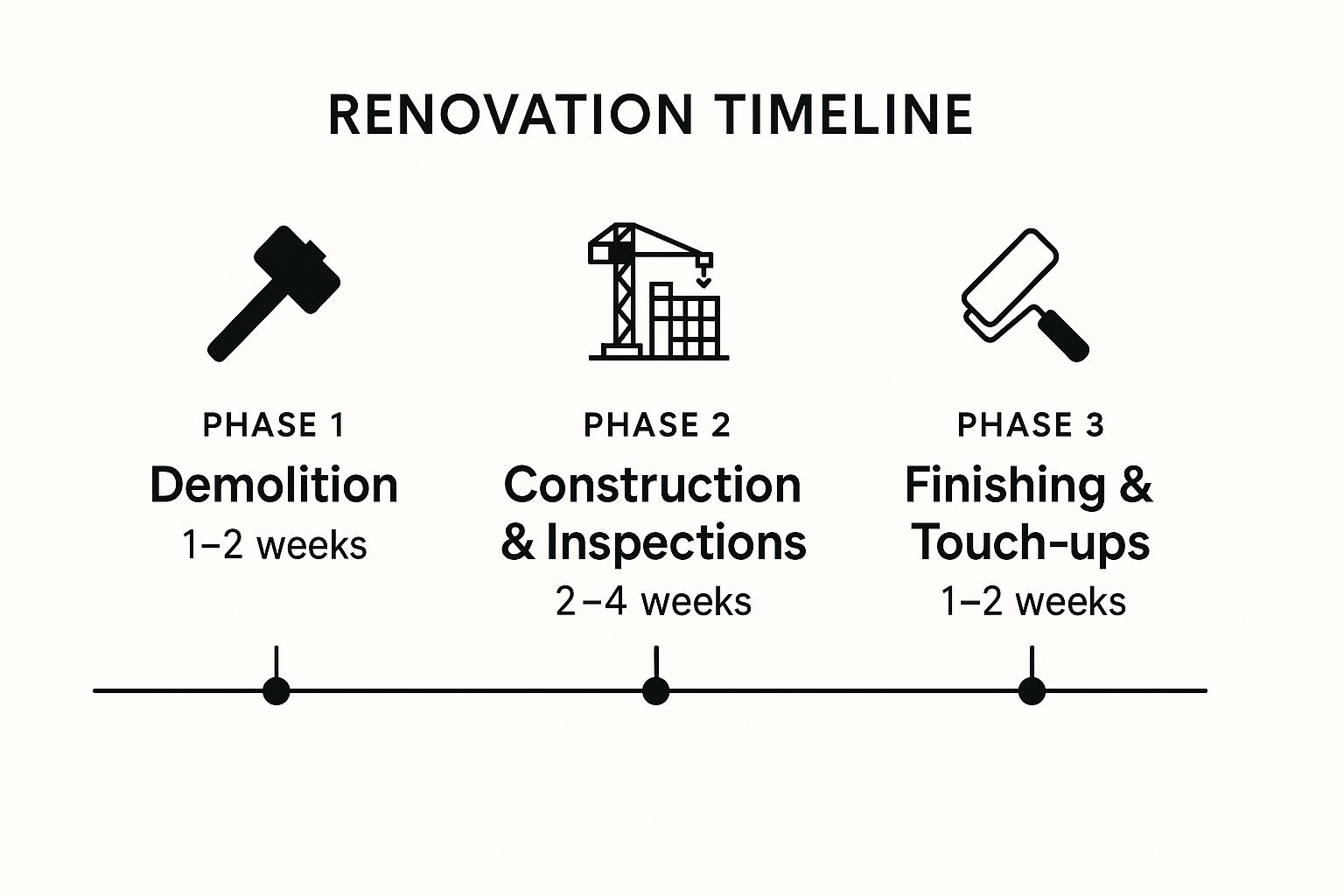
This visual timeline breaks down a typical renovation into its core stages. Understanding this sequence helps you anticipate what to expect at each point in the process.
Why It's Essential
A clear timeline prevents the common scenario where one delay creates a domino effect, pushing back your entire project. It aligns all stakeholders, from your general contractor to your electrician, ensuring everyone knows their role and timing. For homeowners in areas like Pacific Grove, where contractor availability can be tight, locking in a schedule is crucial.
Actionable Steps for Implementation
To develop a realistic and effective timeline, follow these key steps:
- Order Long-Lead Items First: Before demolition even begins, order materials with long delivery times, such as custom cabinets, windows, or special-order tile.
- Build In a Buffer: Every renovation encounters small surprises. Add a buffer of at least 10-15% to your timeline between major phases to absorb minor delays.
- Confirm Contractor Availability: Don't assume your preferred plumber or painter is free when you need them. Confirm their availability and get firm commitments before finalizing your timeline. Learn more about how a home renovations expert in Pacific Grove can manage project timelines effectively.
4. Hire Qualified Contractors and Professionals
The success of your home renovation checklist hinges on the team you assemble. Hiring qualified, licensed, and insured professionals is a critical safeguard for your investment, timeline, and peace of mind. The right contractor brings expertise, efficiency, and accountability.

Why It's Essential
An unqualified contractor can turn a dream project into a nightmare. Issues like shoddy workmanship or project abandonment can lead to costly repairs and liability claims. Vetting your team ensures the work meets building codes and quality standards, which is particularly important for homeowners in Monterey or Pacific Grove.
Actionable Steps for Implementation
To secure a trustworthy and skilled professional, follow these essential steps:
- Verify Credentials: Always check for a valid contractor's license through the California Contractors State License Board (CSLB) database. Also, request proof of liability insurance and workers' compensation.
- Check References and Reviews: Ask potential contractors for a list of recent clients. Follow up with those references to inquire about their experience, timeliness, and the quality of the final work.
- Get Detailed Written Bids: Don't accept verbal quotes. Request detailed, itemized bids from at least three different companies to compare the scope of work and materials included. A professional house remodeling contractor will provide a clear estimate.
- Sign a Comprehensive Contract: Your contract should outline payment schedules, a project timeline, specific materials, and a clear scope of work before any work begins.
5. Choose Materials and Finishes
Once your plans are finalized, the next crucial step is selecting materials and finishes. This is where your vision truly takes shape, influencing the project's final look, feel, durability, and maintenance needs. Balancing aesthetics, functionality, and budget is key.

Why It's Essential
Your material choices directly impact the renovation's longevity. Opting for durable materials in high-use areas like kitchens and bathrooms prevents premature wear and costly replacements. For homeowners in areas like Monterey or Carmel, selecting finishes that are both beautiful and resilient can significantly boost property appeal.
Actionable Steps for Implementation
To make informed material choices, follow these practical steps:
- Order Samples First: Never finalize a material based on a picture. Obtain physical samples of flooring, tiles, and paint. Test them in your home's actual lighting conditions.
- Prioritize High-Traffic Areas: Invest in quality for surfaces that get the most use. For instance, choose durable quartz countertops for the kitchen or luxury vinyl plank flooring for a busy entryway.
- Research Maintenance Needs: Understand the upkeep required for each material before you commit. To learn more about how different options can transform a room, you can explore the various custom paint finishes for your home and their specific benefits.
6. Prepare Living Space During Construction
A crucial, yet often underestimated, part of any home renovation checklist is preparing your living space for the disruption of construction. Proactive organization of temporary living arrangements ensures your family’s comfort and safety. This step is about creating a functional oasis amidst the chaos.
Why It's Essential
Construction generates significant dust, noise, and traffic, which can quickly turn your home into a stressful and hazardous environment. Properly preparing your space minimizes this stress and protects furniture and valuables from damage. For families in Monterey County, this planning is key to maintaining a semblance of normalcy.
Actionable Steps for Implementation
To effectively manage your home during the renovation, follow these practical steps:
- Establish a Temporary Hub: Before demolition begins, set up temporary living quarters. For a kitchen remodel, this could be a mini-kitchen in the garage with a microwave and refrigerator.
- Contain the Mess: Seal off the construction zone from the rest of the house using heavy-duty plastic sheeting and painter's tape over doorways. This is surprisingly effective at containing dust and debris.
- Pack and Protect: Move all non-essential items out of the construction area. Renting a small, local storage unit in Salinas can be a worthwhile investment to keep belongings safe. Cover any remaining large furniture with durable drop cloths.
7. Address Utilities and Infrastructure
A crucial but often overlooked part of any home renovation checklist is addressing your property's core systems. Upgrading or relocating utilities like electrical, plumbing, and HVAC must happen early, as these form the backbone of a modern, functional home. This step involves assessing current capacity and ensuring all systems meet current safety codes.
Why It's Essential
Your home’s infrastructure dictates what is possible in your renovation. An outdated electrical panel cannot support a modern kitchen with new appliances. Proactive utility planning prevents extremely costly and disruptive retrofitting later on.
Actionable Steps for Implementation
To properly integrate utility work into your project, follow these guidelines:
- Assess Current Capacity First: Before finalizing designs, have licensed electricians and plumbers evaluate your existing systems to see if upgrades are needed.
- Plan Utility Work Before Closing Walls: All wiring, plumbing lines, and ductwork must be installed, inspected, and approved before any drywall or insulation goes in.
- Size for Future Needs: If you might add an EV charger or expand your outdoor living space, consider upgrading your electrical panel now while access is easy. Proper planning for outdoor living construction in Pacific Grove can save significant headaches later.
- Coordinate Tradespeople: Ensure your general contractor creates a clear schedule where electricians, plumbers, and HVAC technicians can work without getting in each other's way.
8. Ensure Safety Protocols and Insurance
A crucial part of any home renovation checklist is securing the project with proper safety measures and adequate insurance. This step protects everyone involved, from your family to the contractors on-site. It establishes a safety-conscious environment and provides a critical financial safety net.
Why It's Essential
Renovation sites are inherently hazardous. Proper insurance and safety protocols are non-negotiable for mitigating these dangers. Without them, a simple accident could lead to devastating financial and legal consequences. For homeowners in high-value areas like Pebble Beach, this protection is paramount.
Actionable Steps for Implementation
To properly secure your project site and protect your assets, follow these key steps:
- Verify Contractor Insurance: Before any work begins, demand a certificate of insurance (COI) from your contractor. This document should prove they have both liability insurance and workers' compensation.
- Update Your Homeowner's Policy: Inform your insurance provider about your renovation plans. You may need a "course of construction" rider or an increase in coverage to protect the added value of the renovation.
- Establish Clear Safety Rules: Create and communicate safety zones and rules for your family, especially if you plan to live in the home during the work. This includes keeping children and pets away from active work areas.
- Maintain an Emergency Kit: Keep a well-stocked first-aid kit easily accessible on-site, along with a list of emergency contacts.
9. Plan for Waste Management and Disposal
A frequently overlooked but vital part of any home renovation checklist is a solid plan for waste management. Renovations generate a surprising amount of debris. Organizing an efficient disposal system from the start prevents job site hazards and keeps your property tidy.
Why It's Essential
Without a proper waste plan, debris can quickly pile up, creating safety risks and a chaotic work environment. For homeowners in communities like Salinas or Pacific Grove, maintaining a clean site is also crucial for neighborhood relations.
Actionable Steps for Implementation
To manage renovation waste effectively, follow these key steps:
- Select the Right Dumpster: Assess the scale of your project to choose the right size dumpster. A full kitchen gut in a Carmel home could require a 20-yard dumpster to avoid overage fees.
- Separate Materials: Sort waste as you go. Separate general debris from recyclable materials like metal. If you suspect hazardous materials like asbestos or lead paint, they require specialized handling.
- Schedule Pickups and Placement: Arrange for dumpster delivery before demolition begins and schedule pickups to prevent overflow. Position the dumpster where it provides easy access for workers but causes minimal disruption.
10. Establish Communication and Documentation System
Clear communication is the foundation of a stress-free project and a key part of any complete home renovation checklist. Establishing a robust system for communication and documentation ensures everyone is on the same page. This systematic approach prevents costly misunderstandings and tracks progress accurately.
Why It's Essential
Without formal documentation, verbal agreements can be easily misremembered or disputed. A solid documentation system protects all parties involved. For homeowners in Salinas or Pacific Grove, having a clear paper trail is invaluable for resolving any issues that may arise.
Actionable Steps for Implementation
To create an effective communication framework, follow these steps:
- Schedule Regular Check-ins: Agree on a consistent meeting schedule, such as a weekly on-site walkthrough. Follow up each meeting with a brief email summarizing what was discussed.
- Document Every Change in Writing: Any deviation from the original plan should be documented in a formal change order. This document should detail the new work, costs, and timeline impact, and be signed by both you and your contractor.
- Maintain a Photo Log: Take detailed photos before, during, and after each phase of the renovation. This visual record is crucial for tracking progress and verifying work quality.
Frequently Asked Questions (FAQs)
1. How long does a typical home renovation take?
The timeline varies widely based on the project's scope. A single bathroom remodel might take 3-6 weeks, while a full kitchen renovation in Monterey could take 8-12 weeks or more. A detailed schedule from your contractor is essential.
2. What is the most important part of a home renovation checklist?
While every step is crucial, creating a detailed budget with a 15-20% contingency fund is the most important. A solid financial plan prevents the project from derailing due to unexpected costs.
3. Do I need a permit for interior painting in Monterey?
Generally, cosmetic updates like interior painting in Monterey do not require a permit. However, if your project involves moving walls, altering electrical wiring, or changing plumbing, you will almost certainly need one. Always check with your local building department first.
4. How much value does a renovation add to my home?
The return on investment (ROI) depends on the project and your location. According to Zillow, minor kitchen remodels often have a high ROI, recouping over 70% of their cost. A fresh coat of exterior paint can also increase a home's sale price by up to 2.9%.
5. How do I find a reliable contractor in Carmel or Salinas?
Start by asking for referrals from friends or local supply stores. Always verify their license with the CSLB, check for proof of insurance, read online reviews, and get at least three detailed, written bids before making a decision.
Bringing Your Vision to Life with Confidence
A successful home renovation is far more than just picking out new paint colors. It’s a complex process where meticulous planning is the bedrock of a stunning result. This comprehensive home renovation checklist provides a strategic roadmap to navigate every phase with clarity and control.
By thoughtfully addressing your budget, securing permits, and hiring the right professionals, you transform a chaotic undertaking into a managed project. The steps outlined are the building blocks of a high-quality, lasting investment in your home.
Remember, the ultimate goal of a detailed home renovation checklist is to equip you with the confidence to make smart decisions, hire the right partners, and truly enjoy the process of transforming your space.
A well-executed renovation does more than just update your home; it enhances your lifestyle and boosts your property’s value. With this guide in hand, you are no longer just a spectator in your renovation; you are an informed and prepared project leader.
Ready to turn your checklist into reality? Legacy Painting & Renovating Inc. is a trusted partner for homeowners across Monterey County, from Salinas to Carmel. We bring expertise, craftsmanship, and a commitment to quality to every project. Contact us today for a free, no-obligation estimate and let's start building your dream home.