
Choosing the right tennis court floor coating is a significant decision for any property owner, from a private residence in Carmel to a public facility in Salinas. It’s what separates a world-class court from one that’s just… there. The surface is everything; it dictates ball speed, bounce consistency, and even how much stress the game puts on a player's body.
The main choices usually boil down to acrylic hard courts, famous for their reliable and fast-paced play, and cushioned or synthetic surfaces that are much easier on the joints. This guide will walk you through the options, helping you select the perfect surface for your Monterey Bay area court.
Choosing the Right Tennis Court Floor Coating
A tennis court is more than just a patch of painted ground. It's a serious investment in your property and the experience you offer. A top-tier coating system doesn't just define the game; it acts as a shield, protecting the underlying asphalt or concrete from coastal weather, sun, and daily wear and tear.
So, where do you start? The first step is to get clear on what you really need. Is this court for serious competition, weekend fun with the family, or a multi-sport area? Each answer points you toward a different kind of surface.
Key Factors to Consider
Before you even start looking at color swatches, there are a few core factors every property owner needs to think through. Nailing these down will point you straight to a tennis court floor coating that gives you the best value and keeps players happy.
- Who Will Be Playing? A court at a competitive club in Monterey needs a fast, true surface, making acrylic hard courts a natural fit. On the other hand, a private court for a family might put a premium on joint comfort, which makes a cushioned system the better call.
- What's the Local Climate Like? Here on the coast, the Pacific Grove fog and intense sun can be brutal. You need a coating with fantastic UV and moisture resistance to prevent fading, cracking, or mildew growth.
- What's the Budget and Long-Term Plan? The upfront cost is only part of the story. You have to think about the coating’s lifespan and how much upkeep it’ll need. A cheaper option today might demand more frequent and costly resurfacing down the road.
- How Do You Want the Court to Play? The speed of play is completely customizable. By tweaking the amount of sand in the finish coats, a pro can create a fast, slow, or medium-paced court that’s perfectly suited to your players’ style.
A great tennis court surface, when applied by a professional, does more than just look sharp—it makes the game safer, plays better, and can extend the life of the court by 4-8 years before it needs a new coat.
Quick Comparison of Tennis Court Coating Systems
To make the initial decision a bit easier, it helps to see how the main options compare side-by-side. This table gives you a high-level look at the most popular choices for homes and facilities in the Monterey area.
| Coating Type | Primary Material | Play Speed | Maintenance Level | Best For |
|---|---|---|---|---|
| Acrylic Hard Court | 100% Acrylic Resins | Fast (Customizable) | Low to Moderate | Competitive play, public parks, and multi-use facilities. |
| Cushioned Acrylic | Acrylic with Rubber Granules | Medium (Customizable) | Low to Moderate | Private courts, senior communities, and players seeking comfort. |
| Synthetic Turf | Polypropylene/Polyethylene | Slow to Medium | Moderate | Player-friendly surfaces, excellent drainage, and consistent play. |
| Clay (Har-Tru) | Crushed Stone | Slow | High | Tennis clubs seeking a traditional, professional-grade experience. |
Picking the perfect coating is a team effort between you and an experienced contractor like Legacy Painting & Renovating. When you understand these key differences, you can have a much more productive conversation and land on a choice that will serve your court well for years. For a deeper dive into the specifics, check out our full guide on tennis court floor coating in Monterey.
The Anatomy of a High-Performance Court Surface
A professional tennis court is much more than just a slick of paint over concrete. Think of it like a high-performance vehicle—it’s an engineered system where every layer works together. The asphalt or concrete base acts as the chassis, the critical foundation that provides all the stability.
This base layer is what gives the court its raw strength. Whether you're a facility manager in Carmel or a homeowner in Pacific Grove, understanding this layered approach is key. It helps you see the real value behind a professional tennis court floor coating installation.
The Essential Layers of a Tennis Court
Once the concrete or asphalt foundation is poured and cured, the real magic begins. We build the court from the ground up by applying multiple, specialized coatings, each adding a unique quality to the final playing surface.
First come the resurfacing and leveling layers. These smooth out any dips or bumps in the foundation to create a perfectly flat, true playing plane. Any shortcuts here will show up later as an uneven court with unpredictable play.
Next, we install the cushion coats. Often containing granulated rubber, these layers are the court's shock absorbers. They're what make the game easier on players' joints, reducing fatigue and making play safer.
Key Insight: A cushioned surface is a direct investment in player well-being. It can significantly reduce the stress on knees and ankles, a benefit that’s a huge draw for private clubs and residential courts in communities like Salinas where long-term health is a top concern.
Finally, the vibrant, colored acrylic finish coats go on. These top layers give the court its looks and define its gameplay characteristics. More importantly, they act as a tough, weather-resistant shield, protecting all the hardworking layers underneath. The same expertise that goes into a durable, high-traffic surface is needed here, which is why our experience with specialized applications, like our garage floor coating services in the Monterey area, is so valuable.
Preparing the Canvas for Perfection
Before a single drop of coating touches the ground, the surface has to be perfectly prepared. This is the non-negotiable first step that sets the stage for a court that will last for years.
The image below breaks down the must-do steps for getting a court ready for its new finish.
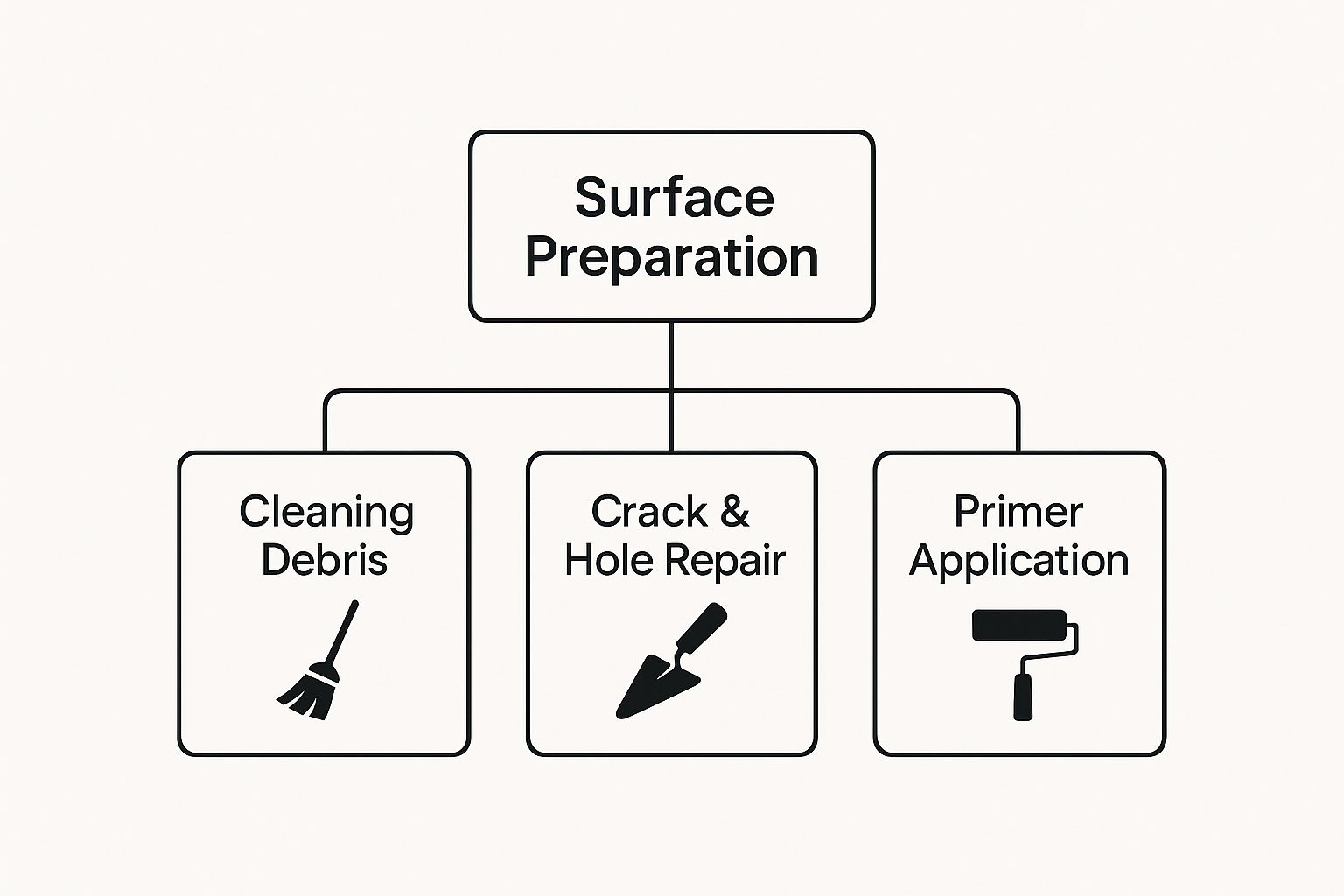
It all starts with a deep clean, followed by meticulous repairs to any cracks or damage, and finishes with priming to make sure the new layers stick for good. Every one of these steps is vital to preventing problems like peeling, bubbling, or cracking.
Acrylic Hard Courts vs. Synthetic Turf Courts
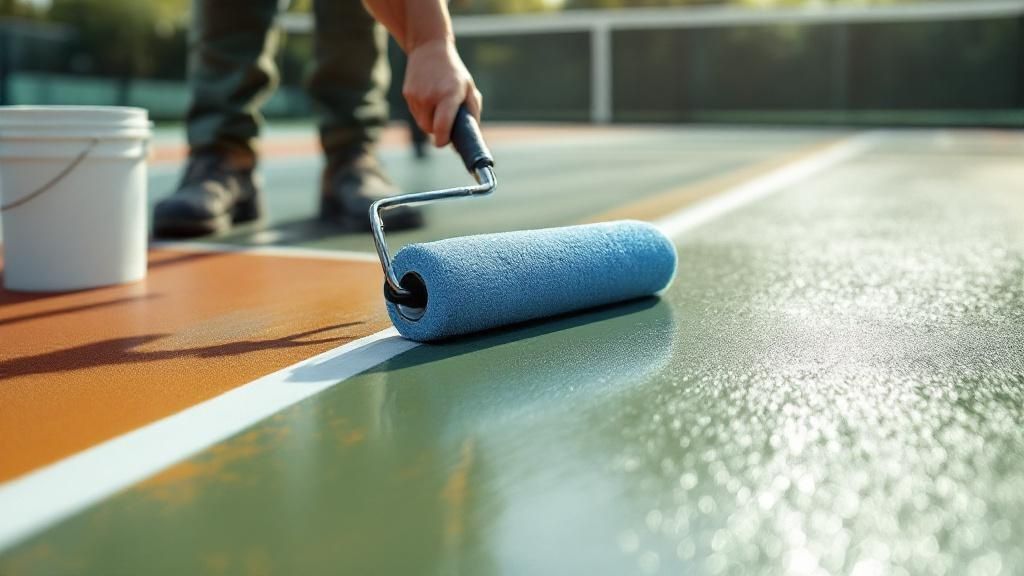
When you're choosing a tennis court floor coating, the decision usually boils down to two main contenders: the classic acrylic hard court or the modern synthetic turf court. Each one delivers a totally different playing experience. For property owners from Salinas to Monterey, digging into these differences is the key to making a smart, long-term investment.
The acrylic hard court is the surface most people picture—it’s what you see at the US Open and countless local parks. On the flip side, synthetic turf is quickly gaining ground because it's easier on the body and performs incredibly well in all kinds of weather.
The Case for Acrylic Hard Courts
Acrylic hard courts are built on a solid foundation of asphalt or concrete, then coated with multiple layers of 100% acrylic resin. This process creates a tough, non-porous surface that’s known for its durability and predictable ball response.
One of its biggest selling points is its customizability. The court's speed can be fine-tuned by changing the amount of sand mixed into the color coats. More sand adds friction, slowing the ball down, while less sand means a much faster game.
Key Takeaway: The main draw of an acrylic hard court is its reliable, fast-paced play and lower upfront installation cost. The vibrant, fade-resistant colors also offer fantastic curb appeal.
The Advantages of Synthetic Turf Courts
Synthetic turf courts are built differently, using a surface of artificial grass filled in with specialized sand. This design creates a completely different feel underfoot, with a major focus on player comfort. The layers of turf and sand work together to absorb shock, taking strain off players' joints.
This makes synthetic turf a phenomenal choice for private home courts or any facility where player health is a priority. On top of that, these courts have incredible drainage. Rainwater seeps right through, letting players in Pacific Grove or Carmel get back on the court much faster after a storm.
Side-by-Side Comparison
Choosing the right tennis court floor coating is all about balancing the pros and cons of each system with your budget and player needs. To make it easier, we’ve put together a table that breaks down the critical differences.
| Feature | Acrylic Hard Court | Synthetic Turf Court |
|---|---|---|
| Player Comfort | Low to moderate (can be improved with cushion layers). | High; excellent shock absorption reduces joint stress. |
| Ball Speed | Fast and customizable to player preference. | Slower, with a lower and more controlled bounce. |
| Maintenance | Requires regular cleaning and crack repair. Recoating every 4-8 years. | Needs periodic brushing to redistribute sand infill and remove debris. |
| Installation Cost | Generally lower initial cost. | Higher upfront investment due to materials and labor. |
| Weather Performance | Can become slippery when wet; susceptible to cracking over time. | Excellent drainage allows for play soon after rain. Resists cracking. |
| Best For | Competitive clubs, public parks, and multi-sport facilities. | Private residences, training facilities, and player-centric clubs. |
Ultimately, there's no single "best" surface—only the one that’s right for your goals. Whether you're after the professional-grade speed of an acrylic court or the forgiving play of synthetic turf, a quality installation will provide years of enjoyment.
The Critical Role of Surface Preparation
Let's be blunt: even the most advanced tennis court floor coating is doomed from the start if it's applied to a poorly prepped surface. This stage isn't just important; it's everything. It’s the foundation that determines whether you get a beautiful, long-lasting court or a peeling, cracked mess in a year or two.
A pristine surface is the only way to guarantee your new coating will bond correctly and stand up to years of intense play. Cutting corners here is a costly mistake, especially with the moist, salt-heavy air we get around Monterey Bay constantly attacking surfaces.
Cleaning The Court: A Deep Dive
The first real step in any professional resurfacing job is a deep, powerful cleaning. We’re talking about high-pressure power washers, often pushing 3,000 PSI or more, to blast away every bit of ground-in dirt, algae, mildew, and any old, flaking paint.
This isn't just for looks. Any gunk left behind acts as a barrier, preventing the new coating from grabbing onto the old surface. In coastal towns like Carmel and Pacific Grove, mildew and algae are relentless. If you don't completely eliminate them, they'll just keep growing right under your brand-new finish.
Repairing Cracks And Depressions
Once the court is sparkling clean and completely dry, the next job is to make the surface perfectly flat and whole again. This means we meticulously fix every single crack, hole, and low spot.
- Hairline Cracks: These can often be handled with specialized acrylic patch binders.
- Larger Structural Cracks: These are more serious and need a tougher solution, often involving multi-layer repair systems to add strength.
- Low Spots: Any "bird baths" where water puddles are filled and leveled out. This is crucial for proper drainage and a true, consistent ball bounce.
Expert Insight: It’s a huge mistake to ignore even the smallest cracks. Water gets in, freezes, and thaws. That tiny fissure quickly becomes a massive, expensive problem. Proper repair isn't a cost; it's an investment in your court's long-term health.
Ensuring Maximum Adhesion
With the court now clean, dry, and smooth, there's one last step to make sure the new tennis court floor coating sticks for good. We apply an acrylic resurfacer, which acts like a powerful primer. It grabs onto the old asphalt or concrete below while creating the perfect textured grip for the new color coats above.
This step gives the court a uniform texture, ensuring the final coats go on evenly. For a deeper look at the science behind why this is so important, check out our guide on professional surface preparation for painting.
Breaking Down Tennis Court Resurfacing Costs
When you're planning a tennis court floor coating project, the final price isn't just one number. It's the sum of a few different parts. For club managers in Salinas or homeowners associations in Monterey, getting a clear breakdown is key to planning effectively.
The biggest factors that drive the cost are your court's current condition, its size, and the exact coating system you choose. A court with deep structural cracks will need a lot more labor and materials than one that just needs a simple recoat.
Key Factors Influencing Your Budget
To really nail down a budget, you have to look at the core parts of the job. Each of these contributes to the final quote from a professional contractor.
- Labor Costs: This is almost always the biggest chunk of the budget. It covers all the detailed prep work—pressure washing, fixing cracks, and leveling the surface—plus the careful application of every coating layer.
- Material Costs: The price for acrylic resins, rubber cushioning granules, and patching compounds can vary. A top-tier cushioned system will naturally cost more in materials than a standard acrylic hard court finish.
- Extent of Repairs: A court with a few minor hairline cracks is a relatively simple fix. But one with deep, spider-web-like "alligator" cracking needs a much more intense—and expensive—repair.
Expert Tip: Think of court resurfacing like any other major home improvement. A quality job adds real, tangible value to your property. Homeowners often research the average cost to paint a room to understand the investment, and the same thinking applies to your court.
Budget Ranges For Recoating vs. Full Resurfacing
Giving you an exact price without seeing the court is impossible, but we can give you some general ballpark figures to help with your planning.
A standard recoating on a court that's already in good shape is the most straightforward option. It usually involves a deep clean, filling minor cracks, and applying two fresh coats of acrylic color.
A full resurfacing, on the other hand, is a much bigger undertaking. This is for courts with serious surface damage, deep cracks, or when you're adding cushion layers for the very first time.
The global synthetic tennis court surface market was valued at $252.1 million in 2022 and is expected to grow, reflecting the increasing demand for high-quality playing surfaces. This shows how much importance facilities and homeowners place on maintaining safe, playable courts.
A Maintenance Plan to Protect Your Investment
Your newly finished tennis court is a serious asset, and a proactive maintenance plan is the best way to protect that investment. Consistent care is essential to maximizing its lifespan, safety, and playability. A simple, ongoing routine is all it takes to keep small issues from turning into expensive headaches.
This is especially true for courts here in the Monterey Bay area. The damp, foggy climates we see in places like Carmel and Pacific Grove are the perfect breeding ground for mildew and algae, which can make the surface dangerously slippery.
Your Year-Round Maintenance Checklist
Protecting your tennis court floor coating doesn't have to be a major chore. Sticking to a simple checklist will do wonders for its integrity and appearance.
- Sweep and Clear Debris Regularly: At least once a week, use a soft-bristled broom or leaf blower to clear away leaves and debris. This prevents staining and stops abrasive materials from wearing down the surface.
- Wash It Down Gently: Every month or so, give the court a light wash with a mild detergent and water to lift away dust and stop mold or mildew. Avoid high-pressure washers, as their force can damage the acrylic surface.
- Tackle Stains Immediately: Spills happen. Clean up sports drinks, food, or suntan lotion right away to prevent permanent marks on your coating.
A well-maintained acrylic court surface is built to last 4 to 8 years before it needs a professional recoat. The secret to hitting the high end of that range? Consistent cleaning and prompt repairs.
Knowing When It’s Time for a Professional Recoat
Even with a perfect maintenance schedule, every tennis court floor coating will eventually show its age. The trick is to spot the signs of wear early, before they lead to more severe structural problems.
According to a report from Archive Market Research, the global market for synthetic tennis court floor coatings is expected to grow by about 6% each year through 2033. You can read the full research on synthetic tennis court surfaces.
Keep an eye out for these tell-tale signs that it’s time to call the pros at Legacy Painting & Renovating:
- Faded or Worn Lines: Are the boundary lines looking faint or chipping? That's a classic sign the topcoat is wearing thin.
- Noticeable Worn Patches: Look closely at high-traffic spots like the baseline. If the color is fading and the texture is smooth, the court's grip is compromised.
- Visible Cracks: The appearance of new cracks—or old ones getting wider—is a major red flag that needs professional attention.
- Changes in Playability: If the ball bounces weirdly or the court feels "faster" than it used to, the surface has likely lost its original character.
Frequently Asked Questions About Tennis Court Coatings
Here are answers to some of the most common questions we get from clients across the Monterey Bay area about their tennis court floor coating projects.
How Long Does a New Tennis Court Coating Last?
A professionally applied acrylic court surface should provide 4 to 8 years of solid play. Key factors influencing this lifespan are court usage, our coastal climate, and how well it's maintained. Regular cleaning and prompt repairs will push your court’s lifespan toward the higher end of that range.
When Is the Best Time of Year to Resurface a Tennis Court in Monterey?
For resurfacing projects in coastal spots like Monterey, Carmel, or Salinas, we aim for the warm, dry weather from late spring through early fall. Applying a tennis court floor coating requires several dry days with mild temperatures and low humidity for each layer to cure properly.
Can You Change the Speed of My Court With a New Coating?
Absolutely. The speed of an acrylic hard court is determined by the amount of sand mixed into the final color coats. We can add more sand for a slower, higher-bouncing court or use less sand for a faster, lower-skidding game. We can fine-tune the mix to get the exact speed you want.
How Much Does It Cost to Resurface a Tennis Court?
The final price tag varies based on the court's current condition, its size, and the chosen coating system. A simple recoating on a court in good shape is the most budget-friendly option. A full resurfacing with extensive crack repair and cushion layers is a more significant investment. We provide a detailed estimate based on your court's specific needs.
Is a Cushioned Surface Really Worth the Extra Cost?
For most players, yes. Cushioned acrylic surfaces absorb significantly more impact, which is a game-changer for joint health. Players feel less fatigue and face a lower risk of long-term injuries. While it adds to the upfront cost, the benefits in comfort and safety make it a fantastic investment, especially for private homes and clubs in Salinas, Monterey, and Carmel.
If you have other questions, we invite you to check out our Legacy Painting & Renovating FAQs page.
Ready to turn your court into a first-class playing surface? Contact Legacy Painting & Renovating Inc. today for a free, no-obligation consultation. Let's talk about how a professional tennis court floor coating can elevate your property.