
Ready to transform your space? Planning a home renovation is a big deal, and knowing where to start is key. A clear plan helps turn your dream into reality without the stress. This guide will walk you through every step, from creating a vision to handling the final details, making sure your Monterey County home project is a success.
Defining Your Vision and Goals
Every great home renovation in Salinas or Monterey starts with a clear idea. Before you even think about colors or styles, you need to know why you're renovating. Without a clear goal, it's easy to get lost in trends that don't solve your home's real problems.
The first step is to turn a vague thought like, "I need a new kitchen," into a detailed plan. This makes sure your money is spent on things that truly make your life better.
Identify Your Pain Points
Take a walk through your home with a notepad. Write down everything that doesn't work well or drives you crazy. This isn't about looks yet; it’s all about how your home functions.
Your list might include things like:
- Bad Layout: "There's no counter space by the stove, which makes cooking hard."
- No Storage: "Our bathroom counter is always cluttered because the vanity is too small."
- Terrible Lighting: "The living room feels dark and gloomy, even during the day."
- Outdated Function: "Two of us work from home, but our 'office' is just a corner of the dining table."
This list helps you focus on the real problems your renovation needs to fix. It’s the foundation for a project that adds real value to your daily life.
Create a "Must-Have" vs. "Nice-to-Have" List
Now you can start dreaming. Make two columns on your notepad: "Must-Haves" and "Nice-to-Haves." This is a critical step that helps you set priorities and prepare for budget talks.
A well-defined 'must-have' list is your project's north star. It keeps you focused when faced with tough budget decisions and ensures the final result solves your core problems.
For example, a Carmel kitchen remodel list might look like this:
Must-Haves:
- A large island with seats for four.
- Durable quartz countertops for our busy family.
- Good lighting under the cabinets for cooking.
- A real pantry for food storage.
Nice-to-Haves:
- A fancy six-burner gas stove.
- A built-in wine fridge.
- Custom pull-out spice racks.
- Heated floors for cold mornings.
This simple list is your secret weapon. When you need to cut costs, you'll know exactly where you can save money without giving up on the essentials.
Think About Your Future Needs
A smart renovation solves today's problems and plans for tomorrow's. More homeowners are updating their current homes instead of moving. The National Association of Home Builders (NAHB) expects residential remodeling to grow by 5% in 2025 because of this trend. You can see more of the NAHB's market trend insights on their website.
Ask yourself big questions. Are you planning to have more kids? Will you keep working from home? Could an elderly parent move in someday? Planning for these things now can save you money and hassle later, adding lasting value to your Pacific Grove home.
Building a Realistic Budget and Timeline
You have your vision. Now it’s time to talk about money and time. A realistic budget and timeline are essential for a smooth renovation that doesn't become a nightmare.
Think of your budget as a GPS that guides every choice you make. A clear timeline is the roadmap that manages expectations and prepares you for the temporary mess.
How to Create Your Renovation Budget
A detailed budget is a must. It should cover everything, from big appliances to small things like nails and paint. A common mistake is to only budget for the visible items, forgetting about the hidden costs that make it all happen.
Here’s how to break down your costs:
- Labor Costs: This is often the biggest expense. It’s what you pay the skilled professionals.
- Materials & Finishes: This includes drywall, flooring, faucets, and light fixtures.
- Permits & Fees: Depending on your project, you may need building permits from Monterey County.
- Contingency Fund: This is your safety net. Set aside 15-20% of your total budget for unexpected surprises, like finding old wiring that needs to be replaced.
A contingency fund isn't a sign of bad planning—it's the mark of a smart, experienced planner. It gives you breathing room to handle surprises without derailing the project.
Here’s a sample budget breakdown to help you get started.
Sample Home Renovation Budget Breakdown
| Expense Category | Percentage of Total Budget | Example Cost (for a $50,000 Project) |
|---|---|---|
| Labor | 20-35% | $10,000 – $17,500 |
| Cabinetry & Hardware | 25-30% | $12,500 – $15,000 |
| Appliances & Ventilation | 10-15% | $5,000 – $7,500 |
| Countertops | 8-10% | $4,000 – $5,000 |
| Flooring | 5-7% | $2,500 – $3,500 |
| Lighting & Electrical | 5-7% | $2,500 – $3,500 |
| Plumbing & Fixtures | 4-5% | $2,000 – $2,500 |
| Contingency Fund | 15-20% | $7,500 – $10,000 |
These numbers can change based on your project, but it’s a good starting point to avoid financial surprises.
Financing Your Project
For many homeowners in areas like Salinas and Carmel, a big renovation requires financing. The good news is, you have options. In 2025, home remodeling spending is expected to reach $509 billion in the U.S. thanks to rising home values. You can learn more about these 2025 home improvement industry trends.
This visual shows how your early planning should flow, from big ideas to final decisions.
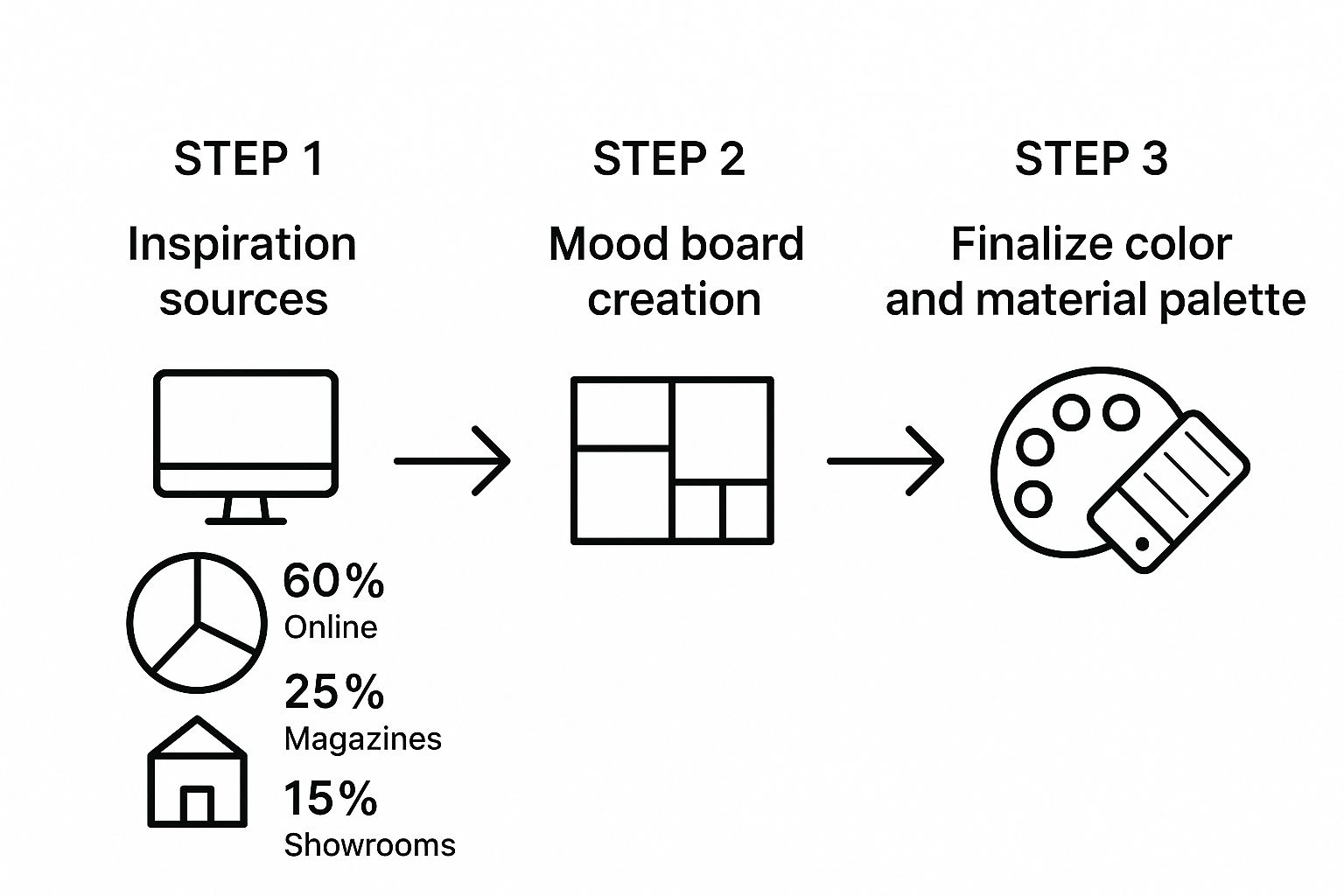
Following a clear process like this helps you stay organized and ensures your final design looks great.
Mapping Out a Realistic Timeline
A detailed schedule is just as important as your budget. It keeps the project on track and helps you know when you’ll have your home back. A good timeline breaks the project into clear phases.
Work with your contractor to map out these key stages:
- Demolition and Prep: Tearing out the old to make room for the new.
- Structural & Rough-Ins: Framing, plumbing, and electrical work behind the walls.
- Inspections: A city or county official will approve the work before walls are closed.
- Closing the Walls: Drywall is installed and finished for a smooth surface.
- Finishes: The fun part! Painting, flooring, and cabinets are installed.
- Final Installations: Lights, faucets, and appliances are put in.
- Final Walkthrough & Punch List: You and your contractor check for any final fixes.
Knowing this sequence helps you understand the process. For a complete guide, download our free home renovation checklist.
Assembling Your Renovation Dream Team

Once you have a vision and a budget, it’s time to find the right people for the job. The success of your renovation depends on the professionals you hire. You need a team you can trust to bring your ideas to life.
For homeowners in Pacific Grove or Monterey, this means finding local experts. They know the area, understand the building codes, and have trusted suppliers.
Finding Reputable Local Contractors
Start your search by asking people you trust. Friends, family, or neighbors in the Carmel area who have had work done are great resources. A positive review from someone you know is very valuable.
You can also use online platforms. Look for contractors with a strong local presence, great reviews, and a portfolio of work you like.
The Vetting Process You Can't Skip
Once you have a shortlist of three to five contractors, it’s time to do your homework. This step is crucial to avoid problems later. A little research now can save you a lot of stress.
Here’s what you must check for every contractor:
- License and Insurance: Make sure they are licensed in California. They also need general liability insurance and workers' compensation.
- References: Ask for at least three recent references from clients with similar projects. Call them and ask about their experience.
- Portfolio Review: Look through their past projects. Does their work match the quality and style you want?
Never hire a contractor based on price alone. The cheapest bid often comes with hidden costs, from low-quality materials to unreliable timelines.
Key Questions to Ask During Interviews
The interview is your chance to see if a contractor is a good fit. Treat it like a job interview, because it is.
Be ready with a list of questions for each candidate. This helps you compare their answers and make a smart choice.
Crucial Interview Questions:
- How long have you been in business in Monterey County?
- How will you communicate with me during the project?
- Who will be my main contact on-site?
- How do you handle changes or surprises?
- Can you give me a detailed, itemized estimate?
Clear answers to these questions will tell you a lot about their experience. Pay attention to how they communicate. You want a partner who is open, responsive, and easy to work with. To learn more, read about what defines true full home remodel professionals.
Getting Into the Weeds: Design Details and Material Choices
With a budget and a team, it’s time for the fun part: picking out the design details and materials. This is where you make choices that fit your style, budget, and daily life.
Finalizing these details before construction starts is key to avoiding delays and staying on budget for your Salinas home renovation.
Finalizing Your Design Vision
Before you choose a single tile, you need a solid plan. A mood board is a great tool for this. It's a collection of images, colors, and textures that shows the look you want.
Your mood board should include:
- Color Palette: Your main and accent colors for walls and decor.
- Key Materials: Pictures of flooring, countertops, and backsplashes you like.
- Fixture Styles: Photos of lighting, faucets, and hardware.
- The Vibe: Inspiration photos that capture the overall feel you’re going for.
This tool helps get you and your contractor on the same page. It turns your ideas into a real plan.
Dealing with Permits in Monterey County
As your design gets more detailed, you might need permits, especially if you move walls or plumbing. Permits are there to protect you. They make sure the work on your Pacific Grove home is safe and up to code.
Think of a building permit as a stamp of approval. It's official confirmation that your renovation plans are safe and sound, protecting your family and your home's value.
A good contractor will handle all the permit paperwork for you. They know what’s needed and will deal with the local building department. This is a huge reason to hire an experienced pro.
Selecting Materials That Last
Choosing materials means balancing looks, cost, and durability. For busy areas like kitchens and bathrooms, quality is very important.
When looking at materials, think about these three things:
- Durability: How will it hold up to daily use? Tough countertops like quartz are a smart choice for a family kitchen.
- Maintenance: How much work will it take to keep it looking good? Some materials need more care than others.
- Cost vs. Value: The cheapest option isn’t always the best value. Investing in quality materials now can save you money on repairs later.
For help choosing materials for the busiest room in your house, see our guide on hiring kitchen remodeling contractors.
Homeowners are making these choices carefully. The global home renovation market was valued at $1.99 trillion in 2024 and continues to grow. You can discover more insights about these global home renovation market trends to see how your project fits in.
Preparing Your Home and Family for Construction

The plans are done and your contractor is ready to start. Now, it's time to prepare your home and family for construction. A little prep work can make the whole experience much smoother.
This phase is about managing the mess, protecting your things, and setting clear expectations. Taking these steps will keep your Salinas home renovation on track and your stress levels down.
Create a Safe and Clean Work Zone
First, completely clear out the renovation area. Move all furniture, rugs, and decor to another room or a storage unit. This is the best way to protect your belongings and give the crew a safe space to work.
Next, you need to contain the dust. Construction dust gets everywhere.
- Seal Doorways: Use plastic sheeting and painter’s tape to seal off doorways to the work zone.
- Protect Flooring: Make sure your contractor protects nearby floors with heavy-duty covers.
- Cover Vents: Shut and cover any HVAC vents in the area to keep dust out of your system.
This prep work is important for any project, big or small. For example, during bathroom renovation services in Monterey, proper containment keeps tile dust from covering your entire house.
Establish Clear Communication Protocols
Living through a renovation is a partnership that needs good communication. Before work begins, sit down with your project manager to set some ground rules.
A pre-construction meeting to set work hours, parking rules, and a communication plan isn't just a formality—it's the foundation of a low-stress project.
Agree on these key details:
- Work Hours: What time will the crew arrive and leave each day?
- Access: How will they get into your house?
- Restricted Areas: Are any parts of the house off-limits?
- Daily Updates: How do you want to get progress reports? (Text, email, call?)
- Bathroom Usage: Designate one bathroom for the crew to use.
Plan for Daily Life and Disruptions
Finally, think about how your family will handle the temporary chaos. A home renovation in Carmel or Pacific Grove is exciting, but it will disrupt your routine. Plan ahead to make it easier.
If you’re remodeling your kitchen, set up a temporary one elsewhere. A microwave, coffee maker, and toaster oven can work wonders. Stock up on paper plates to avoid washing dishes in the bathtub.
Don’t forget about pets and children. Construction sites can be dangerous. Keep pets in a safe, quiet room or consider boarding them during the messiest parts of the project. This will keep them safe and less stressed.
Frequently Asked Questions (FAQs)
Planning a home renovation can bring up a lot of questions. Here are answers to some of the most common ones we hear from homeowners in Monterey County.
1. How long does a typical home renovation take?
The timeline really depends on the project's size and complexity. A simple guest bathroom update might take three to five weeks. A full kitchen remodel in your Carmel home, however, could take anywhere from six to twelve weeks due to plumbing, electrical, and custom cabinet work. Larger projects like additions can take several months.
2. What is a contingency fund and why do I need one?
A contingency fund is a safety net for your budget. It's an extra 15% to 20% of your total project cost set aside for unexpected problems. In older homes around Salinas, it’s common to find surprises like old wiring or hidden water damage. This fund ensures these issues don’t stop your project.
3. Should I move out during my renovation?
This is a personal choice based on the project's scale and your tolerance for mess. For a small project, you can probably stay. For a major remodel of your kitchen or primary bathroom, moving out can be a smart move. It can even speed up the project since the crew has full access to the space.
4. How do I ensure good communication with my contractor?
The key is to set expectations from the start. In your first meeting, decide how you'll communicate. A daily text message, a weekly email update, or a scheduled phone call are all great options. A good system keeps everyone on the same page. For a deeper look, check out our guide on working with home renovations experts in Monterey.
5. What’s the difference between an estimate and a quote?
An estimate is a rough guess of what a project might cost, usually given early in the process. A quote (or bid) is a firm, fixed price based on detailed plans and specific material choices. Always get a detailed written quote before signing a contract to protect yourself from surprise costs.
Ready to get started on your dream renovation? The team at Legacy Painting & Renovating Inc. has the local expertise to bring your vision to life with quality and care. Contact us today for a free, no-obligation consultation