
Direct Answer: Mid-project scope changes, hidden water damage, and permit surprises are the three things that most reliably push bathroom remodels weeks past their original finish date.
Most homeowners who start a bathroom remodel expect a few weeks of disruption and then a finished product they’re happy with. But a lot of jobs in Monterey County stretch past the original schedule — sometimes by a week, sometimes by a month — and it almost never happens because the contractor is slow.
It happens because of decisions made before the first tile comes off the wall. Certain changes, certain assumptions, and certain surprises behind the drywall are responsible for the vast majority of delays on bathroom projects here on the Central Coast.
This article focuses on the three biggest causes of bathroom project delays — not a list of every possible thing that could go wrong, but the ones that actually matter and that homeowners can realistically prepare for.
Scope Changes After Work Has Started
The single most common reason a bathroom remodel runs long is a homeowner changing the plan after the walls are already open.
This sounds avoidable, but it happens constantly — and it’s usually understandable. You see the framing exposed and realize the layout could work better. You decide you want a larger shower than what was spec’d. The tile you ordered arrives and you hate it in person, so you want to switch.
Every one of those decisions creates a ripple effect. If you swap in a larger shower, the plumber may need to come back to move the drain. If you change tile mid-project, your contractor may need to pause work for 1–3 weeks while the new material ships. In some cases, a permit originally pulled for one scope of work may no longer be valid for the new scope — which brings the city or county building department back into the picture.
The way to prevent this isn’t willpower. It’s doing the hard decision-making before the project starts:
- Walk through the design in full detail with your contractor before anyone picks up a tool
- Order all materials — tile, fixtures, vanity, lighting — before demolition begins, so you can see them in person first
- If you’re considering a layout change, decide during the planning phase, not after the walls are open
- Budget a 10–15% contingency specifically for changes, so if you do decide to adjust something, it doesn’t become a financial crisis that stalls the job
If you’re wondering what the full sequence of a bathroom project looks like before any of this starts, What Should I Expect During a Bathroom Remodel From Start to Finish? breaks it down clearly.
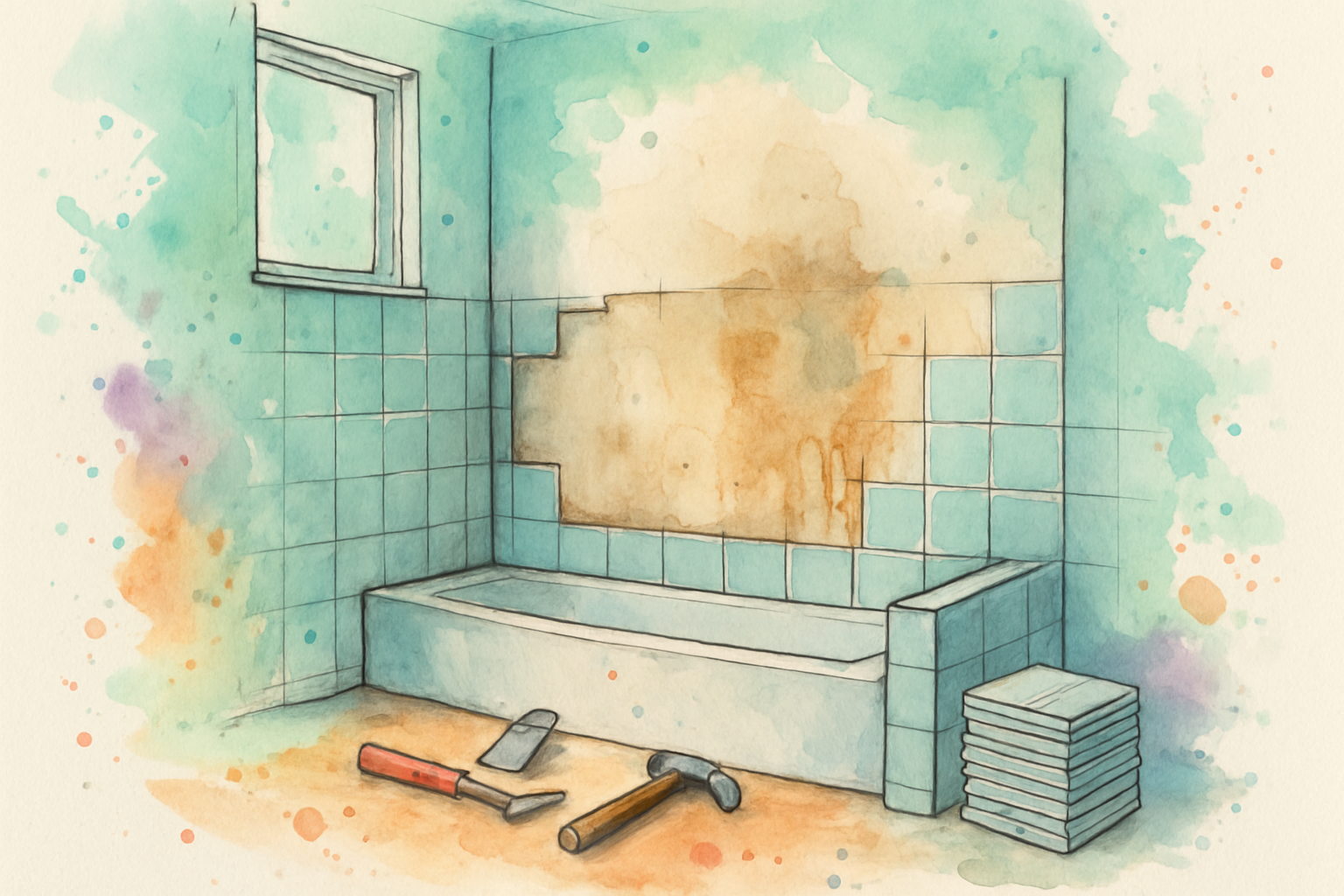
Hidden Water Damage — The Delay No One Plans For
Monterey County’s coastal climate is beautiful to live in. But the combination of marine layer humidity, seasonal fog, and salt air means that moisture problems in bathrooms here tend to be worse — and more hidden — than in drier inland climates.
When a contractor opens up a bathroom wall that hasn’t been touched in 15 or 20 years, they frequently find one or more of the following:
- Rotted backer board or framing behind the shower or tub surround
- Subfloor damage caused by a slow toilet base leak that went unnoticed
- Mold growth on the backside of drywall in poorly ventilated bathrooms
- Corroded or undersized supply lines that need to be replaced before new fixtures can go in
None of these are the contractor’s fault, and none of them can be predicted from the outside. But all of them require real remediation before the remodel can proceed — and that takes time.
A subfloor repair in a standard Monterey-area bathroom typically runs $500–$1,500 depending on how much framing is involved. Mold remediation — if the growth is significant — may require a licensed mold contractor to come in first, which can add 5–10 business days to the schedule before the remodel crew can return.
The honest answer is that you can’t fully prevent hidden damage surprises. But you can plan for them. Ask your contractor before work starts: What happens if you find water damage? How is it priced, and how long does it add to the schedule? A contractor with real experience — one who has worked through Monterey’s older housing stock before — will have a straight answer for that question.
If you’re weighing a DIY approach partly to save money, it’s worth reading Am I Going to Regret DIYing My Bathroom Renovation? — the hidden damage piece is one of the clearest reasons DIY bathroom projects go sideways.
The Three Delay Triggers: How Long Each One Can Add to a Bathroom Project
This infographic shows the three most common bathroom remodel delay causes, how long each typically adds to a project, and what drives that delay.
When Permits Become the Problem
Permits don’t delay projects by themselves. But two specific permit-related situations cause real, measurable stalls — and both are common enough in Monterey County to be worth understanding before you start.
The first situation is when a homeowner doesn’t realize their planned changes actually require a permit. In Monterey and surrounding cities, you generally need a permit any time you’re moving plumbing, relocating electrical, or making structural changes. A cosmetic refresh — new paint, new fixtures in the same locations, new tile — typically doesn’t require one. But the line between those categories gets crossed more often than homeowners expect.
If work gets started without the correct permit, and an inspection catches it, you may be required to open walls back up to prove the work was done correctly. That’s not a hypothetical — it happens. The Monterey County building department article on the site covers exactly which changes trigger that requirement locally.
The second situation is when a remodel uncovers unpermitted prior work. Say you’re renovating a bathroom in a 1970s Salinas home, and when the walls open up, it becomes clear that a previous owner moved plumbing without pulling a permit. That prior work is now your problem. Your contractor may need to stop, document what’s there, and work with the building department to determine how to proceed.
This can add 2–6 weeks to a project timeline depending on the city, the extent of the unpermitted work, and how responsive the building department is during the review period. Salinas and Monterey both have active permit offices, but turnaround times vary — plan for at least 10–15 business days for standard permit processing in most Monterey County jurisdictions.
For a broader sense of how renovation projects work and where the permit conversation fits, the Painting and Remodeling Guide for Monterey County 2026 is a good reference.
Bathroom Delay Causes: What to Expect and How to Prepare
Here’s a plain breakdown of the three main delay triggers, the typical time they add, and what a homeowner can actually do to reduce the risk.
| Delay Cause | Typical Time Added | How to Reduce the Risk |
|---|---|---|
| Scope changes after demo | 1–4 weeks | Finalize all design decisions and order all materials before demo day |
| Hidden water damage or mold | 5–14 business days | Budget a 10–15% contingency; ask contractor how surprises are handled |
| Permit scope mismatch or prior unpermitted work | 2–6 weeks | Confirm permit requirements before work starts; have contractor pull the permit, not the homeowner |
Who Pulls the Permit — and Why It Matters
One small but important decision that affects how permit delays play out: whether the contractor or the homeowner pulls the permit.
In Monterey County, homeowners can technically pull their own permits for work on their primary residence. But when a licensed contractor pulls the permit — using their CSLB license number — they are legally responsible for the work meeting code. That accountability creates a different relationship between the contractor and the building department than an owner-pulled permit does.
When a homeowner pulls their own permit and then hires a contractor, inspection complications become the homeowner’s problem to manage. When the contractor pulls it, they manage the inspection process directly and have a financial and reputational reason to make sure the work passes.
For a project where delays already have multiple potential causes, having the contractor own the permit relationship removes at least one coordination problem from your plate. It’s a simple thing to confirm during your initial estimate conversation. And if a contractor pushes back on pulling the permit themselves — that’s worth paying attention to.
Frequently Asked Questions About Bathroom Remodel Delays
How long does a bathroom remodel actually take in Monterey County?
A straightforward cosmetic remodel — new tile, new fixtures, paint, no layout changes — typically runs 2–3 weeks of actual work. A full gut renovation that includes moving plumbing, replacing the subfloor, and updating electrical can run 4–8 weeks or longer, especially if permits and inspections are involved. Hidden water damage or scope changes can add to either.
Can I still live in my house during a bathroom remodel?
Yes, in most cases — especially if you have more than one bathroom. Your contractor should give you a clear picture of which days the bathroom will be completely offline versus partially usable. If you only have one bathroom, that’s a conversation to have before work starts, not after.
What’s the most common thing homeowners change mid-project?
Tile selection, by a wide margin. Homeowners often pick tile from a small sample and then don’t love it when they see it in person after it arrives. Ordering full samples — or better yet, a full case — before demo begins is the most practical way to avoid that.
Do I need to hire a separate mold contractor if the crew finds mold behind my walls?
It depends on the extent of the growth. Minor surface mold on drywall can usually be addressed by the remodeling crew. But if the growth is significant — covering a large area, or penetrating into framing — California regulations may require a licensed mold remediation contractor to handle it before the renovation can continue. Your contractor should be upfront about when that line is crossed.
If I want to make a change after work starts, is it always a problem?
Not always. Small changes — like swapping out a light fixture style or adjusting grout color — usually have minimal impact. The changes that cause real delays are the ones that affect rough work: moving a drain, changing the shower size, or switching to a different layout. Those require going back to trades that may already be off the job and potentially revising permits.
Planning a Bathroom Remodel in Monterey County?
Legacy Painting and Renovating, Inc. handles bathroom renovation work across the Monterey Peninsula — including Salinas, Pacific Grove, Carmel, and surrounding communities. If you’re in the early planning stages and want a straightforward conversation about scope, timeline, and what to watch out for before work begins, reach out at (831) 917-0047 or through the contact form at legacypaintingrenovating.com.