
Wondering if your home's exterior paint is holding up? If you're asking how often you should repaint your home in Monterey County, the answer is likely sooner than you think. Our special coastal climate is tough on paint. Most local homes need a repaint every 4 to 6 years, not the 7 to 10 years you might hear for other places.
Why Your Monterey County Home Needs a Shorter Repaint Cycle
Living in places like Monterey, Carmel, or Pacific Grove is beautiful. But that beauty comes with a price for your home’s exterior paint. The usual advice for repainting doesn't work here. Our local weather is a mix of fog, salty air, and strong sun that damages paint.
Your paint is your home's first line of defense. Over time, these coastal elements wear it down. This makes paint fail faster here than in drier, inland areas like Salinas. This can lead to much bigger problems if you wait too long.
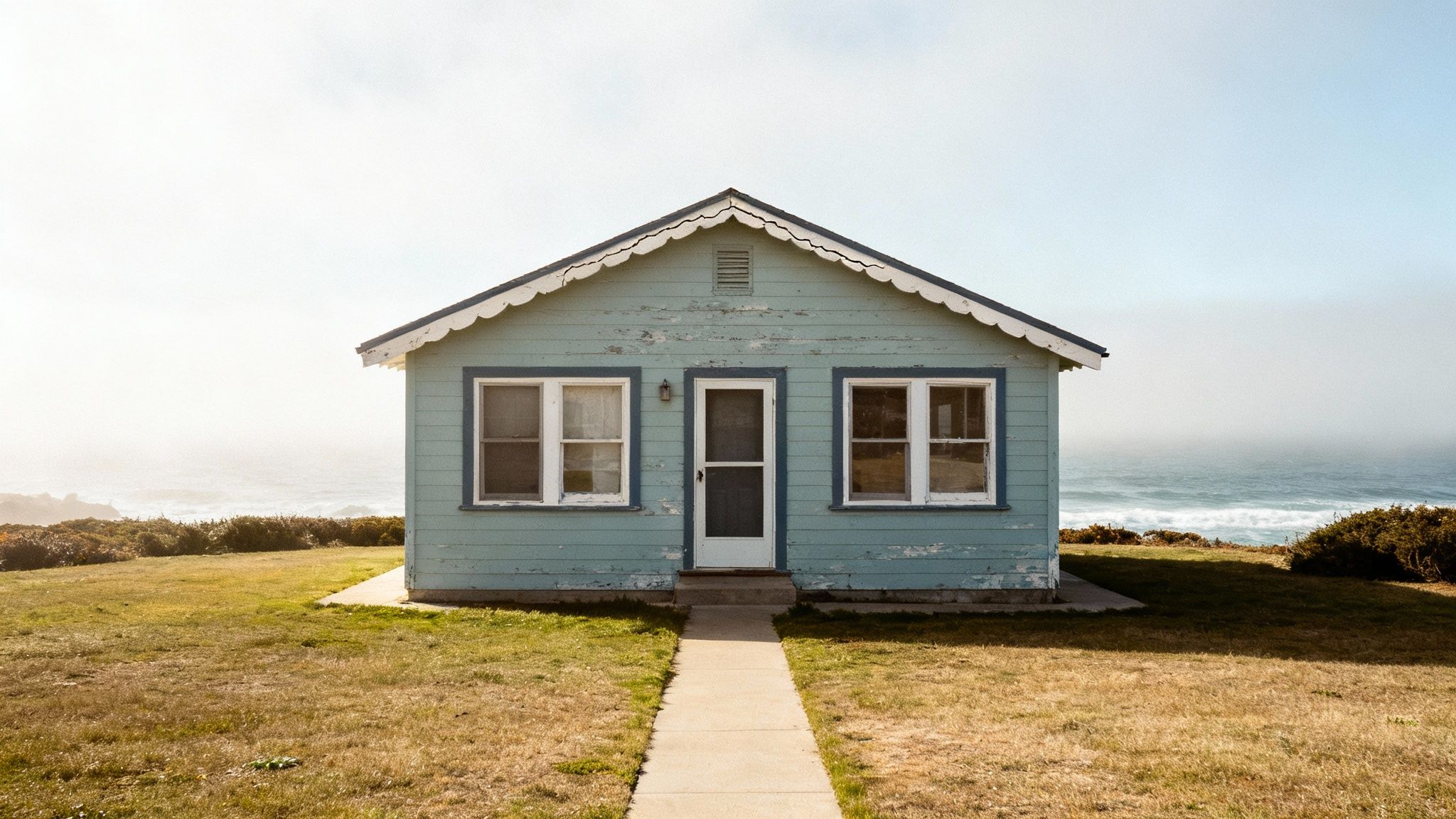
The Real Impact of Our Coastal Climate
The mix of salty air and constant moisture is very harsh on paint. The salt itself can eat away at the surface. At the same time, the dampness from the marine layer helps mildew grow. It can also cause paint to bubble and peel.
These aren't just looks problems. Bubbles and cracks let moisture in. This can lead to wood rot and even structural damage if not fixed.
A regular painting schedule is not just about looks. It's key maintenance that protects your home from expensive, long-term damage.
Understanding these threats is the first step to protecting your home. Ignoring early signs of wear can turn a simple painting project into a major renovation. Knowing what causes paint to peel is vital for any Monterey County homeowner.
Monterey County Repainting Timelines vs. General Guidelines
It's easy to see why standard advice doesn't apply here when you compare the timelines. The constant coastal exposure shortens the life of any exterior paint job. Homes in coastal zones often need repainting every 4–6 years because of salt and moisture.
| Surface Type | General Repaint Guideline | Monterey County Reality (Coastal Exposure) |
|---|---|---|
| Wood Siding | 7-10 years | 4-6 years |
| Stucco | 5-7 years | 5-6 years |
| Decks & Railings | 2-4 years | 1-3 years |
As you can see, wood surfaces are especially at risk in our local climate. They often show signs of paint failure in just a few years. Ignoring these signs can lead to peeling, wood rot, and higher repair costs later.
How Monterey's Climate Wears Down Your Paint
Living in Monterey County means enjoying amazing coastal views. But the ocean air, fog, and sun are very tough on your home's exterior paint. It's a constant battle that breaks down that protective layer.
This is why a simple "paint every 10 years" rule does not work here. Our local climate has its own rules.
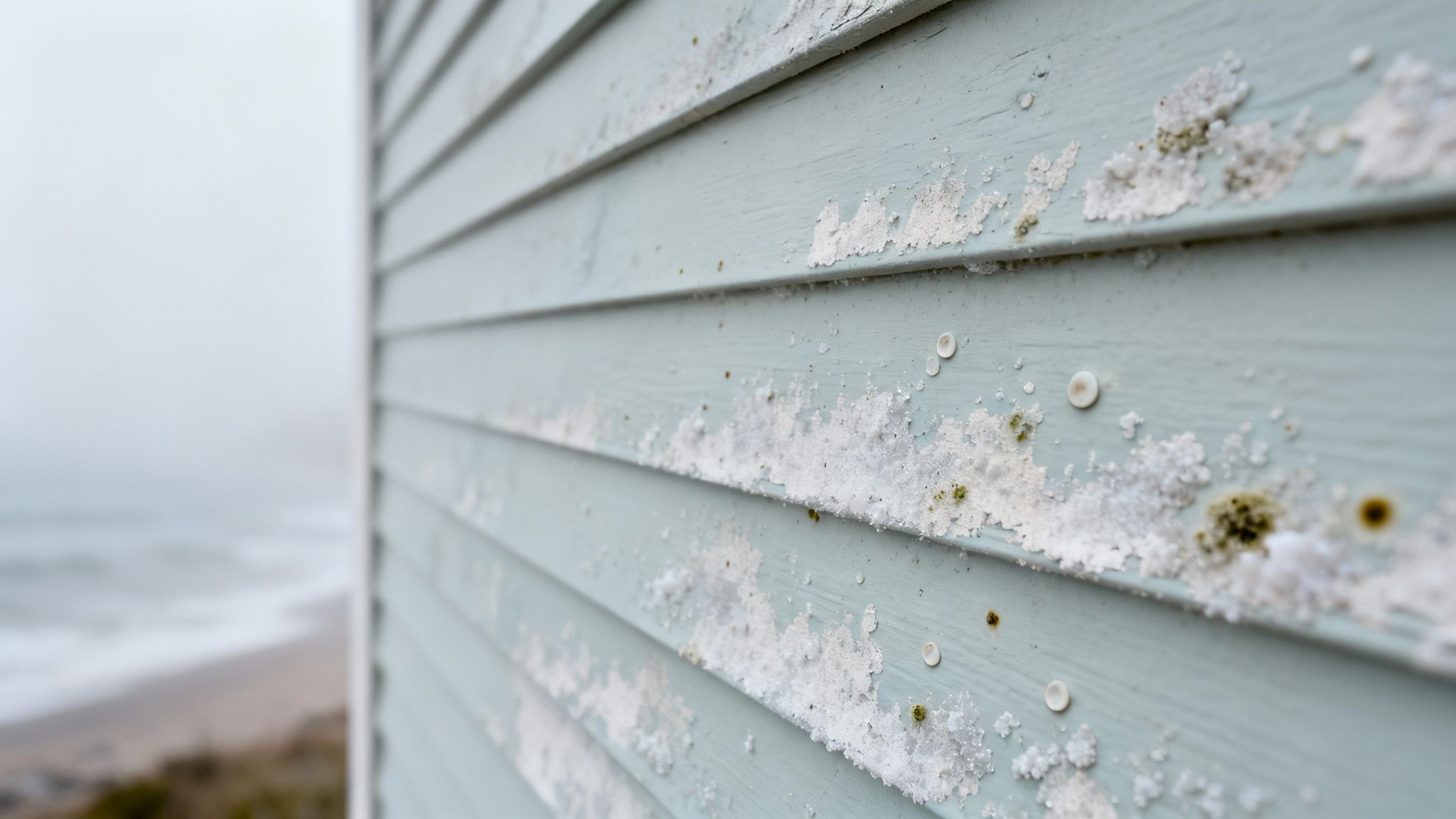
This is not a unique problem. It's helpful to see how other coastal climates impact home exteriors to get a bigger picture. But the mix of conditions in Monterey, Carmel, and Pacific Grove creates special challenges.
The Corrosive Power of Salt Air
Think of the salty air from Monterey Bay as a fine, invisible sandpaper. This salt-filled mist lands on siding, trim, and window frames. It slowly eats away at the paint’s surface. This constant action weakens the paint's bond, making it more likely to chip and peel early.
This process is most aggressive on homes right near the water. The salt crystals pull moisture from the paint, making it brittle and causing it to crack years sooner than it should.
Moisture and the Marine Layer
Our famous fog is more than just a pretty view. The marine layer is a damp blanket that keeps surfaces from fully drying out. This constant moisture is a perfect breeding ground for mold and mildew.
But the problem is deeper than just stains. This dampness gets into tiny cracks in your paint, leading to bigger issues:
- Bubbling and Blistering: When the sun heats up the siding, trapped moisture turns to gas. This gas pushes outward, creating bubbles on the paint's surface.
- Peeling: Once moisture gets behind the paint, it loses its grip. The paint will start to lift right off the surface, leaving the wood or siding exposed.
- Wood Rot: For homes with wood siding, trapped moisture is the main enemy. It is the primary cause of rot, which can lead to very expensive structural repairs.
Intense UV Radiation Damage
Even on foggy days, the sun’s ultraviolet (UV) rays are strong. UV radiation is a major cause of paint failure. It's especially bad on the south- and west-facing walls that get the most sun. It chemically breaks down the binders that hold the paint together.
UV exposure slowly burns your home's exterior. It fades vibrant colors to a dull, chalky finish. It also makes the paint brittle, leading to cracking.
This breakdown process is called chalking. If you run your hand over an older paint job, you might see a powdery film. That’s the paint literally falling apart. It’s a clear sign that the paint is no longer protecting your home. You can learn more about picking the right time by reading our guide on the best time to paint a house exterior.
Visual Signs It’s Time for New Paint
Knowing when to repaint in Monterey County is about reading the signs your home gives you. Your paint is like a shield. It tells you when it's getting weak. Catching these early warnings can save you from bigger repair bills later.
Ignoring these clues is like ignoring a check engine light. It might be a small thing now, but it's a sign of a bigger problem coming. A quick walk around your property is often all it takes to see if your paint is failing.
Cracking and Flaking Paint
A major red flag is cracking that looks like reptile skin, or paint that is flaking and peeling. When paint is lifting off the wall, it is no longer doing its job. In our damp climate, every crack is an open door for moisture to get into your siding.
This is very dangerous for the wood-sided homes in Pacific Grove and Carmel. Once water gets behind failed paint, it can cause wood rot. This is a serious problem that needs quick attention.
Bubbling or Blistering Surfaces
Have you noticed small bubbles forming on your exterior walls? This often happens on a sunny day after a foggy morning. It's caused when heat makes trapped moisture expand under the paint. It literally pushes the paint off the surface.
These blisters are a direct result of the wet-dry cycles we have in Monterey County. They may look small, but each bubble is a sign of future failure. Popping them won't fix the problem. The moisture issue must be solved before repainting. To learn more, check out our guide on what causes paint to bubble.
Don't treat paint bubbles as a small issue. They are a clear sign of moisture getting in. They show that your home's protective layer is failing from the inside out.
Chalky Residue and Fading Colors
Run your hand across a wall that gets a lot of sun. If a dusty, chalk-like powder comes off, you are seeing UV damage. This process, called chalking, happens when the sun's rays break down the paint binders. All that is left is loose pigment.
This is more than just faded color. Chalking means the paint is wearing away and can no longer protect your home. A once-bright house in Salinas now has a dull, dusty finish. Painting over a chalky surface without proper prep will fail because the new paint won't stick.
Spotting Mold or Mildew Growth
Do you see dark, splotchy stains in shaded, damp spots? That’s likely mold or mildew. Our coastal fog creates the perfect humid place for these fungi to grow. They grow especially on the north-facing sides of homes that get little sun. These growths not only look bad, but they also feed on the paint and trap moisture against your siding.
Cleaning is the first step. But if mold keeps coming back, it’s a sign the paint’s mildew-resistant additives have worn out. It's also important to know how to handle it, like addressing mold on vinyl siding. When you see this, your home’s exterior needs a fresh start to prevent more damage.
How Different Siding Materials Handle Coastal Weather
Not all siding is the same, especially against the weather in Monterey County. The material on your home’s exterior plays a big role in how often you need to repaint. Understanding how different surfaces react to salt, sun, and moisture helps you set a realistic maintenance plan.
Your home's siding is like a shield. But whether that shield is wood, stucco, or fiber cement changes how it weathers the storm. Each material has its own weaknesses in our local area.
Classic Wood Siding Vulnerabilities
Wood siding is common on charming homes in Pacific Grove and Monterey. It is also the most at risk from our coastal climate. Wood is porous, so it soaks up moisture from the foggy air. This makes it a target for rot, mildew, and peeling paint if not sealed well.
Wood also expands and contracts with changes in temperature and moisture. This puts stress on the paint, causing it to crack and flake. Because of this, a wood-sided home near the coast often needs a full repaint every 4 to 6 years to stay protected.
Here’s a quick look at the most common signs that your paint is failing.
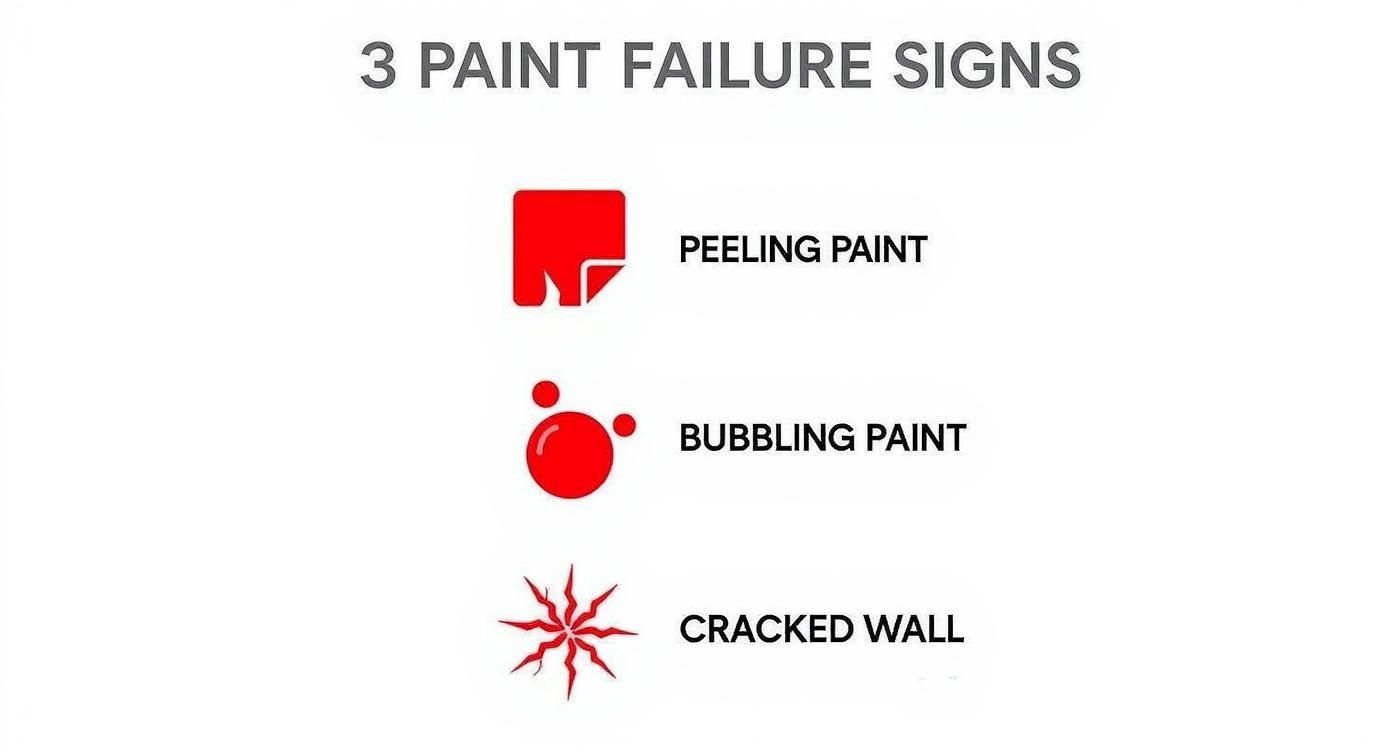
These visual signs are your home's way of asking for help before small issues become big problems.
Stucco and Modern Siding Performance
Stucco is a popular choice for homes from Salinas to Carmel. It holds up to moisture better than wood, but it’s not perfect. Over time, stucco can get hairline cracks. These cracks let the marine layer seep in and weaken the paint's bond.
If you have a stucco home, a paint job can last 5 to 6 years. This can be shorter if cracks are not sealed.
Fiber cement siding, like Hardie board, is a modern and tough option. It resists many of the problems that affect wood. Still, the paint on fiber cement is exposed to the same UV rays and salt air. This causes it to fade and chalk over time. A repaint is usually needed every 7 to 10 years.
Repaint Frequency by Home Exterior Material in Monterey County
| Exterior Material | Typical Lifespan (Coastal) | Typical Lifespan (Inland Salinas) | Common Failure Signs |
|---|---|---|---|
| Wood Siding | 4-6 years | 5-7 years | Peeling, cracking, rot, mildew |
| Stucco | 5-6 years | 7-9 years | Hairline cracks, bubbling, staining |
| Fiber Cement | 7-10 years | 10-12 years | Fading, chalking, chipping |
| Vinyl Siding | 10-15+ years (Factory Finish) | 10-15+ years (Factory Finish) | Fading, chalking, warping |
This table shows a general timeline. Your home's specific exposure to sun and fog will always be a factor. Our expert guide to weather-proof painting for Salinas and Seaside homes offers more detailed advice for local homeowners.
The Secret to a Long-Lasting Paint Job
A beautiful paint job is more than just a new color. The secret to a finish that lasts in Monterey County’s climate is the prep work. Professionals say that a lasting paint job is about 80% preparation.
This is the key first step. It's what separates a paint job that fails in a few years from one that protects your home for a decade or more. Without good prep, even the most expensive paint will peel, bubble, and crack.
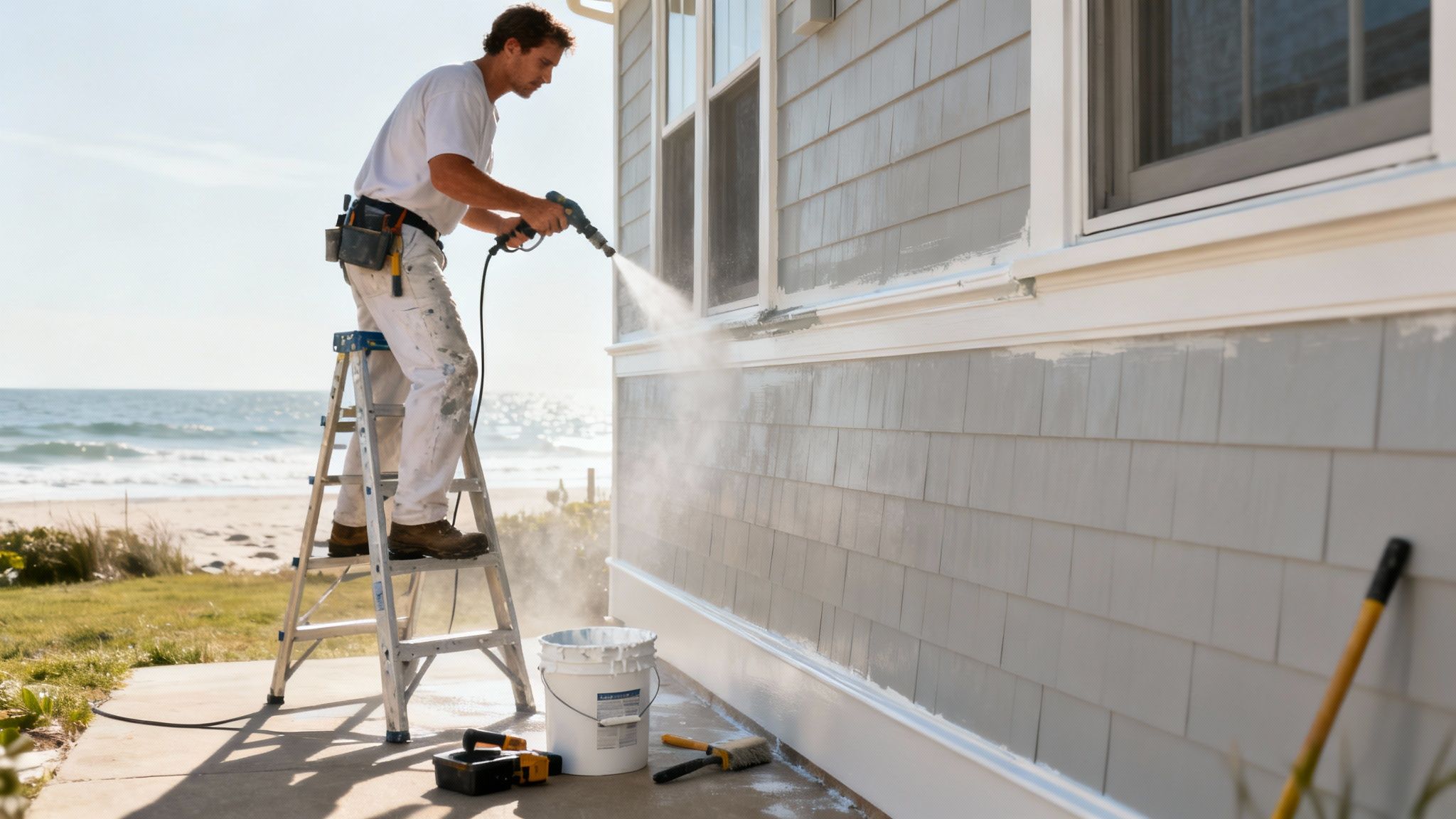
Why Good Prep Matters
The first step in any pro project is a deep clean. For homes in Carmel or Pacific Grove, this means power washing away salt, grime, and mildew. These prevent new paint from sticking properly.
After the surface is clean and dry, the real work starts. A pro will check every inch of your home for damage. This includes:
- Scraping: All loose or peeling paint must be scraped off to create a solid base.
- Sanding: Smoothing the edges of scraped areas is key for a seamless look.
- Priming: Applying a high-quality primer to bare wood or repaired spots is vital. It seals the surface and helps the topcoat stick securely.
This detailed prep work cannot be skipped. You can learn more in our guide on professional surface preparation for painting. Skipping these steps is a sure way to see bubbles and peeling return quickly.
Choosing the Right Paint
Once the surface is prepped, picking the right paint is the next big decision. In our climate, not all paints are the same. The type of paint you choose affects how often you will need to repaint.
For the best protection against our local salt, sun, and moisture, pros in our area use premium coatings.
Premium Acrylic Latex Paints: These paints are flexible, so they can expand and contract with temperature changes without cracking. They also resist fading from strong UV rays.
Elastomeric Coatings: This is like a thick, rubbery shield for your home. Elastomeric paint is great for stucco. It can bridge hairline cracks and create a waterproof barrier.
These high-quality products cost more at first. But they provide better protection that extends the life of your paint job. This saves you money in the long run by delaying the need for another full repaint.
Protect Your Investment with a Smart Painting Plan
Watching your home's paint fail is not a way to save money. It's an invitation for expensive repairs. In Monterey County, our coastal climate is always testing your home's defenses. A smart painting plan is one of the best investments you can make to protect your home.
When you let paint failure go, you allow moisture into your siding. That moisture can lead to wood rot and structural damage. What could have been a simple repaint can become a costly renovation.
Maintenance vs. Emergency Repairs
Thinking of your repaint schedule as a smart investment changes everything. By planning to repaint before major signs of failure appear, you are protecting your biggest asset. It’s the difference between regular maintenance and emergency repairs.
A smart painting plan is about preventing damage, not just reacting to it. Staying ahead of the weather protects your home and helps you avoid the high costs of neglect.
Hiring a professional painter is the final step. An expert knows our local conditions. They have the right tools and a careful prep process to make sure the paint job lasts as long as possible.
Build Your Home's Defense Plan Today
Not sure if your home's paint is still protecting it from the salt air? The best way to know for sure is to have a professional take a look.
Let the experts at Legacy Painting and Renovating Inc. give your home a no-obligation inspection. We serve Monterey, Carmel, Salinas, and Pacific Grove. We can help you figure out what's urgent, what can wait, and how to build a smart painting plan to protect your investment.
Frequently Asked Questions (FAQs)
Planning a home repaint brings up many questions, especially in a place with a unique climate like ours. Here are answers to some common questions from homeowners in Monterey County.
1. How often should I repaint my home's interior?
While this guide focuses on exteriors, your interior matters too. For interior painting in Monterey, plan on repainting living rooms and bedrooms every 5 to 10 years. High-traffic areas like kitchens and bathrooms may need a fresh coat every 3 to 4 years to keep them looking their best.
2. What is the best time of year to paint in Monterey County?
The best time for exterior painting here is when the weather is stable and dry. We recommend scheduling your project for late spring or early fall. These seasons usually offer mild temperatures without the heavy summer fog or intense heat. This allows the paint to cure properly for a durable finish.
3. Will repainting my home increase its value?
Yes. According to Zillow, homes with well-painted exteriors can sell for up to 2.9% more on average. A fresh, professional paint job is one of the best ways to boost your home’s curb appeal and market value. For a home in Pacific Grove or Carmel, that can be a great return on your investment.
4. Can I just touch up the bad spots instead of doing a full repaint?
For a small scuff, a quick touch-up can work for a short time. However, if you see widespread issues like chalky residue, cracking, or fading, it’s time for a full repaint. Touch-up paint rarely blends well with older, sun-faded paint. It also won't solve the underlying reasons why the paint is failing.
5. Why is professional surface preparation so important?
Think of it like building a house on a weak foundation. In painting, surface preparation is the foundation. Painting over dirt, salt spray, or old peeling paint means the new coat has nothing to stick to. Professional prep work ensures the new paint forms a strong bond that will protect your home for years.
Ready to create a smart painting plan that protects your biggest investment? Not sure if your exterior paint is still protecting your home? Let Legacy Painting and Renovating provide a no-obligation inspection anywhere in Monterey, Carmel, Salinas, or Pacific Grove.