
Getting a perfect paint match can feel like a magic trick—that seamless blend where a scuff mark used to be or where you've extended a beloved color onto a new wall. The good news is, it’s not magic; it’s a method you can absolutely master.
The secret is all in the preparation: getting a clean, honest sample, using the right technology, and testing the final color in your home’s unique lighting. This guide will walk you through the professional process for achieving a flawless finish on your next project.
Why Getting the Paint Match Right Is a Big Deal
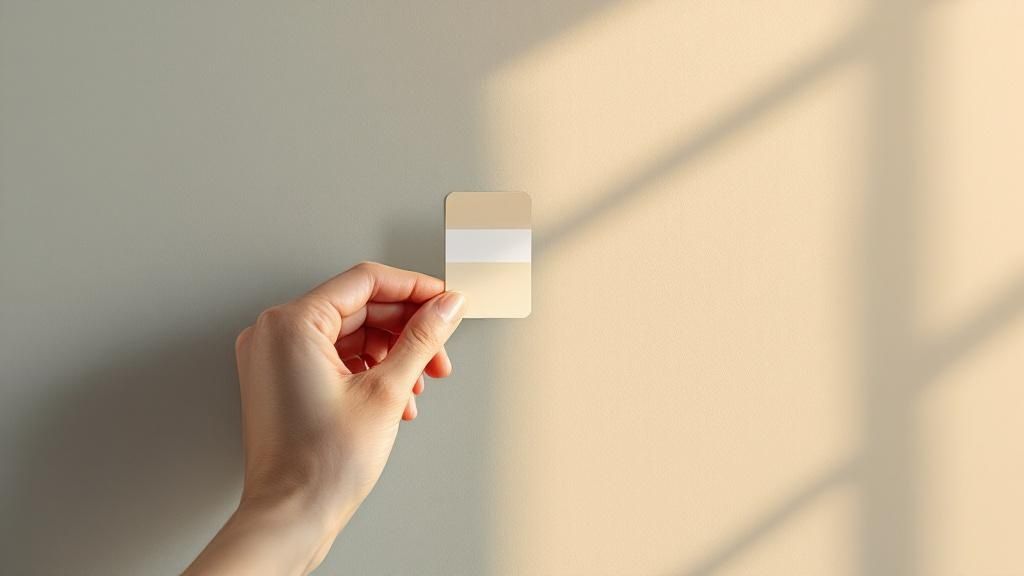
Learning how to match paint color perfectly is a crucial skill for maintaining your home's aesthetic and value. A perfect touch-up makes a wall look brand new, while a botched one draws the eye right to the mistake.
For homeowners in places like Salinas or Carmel, where homes have such distinct character, keeping that polished, cohesive look is everything. The goal is to make any repair or addition completely invisible. It's about paying attention to details like the paint's sheen and how the afternoon sun changes the color’s personality.
A mismatched patch sticks out like a sore thumb and can cheapen the feel of a room. But when you nail the color, it preserves that professionally finished look we all want in our homes.
The Secrets to a Flawless Match
So, how do the pros do it? It’s not by grabbing a paint chip at the store and hoping for the best. The color on your wall has been subtly changed by sunlight, time, and even the air itself.
To get a truly professional result, your game plan should include:
- A Solid Physical Sample: This is non-negotiable. You need a clean, one-inch square cut directly from the wall.
- High-Tech Color Analysis: Take that sample to a quality paint store and let them analyze it with a spectrophotometer for a precise formula.
- Real-World Testing: You must test the paint in your own home. The fluorescent lights of a hardware store tell you nothing about how a color will look in your Monterey living room.
- Sheen and Texture are Key: Color is only half the battle. If an eggshell finish is used next to a satin one, it will stick out no matter how perfect the color is.
By following these steps, you'll be matching paint like you've been doing it for years.
Finding Your True Wall Color
Before you can think about matching paint, you need to know exactly what color is living on your walls right now. If the original paint can is long gone, your first job is to play detective and get a good, clean physical sample.
The goal is a small, flat piece of the paint that’s currently on your wall. The best way to do this is by carefully cutting a small chip from an area that no one will ever see.
How to Get the Perfect Paint Sample
Think about the most discreet, out-of-the-way spots in your home. These are your goldmines for grabbing a sample without leaving an obvious patch.
- Inside a Closet: The back wall or a high corner is perfect.
- Behind a Light Switch Plate: Just unscrew the cover. You'll find a pristine section of wall paint you can safely trim a piece from.
- Behind a Piece of Furniture: If a heavy bookcase or media center has sat in one spot for years, the wall behind it is an ideal source.
Use a sharp utility knife to carefully score a one-inch square. Then, gently pry the chip off the wall, doing your best to keep it flat. This one-inch sample is the single most important tool for an accurate reading at the paint store.
Pro Tip: Never use a photo from your phone for a final match. The lighting in your room, your phone’s camera, and the screen calibration will all distort the color. A physical sample is the only way to get true precision.
The Impact of Time and Sunlight
Remember that the color on your wall has almost certainly changed since it was first rolled on. This is especially true for homes here in Monterey County, where the coastal sun can be surprisingly intense.
Over the years, sunlight gradually fades paint, and a subtle layer of life—dust and grime—can alter its appearance, too. You’re matching the paint to its current state, which is the aged, sun-kissed wall everyone sees. For a deeper look into this, our guide on expert paint color selection for your home has some great insights.
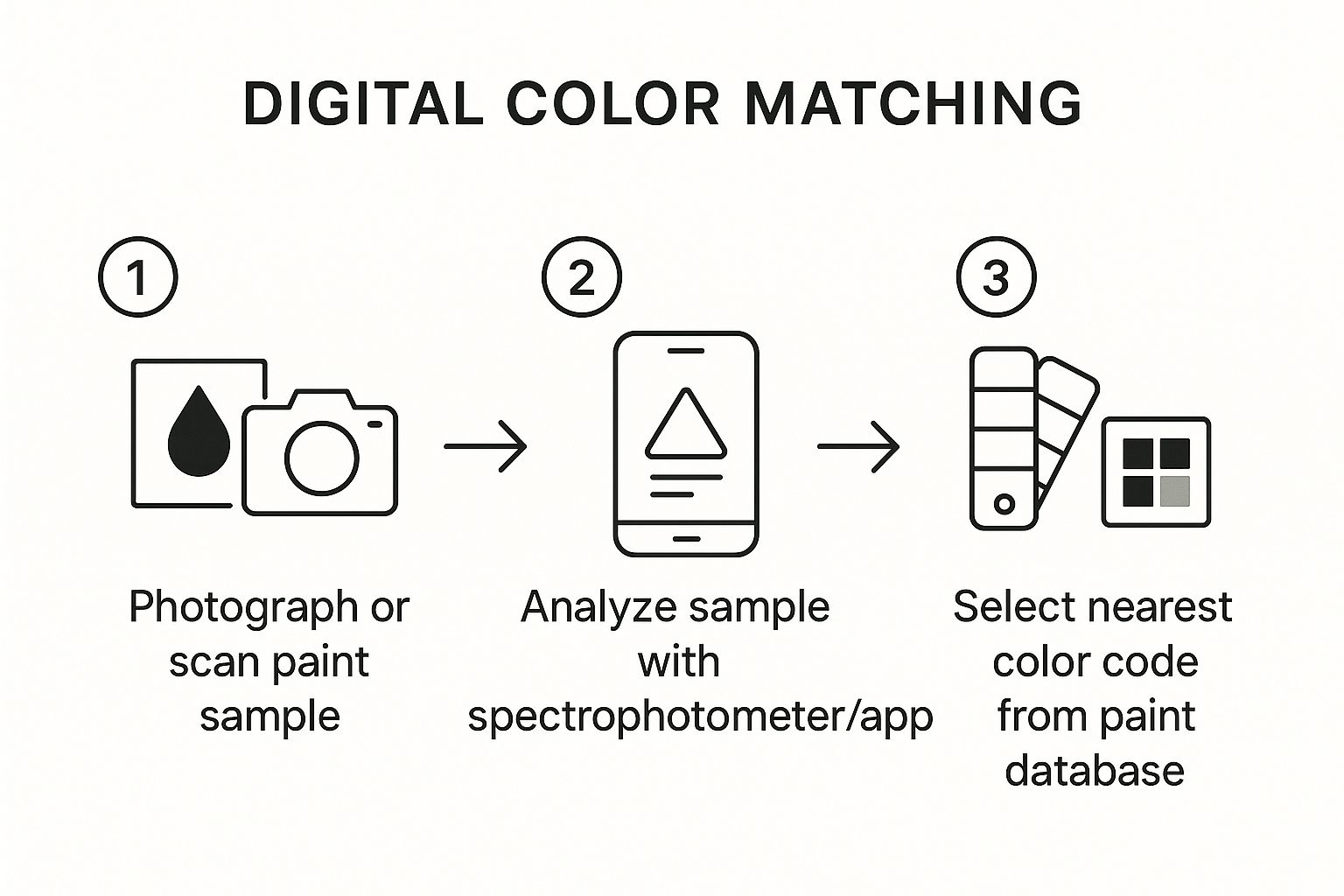
Ultimately, modern technology bridges the gap between your wall and a new can of paint. The store’s scanner analyzes your physical sample and creates a scientific formula, taking the guesswork out of the equation.
Getting a Perfect Color Match With Technology
Gone are the days of holding a paint chip up to a wall and hoping for the best. Modern tech has taken most of the frustrating guesswork out of matching paint. Once you have your physical sample, the next move is to use the powerful tools pros rely on for a precise, data-driven formula.
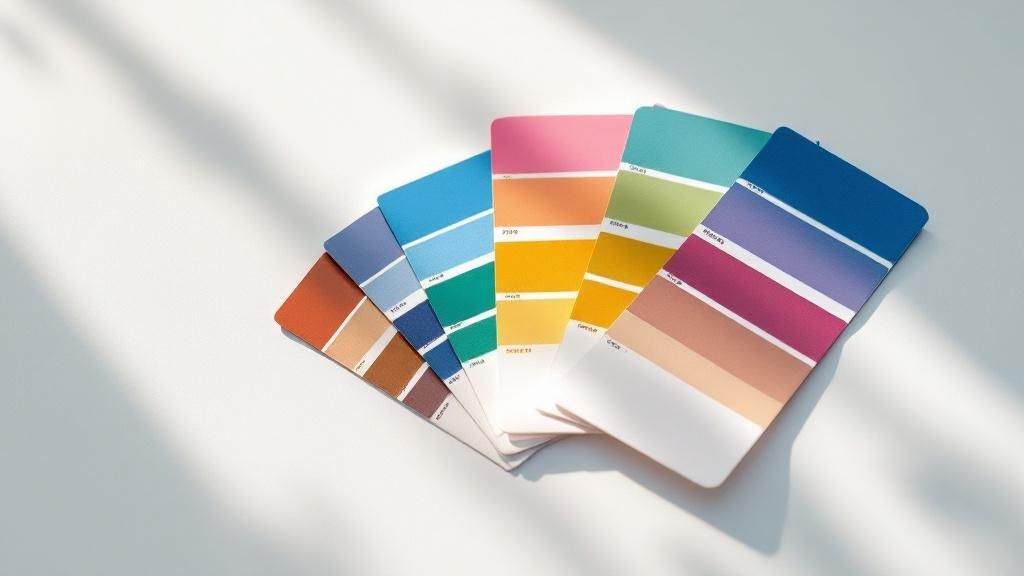
The hero of this story is the spectrophotometer. It’s the high-tech scanner you’ll find at any professional paint store. The store’s expert will place your clean, one-inch paint chip under this machine.
The device shines a controlled, pure beam of light onto your sample and measures the exact wavelength of color that reflects back, breaking it down into a unique digital formula. This scientific approach is, without a doubt, your best bet for getting a near-perfect starting point.
What About Mobile Paint-Matching Apps?
You’ve probably seen mobile apps like Sherwin-Williams' ColorSnap or Benjamin Moore's Color Portfolio. They’re slick tools for gathering inspiration or getting into the right color family.
However, for a seamless touch-up, these apps have serious limitations:
- Camera Quality: Your phone’s camera is not a scientific instrument calibrated for true color accuracy.
- Lighting Issues: The light in your home—from the bright sun in a Pacific Grove house to the soft, warm light in a Salinas living room—will change how the color appears on screen.
- Screen Distortion: Your phone's screen settings almost always distort the true shade you're trying to capture.
Use an app to get in the right ballpark, but always trust a physical sample scanned by a spectrophotometer for the final formula. The difference in precision is what separates a visible patch from an invisible, flawless repair.
Why Color Accuracy Is a Big Deal
The push for precise color replication is exploding. According to Reports and Data, the global market for color matching software was valued at USD 483.5 million in 2020 and is projected to grow significantly. This trend is driven by industries where brand color consistency is everything. You can review a complete market analysis on color matching technology to learn more.
This means the technology at your local Monterey paint store is more reliable than ever. Combining a high-quality physical sample with a professional digital scan gives you the best shot at achieving a perfect paint match.
The Importance of At-Home Sample Testing
You've got the paint formula from the store, mixed with their high-tech spectrophotometer. It feels like you've crossed the finish line, right? Not so fast. The most critical step is still ahead: testing that sample in your own home. This is the moment of truth that separates an okay patch job from a truly invisible repair.
A paint color can look completely different under the harsh, cool fluorescent lights of a hardware store compared to the warm, natural light in your home. Skipping this step almost always leads to a noticeable, slightly “off” finish. The goal is to see how the paint lives and breathes in your unique environment.
Creating an Effective Paint Sample
To properly test your match, you can't just slap a tiny dab of paint on the wall. You need to apply two full coats to let the color achieve its true depth.
There are a couple of great ways to do this:
- Paint a Large Swatch: Find an out-of-the-way spot on the wall and apply a generous swatch, at least 12×12 inches.
- Use a Movable Board: Paint a piece of white poster board or spare drywall. This is a fantastic trick because you can move the sample around the room to check it in different lighting.
No matter which method you choose, always paint your sample directly next to the original color. This side-by-side comparison is the only way to accurately judge the match.
Observe the Color in Changing Light
Once your sample is dry, the real work begins. A color's personality can change dramatically throughout the day. For those of us in coastal areas like Carmel and Pacific Grove, where light shifts from bright sun to misty afternoons, this step is non-negotiable.
Pay close attention to how the color looks at these key times:
- Bright Morning Light: This cooler light reveals the paint's truest undertones.
- Warm Afternoon Sun: Warmer light can make colors appear more yellow or golden.
- Artificial Lighting at Night: Your indoor lamps cast their own color temperature, drastically altering how the paint looks after dark.
This patient, methodical approach delivers a professional result. Of course, using top-tier products also makes a huge difference; you can read our insights on why investing in quality paint is essential for a long-lasting finish.
Matching Sheen and Texture for an Invisible Repair
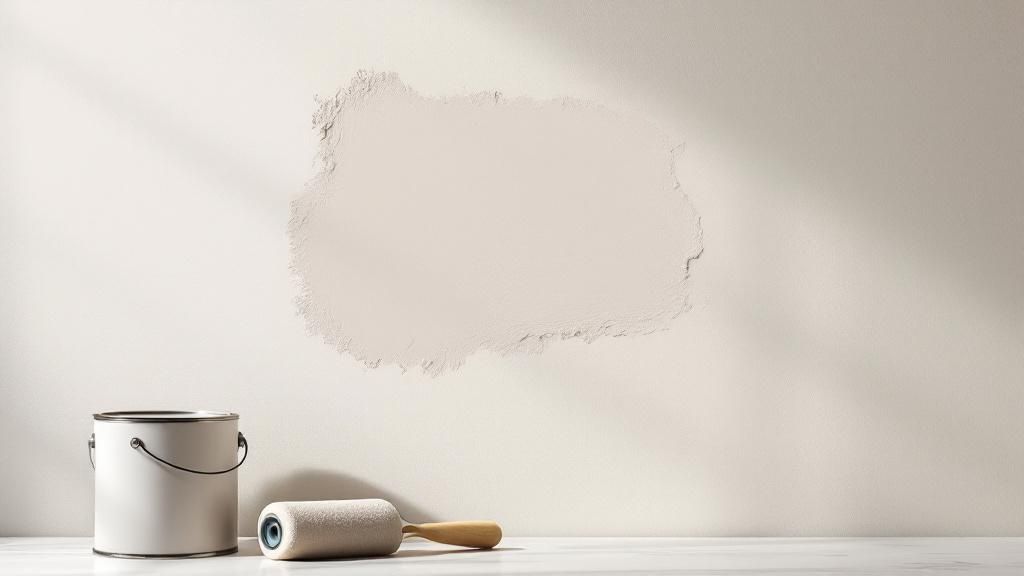
You’ve done everything right—got a clean sample, a high-tech scan, and tested the paint. Yet, when the touch-up dries, it still looks off. This common frustration almost always comes down to two overlooked details: sheen and texture.
Getting the color right is only half the battle. The paint’s finish, or sheen, is just as critical for a repair that truly disappears.
Why Sheen Is So Important
A touch-up with a satin finish on a flat wall will catch the light differently, creating a noticeable patch no matter how perfect the hue. A color can look lighter with a higher gloss or darker in a matte finish simply because of this reflection.
Most interior walls in homes today use an eggshell or satin finish, but you can’t just guess. Here are a few pro tips for identifying your current sheen:
- View it at an angle: Look at the wall from the side with a light source behind you. A matte finish will absorb light, while glossier sheens will have a noticeable shine.
- Feel the surface: Higher gloss paints often feel smoother and slicker to the touch.
- Clean a small spot: Gently wipe a hidden area with a damp cloth. Flat paints might leave a chalky residue, while satin or semi-gloss paints clean up without a fuss.
The most reliable way to guarantee a perfect sheen match is to find an old paint can. If that’s not an option, take a photo of the wall at an angle showing its shine and bring it to the paint store experts.
Don't Forget About Wall Texture
The texture of your wall also plays a huge role in how the final touch-up looks. A perfectly smooth wall reflects light evenly, but a textured surface like orange peel creates tiny shadows that can make a color appear slightly darker. This is especially true for the diverse architectural styles we see across Monterey County.
When touching up textured walls, using a roller with the same nap length is key to mimicking the original application. For a truly seamless repair, you’ll also want to feather the edges of your touch-up. This means blending the new paint into the old with light, wispy brushstrokes to soften the transition.
Matching sheen and texture requires the same attention to detail as matching the color itself—a principle we apply to all our projects, including complex jobs like residential exterior painting.
What to Do When Your Paint Color Doesn't Match
So you’ve done your homework, but when the test patch dries, it’s… off. It happens to the best of us, and it’s not a disaster. You don't have to start the whole process over.
First, understand why this happens. The paint on your wall has been altered by years of sunlight, especially in our bright Monterey homes. On top of that, tiny differences between paint batches can occur even when the formula is technically identical.
Fine-Tuning the Formula
If the color is close but not quite there, the solution is a trip back to the paint store. To get a great result, give the paint mixer specific, actionable feedback.
Think like a designer and use descriptive words to guide the adjustment:
- "This dried a little too gray; I think it needs more warmth."
- "It's just a shade too dark. Could we pull back the black pigment by about 25%?"
- "I'm seeing a green undertone that my wall doesn't have. It needs a bit more yellow."
Giving clear, detailed notes like this helps the expert make precise tweaks. It might take a second try, but that patience is better than living with a mismatched wall.
When a Perfect Touch-Up Is Out of Reach
Sometimes, a perfect match is simply impossible. In these cases, the best strategy is to paint the entire wall from corner to corner. This creates a clean, intentional look that’s infinitely better than a slightly-off patch distracting the eye.
This approach turns a frustrating problem into a beautiful design choice, almost like creating an accent wall. While it's more work, it guarantees a seamless, professional-looking finish that elevates the whole room. If you find yourself in this situation, getting a second opinion from trusted house painting contractors can give you the confidence to make the right call.
Frequently Asked Questions About Matching Paint
Even after you've got the basics down, a few questions always pop up when trying to get a perfect paint match. We get these all the time from homeowners around Salinas and Monterey, so let's clear up some common sticking points.
How big does my paint chip sample need to be?
For the paint store's color-matching machine (the spectrophotometer) to get an accurate read, bring a flat, clean sample that's at least one-inch by one-inch. Source it from a spot no one will see—think inside a closet or behind an outlet cover.
Are paint matching apps on my phone any good?
Mobile apps are fantastic for getting a general idea of a color or finding inspiration. However, for a seamless touch-up, you can't fully trust them. Your phone's camera, screen settings, and lighting all skew the color. For a match that truly disappears, a physical sample scanned at the paint store is the only way to get it right.
Why does my "perfect" match look wrong on the wall?
This classic problem almost always comes down to two culprits: sheen and light. A slight difference in the finish—touching up an eggshell wall with satin paint, for example—will reflect light differently and make the color look off. Plus, the fluorescent lights at the store are nothing like the warm, natural light in your home, which is why at-home testing is a step you can't skip.
What if the paint store can't get an exact match?
It happens. Sometimes, due to sun fading or other factors, a perfect patch isn't possible. The best move is to repaint that entire section of the wall from one corner to the other. This creates a clean, intentional look that is a thousand times better than a slightly-off square drawing attention to the repair.
Does the old paint on the wall affect the match?
Absolutely. Over the years, sunlight, grime, and age will subtly alter the original color. That’s why you're not matching the paint from the can you used five years ago; you're matching the color that's on your wall right now. This is precisely why cutting a fresh sample from the wall is the most critical step for a successful touch-up.
For more answers to common home improvement questions, feel free to check out the Legacy Painting & Renovating FAQs page.
Ready to get a flawless finish without all the guesswork and stress? Contact Legacy Painting and Renovating Inc. today for a free, no-obligation estimate on your next project. Let's bring your vision to life!