
Direct Answer: The decisions that surprise Monterey homeowners most during kitchen remodels involve cabinet choices, permit requirements, and how quickly cosmetic changes turn into structural ones.
Most homeowners in Monterey start planning a kitchen remodel thinking about finishes — countertops, cabinet colors, maybe new appliances. Then the project starts, and a completely different set of decisions shows up that nobody mentioned at the estimate stage.
Those surprises aren’t random. They follow predictable patterns, and they tend to hit hardest when homeowners haven’t been given the full picture upfront. In Monterey County, where older homes in neighborhoods like Del Rey Oaks, Salinas, and Pacific Grove often come with decades of layered finishes, older plumbing tie-ins, and unusual layout constraints, the surprises tend to come faster.
This article focuses on the specific decisions that consistently catch people off guard — not to alarm you, but so you can walk into a kitchen remodel with your eyes open.
The Cabinet Decision Is Bigger Than It Looks
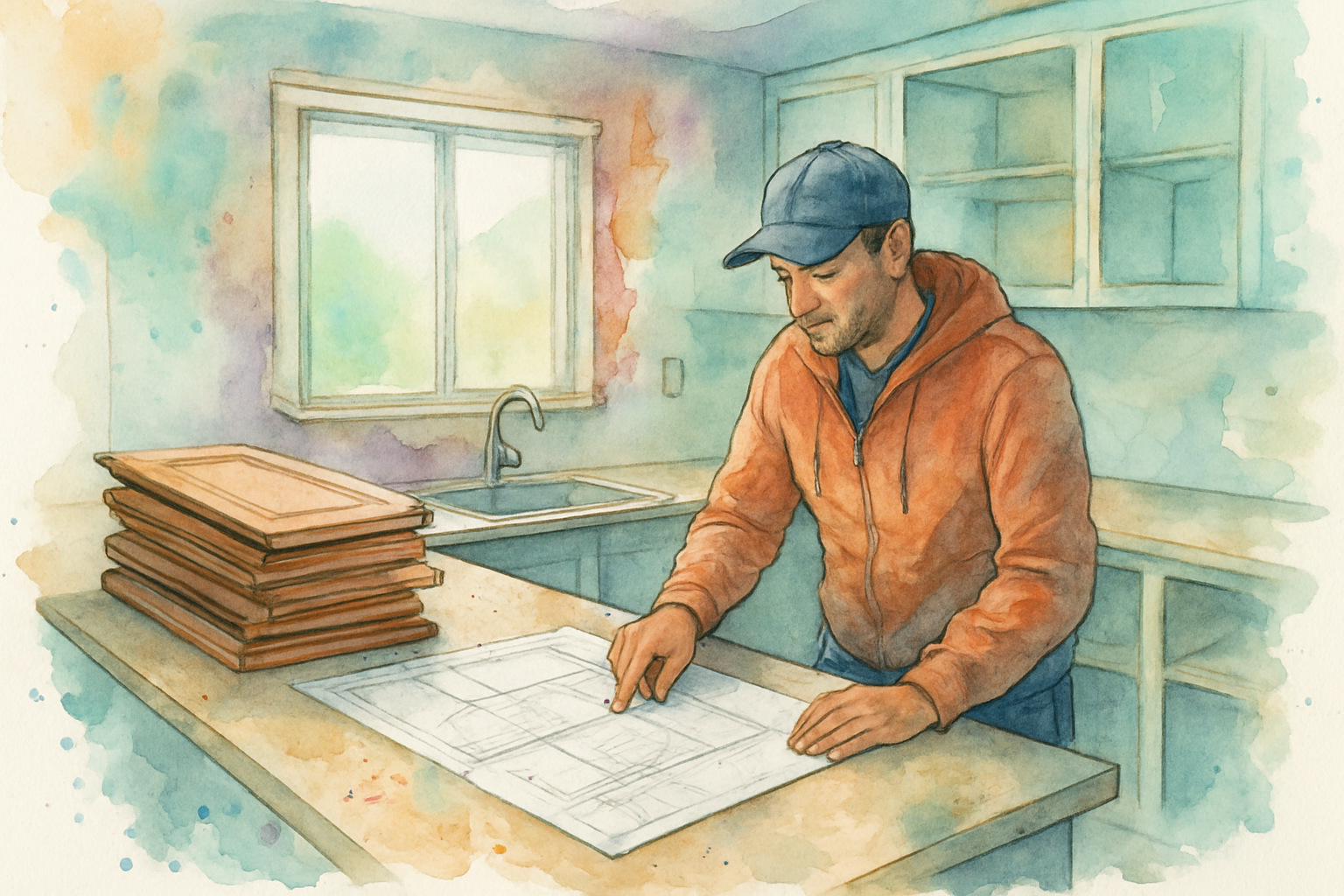
Cabinets are usually where the budget conversation gets complicated. Most homeowners arrive at the planning stage already thinking about replacement — new boxes, new doors, fresh layout. But once a contractor actually looks at what’s there, the conversation often shifts.
Older kitchen cabinets in Central Coast homes are frequently made from solid wood — not the particleboard you’d find in a builder-grade kitchen today. If the boxes are structurally sound and the layout still works for how you use the kitchen, replacing them means spending $8,000 to $20,000 or more on something you didn’t actually need to replace.
Cabinet painting and refinishing is an option many homeowners don’t fully evaluate until they’re already mid-project. A professional paint job on solid wood cabinets — done with proper surface prep, a primer coat, and a durable finish — can look completely new for a fraction of the cost. The decision hinges on a few things:
- Are the cabinet boxes still square and solid, or are they warped or delaminating?
- Does the layout work, or does the remodel require moving cabinet positions?
- Are the doors and drawer fronts in good enough shape to refinish, or are they damaged?
If the answer to the first two is yes, refinishing is almost always worth a serious look. If the layout needs to change, that’s when replacement makes more sense — not just for aesthetics, but because you’re already doing the structural work anyway.
For kitchens in mid-century Monterey homes, this decision alone can determine whether a remodel comes in at $15,000 or $40,000.
When a Cosmetic Project Becomes a Permit Project
This is the decision that catches homeowners most off guard, and it happens more often than people expect.
You want to move the sink to the island. Or take down a half-wall to open up the layout. Or add recessed lighting. Any one of those changes can trigger a permit requirement from the City of Monterey, the City of Salinas, or Monterey County depending on where you live and what’s involved.
The general rule in California: if a project involves structural changes, electrical work, or plumbing modifications, a permit is likely required. What surprises people is how quickly a kitchen remodel crosses those lines without feeling like a major renovation.
Moving a gas line to accommodate a range relocation? Permit. Adding a circuit for a new dishwasher? Permit. Removing a load-bearing wall to open the kitchen to the dining room? Definitely a permit, and likely engineer drawings.
The practical impact is twofold. First, permitted work takes longer — inspections need to be scheduled, and some phases can’t proceed until an inspector signs off. In Monterey County, inspection scheduling can run 1 to 2 weeks between stages depending on workload. Second, unpermitted work creates real problems at resale. Buyers’ agents in the Carmel and Pacific Grove market are trained to spot it, and lenders sometimes won’t close on homes with unpermitted improvements.
If you’re curious how this plays out in a bathroom context — where the permit questions are nearly identical — this piece on whether you need a permit to remodel a bathroom in Monterey covers the local process clearly.
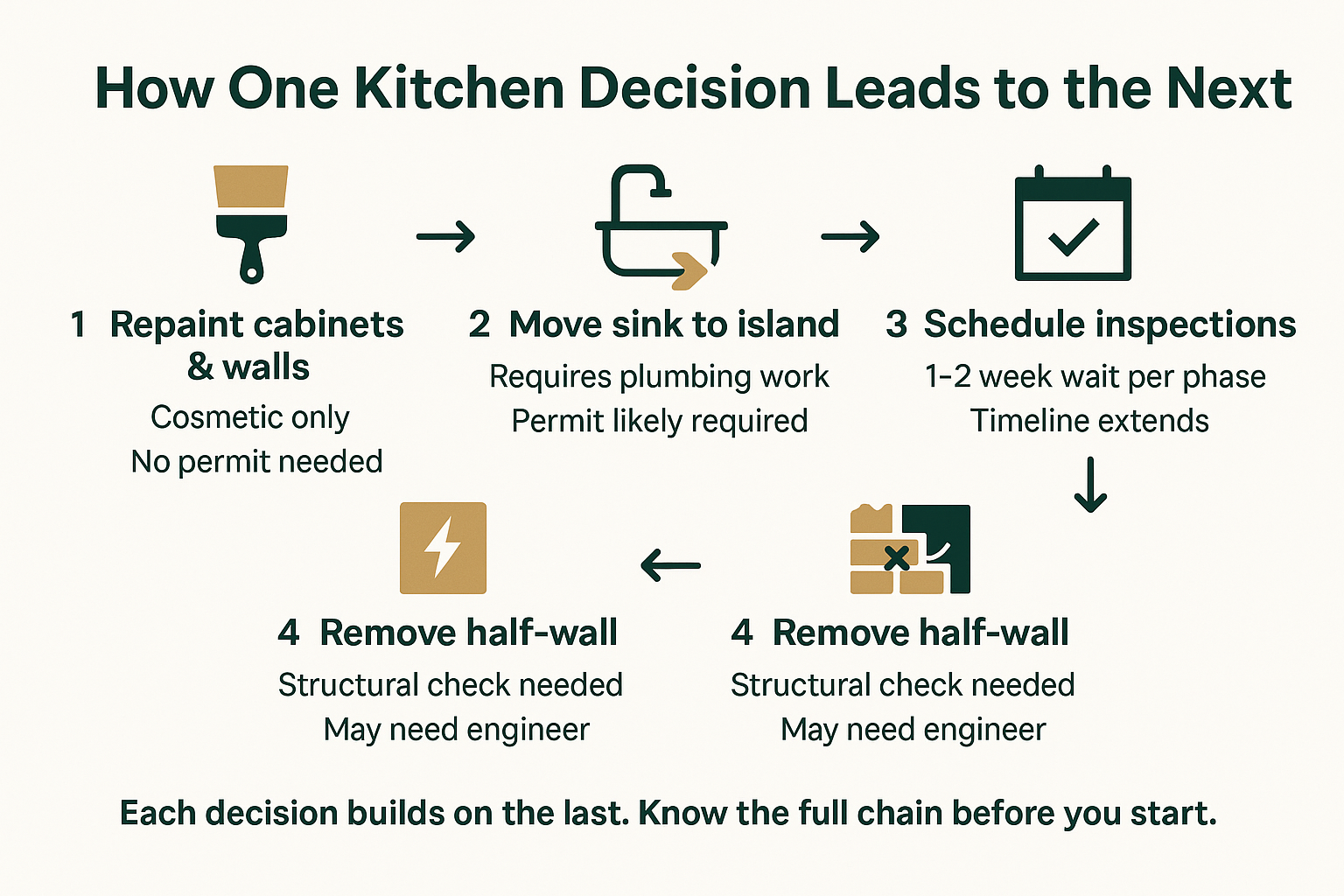
How Quickly a Kitchen Remodel Scope Can Grow
This shows how a single cosmetic decision can chain into structural, permit, and trade work — and why the final scope often looks different from the original plan.
The Finish Selection That Affects How Long Everything Lasts
Once the structural and permit decisions are made, homeowners arrive at the finish selections — and this is where a second wave of surprises shows up, usually in the form of regret after the fact.
Kitchens take more abuse than almost any other room in the house. Heat from cooking, steam, grease, cleaning chemicals — a finish that looks great in a showroom can fail quickly if it wasn’t chosen for that environment. This matters even more in Monterey County, where coastal humidity from the marine layer adds moisture stress that inland homes don’t have.
For painted cabinet surfaces specifically, the finish matters as much as the paint brand. A flat or eggshell finish may look softer and warmer, but it won’t hold up to daily wiping. A semi-gloss or satin is far more practical for cabinet faces and doors. If you’re sorting through those options, this breakdown of how to choose the best paint finish for kitchen cabinets is worth reading before you commit.
For countertop and tile selections, the coastal humidity angle is real. Certain stone finishes are more porous and require ongoing sealing. Grout choices in a kitchen with a foggy microclimate — especially in older homes without great ventilation — need to account for mold resistance. These aren’t reasons to avoid natural materials; they’re reasons to ask the right questions before you order.
A few things to confirm with your contractor before finishes are locked in:
- Is the paint or coating rated for high-humidity, high-traffic environments?
- Does any tile or stone selection require sealing, and how often?
- What does the manufacturer’s warranty cover, and does it apply in a coastal climate?
- Will the cabinet finish be sanded between coats, or is it a single-coat application?
Cabinet Refinish vs. Replacement: Quick Comparison for Monterey Kitchens
This comparison covers the main decision points homeowners face when evaluating whether to paint existing cabinets or replace them entirely.
| Factor | Refinish / Repaint | Full Replacement |
|---|---|---|
| Typical cost range | $2,500–$6,000 | $8,000–$25,000+ |
| Timeline | 3–7 days | 2–6 weeks |
| Layout change possible? | No — keeps existing positions | Yes — full flexibility |
| Works best when… | Boxes are solid, layout works | Layout needs to change or boxes are damaged |
| Permit required? | Typically no | Sometimes — depends on scope |
| Coastal durability | Depends on finish quality | Depends on material and finish quality |
| Impact at resale | Strong if done professionally | Strong — but higher upfront cost |
The Timeline Reality Nobody Talks About Upfront
The surprise that generates the most frustration isn’t the cost — it’s the timeline. Homeowners routinely underestimate how long a kitchen remodel takes, and contractors don’t always set clear expectations at the start.
A straightforward cosmetic kitchen update — new paint, refinished cabinets, hardware swap — can realistically be done in one to two weeks. But the moment you add any structural work, new appliances with delivery lead times, custom cabinetry, or permit-required trades, that number extends fast.
Custom cabinet orders in California can run 6 to 10 weeks for delivery alone. If the project schedule was built around an 8-week lead time and the order gets pushed, the whole project slides. In Monterey County, supply chain timelines from distributors in the San Jose or Bay Area corridor have been less predictable than they were pre-2020, and that hasn’t fully normalized.
The way to protect yourself is to have a sequenced project schedule in writing before work starts — one that shows which phases depend on which deliveries, where the permit hold points are, and what the plan is if a material gets delayed. If you want to understand what that schedule actually looks like phase by phase, this article on what happens during each phase of a kitchen remodel project breaks it down in plain terms.
And if you’re managing a larger scope that includes multiple rooms, the same planning discipline applies — this piece on how to make sure a full home remodel doesn’t turn into a nightmare covers the contractor coordination side of that.
Frequently Asked Questions About Kitchen Remodels in Monterey County
Do I need a permit to remodel my kitchen in Monterey?
It depends on what’s changing. Painting, new hardware, and cosmetic updates don’t require a permit. But if you’re moving plumbing, adding or relocating electrical circuits, or making any structural changes — like removing a wall — you almost certainly need one. The City of Monterey and Monterey County both require permits for those scopes, and the inspection process adds time to your schedule. Don’t skip it; unpermitted work causes real problems when you sell.
How long does a kitchen remodel actually take in a Monterey home?
A cosmetic-only remodel — paint, cabinet refinishing, new fixtures — can run 1 to 2 weeks. Add structural changes, permits, or custom cabinetry and you’re realistically looking at 6 to 12 weeks, sometimes longer if material delivery timelines get extended. Get a written project schedule before work starts so you know exactly where the holds are.
Is cabinet painting worth it, or should I just replace them?
If the cabinet boxes are structurally sound and the layout works for you, professional refinishing is almost always worth it. You can get a completely transformed look for a fraction of full replacement cost. The key word is professional — a poor paint job on cabinets looks worse than leaving them alone. Proper sanding, priming, and a durable topcoat make the difference between a finish that lasts and one that chips in six months.
What finish should I use on kitchen cabinets?
In a coastal climate like Monterey’s, you want something that wipes clean and resists moisture. Satin or semi-gloss finishes are the practical choice for cabinet faces and doors. Flat and eggshell finishes are harder to clean and don’t hold up to daily kitchen use. Ask your contractor specifically what product they’re using and whether it’s rated for high-humidity environments.
What’s the biggest mistake Monterey homeowners make when planning a kitchen remodel?
Starting with a fixed budget and a wish list — but no contingency. In older Central Coast homes especially, you often don’t know what’s behind the walls until demo day. A 10 to 15 percent contingency built into your budget from the start is the difference between a stressful project and a manageable one. Plan for surprises and you won’t be blindsided by them.
Ready to Talk Through Your Kitchen Project?
If you’re planning a kitchen remodel on the Monterey Peninsula and want to understand what the scope actually involves before committing to anything, Legacy Painting and Renovating offers free on-site estimates with a clear explanation of what’s included, what isn’t, and what decisions you’ll need to make along the way. Call (831) 917-0047 or reach out through the contact form at legacypaintingrenovating.com.