
Planning a kitchen remodel in Monterey, Salinas, or Carmel is an exciting thought, but let's be honest—the success of your project comes down to one thing: hiring the right contractor. This guide is your roadmap for finding the best local pros, moving beyond generic advice to give you the exact steps seasoned homeowners take to find reliable, high-quality kitchen remodeling contractors monterey.
Starting Your Monterey Kitchen Remodel

A kitchen renovation is one of the most impactful investments you can make in your home. It’s not just about boosting your property’s value; it’s about transforming the heart of your daily life.
Whether you’re envisioning the coastal charm of a Pacific Grove cottage or the rustic elegance of a Carmel Valley home, a well-done remodel should perfectly blend your personal style with smart functionality.
The Importance of the Right Partner
The path from a dream kitchen to a finished reality is paved with critical decisions, and the most important one is choosing a partner you can trust. This isn't just about finding someone with a truck and a toolbox.
You need a professional who understands local building codes, has a network of reliable suppliers in the Monterey Bay area, and can manage a project from start to finish without frustrating delays or communication breakdowns.
Laying The Groundwork For Success
Before searching for contractors, a little prep work goes a long way. A great project always begins with a clear vision and a solid understanding of what you want to achieve. This initial planning phase helps you communicate your needs clearly and ensures that every contractor you speak with is bidding on the exact same scope of work.
Here are a few key first steps:
- Define Your Style: Gather inspiration. Are you drawn to the modern luxury popular in Pebble Beach, or do you prefer a classic, nature-inspired look suited for a Big Sur retreat?
- List Your Must-Haves: Make a simple list of your non-negotiables. Is a larger island essential? What about soft-close drawers or specific appliances?
- Set a Preliminary Budget: Get a realistic idea of what you’re prepared to spend. This is crucial for guiding conversations and material selections later on.
By taking these proactive steps, you shift from being just a client to being an informed partner in your own renovation. This approach helps you sidestep common pitfalls like budget overruns and project delays.
Defining Your Project Scope and Budget
Before you search for the best kitchen remodeling contractors in Monterey, the most important work happens in your own home. A successful renovation starts with a crystal-clear vision and a realistic budget.
Getting this right from the beginning is the secret to avoiding headaches and getting accurate bids. Are you picturing a simple cosmetic update for your Salinas home, or a full-scale, wall-moving transformation for your Carmel retreat? The answer will completely change the timeline, complexity, and cost.
From Vague Ideas to a Concrete Plan
The first, most powerful thing you can do is separate your "must-haves" from your "nice-to-haves." This simple exercise is a game-changer for setting priorities and keeping your budget in check.
Your must-haves are the absolute non-negotiables, like creating an open-concept flow or adding more storage. Your nice-to-haves are the dream features you'd love if the numbers work out, such as a high-end wine fridge or custom cabinetry.
Pro Tip: We always tell clients to create a detailed list or a simple spreadsheet. This document becomes your project's command center—a brief you can hand to every potential contractor.
Setting a Realistic Monterey Kitchen Budget
Once your vision is planned, it's time to talk numbers. Budgeting for a kitchen remodel in Monterey County means looking beyond the price of appliances and getting real about local costs.
A typical minor kitchen remodel in the Monterey area can cost between $15,000 and $30,000. More extensive renovations involving layout changes, custom work, and high-end materials often exceed $45,000. Understanding these local cost variations is key.
Monterey Kitchen Remodel Budget Tiers
| Remodel Tier | Typical Scope of Work | Estimated Cost Range |
|---|---|---|
| Basic / Cosmetic | Cabinet repainting, new hardware, faucet/sink upgrade, new backsplash, updated lighting fixtures. | $15,000 – $30,000 |
| Mid-Range | Includes Basic tier plus: New semi-custom cabinets, quality quartz or granite countertops, new flooring, new appliances. | $30,000 – $55,000 |
| High-End / Custom | Includes Mid-Range tier plus: Full gut renovation, layout changes, custom cabinetry, high-end appliances, premium materials, plumbing/electrical relocation. | $55,000+ |
One of the most critical parts of any solid budget is the contingency fund. Seriously, do not skip this. You should always set aside an extra 15-20% of your total budget. This is a safety net for the unknowns that often pop up once walls are opened.
This prep work is the foundation for a renovation that you'll love for years to come. You’ll be ready to discuss our comprehensive kitchen remodel and renovation services with confidence.
How to Find and Research Potential Contractors
You’ve got your project plans mapped out and a budget that feels right. Now comes the most important part: finding the right kitchen remodeling contractors in Monterey to bring your vision to life.
Instead of getting lost in a Google search, build a focused, highly-vetted shortlist of 3-5 promising candidates. It’s all about quality, not quantity.
Tap Into Your Local Network
Before you search online, start with the people you already trust. Word-of-mouth is still king for a reason. Anyone in your circle—friends, family, neighbors, or colleagues in the Monterey Bay area—who has recently tackled a renovation is your best resource.
Ask specific questions: How was the communication? Did they stick to the timeline? How did they handle surprises? Beyond your immediate circle, think about other local professionals:
- Real Estate Agents: Agents in areas like Carmel and Pacific Grove have go-to lists of reliable contractors they trust.
- Building Suppliers: Folks at local lumber yards in Salinas or Monterey know which contractors are organized and professional.
- Interior Designers: Designers have a trusted network of contractors whose work meets their exacting standards.
This graphic gives you a solid overview of the journey you're about to embark on with your chosen contractor.
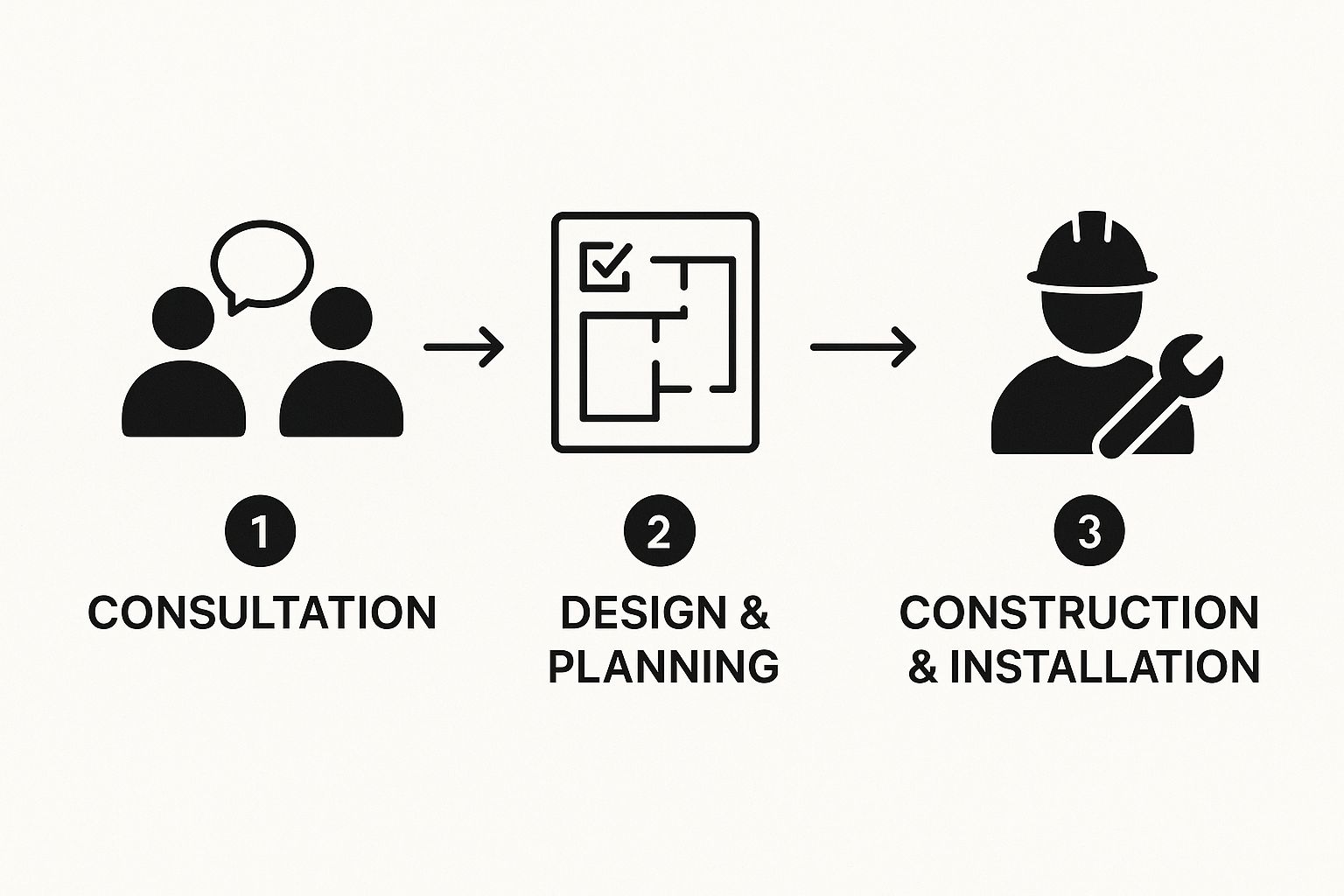
Knowing these stages helps set your expectations and makes the whole kitchen remodel feel much more manageable.
Vet Their Online Presence
Once you have recommendations, do some digital digging. A contractor’s online presence is their modern-day business card.
First, check their license. Every legitimate contractor must be licensed by the Contractors State License Board (CSLB). Use the CSLB website to verify their license is active and see if they have any complaints.
A strong portfolio should do more than just show off beautiful kitchens; it should show you their kind of beautiful kitchen. Look for projects that align with your home’s style, whether it’s a modern coastal vibe or classic Spanish Colonial.
Finally, read reviews on Google, Yelp, and Houzz. Look for patterns. Repeated complaints about poor communication or blown budgets are major red flags. Also, pay attention to how the contractor responds to negative feedback. A professional reply is a great sign.
The Vetting Process: What to Ask and Verify

You have a solid shortlist of potential kitchen remodeling contractors in Monterey. This is where you vet each one to separate the true professionals from the rest.
Think of this as your best defense against blown budgets, missed deadlines, and headaches. It’s how you find a team that values quality, craftsmanship, and clear communication.
The Non-Negotiables: License and Insurance
Before talking design, confirm these non-negotiables for any contractor in Monterey County:
- A Valid State License: Use the CSLB website to check their license number. Is it active and in good standing?
- General Liability Insurance: This protects your home from accidental damage. Ask for their certificate of insurance and verify it's current.
- Workers’ Compensation Insurance: This is huge. If a worker gets injured on your property and the contractor isn't covered, you could be liable.
Never skip these checks. Any professional contractor will have this documentation ready. If they balk, walk away.
Digging Deeper with Past Clients
Once you've confirmed the essentials, talk to their past clients. Don't just ask, "Were you happy with the work?" Dig deeper to understand the entire experience.
When you call a reference, try asking insightful questions:
- "How did the team handle unexpected problems or last-minute changes?"
- "Was the project completed on time? If not, how did they communicate delays?"
- "Did the final bill match the original quote?"
- "What was the job site like? Were they clean and organized daily?"
The answers will tell you far more about a contractor’s professionalism and reliability than a simple thumbs-up.
One of the biggest predictors of a successful project is consistent, proactive communication. Are they responsive? Do they answer your questions clearly? This early interaction is a preview of how they'll communicate once the project is underway.
Finally, have a frank conversation about money. Understand their pricing structure. A transparent contractor will break down their bid. A vague proposal is a red flag, often meaning "unexpected" costs will pop up later.
When your beautiful new kitchen is complete, remember the right paint job is the perfect finishing touch. Explore our expert services for interior residential painters in Monterey.
Comparing Bids and Finalizing the Contract
You have three or four detailed bids in hand. It's about so much more than grabbing the lowest number—a surprisingly low bid should set off alarm bells.
You're aiming for a true "apples-to-apples" comparison. A professional bid should be a detailed, multi-page document that breaks down every cost: materials, labor, permits, and subcontractor work.
A vague proposal is one of the biggest red flags in this business. If a contractor won't clearly itemize where your money is going, they’re leaving the door wide open for unexpected costs.
Decoding the Details in Each Proposal
As you review each proposal, get granular. Do all bids list the exact same model of refrigerator or grade of quartz countertops you discussed for your Carmel home? This detail ensures every contractor is bidding on the exact same project.
It’s also smart to have a feel for the local market. Costs can shift based on demand and material availability here on the peninsula. Regional data can help you see if the bids are realistic. You can explore these regional cost dynamics to get a better sense of the local market.
Key Elements of a Rock-Solid Contract
Once you've picked a contractor, there's one last crucial step: the contract. This document is your project's constitution and the single most important tool to protect your investment.
Never start a project without a signed contract that includes:
- A Detailed Scope of Work: The contract must spell out every single task and list all materials, brand names, and model numbers.
- A Clear Payment Schedule: Payments should be tied to project milestones, not random dates. California law also caps the down payment.
- A Project Timeline: Include a firm start date and an estimated completion date.
- The Change Order Process: Outline exactly how changes will be priced, approved in writing, and added to the schedule.
- Proof of Insurance and Licensing: The contract should list the contractor’s license number and confirm they carry liability and workers' compensation insurance.
Signing a comprehensive contract isn't about a lack of trust; it's about creating clarity and ensuring everyone is on the same page from day one.
Partnering for a Successful Kitchen Remodel

You’ve hired your contractor. Signing the contract isn’t the finish line—it’s the start of a critical partnership. The best remodels come from homeowners and contractors working together as a team.
The secret to a smooth project is clear and consistent communication. Set up a regular check-in, whether it's a weekly call, an email with progress photos, or a brief meeting on-site.
Your Role in Keeping the Project Moving
While your contractor manages the crew, you have an important role in preventing delays. Your active participation is vital.
Your contractor handles the how, but you’re still in charge of the what. This means you’ll need to:
- Make Decisions Without Delay: When asked to finalize tile, hardware, or paint color, a quick response is key. A day of indecision can cause a week-long delay.
- Be Available for Key Checkpoints: Your contractor may need you on-site for critical moments, like mapping out electrical outlets. Block out time for these milestones.
Remember, this is a collaborative effort. A good contractor will keep you informed, but an engaged homeowner helps create a positive, productive environment for everyone.
By working hand-in-hand with your home remodel contractor in Monterey, you're building a foundation for a less stressful renovation. This spirit will turn your vision for a kitchen in your Pacific Grove or Carmel home into a stunning reality.
Frequently Asked Questions About Kitchen Remodeling
Thinking about a kitchen remodel brings up a lot of questions. As experts who have worked on countless homes from Salinas to Carmel, we've heard them all. Here are straightforward answers to some of the most common ones.
1. How long does a kitchen remodel take in Monterey?
The honest answer is: it depends on the scope. A minor refresh—like cabinet painting and new hardware—can often be done in 2-4 weeks. For a full-gut renovation, you should plan for 8-12 weeks or more, factoring in permits, custom material lead times, and inspections.
2. Do I need a permit for my kitchen remodel?
Most likely, yes. If your project involves moving walls, changing the plumbing layout, or altering electrical wiring, a permit is almost always required by the city or county. A reputable contractor will handle this entire process for you, from application to final inspection.
3. What kitchen design trends are popular in coastal areas like Monterey and Carmel?
In coastal homes, we see trends that embrace our natural surroundings. This includes light, airy color palettes, natural wood accents (like open shelving), and durable quartz countertops that mimic stone. The biggest trend is maximizing natural light with large windows or skylights to connect the kitchen to the outdoors.
4. What is a "change order" and how does it work?
A change order is a written document that details any alteration to the original contract's scope of work. If you decide to add a feature or change a material mid-project, a change order will be created outlining the new work, the cost difference, and any impact on the timeline. It must be signed by both you and the contractor before the new work begins.
5. How can I save money on my kitchen remodel?
There are several ways to be budget-conscious without sacrificing quality. Consider refinishing or repainting existing cabinets instead of replacing them. Choose high-quality but standard-sized appliances and materials, as custom orders add significant cost. Finally, keeping your existing kitchen layout is the biggest money-saver, as it avoids expensive plumbing and electrical relocation.
Choosing the right partner is the first step toward the kitchen of your dreams. Our guide to home renovations by experts in Monterey offers more local insights.
Ready to transform your kitchen? Contact Legacy Painting & Renovating Inc. for a free, no-obligation estimate and partner with a team dedicated to quality craftsmanship in Monterey, Salinas, and beyond.