
Thinking about a home renovation is the fun part. Navigating the local renovation permit requirements, however, is the critical first step to getting the job done right and safely.
Here in Monterey County, from Salinas to Carmel, the general rule is straightforward. If your project changes your home’s structure, or its electrical, plumbing, or mechanical systems, you'll need a permit. Purely cosmetic updates like interior painting? You're likely in the clear.
Understanding your local permit needs is essential for a smooth, successful home renovation. This guide breaks down what you need to know about permit requirements in the Monterey area.
When Do You Need a Renovation Permit in Monterey County?
Knowing exactly when you need a permit is crucial for a successful project, whether you're in Salinas, Monterey, or Carmel. Think of it this way: if your project is only skin-deep, you probably don't need a permit.
This includes tasks like interior painting in Monterey, laying down new carpet, or swapping out a kitchen faucet without touching the plumbing lines behind the wall.
But the moment your project digs deeper, a permit becomes essential. It's not just red tape; it's a system designed to make sure all work meets current safety standards. This protects you, your family, and any future owners of your home.
Projects That Typically Require a Permit
Any job that tinkers with your home's core systems or structure will almost certainly need the county's green light. This ensures the work is safe, sound, and up to local codes.
Here’s a quick rundown of projects that will have you heading to the permit office:
- Structural Alterations: Moving or removing walls, cutting a new window or door, or doing any work that affects your home's foundation or roof structure.
- Plumbing Modifications: Planning to relocate a toilet, add a new sink, or reroute water lines for a bathroom remodel requires a plumbing permit.
- Electrical Work: Installing new outlets, running new lighting circuits, or upgrading your main electrical panel are all jobs that require a permit.
- Additions and Major Remodels: Any project that expands your home's footprint, like a new primary suite or a full kitchen gut-and-remodel, will definitely need a permit package.
To give you a clearer picture, here’s a quick guide to common projects and their permit needs.
Quick Guide to Common Renovation Permits in Monterey County
This table helps you quickly see whether your upcoming project is likely to need a permit.
| Project Type | Permit Typically Required? | Key Considerations |
|---|---|---|
| Interior Painting & Flooring | No | Cosmetic updates that don't alter the structure. |
| Kitchen/Bath Faucet Replacement | No | As long as you're not moving the plumbing lines. |
| Building a Deck | Yes | Especially if it's over 30 inches high or attached to the house. |
| Replacing Windows | Yes | If you're changing the size of the opening. |
| Moving an Interior Wall | Yes | This is a structural change, even if the wall isn't load-bearing. |
| Reroofing | Yes | A permit is required to ensure proper materials and installation. |
| Adding a Bathroom | Yes | Involves structural, electrical, and plumbing work. |
| New Electrical Outlets | Yes | Any new wiring or circuit work needs a permit. |
| Replacing a Water Heater | Yes | This requires a permit to ensure it's installed to safety codes. |
Remember, this is a general guide. It's always best to double-check with your local building department in Monterey, Salinas, or Carmel, as specific project details can change the requirements.
The secret to a smooth project is working with professionals who know what they're doing. A knowledgeable contractor understands local codes and can advise you on exactly what's possible within regulations.
Planning for Success
Proper planning is everything. Before picking up a sledgehammer, having a clear scope of work is what will help you figure out your permit needs.
A thorough plan, like the one we map out in our home renovation checklist, helps you organize every phase. This step saves time and prevents budget-busting surprises down the road.
Understanding Different Permit Types for Your Project

Getting your head around renovation permit requirements can feel overwhelming, mainly because not all permits are the same. A simple permit is like a single ticket, but a major renovation is more like an all-day pass.
This difference is critical. If you're giving a bedroom in Pacific Grove a cosmetic update, you probably won't need a permit. But a full-blown kitchen remodel in Monterey will require multiple permits to cover every part of the job.
Once you understand this breakdown, what once felt like a confusing roadblock becomes a straightforward checklist for your Salinas home renovation.
Building Permits for Structural Work
This is the main permit that acts as an umbrella for most major renovations. You'll need a building permit anytime you're changing your home's fundamental structure.
This covers obvious projects, like building an addition or taking out a load-bearing wall. But it also includes work you might not immediately think of, such as:
- Cutting a new opening for a window or door.
- Building a deck that sits more than 30 inches off the ground.
- Putting on a new roof.
- Making any adjustments to your home's foundation.
Basically, if the work affects your home's structural integrity, a building permit is a must. This ensures a professional has reviewed the plans and that the construction meets local safety codes in Carmel or elsewhere in the county.
Mechanical, Electrical, and Plumbing (MEP) Permits
While the building permit handles the bones of your house, you'll often need specialized "sub-permits" for systems running through the walls. We call these MEP permits.
Think of it this way: The building permit is for the car's body. MEP permits are for the engine and electronics. Each system is vital and needs its own stamp of approval to ensure it's safe.
A seemingly simple kitchen remodel will almost always require separate plumbing and electrical permits. You can learn more in our guide to kitchen remodeling in Monterey. These specialized permits are essential for ensuring everything is up to code.
Your Step-By-Step Guide to the Permit Application Process
The renovation permit requirements in Monterey County can feel like a maze, but it's simpler when you break it down into clear steps. Think of it like following a recipe: gather your ingredients, follow instructions, and give it time.
The real work starts long before you hand anything to the county. Finalize every project detail with your contractor. This clarity allows your team to create the detailed plans that building departments in Salinas, Carmel, or Pacific Grove demand.
Our work with full home remodel professionals has taught us that a well-defined plan is the key to a smooth permit process.
Preparing Your Application Package
With your plans locked in, it's time to gather all the required documents. This is where you need to be meticulous.
A typical application package will include:
- A Completed Permit Application Form: Make sure every single field is filled out correctly.
- Detailed Construction Plans: These are the architectural drawings that show exactly what you're building.
- A Site Plan: This map of your property shows where the work will happen in relation to your property lines.
- Engineering Calculations: For structural changes, these are almost certainly needed.
Think of this package as your project's resume. It must be professional, thorough, and easy for plan reviewers to understand.
This visual breaks down the core journey of applying for a permit.
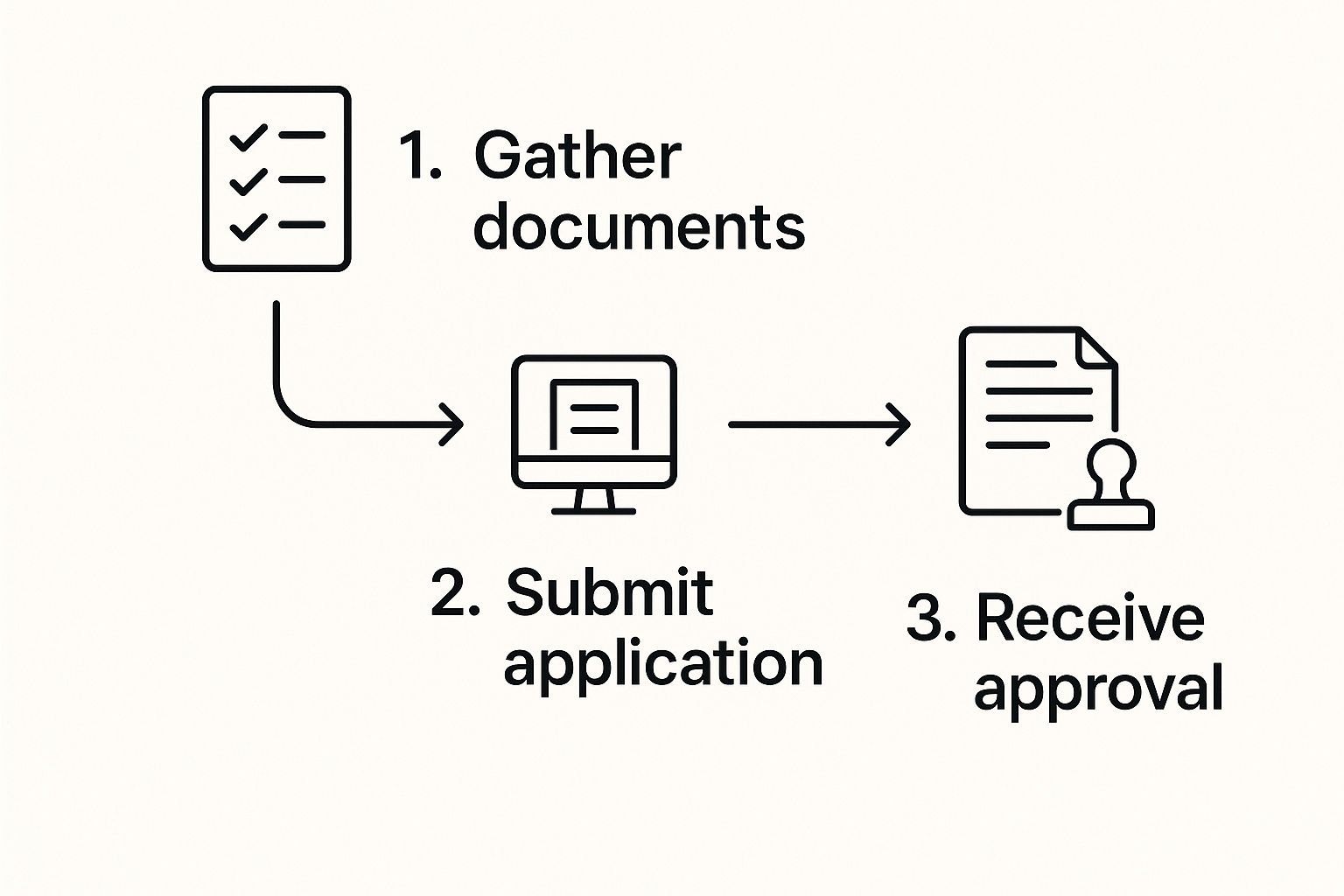
As you can see, it all flows from careful preparation to official submission and final approval. Getting that first step right makes all the difference.
Submission and Review
Once your application package is ready, you'll submit it to the right local office. After submission, your plans go into the review phase. This is where plan checkers comb through your documents to ensure everything lines up with local building codes.
This review stage can slow down. A 2023 report highlighted how much permitting delays can impact projects. You can learn more about the findings in this permitting study and see why efficiency is critical.
Working with an experienced local contractor is invaluable here. We know what reviewers are looking for and how to address feedback quickly, keeping your project moving.
Essential Documents for Your Renovation Permit Application

If there's one secret to getting a permit approved smoothly in Carmel or Pacific Grove, it’s having all your ducks in a row. A complete, accurate package of documents is the most effective way to prevent delays.
Think of your application paperwork as the instruction manual for your renovation. You're giving plan checkers a guide that helps them visualize your project and confirm its safety. This process ensures every part of your renovation meets strict local codes.
Your Core Documentation Checklist
While every project is different, most major renovations require a core set of documents. Having these ready is a non-negotiable step in meeting local renovation permit requirements.
Here’s what you’ll almost always need to gather:
- Construction Drawings: Professional blueprints that are detailed, drawn to scale, and clearly show the "before" and "after."
- Site Plan: A bird's-eye view map of your property showing your home, property lines, and the exact location of the work.
- Structural Calculations: An engineer's stamp of approval proving your plans are structurally sound and safe for any work on the bones of your house.
A well-prepared application sends a clear message to the building department: you and your contractor are professionals who respect the process. It builds instant trust and can pave the way for a faster review.
To help you get organized, here’s a quick-glance table of the most common documents.
Essential Documents for Your Permit Application
| Document Type | Purpose | When It's Usually Needed |
|---|---|---|
| Construction Drawings | Detailed architectural blueprints showing the "before" and "after." | Almost all interior and exterior renovation projects. |
| Site Plan | An overhead map of the property showing where the work will occur. | Additions, new structures (decks, sheds), and major exterior work. |
| Structural Calculations | Engineering proof that structural changes are safe and sound. | Removing or adding walls, adding a story, or changing the roofline. |
| Plumbing & Electrical Plans | Diagrams showing new pipe layouts or electrical circuits. | Kitchen/bath remodels, or projects involving significant rewiring or re-piping. |
| Title 24 Report | A report proving the project meets California's energy efficiency standards. | Projects involving new windows, insulation, or significant HVAC changes. |
| Soils Report | Analysis of the ground stability on your property. | New foundations, major additions, or projects in hillside or coastal zones. |
Keeping this checklist handy will ensure you don't overlook a critical piece of the puzzle.
When Specialized Documents Are Required
Beyond the basics, some projects need extra, specific paperwork based on scope or location.
For instance, a total bathroom gut and remodel will likely require detailed plumbing and electrical diagrams. Knowing what goes into a project like this helps you anticipate the paperwork; learn more about what the best bathroom renovation services include.
Similarly, projects in certain areas of Monterey County might need a soils report to check ground stability. Any renovation impacting energy use, like new windows, will require Title 24 compliance forms.
Navigating Permit Timelines and Costs
So, you’re ready to start your renovation. Two big questions are probably top of mind: "How long will this take?" and "How much will it cost?"
Getting a handle on the timelines and fees for renovation permit requirements is essential for smooth project planning in Monterey County. Think of it like planning a trip—you need to know the cost and timing before you pack.
The time to get a permit can vary. For a straightforward job in Salinas or Pacific Grove, you might get an over-the-counter permit the same day. For a more involved renovation, brace for a review process that takes four to eight weeks—or longer if changes are requested.
Understanding Permit Timelines
So, what makes the clock tick faster or slower? The number one reason for a delay is an incomplete or inaccurate application. One missing signature can send your application back to the beginning.
The building department's workload is another huge factor. According to a quarterly permit index from Shovels.ai, the first quarter of 2025 saw a 6.1% nationwide dip in new building permits tied to economic pressures. These national trends can influence local wait times right here in Monterey.
Expert Insight: The single best way to cut down your wait time is to submit a perfect application from the get-go. An experienced local contractor who knows the ins and outs of the Carmel and Monterey building departments is invaluable.
Breaking Down Permit Costs
Permit fees aren't one-size-fits-all. They’re calculated based on the size and value of your renovation.
Generally, the cost is figured out in one of two ways:
- Based on Project Valuation: Most common in Monterey County. Fees are a set percentage of your total project cost. For a $50,000 kitchen remodel, fees could be several hundred to over a thousand dollars.
- Based on Scope of Work: In some cases, fees are tied to specific items, like per new electrical circuit or plumbing fixture.
These fees cover the entire process, including plan review, administrative work, and all on-site inspections needed to close out your permit.
Common Permit Mistakes and How to Avoid Them
Even the most buttoned-up renovation plan can hit a wall because of a simple permit mistake. These common pitfalls can lead to hefty fines, stop-work orders, and even tearing out finished work.
Getting a handle on these slip-ups is the best way to ensure your Salinas or Monterey project keeps moving forward.
One of the biggest temptations is starting work before the permit is officially in hand. If an inspector finds unpermitted work, they can shut down the entire job site. This not only stalls your timeline but can also land you with fines that are often double the original permit fee.
Inaccurate Plans and Missed Inspections
Another major snag is submitting incomplete or incorrect plans. Your permit application is a promise to build according to current safety codes. If your drawings don't match the actual work, you’re set up to fail inspections.
That brings us to another critical error: skipping a required inspection. These are scheduled at key points, so an inspector can verify the work is up to code. If you miss one, you might have to tear open a finished wall.
Our guide to bathroom remodeling for Monterey homeowners dives into how vital these steps are, especially for more involved projects.
Proactive Tip: Always keep your approved plans and the official permit card posted somewhere obvious on the job site. This keeps your crew, contractors, and the building inspector all on the same page.
Frequently Asked Questions About Renovation Permits
Even after mapping out the process, it's natural to have a few more questions. Here are the answers to some of the most common things we get asked about permits in Monterey County.
Getting these details straight will help you move forward with confidence.
1. What happens if I renovate without a permit in Monterey County?
If county officials discover unpermitted work, they can issue a stop-work order, halting your project. You'll likely face fines, often double the original permit fee, and may be required to tear out the finished work. It also creates a huge red flag when you decide to sell your home.
2. Can my contractor handle the permit process for me?
Absolutely, and they should. A reputable contractor like Legacy Painting & Renovating Inc. will manage the entire permit process. It's a standard part of our service because we're familiar with the codes and submission quirks in Salinas, Carmel, and other local jurisdictions.
3. How long is a renovation permit valid?
In most parts of Monterey County, a building permit is typically valid for 180 days from the day it's issued. The permit stays active as long as you're making steady progress and passing required inspections. If your project pauses, you'll likely need to apply for an extension.
4. Does cosmetic work like interior painting require a permit?
Generally, no. Purely cosmetic updates don't require a permit. This includes projects like interior or exterior painting, installing new flooring, or replacing countertops (as long as you aren't moving plumbing). Permits are for work that alters your home's structure or systems.
5. How does a contractor help with the permit process?
Think of your contractor as your expert guide. We streamline the process by ensuring accuracy, managing paperwork, and communicating directly with the building department. This professional oversight helps prevent common mistakes and delays, getting your renovation started faster.
Ready to start your home renovation with a team that understands the local permit process inside and out? Contact Legacy Painting & Renovating Inc. today for a free, no-obligation estimate and let our Carmel commercial painters and home renovation experts handle the details.