
It’s a moment almost every homeowner goes through: you open a contractor's quote and get instant sticker shock. That number is almost always higher than you ballparked in your head, leaving you wondering about the real cost of doing business and why contractors charge what they do.
But a professional bid is so much more than a bucket of paint and a few days of work. It’s a promise of quality, reliability, and a finished project that will actually last. This guide breaks down exactly what goes into a professional quote, from labor and materials to the hidden costs that ensure a project is done right.
Why a Contractor's Bid Is More Than You Expect
Think of it this way: hiring a true professional is like booking an all-inclusive vacation. The price tag covers the flights, insurance, expert local guides, and all the logistics to make your trip seamless.
On the other hand, going with the cheapest option is like buying just the plane ticket. Sure, it gets you there, but you’re on your own for everything else—including any headaches that pop up along the way.
A professional’s bid folds in all the essential costs that truly protect your investment. These are the behind-the-scenes components that separate a legitimate, reputable business from a risky, low-ball alternative.
The Anatomy of a Professional Quote
Every project budget, whether it’s for a home renovation in Monterey or a commercial painting job in Salinas, is built on a solid foundation of direct and indirect costs. These figures are meticulously calculated to ensure the job gets done right the first time.
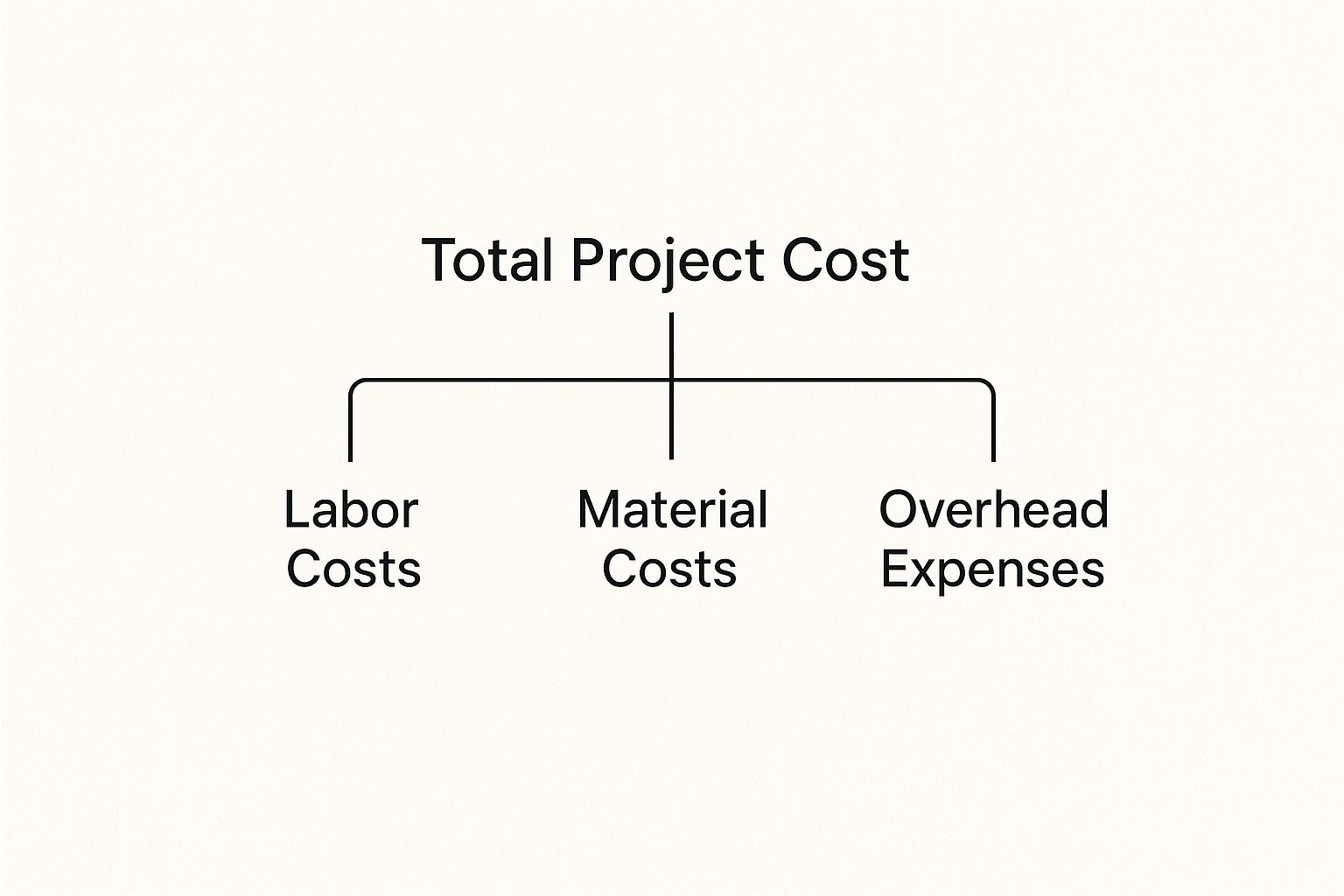
When you look at a bid, you're seeing a few key puzzle pieces come together:
- Labor Costs: This is much more than just an hourly wage. It includes payroll taxes, vital worker's compensation insurance, and the kind of benefits that attract and keep genuinely skilled craftspeople on the team.
- Material Costs: Pros don't just grab the cheapest stuff off the shelf. They source high-quality, durable materials and have to account for fluctuating market prices and supply chain reliability to make sure your project stays on track.
- Overhead Expenses: These are the "invisible" costs of running a real business. We're talking about things like general liability insurance, state licensing fees, professional-grade tools, and even the software used to manage your project efficiently.
The image below gives you a clear visual breakdown of how these core components add up to the final project cost.
Before we move on, let's quickly recap what goes into a legitimate contractor's bid. This table breaks down the core cost categories, helping you see where your money goes beyond just the obvious labor and materials.
A Quick Look Inside a Contractor's Bid
| Cost Category | What It Covers |
|---|---|
| Direct Costs | The "on-the-job" expenses. This includes the wages for the skilled crew working on your property and the high-quality materials (paint, lumber, fixtures) being installed. |
| Indirect Costs (Overhead) | The cost of running a stable, professional business. Think insurance, vehicle maintenance, office rent, tools, and project management software. These are non-negotiable for a legitimate company. |
| Profit Margin | This is what allows the business to stay healthy, invest in better equipment, train its team, and continue serving customers in the future. It’s not just "extra money"—it's the fuel for a sustainable business. |
As you can see, a contractor's price is a carefully balanced equation. It’s a mix of skilled labor, quality materials, and the necessary overhead that guarantees a smooth, protected, and high-quality project from start to finish.
Breaking Down the Direct Project Costs

Let's pull back the curtain on the two biggest line items you’ll see on any project quote: labor and materials. These are the costs you can physically see—the painters on site, the cans of paint, the new fixtures.
But what you’re paying for runs much deeper than just an hourly wage or the price on a sticker. Understanding these direct costs is the first step to seeing why a quality job costs what it does.
The True Cost of Quality Materials
When we talk about "materials," we're talking about a lot more than just some paint and primer. There’s a massive difference between the builder-grade stuff designed to look good for a walkthrough and the premium materials engineered to last for years.
A true professional working in Carmel or Pacific Grove knows that the coastal air is no joke. We have to select products specifically designed to stand up to the moisture and salt, ensuring you get a finish that lasts.
That slightly higher upfront cost for premium paint might seem like a lot, but it's what prevents you from dealing with premature fading, chipping, or having to repaint the whole thing again in just a few years. For a closer look at how this plays out, our guide on the average cost to paint a room breaks down how material quality directly shapes the price.
Plus, we're all at the mercy of the market. Global supply chain issues can cause the price of lumber or key paint ingredients to spike overnight, which can unfortunately delay projects and bump up costs.
Labor: More Than Just an Hourly Wage
When you see "labor" on a bid, you're not just paying for a person's time. You’re investing in expertise. The skilled work needed for a high-end renovation or a flawless paint job is a craft honed over years.
A professional crew brings a level of precision and efficiency that a handyman or a less-experienced worker simply can't replicate. Their expertise is what guarantees that surfaces are prepped correctly, materials are applied perfectly, and the job is done right the first time.
When you hire a reputable company, that labor cost covers:
- Training and Certification: We invest in ongoing education to keep our team sharp on the latest techniques and safety rules.
- Efficiency: An experienced team has a system. They work methodically to minimize the disruption to your life and get the project done on schedule.
- Problem-Solving Skills: What happens when we uncover hidden water damage or run into a tricky surface texture? A pro knows exactly how to handle it without cutting corners or compromising the final result.
At the end of the day, both labor and materials are an investment. They’re an investment in the long-term value, durability, and simple enjoyment of your home.
The Invisible Costs of a Professional Business
What’s happening behind the scenes is every bit as important as the work you see on your property. For any professional contractor, the real cost of doing business goes far beyond paint and labor. It includes a whole host of overhead expenses—the "invisible" costs that separate a legitimate, professional company from a side-gig handyman.
These are the non-negotiable investments that make sure your project runs smoothly, safely, and legally. Think of it like the foundation of a house; you don’t really see it, but without it, the whole structure would come crumbling down.
Protection for You and Your Property
One of the most critical invisible costs is insurance. A professional contractor carries multiple policies, not just to protect their business, but to protect you, the homeowner. This is a huge factor in why contractors charge what they do.
- General Liability Insurance: This is your shield against accidents. If a ladder slips and damages your property or even a neighbor's car, this insurance covers the repairs. Without it, you could be on the hook for those costs.
- Workers' Compensation: This policy is both legally required and ethically essential. It covers medical bills and lost wages if a crew member gets injured on your property, shielding you from devastating potential lawsuits.
An accident on your property could become a financial nightmare. A lower bid from an uninsured contractor isn’t a bargain—it's a massive gamble with your own assets.
The Tools and Technology for a Modern Business
Beyond insurance, a modern contractor has a ton of other operational expenses that are vital for delivering a high-quality service. This is true whether it’s a small residential job or a large-scale project where understanding the commercial painting cost requires factoring in these backend investments.
These ongoing costs include:
- Licensing and Bonds: Maintaining the proper state and local licenses for work in areas like Salinas and Monterey requires fees and ongoing education.
- Vehicles and Equipment: Company trucks, specialized tools, and safety gear all need fuel, regular maintenance, and eventual replacement. These things aren't cheap.
- Software and Systems: From project management and customer communication to accurate accounting, everything runs on professional software subscriptions that keep the business efficient.
"When you hire a professional, you're not just paying for their time on-site. A healthy portion of the project price supports the stability, reliability, and legal compliance that a well-run business provides."
Choosing a contractor who invests in these "invisible" costs means choosing a partner who is stable, accountable, and committed to protecting your investment from start to finish. It’s the difference between hiring a real business and just hiring a person with a truck.
How Market Forces and Common Challenges Shape Your Price

A contractor’s pricing doesn't exist in a vacuum. It’s directly plugged into the bigger economic picture and shaped by the day-to-day challenges of the industry. Just like your grocery bill creeps up with inflation, so do all the costs of running a professional renovation business in Salinas or Pacific Grove.
These market forces are often unpredictable and totally out of any single contractor's control. A contractor's final quote must account for both economic shifts and the common pain points that can impact a project's timeline and budget.
Global Trends Affecting Local Projects
It can be tough to connect the dots between a big international policy decision and your kitchen remodel, but the link is very real. Tariffs and global trade agreements can trigger sudden, sharp increases in the prices of imported materials like tile, light fixtures, or specialty wood.
For example, a new tariff could make a specific type of flooring 25% more expensive overnight. That cost gets passed down the entire supply chain and ultimately has to be reflected in the project bid for homeowners planning a full home remodel.
This is a huge part of the real cost of doing business. We're not just builders; we're constantly navigating a complex global marketplace to source the best materials for your Monterey Bay home.
The Real-World Headaches Contractors Face
Beyond market forces, contractors constantly deal with challenges that a professional quote is designed to mitigate. These issues highlight why a thorough, well-planned bid is crucial for a successful project:
- Managing Unrealistic Expectations: Clients often expect perfection, which is rarely attainable. A professional quote sets clear, realistic expectations from the start, detailing what is included and what isn't to prevent misunderstandings later.
- Scope Creep: This happens when a project grows beyond its original agreement, often due to small, undocumented requests from the client. As noted by Wrike, scope creep impacts projects and what causes it by causing cost overruns and delays. A detailed contract with a clear change order process is the best defense.
- Ineffective Bidding Processes: Disorganized bidding leads to miscalculations and lost profits. A reputable contractor invests time and resources into creating an accurate, comprehensive bid that covers all aspects of the job, ensuring no surprises for you or them.
These challenges show that a contractor's role is not just about physical labor; it's about expert project management.
Why a Fair Profit Margin Actually Protects You
Let's be honest, "profit" is probably the most misunderstood part of any contractor's quote. It's easy to see that number and think it's just extra cash going straight into the owner's pocket.
But the reality is, a healthy profit margin is the engine that keeps a professional, reliable business running. Ultimately, it’s what protects your investment in your home.
Think of it this way: profit isn't just about making money. It’s about having the financial stability to do the job right. A company with a fair margin can afford to reinvest in better equipment, provide ongoing training for its crew, and absorb the inevitable surprises a project throws at them without cutting corners.
The Danger Lurking in the Lowest Bid
The construction world is incredibly competitive, often leading to a "race to the bottom." Some companies will throw out ridiculously low bids just to win the work, forcing them to operate on razor-thin margins—or even at a loss.
This is a risky business model that can have serious fallout for homeowners when it comes to quality and safety. A contractor who isn't charging enough to be profitable today might not be in business to honor their warranty a year from now.
"Profit ensures longevity. When you pay for a fair profit margin, you're investing in a company’s ability to stand behind its work long after the final check is cashed."
A contractor's profit margin is a key indicator of their company's health and reliability. A business that prices its work to include a reasonable profit is a business that's planning for the future. For homeowners here in Salinas or Monterey, that means you're hiring a team that is stable, properly insured, and genuinely committed to its clients for the long haul.
At the end of the day, a fair price is a sign of a trustworthy partner. Understanding what goes into hiring interior wall painting contractors means recognizing that a sustainable business model is your best protection against shoddy work and future headaches.
Frequently Asked Questions About Contractor Costs
Let's tackle some of the most common questions homeowners have about how professional contractors figure out their pricing. Understanding the why can make the whole process much smoother.
1. Why do contractor quotes vary so much?
Quotes can vary widely based on the level of detail, quality of materials proposed, and the company's overhead. A lower bid might be from a contractor who is uninsured, using cheaper materials, or has misunderstood the scope of your project for an interior painting in Monterey job. Always compare bids based on value, not just the final price.
2. Is it okay to negotiate a contractor's price?
While you can discuss the budget, asking a reputable contractor to simply lower their price often means asking them to cut corners. A better approach is to ask, "Are there different material options we could use to meet my budget?" or "Could we phase the project?" This opens a collaborative conversation about achieving your goals within your budget without sacrificing quality.
3. What's the biggest red flag in a contractor's bid?
A bid that is significantly lower than others is a major red flag. This often indicates the contractor is uninsured, using subpar materials, or plans to add surprise charges later. Another red flag is a lack of detail—a professional bid should clearly itemize the scope of work, materials, and costs.
4. Why do some contractors charge for an estimate?
While we provide free estimates, some contractors charge for them on complex projects like a Salinas home renovation. This fee covers the extensive time required for design, material research, and detailed planning. Often, this fee is credited back to you if you hire them for the job.
5. Can I save money by buying the materials myself?
This usually ends up costing more time and money. Contractors often receive trade discounts and are experts at ordering the correct quantity of the right materials. If you supply them, you become responsible for any shortages, defects, or delays, which can bring the project to a halt.
For more answers, visit our Legacy Painting & Renovating FAQs page.
Ready to see what a professional, transparent bid looks like for your next project? The team at Legacy Painting and Renovating Inc. is here to provide a detailed, no-obligation estimate for your home in Monterey, Salinas, or the surrounding communities. Contact us today to get started.