
A home remodel timeline can run anywhere from 4 to 12+ months, and sometimes even longer. The biggest factors that will stretch or shrink that timeframe are your project's scope, local permit processing times, and material availability. Solid planning is the single best way to keep your project on track and avoid expensive surprises.
This guide breaks down a realistic home remodel timeline, from initial planning to final touches, helping homeowners in Salinas, Monterey, and Carmel understand each step. A well-managed timeline is the key to a successful, low-stress renovation.
What to Expect From Your Home Remodel Timeline
Starting a renovation is exciting, but it's crucial to understand the road ahead. A realistic home remodel timeline is your roadmap, turning a potentially chaotic process into manageable steps. Whether you’re overhauling a kitchen in Salinas or updating a bathroom in Carmel, knowing the order of operations helps you set practical expectations.
The process is broken down into four distinct phases: Planning, Prep & Demolition, Construction, and Finishing. Each stage has its own timeline and depends on the one before it. For an in-depth look, a detailed house construction timeline can provide a great sense of the big picture.
The visual below breaks down a standard project into three main stages, giving you a quick reference for a typical remodel.
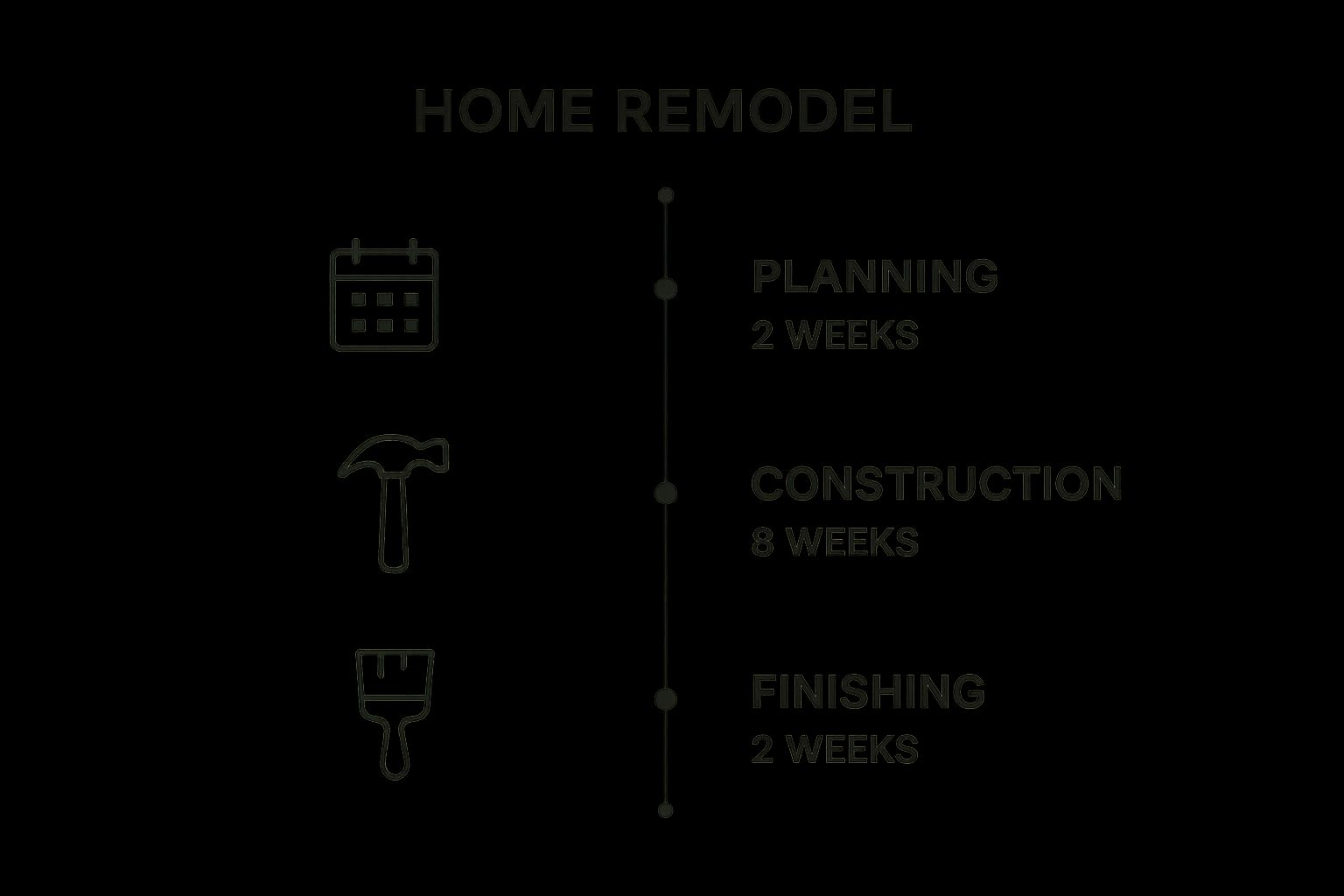
As you can see, actual construction takes the biggest chunk of time. However, don't overlook the planning and finishing stages—they're just as critical for a successful outcome.
Estimated Home Remodel Timeline by Project Scope
To give you a clearer idea of what to expect, here is a table outlining typical timeframes for different renovation projects. Keep in mind these are estimates; your project could be faster or take longer depending on the specifics of your Salinas home renovation.
| Project Type | Planning & Design Phase | Construction Phase | Total Estimated Time |
|---|---|---|---|
| Single Bathroom Remodel | 2 – 6 Weeks | 3 – 7 Weeks | 1 – 3 Months |
| Kitchen Remodel | 4 – 12 Weeks | 6 – 12 Weeks | 3 – 6 Months |
| Multi-Room Renovation | 6 – 16 Weeks | 12 – 20 Weeks | 4 – 9 Months |
| Full Home Remodel / Addition | 3 – 6 Months | 6 – 9+ Months | 9 – 15+ Months |
This table illustrates how planning and design are significant parts of the total time. In this guide, we'll walk through every step, giving you the confidence to tackle your next home project in Pacific Grove or Monterey.
Laying the Groundwork with Planning and Design

Think of this first phase as drawing a detailed map before a long road trip. This foundational stage of your home remodel timeline is where your vision takes shape, typically lasting from one to four months.
Here, you’ll define goals, lock in a budget, and assemble your professional team. It's also when you finalize every detail, from tile and countertops to paint colors and fixtures.
Making these decisions before demolition begins is the secret to avoiding delays and surprise costs. A solid plan ensures everyone, from your contractor in Salinas to your designer, is aligned. Our comprehensive home renovation checklist is a great tool to keep you organized.
Navigating Permits and Approvals
Securing building permits is one of the biggest wild cards in any renovation timeline. The process can create bottlenecks, especially for complex projects or homes in historically sensitive areas like Carmel or Pacific Grove. Requirements and wait times vary dramatically between municipalities in Monterey County.
Pro Tip: Your contractor's local experience is priceless here. An established professional who knows the local permit office can anticipate requirements and submit paperwork correctly, potentially saving you weeks or months.
This groundwork also includes handling associated costs. Understanding potential fees during planning is crucial. For reference, this guide on the UK cost of building regulations shows how important it is to budget for these administrative steps, even though the specifics are different locally.
Preparing for the Build with Demolition and Structural Work

With a solid plan, your project moves into demolition and structural work. This phase is where the physical transformation begins, lasting anywhere from two to six weeks. It’s all about creating a clean slate for your new space.
This isn’t just about swinging sledgehammers. It’s a carefully managed process involving moving walls, changing layouts, and sometimes rerouting major plumbing and electrical systems. The work done here sets the foundation for everything that follows.
Uncovering Hidden Surprises
This is where a renovation gets interesting. Especially in the beautiful, older homes common to Salinas and Monterey, you never know what’s behind the drywall. It’s not unusual to find outdated wiring, hidden water damage, or other structural issues.
This is exactly why a well-planned renovation accounts for the unknown. We always recommend building a 10–15% contingency fund into your budget and a time buffer into the schedule. It turns a potential panic into just another step in the process.
This foresight is what separates seasoned pros from the rest. Working with experienced full home remodel professionals means you have a team that anticipates these discoveries and can tackle them efficiently without derailing your project. Think of these finds as an opportunity to make your home safer and more structurally sound.
Bringing Your Vision to Life During Construction
This is where the magic really happens. The construction phase is the longest and most exciting part of your home remodel timeline, where planning becomes reality. Expect this stage to last from two to four months or more.
There’s a critical method to the madness. First, framing creates the new skeleton, followed by the "rough-in" for plumbing and electrical before walls are closed up. All new wiring must pass inspection before insulation and drywall can be installed.
The Construction Sequence and Key Milestones
Understanding the flow of construction helps you see progress, even when it feels chaotic. Most remodels follow a similar path:
- Framing and Structural Changes: The physical outline of your new space takes form.
- Rough-in Work: Plumbers, electricians, and HVAC pros run pipes, wiring, and ductwork. This step ends with crucial inspections to ensure everything is up to code.
- Insulation and Drywall: Once inspections pass, insulation goes in. Then, drywall is hung and finished, creating solid rooms.
Remodeling activity is on the rise. According to the National Association of Home Builders, the remodeling market is projected to see a 5% increase in 2025, increasing demand for skilled labor and materials. You can read more about the NAHB's remodeling forecast to understand the bigger picture.
The most valuable asset during this phase is clear and consistent communication with your contractor. Regular check-ins keep you in the loop and help tackle any unexpected issues together.
This is especially true for complex projects like a kitchen remodel, where many tradespeople must coordinate perfectly. To see this in action, view the work of our kitchen remodeling contractors in Monterey.
Adding The Final Touches And Finishes

This is the final sprint where your house truly becomes a home. The finishing phase, usually taking one to two months, is where all the hard work comes together. It's more about delicate details than sledgehammers.
There’s a specific order to this stage. After walls are primed and receive their final coat of paint—like that from professional Carmel commercial painters—new flooring goes down. Next, we bring in cabinetry and countertops, followed by plumbing fixtures. Finally, electricians install lights and outlets. To see this sequence, our guide to upgrade your bathroom remodel breaks it down perfectly.
The Art Of The Punch List
As we near the finish line, it’s time for a "punch list." This is a final, detailed checklist of every minor touch-up or fix needed before the job is 100% complete.
A punch list isn't about finding fault; it's a collaborative tool to ensure absolute satisfaction. It’s your final chance to walk through with your contractor and confirm every detail meets your expectations.
This last leg is where an experienced project manager shines. A skilled contractor in Carmel or Pacific Grove is a master at coordinating trades—painters, tilers, electricians—to ensure they work seamlessly. This careful oversight guarantees a polished, high-quality result.
How To Handle Common Remodeling Delays
Even the best home remodel timeline can hit snags. The key is to stay flexible and know what issues can arise, so you can work with your contractor on solutions.
Most delays boil down to three things: material backorders, subcontractor scheduling, and change orders. That one-of-a-kind tile might be on backorder, or a plumber's schedule shift creates a domino effect. Smart planning and clash detection and coordination during the design phase can help spot problems before they happen on-site.
Navigating Scheduling and Supply Chains
The best way to deal with these challenges is to plan for them. Building a 2–4 week buffer into your timeline from the beginning is the smartest move you can make. This gives your team crucial breathing room when the unexpected occurs.
It's also important to remember the bigger picture. A tight labor market can stretch timelines for even the best contractors.
Key Takeaway: Consistent, open communication is your best tool. A great contractor in the Monterey area will keep you posted on any hiccups, explain what’s happening, and lay out clear options to keep the project moving forward.
Choosing a team that’s a master at managing the chaos is everything. For more insight, browse the answers on our Legacy Painting & Renovating FAQs page.
Frequently Asked Questions (FAQs)
Here are answers to some of the most common questions we hear about managing a home remodel timeline.
1. How can I keep my remodel on schedule?
The best way to prevent delays is to finalize all design choices, material orders, and finish selections before work begins. Avoid change orders once construction starts, as even small tweaks can cause a domino effect of delays. Hiring a trusted general contractor streamlines communication and scheduling.
2. What is the biggest cause of renovation delays?
In our experience, unexpected material backorders and last-minute homeowner changes are the top culprits. Supply chain issues can halt a project for weeks. Similarly, changing your mind mid-stream often means reordering materials and rescheduling labor, pushing back your completion date.
3. Does the time of year impact my remodel timeline?
Yes, the season matters. Exterior work like an addition or getting a quote for interior painting in Monterey is best scheduled for the dry season to avoid weather delays. Contractors in the Monterey Bay area are busiest during summer and before the holidays, so scheduling for late winter or early spring can sometimes lead to a smoother timeline.
4. How much time should I budget for permits?
Permit approval times vary widely depending on project complexity and your city. A simple permit might take a few weeks, but a major structural remodel in Carmel could take several months. An experienced local contractor can navigate this process much more efficiently.
5. Should I move out during the renovation?
For a large-scale project like a full kitchen gut or whole-house remodel, we strongly recommend it. Living through the constant dust, noise, and crew traffic is stressful and can be a safety issue. An empty home also allows crews to work more efficiently, which can shorten your overall home remodel timeline.
Ready to start your renovation with a team you can trust to deliver on time and on budget? Contact Legacy Painting & Renovating Inc. today for a free, no-obligation estimate for your project in Salinas, Monterey, or anywhere in between.