
Living on the Central Coast is a dream. But that dream can become a maintenance nightmare if your home isn’t properly protected. A standard paint job that lasts a decade inland can fail in just a few years here in Salinas and Seaside. Why? The things we love about this area—the salt air, marine fog, and intense sun—are brutal on a home’s exterior.
This isn’t just about looks. It’s about protecting your biggest investment.
Why Coastal Homes Need a Smarter Painting Strategy
Living in Monterey, Carmel, or Pacific Grove comes with unique challenges for your home’s exterior. That salty breeze and morning mist are constantly attacking your paint. Unlike homes just a few miles inland, our coastal properties are in a non-stop battle with a harsh environment.
Think of your home’s paint as its first line of defense. When that shield is weak, moisture, salt, and sun can damage the wood, stucco, or siding underneath. A generic approach to painting simply won’t work here.
The Big Three Culprits of Coastal Paint Failure
Homes along the Monterey Bay face a triple threat. This trio breaks down paint much faster than usual. Understanding these local challenges is the first step toward a paint job that actually lasts.
- Corrosive Salt Air: Tiny salt particles in the sea breeze land on your home. Salt attracts moisture, and together they eat away at the paint. This leads to a chalky look, peeling, and blistering.
- Persistent Marine Fog: The frequent fog in Seaside and Pacific Grove means surfaces rarely dry completely. This constant moisture can get behind the paint, causing it to bubble and peel.
- Intense UV Exposure: Our sunny days are beautiful, but the sun’s UV rays are powerful. They break down paint pigments, causing colors to fade and the paint to become brittle. You’ll often see this on the south and west-facing walls of a home first.
Here’s a quick look at how these elements damage a typical paint job.
How Coastal Weather Damages Standard Paint
This table shows how Salinas and Monterey Bay weather harms typical exterior paint.
| Coastal Element | Impact on Paint | Visible Sign of Damage |
|---|---|---|
| Salt Air | Chemically breaks down paint binders. | Chalky residue, premature fading, blistering. |
| Marine Fog/Humidity | Traps moisture under the paint film. | Bubbling, peeling, mildew, or algae growth. |
| UV Radiation | Degrades paint pigments and resins. | Faded or dull colors, cracking, and brittleness. |
When you put these forces together, the results are clear: a paint job that doesn’t last.
These combined forces mean a standard paint job has a much shorter life here. Paint in coastal zones may only last 4–6 years before needing attention. The same paint inland can easily last up to 10 years. You can find more insights on how coastal weather impacts paint from industry experts.
Your home’s exterior paint is more than just color; it’s a vital protective coating. In the Monterey Bay area, choosing the right strategy is an investment in your property’s resilience and value.
This constant environmental stress makes a specialized, weather-proof approach a necessity, not a luxury. It’s the only way to keep your home beautiful and protected.
Selecting the Right Paint for Coastal Durability
Choosing paint for a home in Carmel or Monterey is about more than picking a color. You are selecting a shield to protect your investment from the harsh coastal elements.
Not all paints are created equal. What works for an inland home can peel and fade quickly here. Let’s look at the science inside the can, as this is the most critical decision you’ll make for a weather-proof painting project.
Understanding Paint Formulations for Coastal Homes
The paint aisle can be overwhelming. For coastal durability, you only need to focus on a few key types. Knowing the difference helps you ask the right questions.
- 100% Acrylic Latex Paints: This is the top choice for most exterior jobs here. High-quality acrylic paints are great for adhesion, color retention, and flexibility. They expand and contract with temperature changes, which prevents cracking. They are also breathable, which lets moisture escape—a must for dealing with our marine layer.
- Elastomeric Coatings: If you have a stucco home, common in Monterey and Salinas, elastomeric paint is a great choice. It’s a thick, flexible coating that can stretch to cover small cracks. This creates a waterproof barrier against wind-driven rain and fog.
- Marine-Grade Finishes: These are typically used for boats, but they can be a smart move for homes in the most exposed locations. They offer superior resistance to salt and UV damage but require special application.
Of course, the best paint won’t work on the wrong surface. It’s also important to have a good grasp of understanding various siding materials like Breeze Siding.

The Critical Role of the Right Primer
Primer is the unsung hero of a lasting paint job. It’s the foundation that makes sure your topcoat sticks and holds up for years. Using the wrong primer—or skipping it—is a recipe for failure on the coast.
Think of primer as the glue that holds your entire paint system together. It solves problems before they start, from blocking stains to ensuring the final color looks true and vibrant.
Take redwood siding, for example, which we see on many Carmel homes. Redwood has natural oils called tannins that will bleed through standard paint, causing ugly brown stains. A high-quality, stain-blocking primer is a must. Likewise, a slick surface might need a special bonding primer to give the new paint something to grip.
A professional painter will always check your home’s surfaces to select the right product. To learn more, explore our guide on what paint primer is used for.
The Importance of Meticulous Surface Preparation
A great paint job is only as strong as the surface it’s on. This is especially true for homes battered by coastal weather in Salinas and Seaside. Proper preparation isn’t just a first step; it’s the most important factor for a durable finish.
Trying to save money by skipping this stage is a costly mistake. It guarantees you’ll see peeling, blistering, and paint failure much sooner.
Painting over a dirty, flaky surface is like building a house on a shaky foundation. Even the best paint won’t stick correctly if the siding is covered in salt, mildew, or loose paint. A professional process creates a clean canvas so your paint can protect your home for years.
The Non-Negotiable First Steps
For any home on the Monterey Peninsula, prep work must start with a deep clean. A professional power wash is the only way to remove invisible layers of salt, grime, and mildew. This one step is crucial for helping the new primer and paint form a strong, lasting bond.
Once the surface is clean and dry, the real detail work begins. This includes:
- Expert Scraping: We carefully remove all loose, cracked, or peeling paint to get down to a stable surface.
- Sanding and Feathering: We smooth the edges between old paint and scraped areas to create a seamless finish.
- Repairing Damage: We fill any cracks, holes, or rotted wood before any primer is applied.
This visual gives you a good sense of the essential flow, from a clean surface to the final protective coat.
The key takeaway is that each step builds on the last. Without a solid, clean surface, the primer and paint cannot do their jobs.
We consider preparation to be about 80% of a successful exterior paint job. The time and effort invested here directly determine how long the finish will last.
This level of detail is what separates a short-term fix from a long-term protective coating. You can review these meticulous surface preparation guidelines to understand the core principles.
Finding the Perfect Time to Paint on the Central Coast
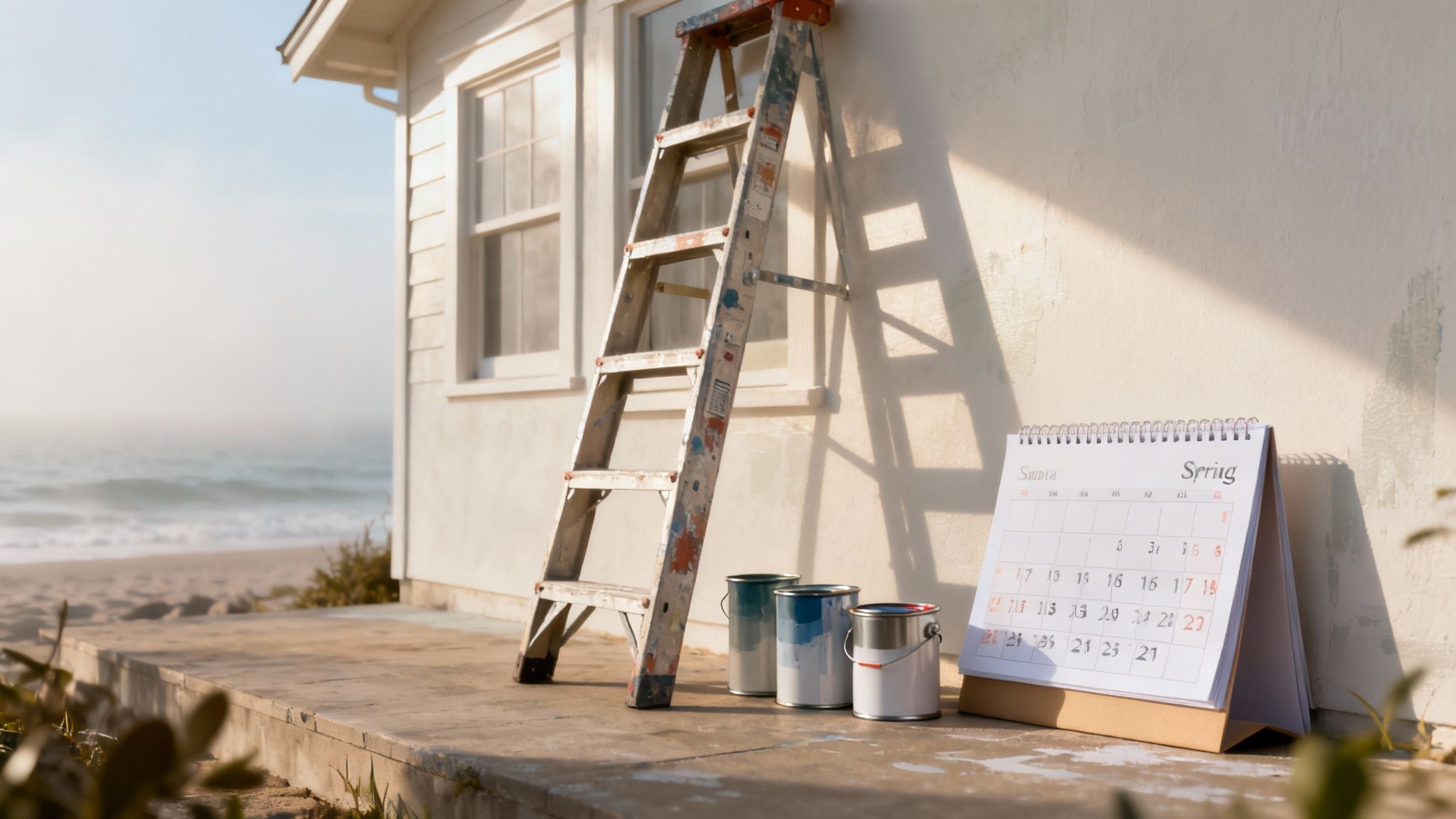
Here on the coast, from Salinas to Monterey, timing your exterior paint job is everything. Our unique weather isn’t like other regions. If you paint during the wrong month, the project could fail before the first coat even cures.
A successful, weather-proof finish means working with our local weather, not against it. Picking the right time is just as important as choosing the right paint.
Navigating Our Foggy Summers and Rainy Winters
Many homeowners think a warm summer day is perfect for painting. On the Central Coast, that’s a rookie mistake. Our famous marine layer brings thick fog and high humidity. This moisture keeps paint from drying and curing correctly, trapping water underneath. The result? Bubbling, peeling, and a finish that won’t last.
Our rainy winters bring their own problems. Cold temperatures stop the paint from bonding to the surface. And with constant rain, it’s nearly impossible to get surfaces dry enough in the first place.
The Golden Windows for Painting
For a durable finish, we have two “golden windows” for exterior painting here: late spring (April to June) and early fall (September to October). During these times, the weather gives us the ideal conditions.
- Moderate Temperatures: We get mild days that let paint cure naturally, not too fast or too slow.
- Lower Humidity: The marine layer isn’t as strong, meaning less moisture in the air.
- Dry Surfaces: There’s less risk of a surprise rain shower, so surfaces stay dry from prep to final coat.
Expert Tip: Even during the best months, always check the local dew point. If the surface temperature is too close to the dew point, condensation will form. This moisture weakens the paint’s bond and leads to a weaker finish.
Coastal painting pros always aim to work when daytime humidity is below 85%. This simple strategy ensures your paint can form the tough, protective shell your home needs.
A Little Maintenance Goes a Long Way
You’ve invested in your home’s look and protection with a fresh paint job. To get the most out of it, a little proactive care makes a big difference. Simple, consistent upkeep will help your paint last longer and keep your home looking sharp.
The most important task is a gentle annual wash. Throughout the year, a layer of salt, dust, and grime builds up on your walls. A quick wash with a soft brush, mild detergent, and a garden hose is all it takes to remove these harmful elements.
Your Seasonal Inspection Checklist
Your eyes are your best tool for catching small issues before they become big problems. Just walk around your property every few months to spot trouble early.
Here’s what to look for:
- Minor Cracks or Bubbles: Check walls that get the most sun, like south or west-facing walls. These are often the first places to show stress.
- Early Signs of Peeling: Look at corners, eaves, and anywhere water might collect. Knowing what causes paint to peel helps you know where to look.
- Mildew Growth: Look for dark spots in shaded, damp areas, like under overhangs or behind bushes.
A few minutes of inspection each season can help you delay a full repaint by several years. That can save you thousands of dollars in the long run.
The Power of Proactive Touch-Ups
When you spot a small chip or crack, fix it quickly. A minor touch-up now stops moisture from getting behind the paint, which leads to widespread peeling later. This is why we suggest keeping a small, labeled can of leftover paint and primer.
This hands-on approach is even more effective when you start with the right materials. Choosing high-quality exterior paints can stretch a paint job from an average of four years to as long as 7-10 years. That simple choice can cut your long-term maintenance costs by up to 40% over a decade.
Common Questions About Painting Coastal Homes
Even with a good plan, questions often come up when weather-proofing your home in Salinas or Seaside. Here are a few common questions we hear from homeowners across Monterey Bay.
How often should I repaint my coastal home in Seaside or Salinas?
A typical inland house might need new paint every 7-10 years. But our salty, foggy climate is tough on paint. With a professional, weather-proof system using top-quality materials, you can expect 5-7 years of solid performance. If a previous job used cheap paint or had poor prep work, you might see failure in just 3-4 years.
Is elastomeric paint a good choice for my stucco home in Monterey?
Yes. For stucco homes in Monterey County, elastomeric paint is a fantastic solution. It’s like a thick, flexible, waterproof jacket for your house. Its biggest advantage is its ability to stretch over the hairline cracks common in stucco. This creates a seamless shield against our wind-driven rain and fog.
What is the biggest mistake homeowners make with exterior painting?
The most common and costly mistake is hiring a painter based only on the lowest price. Many low-bid painters cut corners on important prep steps, like power washing to remove salt or using the right primer. On the Central Coast, that’s a recipe for disaster.
We tell our clients that proper prep is 80% of the job. Skipping it means you’ll likely see peeling and bubbling within a couple of years, wasting your entire investment.
Can you just paint over mildew?
No. Mildew is a living fungus. Painting over it is like putting a band-aid on a weed. It will grow right under the new paint and push its way through, causing stains and paint failure. Any spot with mildew must be killed first with a proper cleaning solution and allowed to dry completely before painting.
Why does paint fade faster on one side of my house?
This is common in our sunny climate. The wall that gets the most direct sun—usually the south or west-facing side—will fade much faster. The sun’s UV rays break down the pigments in the paint. Your best defense is a premium, 100% acrylic paint with built-in UV inhibitors to help it hold its color.
Wondering if your home’s exterior can withstand another wet winter? Schedule a free consultation with our local painting pros at Legacy Painting and Renovating Inc. We’ll help you weatherproof with confidence. https://legacypaintingrenovating.com