
It’s a common thought in home improvement: painting it yourself will save a lot of money. But is that really true? The short answer is, it’s often not cheaper.
While you don't write a check for labor, the hidden costs add up fast. Think about quality materials, tools you'll only use once, mistakes, and—most importantly—your own time. These factors can quickly erase any savings, making the DIY route more expensive in the long run.
Thinking about painting your home? This guide breaks down the true cost of DIY versus hiring a pro so you can make an informed choice and avoid common pitfalls.
The True Cost of Painting Your Home
When homeowners in Monterey County think about a fresh coat of paint, their first idea is often a trip to the hardware store. It seems simple enough. Buy some paint, grab a roller, and spend a weekend on it.
But that shopping list rarely shows the full picture. If you're weighing your options, you need to look past the price tag on a can of paint.
A professional paint job is built on more than just the paint. The real cost is in the details. This includes prep work, high-quality primers, and the right tools that pros have spent years buying. A big part of a contractor's fee is for their skill and efficiency—getting the job done right the first time. To learn more, read about why professional contractors charge what they do.

Unpacking the Full Financial Picture
The idea of "free" labor makes DIY tempting, but it’s often an illusion. It's like exploring the hidden tradeoffs in seemingly 'free' options you find online. What seems like a bargain often has hidden costs.
To compare fairly, you need to look at every single expense. This includes the obvious and the hidden ones. Let's start with a snapshot of what goes into each approach. This will help you see the real costs, whether you're in a Salinas ranch home or a Carmel cottage.
DIY vs. Professional Painting: Initial Cost Snapshot
| Cost Factor | DIY Project | Professional Service (Legacy Painting) |
|---|---|---|
| Upfront Costs | Lower initial cash for basic supplies. | All-inclusive quote covers everything; higher upfront cost. |
| Material Quality | Consumer-grade paints and primers. | Professional-grade, high-performance materials included. |
| Tool Investment | Must buy or rent ladders, sanders, sprayers, etc. | All necessary professional equipment is included. |
| Your Time | Lots of time spent on research, prep, painting, and cleanup. | Zero time investment required from you. |
| Mistakes & Rework | High chance of costly errors that need fixing. | Guaranteed results with insurance against mistakes. |
| Final Result | Varies by skill; often lacks a professional finish. | Flawless, durable finish that increases home value. |
The initial sticker price is just the beginning. The "cheaper" route might mean unexpected trips to the store, buying tools you'll never use again, and the frustration of fixing mistakes a pro would have avoided.
A Detailed Breakdown of Project Financials
When you start looking at the numbers, the first thing to do is list everything. A DIY paint job isn't just about the paint. It's a shopping list that gets long very fast.
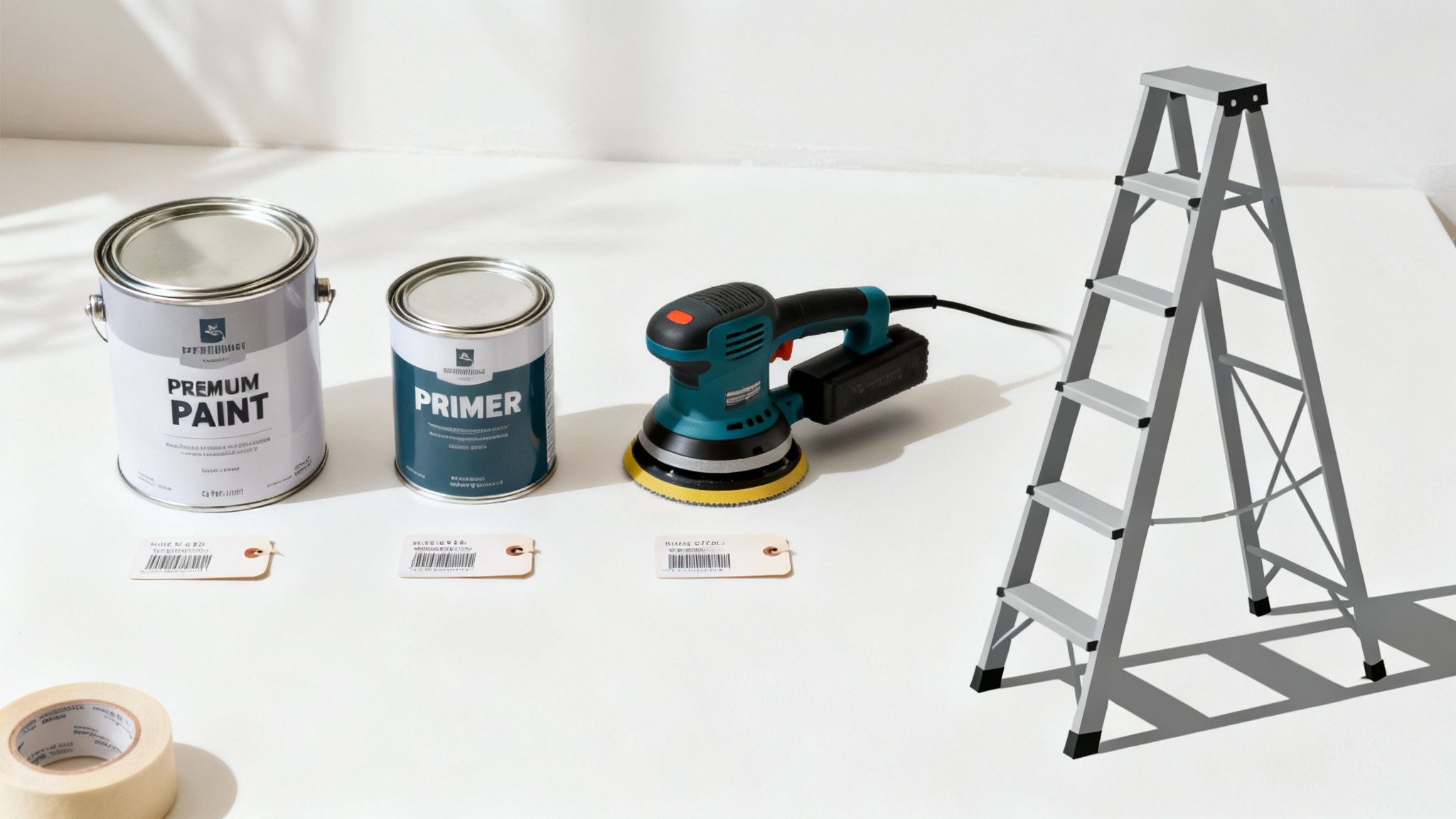
Let's break down what a typical project in the Monterey Bay area might cost you. The core materials are your first stop. This is more than just paint—you need a high-quality primer for a finish that lasts.
Then there’s painter’s tape, spackle for holes, sandpaper, drop cloths, and roller trays. Each item seems small, but together, they add up to a big upfront cost before you even start painting.
The Hidden Costs of Tools and Equipment
Besides supplies, the biggest budget shock for most DIY painters is the cost of good tools. A professional look demands professional equipment. Those old, stiff brushes from ten years ago won’t work.
You'll need to buy or rent several key items:
- Quality Brushes and Rollers: Cheap ones leave streaks and shed fibers into your fresh paint.
- A Sturdy Ladder or Scaffolding: This is for safety, especially in homes with high ceilings or tricky stairs.
- An Orbital Sander: This is crucial for smoothing patched walls and creating an even surface for the paint.
- Masking Tools: These help create sharp lines around trim and ceilings.
Buying these essentials can add hundreds of dollars for tools you might only use once. This is where the "savings" of a DIY project start to disappear.
Comparing DIY Expenses to a Professional Quote
Now, let's compare that hardware store trip with a quote from a team like Legacy Painting. When we create an estimate, we bundle everything into one clear number. You're not just paying for paint; you're investing in a complete, stress-free service.
A professional quote from us covers:
- All Labor: From the careful prep work to the final cleanup.
- Premium Materials: We use contractor-grade paints that offer better coverage and durability than store-bought options.
- Professional Equipment: Our crews arrive with everything they need, from sprayers to scaffolding.
- Insurance and Guarantees: You get peace of mind knowing the job is fully protected.
This clear approach lets you budget with confidence. You won't have to worry about surprise costs. If you're curious, you can see what pros look for in our guide on how to estimate a painting job.
According to Zillow, homes with well-painted exteriors sell for up to 2.9% more on average. It's easy to think DIY is the cheaper route, but a close look at the numbers tells a different story. DIY material costs alone can run $1 to $3 per square foot. Hiring a pro might cost between $2 and $6 per square foot, but that includes labor, superior materials, and a lasting finish. You can dig into more 2023 house painting statistics and trends on vanderkolkpainting.com to see how the numbers shake out.
The Long-Term Value Proposition
The most important financial factor is long-term value. A flawed DIY job with brush strokes or peeling paint will likely need to be redone in a few years. That means buying all those materials and giving up your weekends all over again.
A professional finish, however, is an investment in durability. With expert prep and premium materials, a paint job from Legacy Painting is built to last. You won’t spend more time and money fixing the same problem later, which makes it the smarter choice for your home in Carmel or Pacific Grove. The goal is to do it right the first time.
The Overlooked Cost of Your Time and Effort
When adding up the costs of a DIY paint job, it’s easy to focus on the price of paint and brushes. But the most valuable thing you'll spend is something you can't buy back: your time. It’s a common mistake to think you’re saving money without calculating the hours and stress that go into the project.
A professional-grade finish isn't just about putting paint on a wall. The truth is, a quality paint job is about 80% preparation and only 20% painting. Most of your time will be spent on the tedious prep work.
The True Time Commitment of a DIY Project
A professional crew in Salinas can paint a standard-sized room in a day or two. For a DIYer? That same room can easily take an entire weekend—or even two. The hours add up fast.
Here’s a realistic breakdown of where your time will go:
- Research and Shopping: This means hours watching tutorials and making multiple trips to the hardware store.
- Room Preparation: This involves moving heavy furniture, covering floors, and carefully taping every edge and outlet.
- Surface Preparation: This is the most critical stage. You’ll be cleaning walls, filling every hole, sanding everything smooth, and then priming.
- The Actual Painting: This often requires at least two coats, with proper drying time in between.
- Cleanup: This includes washing every brush, disposing of materials, peeling off tape, and moving furniture back.
Every one of these stages demands patience. If you rush the prep, you’ll get a sloppy finish. To see how the pros move so fast, check out our guide on how to paint faster.
The real cost of DIY isn't just the money spent on supplies—it's the lost weekends, the physical exhaustion, and the stress of a home in disarray. What is that peace of mind worth to you?
Calculating the Opportunity Cost
Now, let's talk about opportunity cost. What else could you be doing with the 20, 30, or even 40+ hours you're dedicating to this project? That’s time you could spend with family, relaxing on Carmel Beach, or enjoying your home.
Don't forget the physical toll. Painting means hours on a ladder and constant bending. It's exhausting work that can leave you sore for days.
Hiring a team like Legacy Painting & Renovating isn’t just buying a service. It's buying back your time, your energy, and your peace of mind. It’s the guarantee that the job gets done right, efficiently, and without turning your life upside down.
Achieving a Durable and Professional Finish
Ever wonder why a professional paint job looks so flawless and lasts so much longer? The secret isn't a magic brand of paint. It comes down to skill learned over years on the job.
The real difference between a finish that peels in two years and one that looks perfect for a decade is technical skill and using the right materials. Hiring a pro ensures the investment you make in your home today pays off for years.
The Critical Role of Surface Preparation
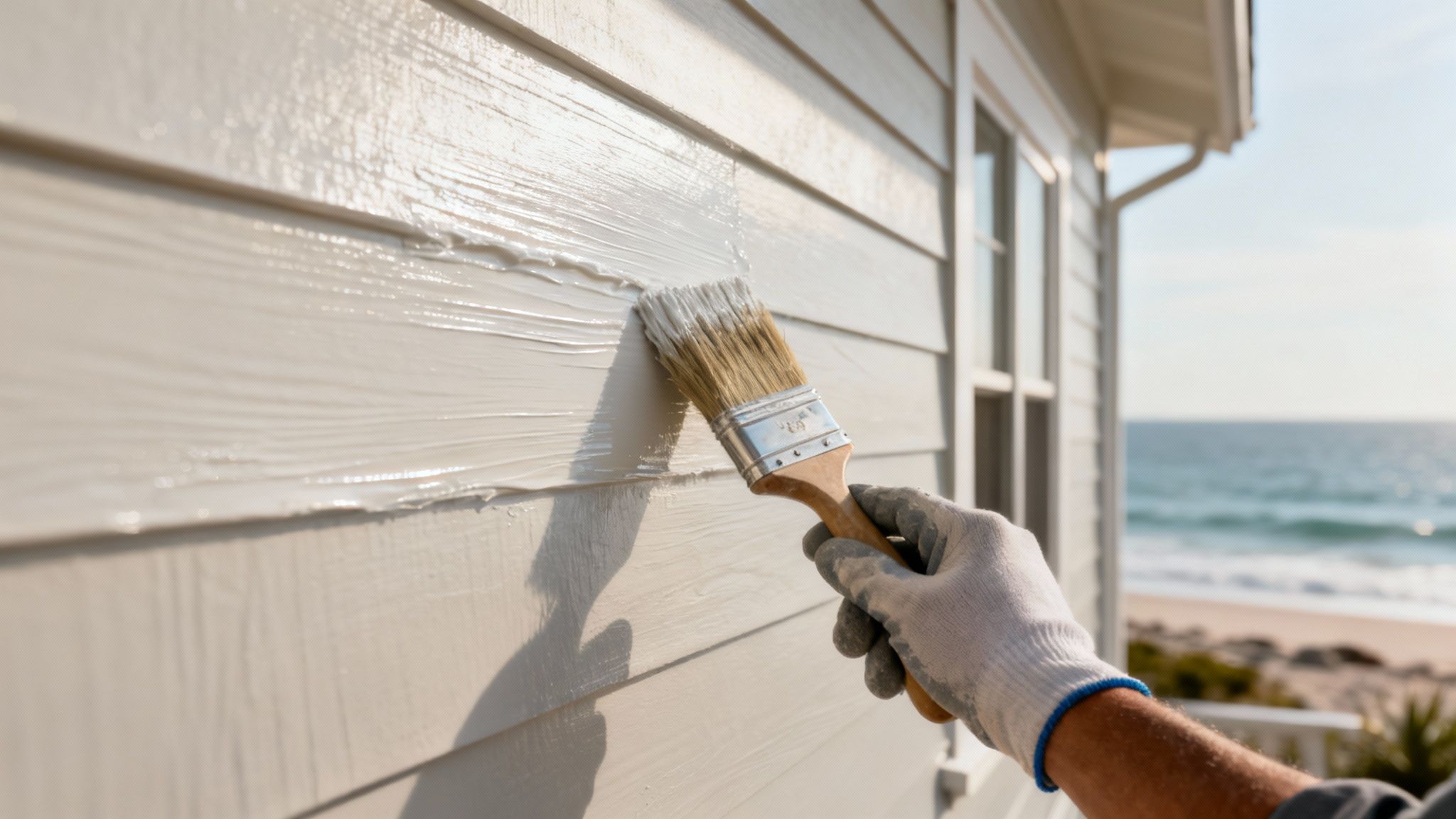
Here's the honest truth: surface preparation is the single most important factor for a lasting paint job. It’s also where many DIY projects fail. Paint is only as good as the surface it’s on, which is why we spend most of our time on this step.
This isn’t just wiping down a wall. Professional prep includes:
- Thorough Cleaning: We remove years of grime, dust, and oils that prevent paint from sticking.
- Meticulous Repairs: Every crack and hole is filled and sanded perfectly smooth.
- Proper Priming: We apply the right primer to seal stains and ensure the color is true.
Rushing these steps is why DIY paint jobs often look patchy and fail early.
Advanced Application Techniques
Once the surface is perfect, our team uses advanced techniques for a flawless, streak-free look. We know how to maintain a "wet edge" to avoid ugly marks. We also use tools like commercial-grade sprayers for a smooth finish on trim and doors.
This skill is especially important for homes along the coast in places like Pacific Grove and Carmel. The moist, salty air requires specific techniques to prevent mildew and peeling. A pro knows which products stand up to our local climate.
Key Differences in Project Execution
| Task | Typical DIY Approach | Legacy Painting Professional Standard |
|---|---|---|
| Surface Inspection | A quick look for obvious problems. | Detailed inspection to find all imperfections. |
| Cleaning | Wiping walls with a damp cloth. | Degreasing and washing all surfaces with special solutions. |
| Repairs & Sanding | Using all-purpose spackle with minimal sanding. | Applying specific fillers and power sanding for a seamless repair. |
| Priming | Using a paint-and-primer-in-one, or skipping primer. | Selecting and applying specialized primers for the surface. |
| Paint Application | Using consumer-grade tools, resulting in brush marks. | Using professional tools for a uniform, factory-like finish. |
| Cleanup | Basic cleanup that might leave paint splatters. | Meticulous cleanup, leaving the space spotless. |
The professional approach is more thorough, which means a better-looking and longer-lasting result.
Commercial Grade Products for Superior Durability
The paint you find at the hardware store isn't the same as what pros use. We have access to higher-quality paints and primers that offer better coverage and last longer. These products are made for performance.
This difference in material quality has a huge impact on how long your paint job will last. When you hire Legacy Painting, you get premium products that deliver a more beautiful finish. This makes a professional paint job a smart, long-term investment.
Navigating Safety and Environmental Concerns
When you plan a paint job, you probably think about colors, not safety. But painting has real risks that are often overlooked in a DIY project. From a wobbly ladder to breathing in fumes, a DIY approach means you are responsible for safety.
This is another area where DIY "savings" can disappear. Cutting corners here can put your health and your family at risk. A professional crew is trained to manage these issues.
Ladder Safety and Physical Risks
Painting often means working at heights. For most homeowners, this is unfamiliar and dangerous. An unsteady ladder or a simple slip can lead to a serious injury.
Professionals are trained in ladder safety. We use commercial-grade equipment built for stability. We know how to safely reach tricky spots, protecting ourselves, your family, and your property.
Proper Ventilation and Air Quality
Paint fumes aren't just annoying; they can be harmful. Many paints release volatile organic compounds (VOCs), which can cause headaches and other health problems. Just opening a window often isn't enough, especially in older homes around Pacific Grove or Carmel.
A big part of a professional's job is creating a well-ventilated workspace. This isn't just for our safety—it protects your family from breathing in toxic fumes and keeps the air in your home healthy.
We are experts at managing airflow and use the best low-VOC or zero-VOC paints. This focus on air quality is non-negotiable and keeps your home a safe space.
Eco-Friendly Materials and Disposal
More homeowners are looking for eco-friendly paints. Professionals have better access to these high-performance, healthy products. We also know how to apply them for maximum durability.
But what do you do with leftover paint and chemical-soaked rags? These items are hazardous waste and can't go in the regular trash. Professionals know Monterey County's local disposal rules, making sure these chemicals stay out of our landfills and waterways. This protects the environment and saves you from potential fines.
Deciding When to DIY and When to Call a Pro
The final call between DIY and hiring a professional comes down to the job's scope, your skill level, and what your time is worth. Not every paint job needs a full crew. Some smaller projects are perfect for a DIYer.
If you’re painting a small accent wall or a powder room, doing it yourself is a great choice. These jobs are manageable and don't require a lot of special equipment.
When the Job Calls for an Expert
However, the scale can quickly tip in favor of calling in the pros. There are clear signs that a DIY attempt could become frustrating and costly. In these cases, hiring a professional painter is a smart investment.
You should hire a professional for:
- Large-Scale Projects: Painting multiple rooms or a full home interior is a massive job. Professionals can handle this volume efficiently.
- Challenging Architecture: Homes with vaulted ceilings or intricate trim need special equipment and a steady hand.
- Extensive Prep Work: If your walls have significant damage, a pro can perform the repairs needed for a flawless foundation.
- Exterior Painting in Coastal Areas: The Monterey coastal climate is tough on paint. A professional knows how to protect your home from moisture, salt air, and sun.
This visual guide breaks down the safety differences between DIY and hiring a pro.
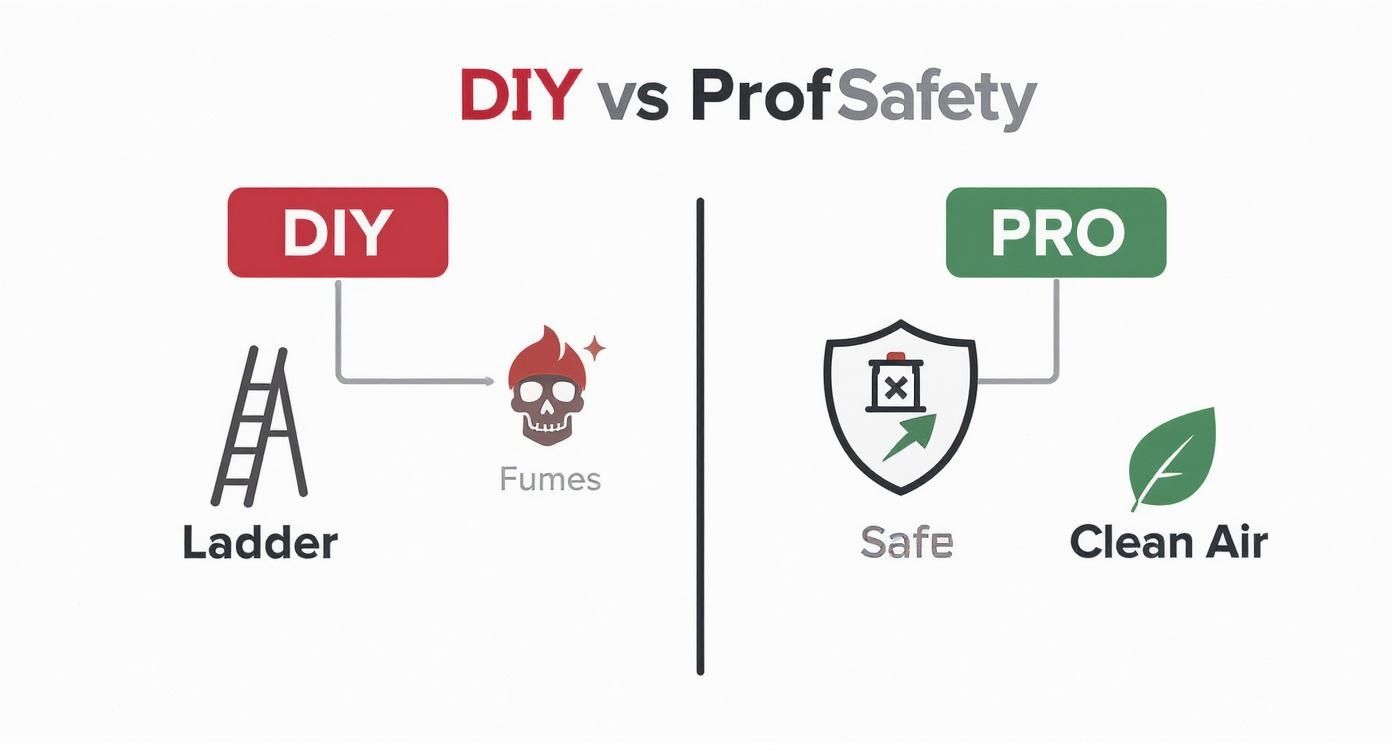
Professionals are trained to reduce these risks, ensuring the project gets done safely.
Before you commit your weekends to a big project, weigh the real costs. The right choice saves not just money, but also your valuable time and peace of mind.
To help you decide, reviewing blog cost analysis articles can provide more clarity. If you're ready to see how our expertise can save you time and stress, contact Legacy Painting & Renovating Inc. for a free, no-obligation estimate.
Frequently Asked Questions About DIY vs. Pro Painting
1. Is it really cheaper to paint a room yourself?
Initially, DIY seems cheaper because you aren't paying for labor. But when you add up the costs of quality paint, primer, brushes, rollers, ladders, and repair materials, the price goes up fast. Plus, fixing mistakes can be expensive. Hiring a pro often provides better long-term value.
2. What are the biggest hidden costs of DIY painting?
The biggest hidden costs are tools you'll only use once, underestimating the amount of paint needed, and the value of your own time. A project that takes a pro two days could take you two full weekends. Also, mistakes like spilling paint on flooring or poor prep work can lead to costly repairs.
3. How much value does professional painting add to a home?
A professional paint job can offer a significant return on investment. According to HomeLight, a fresh coat of interior paint can yield a 107% ROI. For exteriors, it’s around 55%. It boosts curb appeal and signals to buyers that a home is well-maintained, which is a huge plus in markets like Monterey and Carmel.
4. Why does surface preparation matter so much?
Surface preparation is about 80% of the job. If you don't clean, patch, and sand the walls properly, the paint won't stick well. This leads to peeling, bubbling, and an uneven finish. Professionals have the tools and expertise to create a perfectly smooth surface, ensuring the paint job lasts for years.
5. When does it make sense to hire a professional painter?
You should hire a pro for large projects, like an entire interior or exterior. It's also wise for rooms with high ceilings, complex trim, or if the walls need significant repairs. If you live in a coastal area like Pacific Grove, a pro will know how to use the right materials to protect your home from salt and moisture.
Before you pick up that roller, run the numbers. Legacy can help you understand when DIY makes sense—and when hiring a pro is the smarter investment. Ready to see how a professional paint job can save you time, stress, and money? Contact us today to get started.