
Most homeowners in Monterey County believe exterior painting is strictly a summer job. This is a common myth that can lead to a paint job failing years too early. The secret to a lasting finish isn't the summer sun. It's the cooler, more stable weather we get in fall and winter.
These seasons provide the perfect conditions for paint to cure properly. This forms a tough, protective shell against our unique coastal climate. Correct timing helps you avoid common problems like cracking and peeling caused by painting in the intense summer heat.
Monterey's Climate Demands a Different Painting Schedule
It’s easy to see why homeowners from Salinas to Carmel think summer is the best time for outdoor projects. But along the coast, this logic can backfire. Intense sun can bake the paint, causing it to dry too quickly on the surface.
When this happens, the paint can't bond correctly to your home. The result is a brittle finish that fails early. This is especially true when our marine layer brings in salt and moisture.
Fall and winter, on the other hand, offer what painters call "Goldilocks conditions"—not too hot and not too cold. This moderate weather allows the paint to go through its chemical curing process as the manufacturer intended. This process forms a strong barrier that truly protects your home. For a deeper dive, you can learn more about the ideal exterior painting season in our detailed guide.
Taking Advantage of the Ideal Painting Window
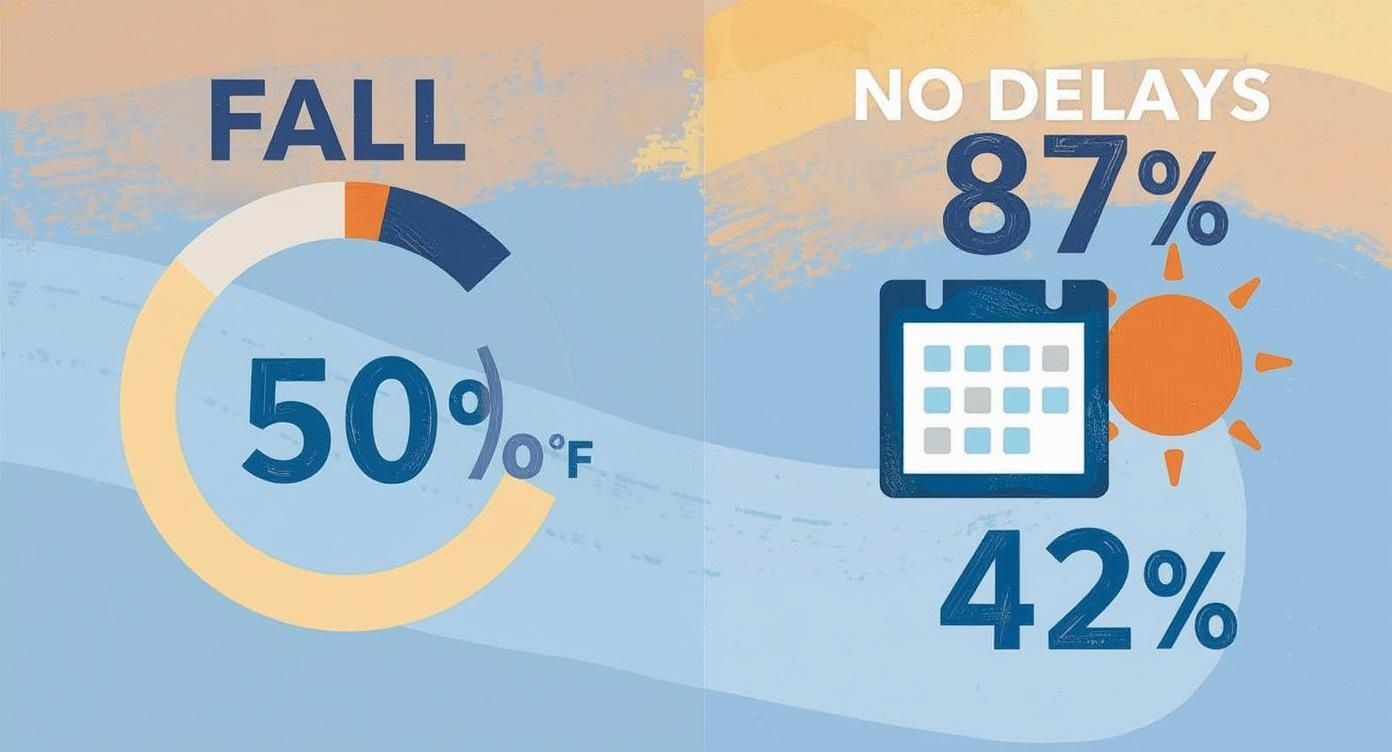
The best time for exterior painting in Monterey County is from late September through early November. During this period, temperatures usually stay between a comfortable 50°F and 75°F.
This is why fall painting has a clear advantage over other seasons. A fresh coat of paint acts as a shield against moisture before the wettest months arrive.
Seasonal Painting Conditions in Monterey County at a Glance
Here’s a quick breakdown of what to expect when painting during each season in our area.
| Season | Average Temperature Range | Key Challenge | Primary Advantage |
|---|---|---|---|
| Spring | 45°F – 65°F | Unpredictable rain and lingering morning dampness | Mild temperatures when the weather cooperates |
| Summer | 55°F – 80°F+ | Intense sun and heat can cause paint to dry too fast | Long daylight hours |
| Fall | 50°F – 75°F | Fewer daylight hours for painting | Ideal temperatures for paint curing and adhesion |
| Winter | 45°F – 60°F | Potential for frost or rain delays | Stable, cool temperatures; better contractor availability |
This table shows that fall offers the most reliable window for a high-quality, durable paint job. Homeowners in Pacific Grove, Monterey, and surrounding areas can get a far better finish by rethinking the traditional painting calendar. It's not just about looking great; it’s about lasting for years.
How Monterey's Coastal Climate Affects Your Home
As fall gives way to winter, Monterey Bay sees cooler temps, frequent fog, and high humidity. These conditions, especially in Pacific Grove and Carmel, are tough on homes. Exterior surfaces exposed to salt air and moisture can take a beating.
Moisture-related damage like peeling, blistering, or mildew is common. Homes that aren’t sealed before the wet season are at risk. Waiting until spring is a mistake because the damage may already be done.
The Science of Moisture Damage
This process, known as water intrusion, is the top reason exterior paint fails here. Once moisture gets trapped behind the paint, it creates big problems. As temperatures change, trapped water expands and contracts, pushing paint away from the inside out.
This leads to issues homeowners across Salinas and the Monterey Peninsula know well:
- Blistering and Bubbling: Trapped moisture creates ugly, air-filled bubbles.
- Peeling and Cracking: The paint's bond weakens, causing it to lift and flake off.
- Mildew and Mold Growth: Constant dampness is a perfect breeding ground for mildew.
When your home’s protective barrier is broken, it's more than a cosmetic issue. It’s an open invitation for moisture to cause serious structural damage.
Local Climate Insight: Homes on the Monterey coast often need a repaint every 4–6 years, much sooner than the national average of 8–10 years. This is due to our region's high humidity and salty air.
Why Timing Your Painting Is a Defensive Strategy
Waiting until spring to fix peeling paint is a costly mistake. By then, your home has already endured a wet winter with no defense. What could have been a simple repaint can turn into a major repair project.
This is why timing your exterior painting is a crucial defensive strategy. Painting in the fall creates a fresh, protective seal right before the wet season. Legacy Painting and Renovating uses high-performance, moisture-resistant products designed for our foggy climate to deliver results that last.
The Goldilocks Conditions for a Perfect Paint Job
For a perfect, durable finish, paint needs time to not just dry, but to properly cure. Understanding this difference is key to why fall and winter are the best seasons for painting in Monterey County.
Drying is just the first step where water evaporates, leaving the surface dry to the touch. Curing is the slow, internal chemical reaction where paint molecules link together. This forms a hard, resilient, and protective shell.
Why Summer Heat Is the Enemy of a Lasting Paint Job
Painting under the intense summer sun forces the paint to dry on the surface almost instantly. This traps solvents and moisture underneath. Painters call this “flash drying,” and it prevents the paint from curing evenly.
Instead of forming a strong, flexible film, the paint becomes brittle and weak. It never gets a chance to bond properly with the siding. This leads to common problems down the line like premature cracking and widespread peeling.
Finding the Perfect Curing Window
This is where the cooler weather of fall and winter becomes a painter’s best friend. The stable, moderate temperatures provide the "Goldilocks conditions"—not too hot, not too cold.
Think of it like this: Curing is a marathon, not a sprint. The steady, cool temperatures of fall allow the paint to complete its marathon at the ideal pace. This results in a tougher, more flexible, and longer-lasting finish.
This slower curing process ensures the paint forms a powerful bond with the surface. The result is a smooth, durable barrier ready to protect your home from the damp Monterey winter.
Real-World Benefits of Off-Season Painting
What does painting your house in the off-season really mean for you? It’s about more than just a flawless finish. Choosing to paint in the fall or winter delivers practical advantages in longevity, scheduling, and cost.
Instead of joining the summer rush, you're giving your home a stronger coat of armor. This proactive mindset preserves your home's value against our unique coastal climate.
A Longer-Lasting and More Durable Finish
The biggest benefit of painting in the fall or winter is the quality and lifespan of the paint job. Mild temperatures let the paint cure slowly and properly. This can add years to the life of your exterior paint.
For homes in Pacific Grove and Carmel, the salt air and fog are brutal. A perfectly cured fall paint job can stretch your repaint timeline significantly. You can find more details in these important findings on Division Construction.
Better Scheduling and Contractor Availability
Summer is peak season for all home improvement projects. Trying to book a great contractor often leads to long waits. When demand cools in the fall and winter, the advantage shifts to you.
- Easier Scheduling: It’s much simpler to get on a painter's calendar.
- More Focused Attention: Your project gets more dedicated time from the crew.
- Faster Start Times: You can often get the project started much sooner.
This flexibility makes the entire process smoother and less stressful.
A Smart Return on Your Investment
Timing your exterior paint job is a smart financial decision. A more durable finish extends the paint's life and delays the cost of repainting. More importantly, you're preventing moisture damage that leads to expensive repairs.
A fresh exterior is a massive curb appeal booster, especially if you're thinking of selling. A fall paint job ensures your home looks its absolute best. Learn more about how fresh paint boosts curb appeal in our comprehensive guide.
How We Prepare Your Home for a Flawless, Long-Lasting Finish
A great exterior paint job is 80% preparation. This groundwork is what separates a quick fix from a long-term shield that protects your investment.
This work is especially critical for homes here in Monterey County. The constant assault of salt and fog means that skipping a single step will compromise the entire project.
The Non-Negotiable Steps for a Finish That Endures
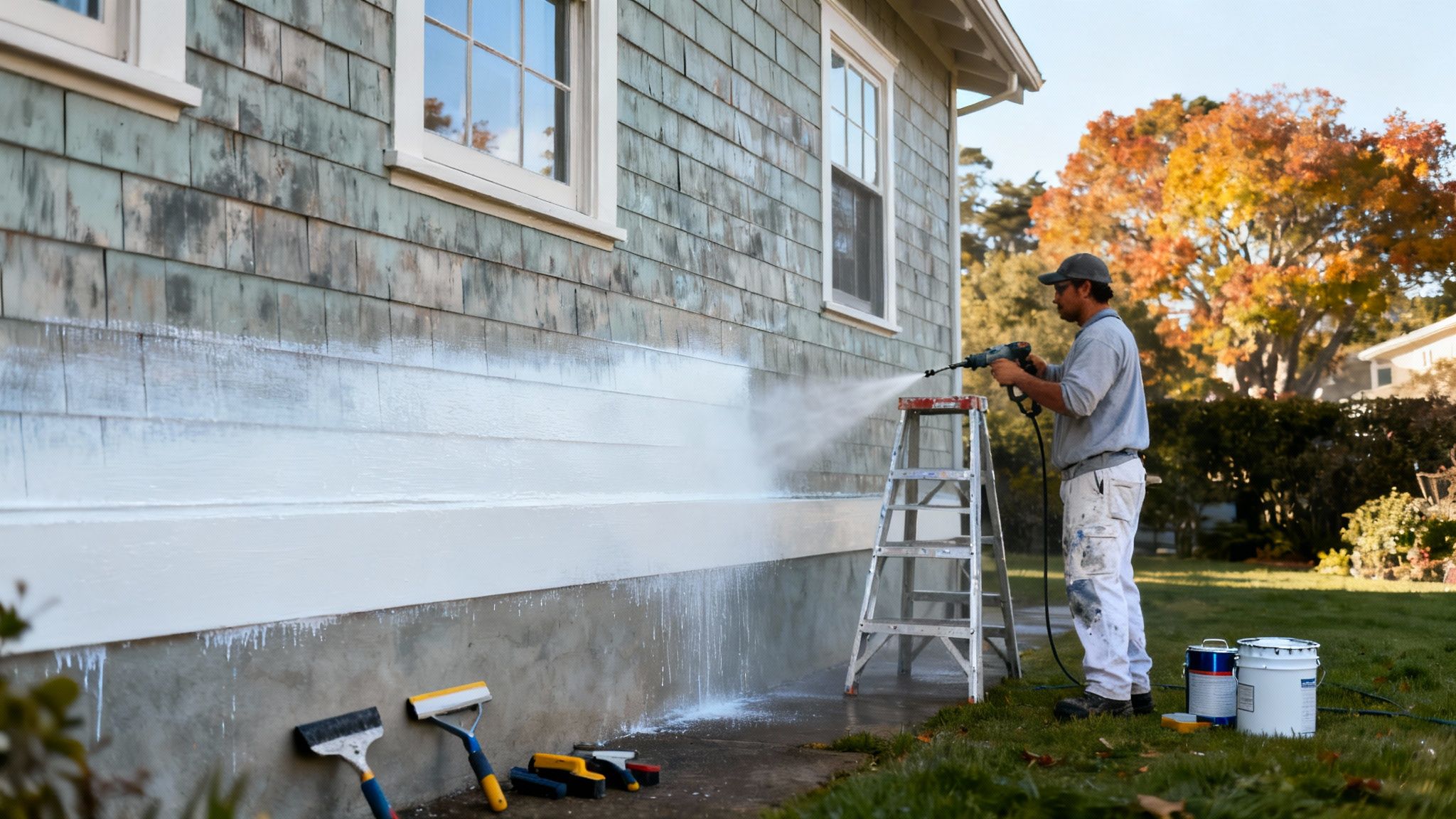
Our prep work is a systematic process refined over years of working on the Monterey Peninsula. It’s designed to create the perfect canvas for new paint.
Here’s what our process always includes:
- Thorough Power Washing: We power wash the exterior to remove dirt, grime, salt spray, and mildew.
- Meticulous Scraping and Sanding: We scrape and sand any loose, cracked, or peeling paint to create a smooth surface.
- Repairing Damaged Surfaces: We identify and repair any damaged areas first to ensure the structure is sound. Learn more in our guide to surface preparation for painting.
- Applying a High-Quality Primer: We apply a moisture-blocking primer to seal repaired spots and create a uniform surface for maximum adhesion.
Choosing Materials Built for the Coast
Once the surfaces are prepped, selecting the right materials is the final piece of the puzzle. Not all paints can stand up to a cool, damp Carmel or Pacific Grove winter.
We exclusively use premium acrylic latex paints formulated to cure properly in cooler temperatures. Many of these products also contain mildewcides for an extra layer of defense against mold and mildew.
This combination of preparation and superior materials is the professional standard. It's the only way to guarantee a beautiful finish that protects your home for years.
Your Simple Guide to Protecting Your Home This Season
Now is the time to act. Inspect your home for signs of paint failure—like cracking, bubbling, or chalky residue. Scheduling updates before the wettest months set in can extend the life of your paint and protect your home.
Catching these issues now can save you stress and costly repairs. For homeowners from Monterey and Salinas to Pacific Grove, being proactive is the best way to keep your home sealed and ready for our coastal climate.
Your Quick Inspection Checklist
Take a slow walk around your house. Pay close attention to walls that face the ocean or get the most weather. You’re looking for these common red flags:
- Fine Cracks or Alligatoring: Look for a network of fine cracks that resemble reptile skin. This means the paint has become brittle.
- Bubbling or Blistering: Small bubbles are a dead giveaway that moisture is trapped behind the paint.
- Chalky Residue: If a chalky powder comes off on your hand, the paint’s binder is breaking down.
- Peeling or Flaking Paint: This is the most obvious and urgent sign of paint failure.
To do this well, it helps to know the various parts of your home's exterior. For a more structured plan, use our home maintenance checklist template to guide your inspection.
If you spot any of these problems, don’t wait. Schedule a professional inspection to get an expert opinion. Acting early ensures your property faces the winter with a strong, durable shield.
Frequently Asked Questions
Still have questions about fall and winter painting? Let's clear up some of the most common concerns we hear from Monterey County homeowners.
1. Is it really okay to paint my house when it's cold outside?
Yes, as long as it's done within the right temperature window. Modern acrylic latex paints are made to cure perfectly in cooler weather, often down to 35°F. We monitor the forecast to schedule work during clear, dry periods, ensuring the temperature stays within the safe zone.
2. What happens if it rains right after my house is painted?
This is a top concern, but we plan for it. We schedule our work around clear forecasts to give fresh paint enough time to dry to the touch. Most modern paints can handle a light shower just a few hours after application.
3. Will the project take longer than a summer paint job?
Not usually. While daylight hours are shorter, our schedules are less crowded than in summer. This often means we can start your project sooner and give it more focused attention, completing the work efficiently and to the highest standard.
4. Are there any cost savings with off-season painting?
Sometimes. With lower demand, some contractors may offer more flexible pricing. The real savings, however, come from preventing moisture damage like wood rot and mildew. Avoiding those major repair bills is the true financial win.
5. How do you deal with morning fog and dew?
Local experience is crucial here, especially in coastal areas like Pacific Grove. We never paint on a damp surface. This often means starting our day a bit later to let the sun dry everything out. We also use professional moisture meters to test surfaces before we begin painting.
Live in Monterey, Salinas, Pacific Grove, or Carmel? Schedule your seasonal exterior inspection with Legacy Painting and Renovating today—before the winter weather rolls in. We’ll make sure your home looks great and stays protected.