
Water intrusion is when water gets into your home where it shouldn't be. This can be a slow drip from a hidden pipe or moisture seeping through your foundation. It’s a serious issue because this unwanted water can cause major structural damage, mold growth, and expensive repairs before you even see a puddle. This guide explains the signs of water intrusion and how you can protect your Salinas-area home from costly damage.
What is Water Intrusion?
Think of water intrusion as an uninvited guest who secretly damages your home from the inside. It's usually not a big flood. More often, it's a slow, steady creep of moisture that causes the real harm.
For homeowners in coastal areas like Monterey and Carmel, our damp, foggy climate makes properties especially vulnerable. The problem often starts with something small, like a tiny crack in the stucco or a worn-out window seal. Over time, these small openings let moisture inside.
Once water gets in, it soaks into wood, drywall, and insulation. This creates a perfect place for rot and mold to grow. This is how a small issue can turn into a huge headache.
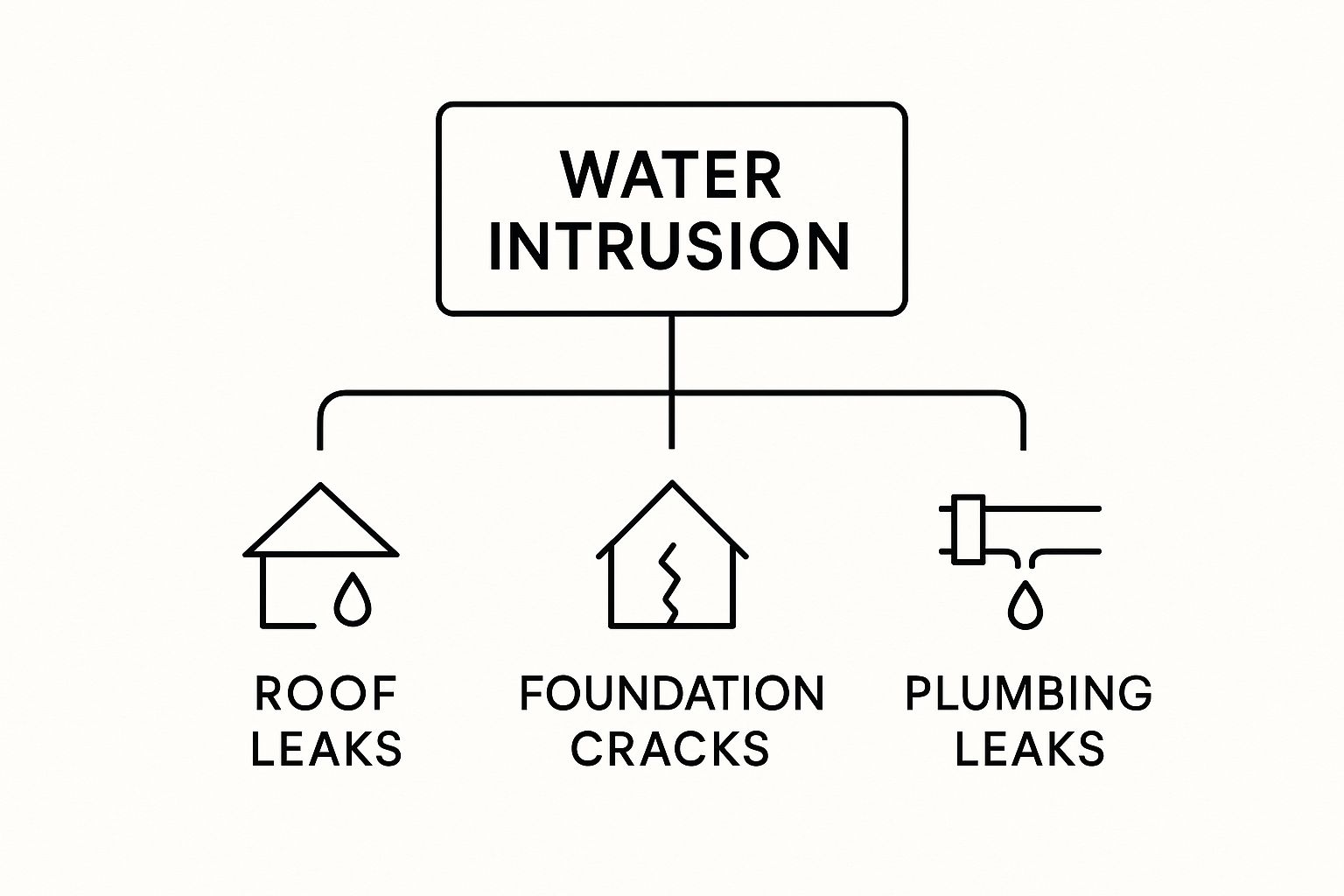
Water can attack your home from the roof, the ground, and even from inside the walls. This makes it very important to have a strong defense. Let's look at where the water often comes from.
Common Sources of Water Intrusion
Water can get into your home from several places. Knowing the most common sources helps you spot problems early.
Here are the top culprits we see in homes from Salinas to Pacific Grove:
- Plumbing Leaks: A slow drip from a pipe under a sink or a faulty appliance can go unnoticed for a long time.
- Roof & Gutter Issues: Damaged shingles, cracked flashing around chimneys, and clogged gutters can let rainwater seep in.
- Foundation Cracks: Water can pool around your house after a heavy rain and find its way through tiny cracks in the foundation.
- Window & Door Seals: Old, cracked caulk or worn-out weatherstripping around windows and doors can let in wind-driven rain.
These are the key areas to watch to prevent water damage.
Why Even a Small Leak Is a Big Problem
The real danger of water intrusion is the slow damage it causes over time. A single drop of water is harmless. But hundreds of drops every day can cause serious problems, especially for homes in our coastal climate.
This constant moisture leads to peeling paint, musty smells, and even cracks in your walls. A study by the American Society of Home Inspectors found that 60% of U.S. homeowners have had moisture problems in their homes. This shows how important it is to be proactive about protecting your property.
Signs of Hidden Water Damage
Water damage rarely appears overnight. It’s a quiet problem that leaves small clues that are easy to miss. Learning to spot these early warnings is your best defense against expensive repairs.
When the Legacy Painting & Renovating team inspects a home in Monterey or Carmel, we act like detectives. We look for the subtle signs that tell us something is wrong. You can do the same by paying attention to what you see, smell, and feel in your home.
Musty Smells and High Humidity
Have you ever walked into a basement and noticed a damp, earthy smell? That is one of the first and most reliable signs of hidden moisture. It’s the smell of mold or mildew, which love to grow in dark, damp places.
If a room feels constantly clammy or humid, that’s another red flag. This means there is too much moisture in the air, creating the perfect environment for bigger problems to develop.
Visual Clues on Walls and Ceilings
Your walls and ceilings often show the first signs of water damage. Keep an eye out for these classic clues:
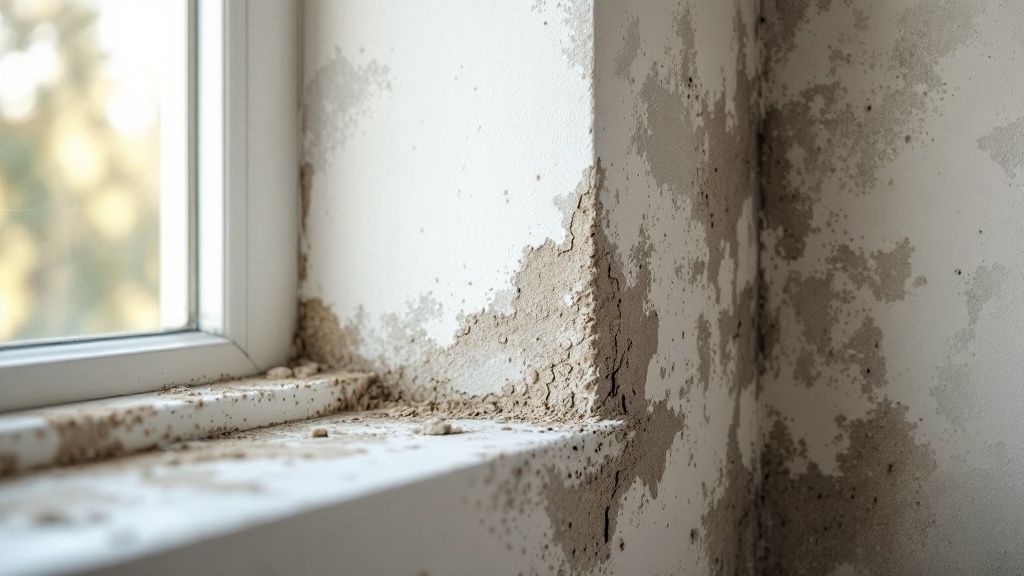
- Stains or Discoloration: Ugly yellow or brown spots on a ceiling are almost always a sign of a slow leak from the roof or a pipe above.
- Peeling or Bubbling Paint: When moisture gets behind paint, it pushes the paint away from the wall. This causes bubbles and peeling. You can learn more in our guide on what causes paint to bubble.
- Warped or Swollen Drywall: If your drywall feels soft, spongy, or looks like it's bulging, it has absorbed a lot of water. Its strength is now compromised.
Never just paint over these signs. They are symptoms of an active moisture problem that needs to be fixed at the source.
Red Flags for Coastal and Stucco Homes
Living on the Monterey Peninsula brings unique challenges. Our beautiful stucco homes, for instance, need careful attention.
One of the clearest signs of water in stucco is efflorescence. This looks like a fine, white powder on the surface. It happens when water inside the stucco evaporates, leaving salt deposits behind. It's a clear sign that moisture is moving through your walls.
Even tiny cracks in stucco can let fog and rain in, leading to rot in your home's wood frame. For hidden problems, like foundation leaks, it's important to know the signs. This guide on detecting slab leaks early is a great resource. Finding these issues fast is key to protecting your home.
Why Water Intrusion Is a Big Deal on the Monterey Peninsula
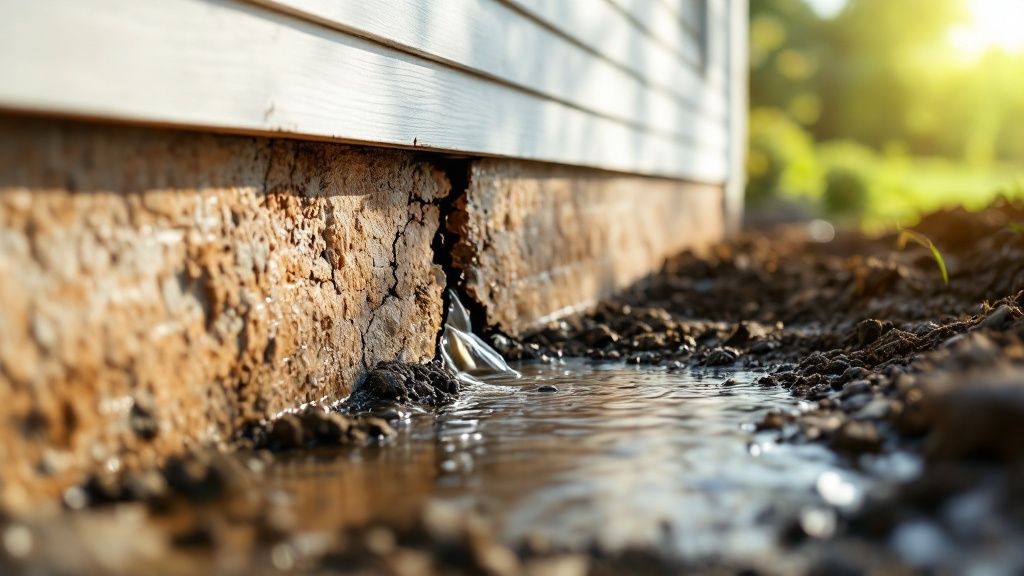
Living on the Monterey Peninsula means our homes face constant stress from fog, salty air, and seasonal storms. These things can break down a home's defenses and let moisture inside.
At Legacy Painting & Renovating, our teams see the same problems again and again. It's usually small, overlooked issues that grow into something serious. In our damp climate, even a tiny opening can lead to hidden rot and mold.
Let's look at the most common causes we find in local homes.
Failing Exterior Seals and Caulk
The caulk around your windows and doors is your first line of defense. But over time, sun and salt in the air make the caulk brittle and cracked. It can pull away from the frame, losing its seal.
Once that happens, rain can be forced through these small gaps. From there, the water gets trapped inside your walls. This is one of the most common sources of slow leaks we find.
Compromised Stucco and Siding
Stucco is a great choice for our area, but it needs to be maintained. Even hairline cracks can act like a sponge in our foggy weather, pulling moisture deep into your home’s structure.
This creates several problems:
- Trapped Moisture: Water gets stuck behind the stucco and can't dry out, leading to wood rot in the frame.
- Freeze-Thaw Cycles: In colder months, trapped water can freeze and expand, making cracks bigger over time.
- Siding Gaps: Gaps can appear in wood or composite siding as the house settles, creating an open door for rain.
Clogged Gutters and Poor Drainage
Your gutter system has one simple job: move rainwater away from your foundation. When gutters are full of leaves and debris, they can't do their job.
Rainwater backs up, spills over the edge, and pools right against your foundation. This constant wetness gives water plenty of time to find a crack and get into your basement or crawlspace.
The ground around your house should also slope away from the foundation. If it doesn't, you are basically inviting water to sit there and find a way in. These simple maintenance issues are often the cause of the most expensive water damage repairs we see.
How a Small Leak Becomes a Catastrophic Problem
It's easy to ignore a small water stain or a musty smell. But that small issue is often just the tip of a very expensive iceberg. Water works silently behind your walls, creating a domino effect of damage.
A little moisture soaks into the wood framing, insulation, and drywall. This creates the perfect damp, dark place for wood rot and mold to begin their quiet work.
The Domino Effect of Unchecked Moisture
A simple damp spot can quickly get worse. The problem grows in stages, each one causing more damage.
- The Small Opening: It all starts with a tiny breach, like a cracked shingle or a bad window seal.
- Soaking In: Building materials like wood and drywall soak up the moisture, holding it deep inside your walls.
- Mold and Mildew Growth: In just 24 to 48 hours, mold can start to grow in the damp area. This is when you start to smell that musty odor. We cover this in our guide on how to prevent mold growth.
- Structural Damage: Over weeks and months, the damp wood begins to rot, becoming weak. Drywall will get soft and eventually crumble.
- Pests Arrive: Rotting, damp wood is an open invitation for pests like termites and carpenter ants, which make the damage even worse.
This is how a simple fix can turn into a huge, costly renovation project. A repair that might have started as a simple tube of caulk can easily become tens of thousands of dollars in structural repairs and mold removal.
The High Cost of Waiting: Your Wallet and Your Health
Putting off a water damage repair is a risk to your home and your family's health. The cost of doing nothing grows quickly. A small leak might only cost a few hundred dollars to fix. But if you wait until you have widespread rot and mold, repairs could cost tens of thousands of dollars.
According to the Insurance Information Institute, water damage and freezing are one of the most common causes of homeowner loss, accounting for a significant portion of claims each year. This shows how financially damaging water can be.
And it’s not just about money. Mold can cause serious health risks, especially for children, the elderly, or anyone with asthma. Protecting your home from water is also about protecting the people inside it.
Proactive Steps to Keep Your Home Dry
Knowing the dangers is half the battle. The other half is stopping it. Thankfully, your best defense is often simple, routine maintenance. A little proactive care can protect your biggest investment.
Think of this as an annual check-up for your home’s exterior. These simple tasks are very effective at keeping moisture out, which is extra important in our coastal climate.
Keep Your Gutters and Downspouts Clear
Your gutter system is crucial for managing water. If it gets clogged, rainwater will spill down your siding and pool around your foundation. This is a recipe for disaster.
- Clean them twice a year: Clear out leaves and debris in the spring and fall.
- Make sure water flows away: Downspouts should drain at least five to ten feet away from your foundation to keep water from seeping into your basement.
This one simple task can prevent a lot of problems.
Check All Seals and Caulk Every Year
The seals around your windows, doors, and vents are common leak spots. Over time, caulk gets brittle and cracks, leaving small paths for moisture to get in.
Once a year, walk around your house and look at all the sealant. If you see cracks or gaps, scrape out the old caulk and apply a fresh bead of high-quality exterior caulk. Learning how to remove old caulk properly is key to a lasting, watertight seal.
Pay Attention to Your Landscaping and Grading
The ground around your home can either help or hurt you. You want it to guide water away from your foundation.
Simple rule: The soil should slope down and away from your house. A drop of about six inches over the first ten feet is ideal. This encourages rainwater to flow away naturally.
Also, keep bushes and mulch at least a foot away from your siding. This helps the exterior of your house dry completely after a storm or foggy morning, which is common for homes in Carmel and Pacific Grove.
How Pros Tackle Water Intrusion for Good
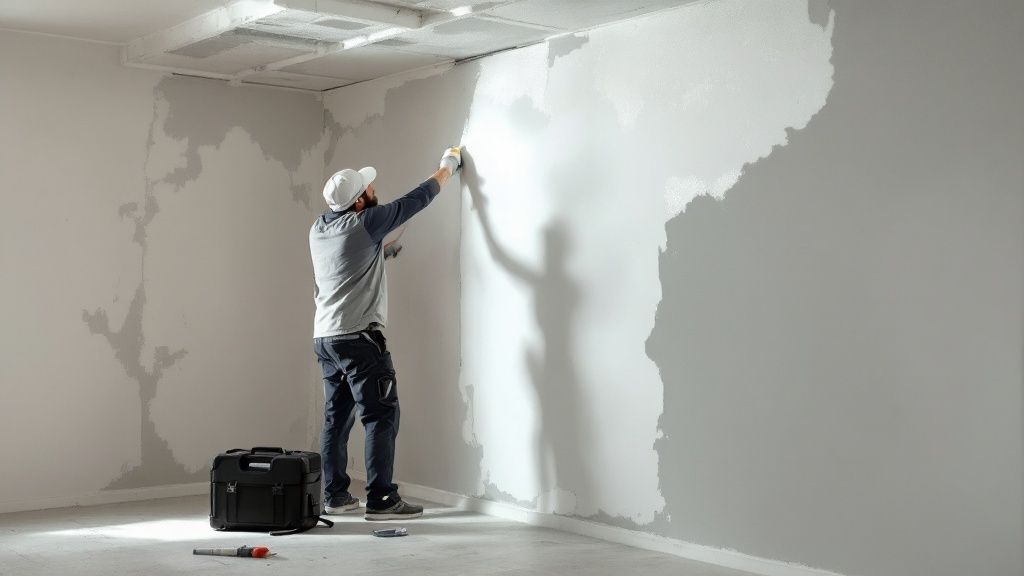
When you see a water stain, you might be tempted to just paint over it. But that only hides the problem. A professional repair gets to the root cause to make sure it's gone for good.
At Legacy Painting & Renovating, we start with a thorough investigation. We find the exact entry point—a leaky pipe, a crack in the stucco, or a failed window seal. We need to know what we're dealing with to create a lasting fix.
Repairing the Damage and Rebuilding Your Defenses
Stopping the water is just the first step. Next, we repair the damage that's already been done. This often means replacing soggy drywall or rotted wood to restore your home's structure. These problems can start with a hidden plumbing issue. Learning about common plumbing problems and solutions can help you catch them early.
Once the damage is fixed, we focus on prevention. This is where our expertise as professional painters in Salinas really matters.
We use top-quality sealants and painting techniques to create a tough, water-resistant barrier on your home’s exterior. We're not just making it look good; we're building a shield designed to stand up to the damp, salty air on the Monterey coast.
This two-part approach—repair and prevention—is essential. The financial risks are just too high in our coastal climate. Getting the right team is critical. Our free contractor hiring checklist can help you find a qualified pro who will fix the problem correctly. We don’t just patch the damage; we strengthen your home for years to come.
Your Water Intrusion Questions Answered
We've covered a lot, but homeowners often have a few more specific questions. Here are answers to the most common ones we hear.
How often should I check my home for water intrusion signs?
It's a good idea to do a thorough check yourself at least twice a year, once in the spring and again in the fall. You should also check your attic and basement after any major storm. For homes in the Monterey area, having a professional inspection every 3–5 years is a smart way to catch problems you might miss.
Can I fix minor water damage myself?
Be careful with DIY fixes. If it's a small, cosmetic stain from a leak that has already been repaired, a touch-up might be okay. But if you see soft drywall, bubbling paint, or smell a musty odor, call a professional. The real danger is the moisture you can't see, which can lead to mold and structural rot.
Is water intrusion covered by homeowner's insurance?
It depends. Most policies cover sudden and accidental damage, like a burst pipe. However, they almost never cover damage that happens slowly over time due to poor maintenance. This is why being proactive is so important—it can save you from a huge out-of-pocket expense.
My stucco has small cracks. Is this a big deal?
Yes, it is. Even a hairline crack is an open door for moisture. In our foggy climate on the Monterey Peninsula, those small cracks can pull water into the wall. That trapped moisture rots the wood frame of your home from the inside out. Sealing those cracks is one of the most important maintenance tasks for a stucco home.
What happens during a professional water intrusion inspection?
A professional inspection from a team like ours is a deep dive. We check your home’s entire exterior—roof, siding, windows, and foundation. Then, we move inside to check basements, attics, and bathrooms. We are trained to spot both obvious and subtle clues to find the root cause of the problem.
Don't wait for a small concern to become a major headache. If you've noticed any of the warning signs we've talked about, the best time to act is now.
Protect your home's value and your peace of mind. Contact Legacy Painting and Renovating Inc. for a thorough inspection and a free, no-obligation estimate for your Monterey Peninsula property.
Schedule Your Free Estimate with Legacy Painting and Renovating Inc.