
For homeowners in Monterey County, your exterior paint is more than just color. It’s your home’s first line of defense. Repainting before winter moisture arrives isn't just a good idea—it's a critical step to protect your property. The mild, dry days of fall offer the perfect conditions for paint to cure, creating a strong shield against the salt, fog, and rain that define our winters.
As fall sets in across Monterey, Pacific Grove, Carmel, and Salinas, a key window opens for homeowners. Taking advantage of this season can protect your home and prevent costly repairs down the road.
Why Fall is the Ideal Season for Coastal Painting
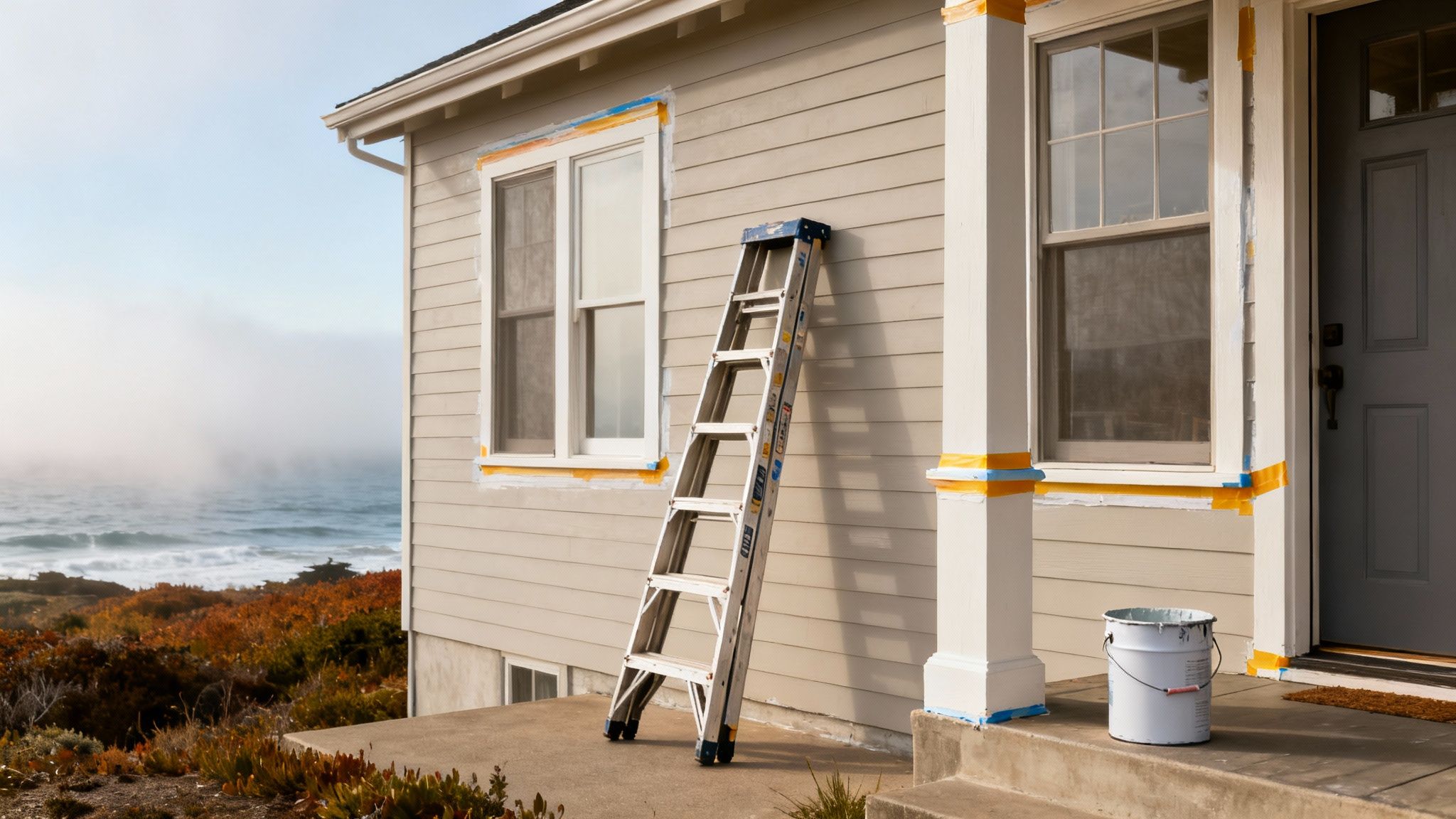
Autumn in places like Carmel and Pacific Grove offers a vital opportunity for homeowners. This isn’t just about refreshing your home’s curb appeal. It's a smart strategy to guard against the harsh weather just around the corner.
Timing your exterior paint project correctly is the difference between a long-lasting finish and one that fails early.
The Science of a Perfect Cure Time
Exterior paint needs the right conditions to perform well. The curing process, where paint bonds to the surface, is key. Mild temperatures and low humidity are ideal for this.
Here on the coast, the stable weather of fall creates the best environment for paint to cure. It’s a sweet spot, unlike the hot summer sun or the dampness of spring. A proper cure creates a tough shield that can withstand the coming winter. When you consider the importance of preparing for severe weather events like El Niño, painting in the fall becomes even more important.
"Acting in the fall is essential winter prep for your home's exterior. It prevents minor issues like hairline cracks from escalating into costly wood rot and structural damage by springtime."
Avoiding Winter's Damaging Effects
Winter moisture is the number one enemy of a home's exterior. In coastal areas, paint faces accelerated wear from high humidity, salt corrosion, and UV exposure. Many homeowners don’t realize that Monterey’s marine climate can shorten a paint job’s lifespan to just 4–6 years without the right materials.
If paint is left untreated before winter, surfaces can peel, grow mildew, or even rot. This leads to more expensive repairs in the spring. You can learn more in our article on why fall and winter are crucial for painting in Monterey County.
Fall Painting Benefits vs Winter Risks in Monterey County
| Factor | Painting in Fall (Proactive) | Waiting Until Spring (Reactive) |
|---|---|---|
| Surface Condition | Seals minor cracks and protects surfaces before winter moisture hits. Prevents small issues from becoming big problems. | Surfaces have already endured a full winter of moisture and salt, leading to deeper cracks and potential wood rot. |
| Project Cost | Lower overall cost. You're paying for painting and minor prep, not extensive repairs. A smart, preventative investment. | Higher costs due to necessary repairs like wood replacement, stucco patching, and treating mildew before painting can even start. |
| Paint Durability | Paint cures properly in mild, dry weather, creating a stronger, more resilient barrier that lasts for years. | Lingering moisture in surfaces can lead to poor adhesion, causing the new paint to peel or blister within a year or two. |
| Timeline & Scheduling | Painters' schedules are often more open in the fall. The stable weather allows the project to be completed efficiently. | High demand in spring can lead to long waiting lists. Unpredictable spring rain can cause frequent and frustrating delays. |
Painting in the fall is a proactive investment that protects your property's value through the wettest months. Waiting until spring often means paying to fix damage that could have been avoided.
How to Spot Early Signs of Paint and Moisture Damage
Before you pick colors, you need to inspect your home. For those of us with homes in Pacific Grove, Salinas, or anywhere along the coast, a walk around your property can help you spot paint problems early.
Knowing what to look for is half the battle. It lets you step in before our wet winter turns a small crack into a major repair.
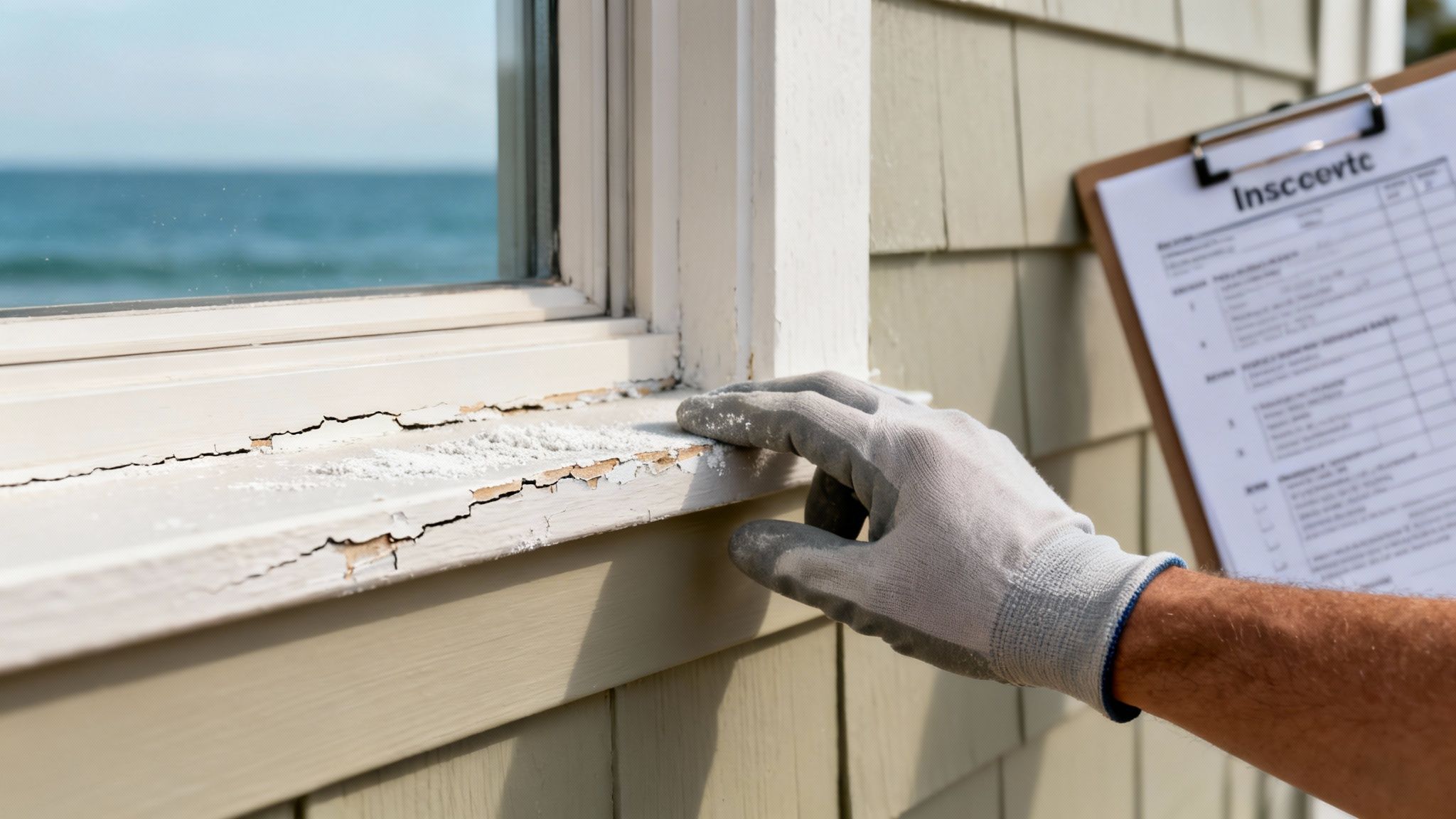
Obvious Red Flags to Look For
Some paint problems are hard to miss. These are clear warning signs that your home's protective shield has been broken.
- Peeling, Bubbling, or Cracking: This is the classic sign of paint failure. It means moisture has gotten underneath the paint, breaking its bond with the wall.
- Chalky Residue: Run your hand over the siding. If it comes away with a powdery substance, the paint is oxidizing and losing its protective qualities.
- Visible Mold or Mildew: Look at shady spots, like north-facing walls. Dark green or black spots mean moisture is lingering long enough for mildew to grow.
These aren't just cosmetic flaws. They are open invitations for water to get into your home's structure. It's helpful to understand the common mold and moisture issues that inspectors often find.
Subtle Signs of Coastal Wear
Living in beautiful spots like Monterey and Carmel comes with a downside: our salty air is tough on paint. It speeds up decay in ways that aren't always obvious until the damage is done.
Pay special attention to south and west-facing walls, which get the most sun. Also, carefully inspect window sills, door frames, and trim, as these areas collect moisture and often fail first.
Here's a quick checklist for your walk-around:
- Check for Fading Color: Is the paint duller than in protected areas? Fading means the paint’s binding agents have broken down.
- Inspect Caulk Lines: Look at the sealant around windows and doors. If it’s brittle or cracked, it has failed.
- Look for Stains: See any rust-colored streaks from nails or screws? That’s a clear sign moisture is causing the metal to corrode.
Recognizing that water intrusion is a serious problem in its early stages can save you from big headaches later. Fixing these issues now gets your home ready for winter.
Choosing the Right Paint for Coastal Climates
Not all paint is created equal, especially when it faces the conditions of the Monterey Bay coastline. The constant salt spray, fog, and UV rays demand a coating that’s much tougher than average exterior paint.
The best choice for properties in Carmel, Pacific Grove, and anywhere along our coast is a high-quality, 100% acrylic latex paint. This type of paint is flexible enough to handle temperature swings, which helps prevent cracking and peeling.
Key Features for Coastal Durability
When looking at paint options, you have to look beyond the color. Certain features are essential for a finish that will last.
Your checklist should include these three must-haves:
- Mildew Resistance: Look for paints with strong mildewcide additives that stop mold and mildew growth.
- Salt-Spray Durability: Premium coastal paints use binders designed to resist breakdown from salt in the air.
- UV Protection: High-quality paints have pigments that stand up to UV rays, keeping your home looking fresh for years.
Realtors note that fresh paint boosts home value by 2–5%—a smart investment ahead of winter. In coastal towns like Carmel or Pacific Grove, painting now also helps preserve historic homes exposed to harsher sea air.
The Critical Role of Primer and Sheen
Even the best topcoat will fail without the right foundation. A high-quality primer is essential in a coastal setting. It seals the surface against moisture and helps the paint stick.
The paint’s sheen also plays a huge role in its durability.
- Siding: A satin or low-lustre finish offers great durability and moisture resistance with a subtle sheen.
- Trim, Doors, and Windows: A semi-gloss finish is best for these areas. Its harder surface provides maximum protection against moisture and wear.
For a deeper dive, explore our insights on selecting the right weather-resistant paint for your Monterey home.
The Professional Prep Work That Guarantees a Lasting Finish
Any painter will tell you: a great paint job is all about the prep work. This is especially true for homes in Monterey and Carmel, where a solid foundation is non-negotiable for a finish that can survive winter.
Taking shortcuts here is the #1 reason paint fails early in our climate. Proper prep work is what stops peeling and blistering down the road. It ensures your new paint forms a powerful, lasting bond.
Creating a Flawless Foundation
Before a can of paint is opened, the surface must be perfectly clean, dry, and stable. A professional team tackles this with several steps:
- Thorough Washing: We start by power washing the exterior to remove salt, grime, and mildew.
- Scraping and Sanding: Any failing paint is scraped off completely. We then sand the edges for a smooth transition.
- Making Necessary Repairs: We fix any damaged wood or stucco. Painting over rot just hides the problem.
Sealing Your Home from Winter Moisture
Once everything is clean and smooth, the next job is to create a watertight seal. We fill gaps around windows, doors, and trim with a high-quality, flexible caulk.
Spot-priming any bare wood is also crucial. Primer acts as both a sealant and a bonding agent. It stops moisture from soaking into the wood and gives the topcoat something solid to grip.
The diagram below breaks down the essential layers of a durable coastal paint job.
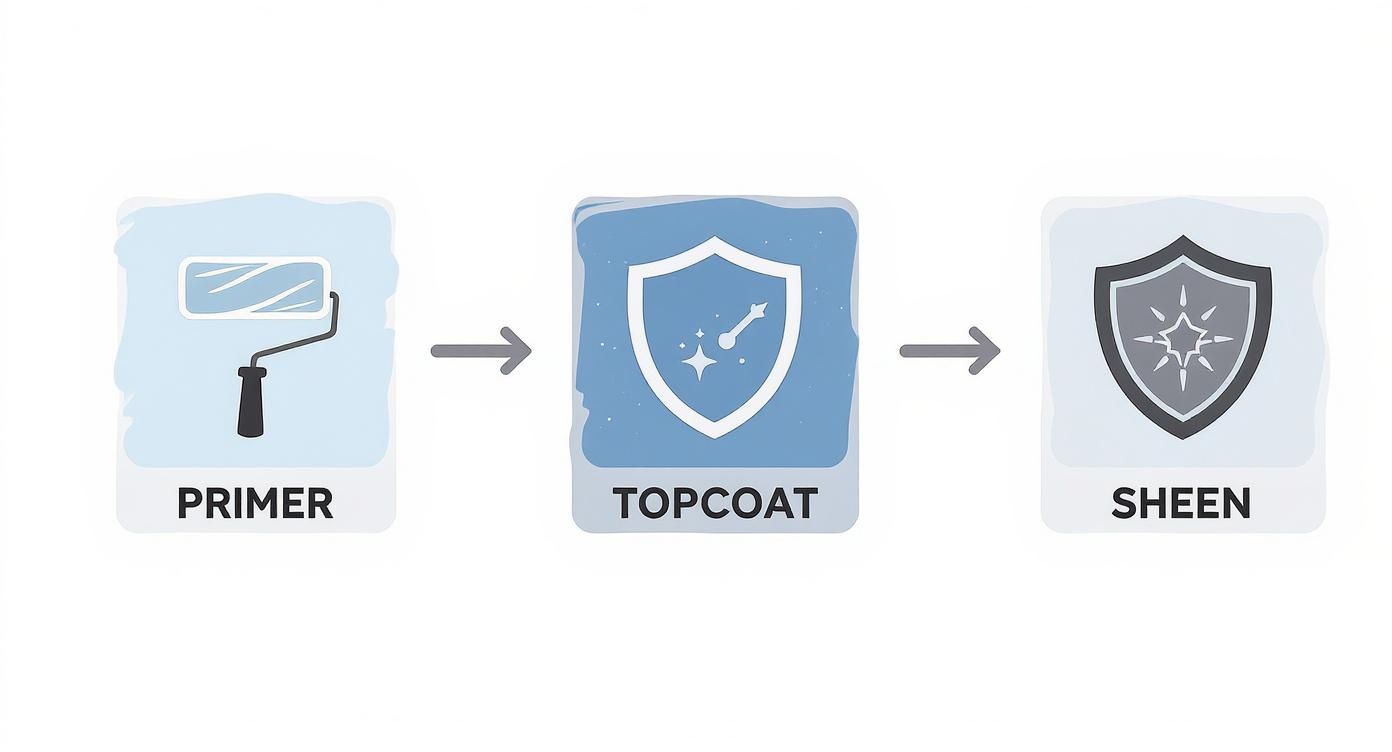
This systematic approach is the only way to get a finish that can stand up to our coastal winters. If you want to dive deeper, check out our guide on professional surface preparation for painting.
Hiring a Painter Who Understands Monterey's Climate
Choosing the right painter in Monterey County is about more than a price quote. You need a local pro who understands our unique coastal challenges, from Carmel fog to Pacific Grove sea spray.
Legacy Painting and Renovating understands the region’s unique microclimates. We use marine-grade and weather-resistant coatings designed to withstand fog, salt, and sun. Our expert timing and material choices protect your home when others may overlook key details.
Finding a True Coastal Expert
When you talk to painters, ask specific questions about their experience with coastal homes. A painter who mostly works inland in Salinas might not use the same materials or prep techniques needed for a home near the ocean.
Make sure you ask about:
- Their Experience with Coastal Homes: Ask for examples of projects in Monterey, Carmel, or Pacific Grove.
- The Products They Use: They should mention marine-grade or weather-resistant coatings and explain why they are the right choice.
- Their Plan for Weather Delays: A pro will have a clear plan for when the fog rolls in unexpectedly.
A detailed, written estimate is a must. It should clearly break down all costs for labor, materials, and prep work.
Verifying Credentials and Trustworthiness
Before you sign anything, confirm the contractor is licensed and insured. This protects you and ensures they are accountable. Ask to see proof of their license and liability insurance.
Checking local references is also important. Ask for contact information for recent clients in your area. For more ideas, look at our guide on the 7 questions to ask before hiring a painter in Monterey County.
Hiring an expert who knows our coast means you're investing in a paint job built to last.
Your Coastal Painting Questions Answered
We get it—protecting your coastal home is a big priority. Here are answers to some of the most common questions we hear from homeowners around Monterey Bay.
How long does exterior paint last in Monterey or Carmel?
In coastal areas, a high-quality paint job typically lasts about 4-6 years due to salt, humidity, and sun. This is much shorter than inland homes. Yearly maintenance, like washing off salt and grime, can help extend its life.
What are the biggest signs my home needs repainting?
The most urgent red flags are peeling, bubbling, or cracking paint. These are clear signs that moisture is getting behind the paint’s protective layer. Other key signs include a chalky powder on the surface, visible mold, or faded color.
Is it too late to paint if it’s already cool and foggy?
Not always. The key factors are surface temperature and moisture, not just air temperature. As long as we can find a dry window where the siding stays above 50°F during and after painting, we can work. Autumn often gives us perfect opportunities.
Can I just touch up peeling spots?
Touching up a few spots is usually just a temporary fix. Peeling paint is often a sign of a larger problem. For a seamless, protective barrier, a full repaint is the best way to truly protect your home.
How does salt air damage my home’s paint?
Salt is very corrosive. When salt particles from sea spray land on your siding, they break down the binders in the paint. Moisture from our coastal fog speeds up this process, leading to cracking, flaking, and peeling.
If you live in Monterey, Carmel, Salinas, or nearby, now’s the time to get ahead of coastal wear. Acting now can save thousands in deferred maintenance come spring. Contact Legacy Painting and Renovating Inc. for a free seasonal assessment to schedule your exterior paint project before moisture season peaks.