
Is the paint on your Monterey home peeling, fading, or bubbling? You're not alone. Our special coastal climate—with its salty fog, constant moisture, and strong sun—is tough on exterior paint. This environment makes paint break down much faster here than just a few miles inland.
This guide explains how to protect your home's paint from the weather in Monterey County.
Your Guide to Protecting Your Home’s Exterior Paint
Living in beautiful coastal towns like Monterey, Carmel, or Pacific Grove means your home is always fighting the elements. You can't use generic painting advice you find online. Homes here have specific problems that need a smart, local solution to keep the paint looking good.
This guide will show you exactly how Monterey’s weather damages your paint. More importantly, it will tell you what you can do about it. Three main culprits are likely hurting your home right now.
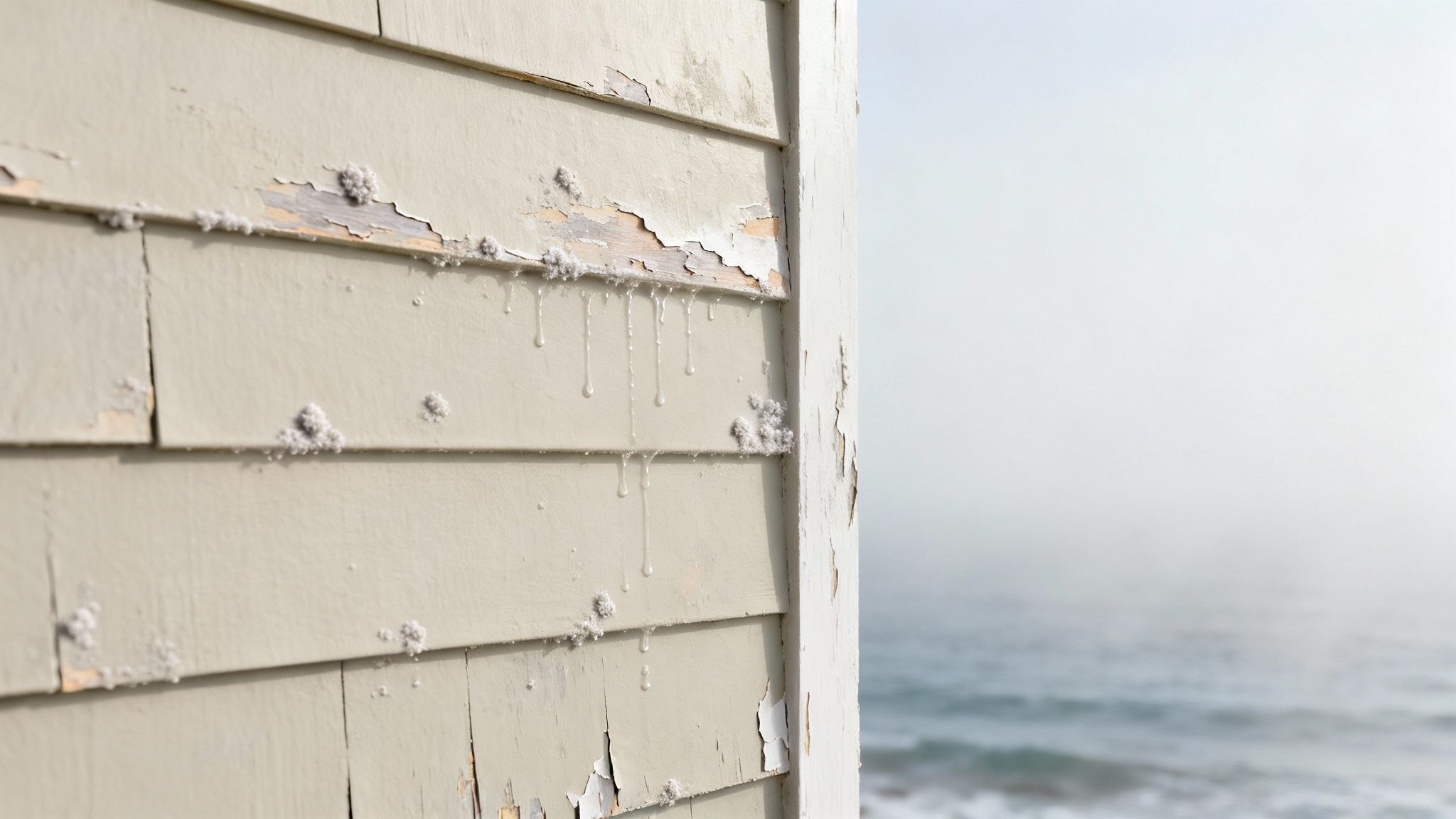
Monterey's Top 3 Weather Threats To Exterior Paint
To protect your home, you need to know what you're fighting. Here are the top three things in our environment that attack your paint every day.
| Weather Threat | What It Does | Common Sign of Damage |
|---|---|---|
| Constant Moisture & Fog | Seeps behind paint and breaks its bond with the wall. | Bubbling, blistering, and large sheets of peeling paint. |
| Salty Air | Tiny salt crystals land on surfaces and eat away at the paint. | Chalking, pitting, and colors fading faster. |
| Intense UV Exposure | Breaks down the chemicals that hold paint together. | A powdery feel on the surface and dull, faded colors. |
These three factors work together to make paint fail. Each one weakens your home's defenses, making it easier for the others to cause damage.
The truth is that coastal homes may need repainting every 4–6 years. This is much sooner than the 8-10 years you might expect in drier areas. Learn more about how weather impacts paint longevity to see why our local weather is so demanding.
To fight back, you need more than just a standard coat of paint. You need a complete defense system built for our coast. A big part of that defense is choosing the right paint from the start. See which products work best against salt and fog in our guide on the best weather-resistant paint for your home.
The Science Behind Coastal Paint Failure
Living on the Monterey Peninsula gives us amazing views and nice weather. But that same beautiful climate is surprisingly hard on your home's paint. The damage you see isn't random. It’s a scientific process caused by our unique coastal environment.
Let's break down how salt, moisture, and sun work together to ruin your home's protective coating.
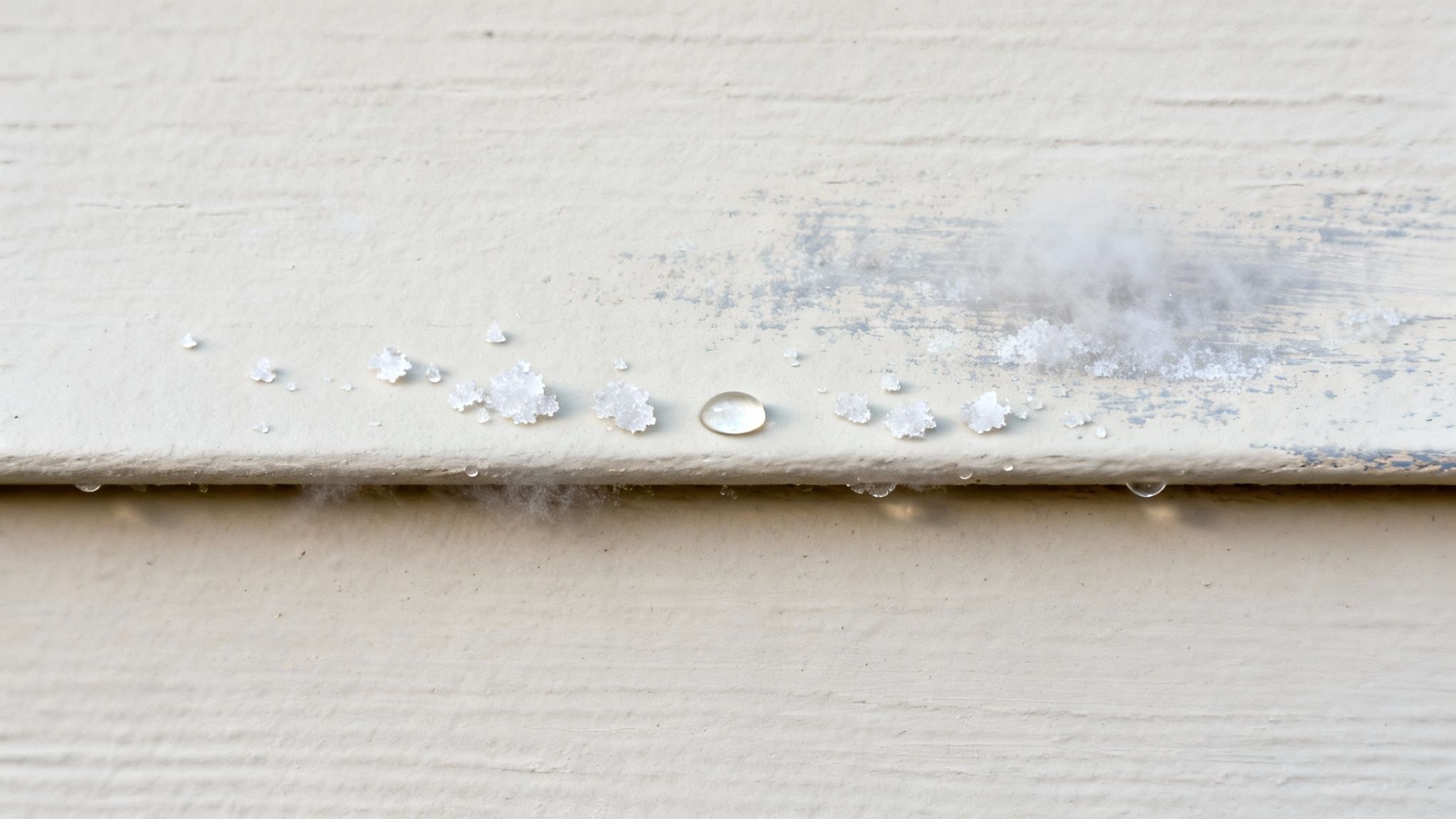
Salt: The Invisible Attacker
That salty sea breeze is a key part of life in Carmel and Pacific Grove. But it's also a main cause of paint failure. The air carries millions of tiny salt crystals that land on your home’s walls.
These salt particles attract and hold water. This keeps the surface of your paint slightly damp all the time. This damp, salty environment slowly eats away at the finish, causing it to weaken and fade.
Moisture: The Bond Breaker
Monterey’s famous fog is a constant source of moisture that soaks exterior walls. Unlike rain that comes and goes, our thick fog can hang around for hours. This means your home’s siding never gets a chance to fully dry out.
This constant wetness causes two big problems:
- Weakened Grip: Moisture gets into tiny cracks in the paint. As it builds up behind the paint, it breaks the bond holding the paint to the wall. This trapped moisture is why you see bubbling, blistering, and peeling.
- Mildew Growth: Shady, damp areas are perfect for mildew and mold to grow. These organisms actually feed on the paint, leaving ugly green and black stains that are hard to remove.
For homes along the coast, moisture isn't just a surface issue—it's the main force that pries paint away from your walls from the inside out. Understanding this is key to preventing long-term damage.
UV Rays: The Silent Fader
Even on cloudy days, the sun’s ultraviolet (UV) rays are attacking your home. UV rays break down the binders that hold paint pigments together. These binders give paint its strength and flexibility.
As the binders break down, the paint gets brittle. The color pigments are released, creating a powdery residue on the surface called chalking. You can test for this by wiping your hand across an older wall. If a chalky powder comes off, UV damage is already happening.
When salt, moisture, and UV rays combine, they create a destructive cycle. The sun weakens the paint, which lets salt and moisture get in, which causes the paint to peel. To learn more, read our guide on what causes paint to peel. This is why a special approach to painting isn't just a good idea for Monterey homeowners—it’s necessary.
Spotting The Early Warning Signs Of Weather Damage
The best way to avoid a costly paint failure is to catch problems early. If you know what to look for, you can find small issues before they become big ones. Think of it as a yearly check-up for your home.
Your home's paint is like a shield. Over time, the constant attack from moisture, salt, and sun creates tiny cracks in its armor. Finding these early signs lets you make small repairs or know when it’s time to call a pro.
Your Visual Inspection Checklist
Walk around your home at least once a year, especially after the rainy season. Pay close attention to the sides that face the ocean or get a lot of sun.
Here are the key signs of weather damage to look for:
-
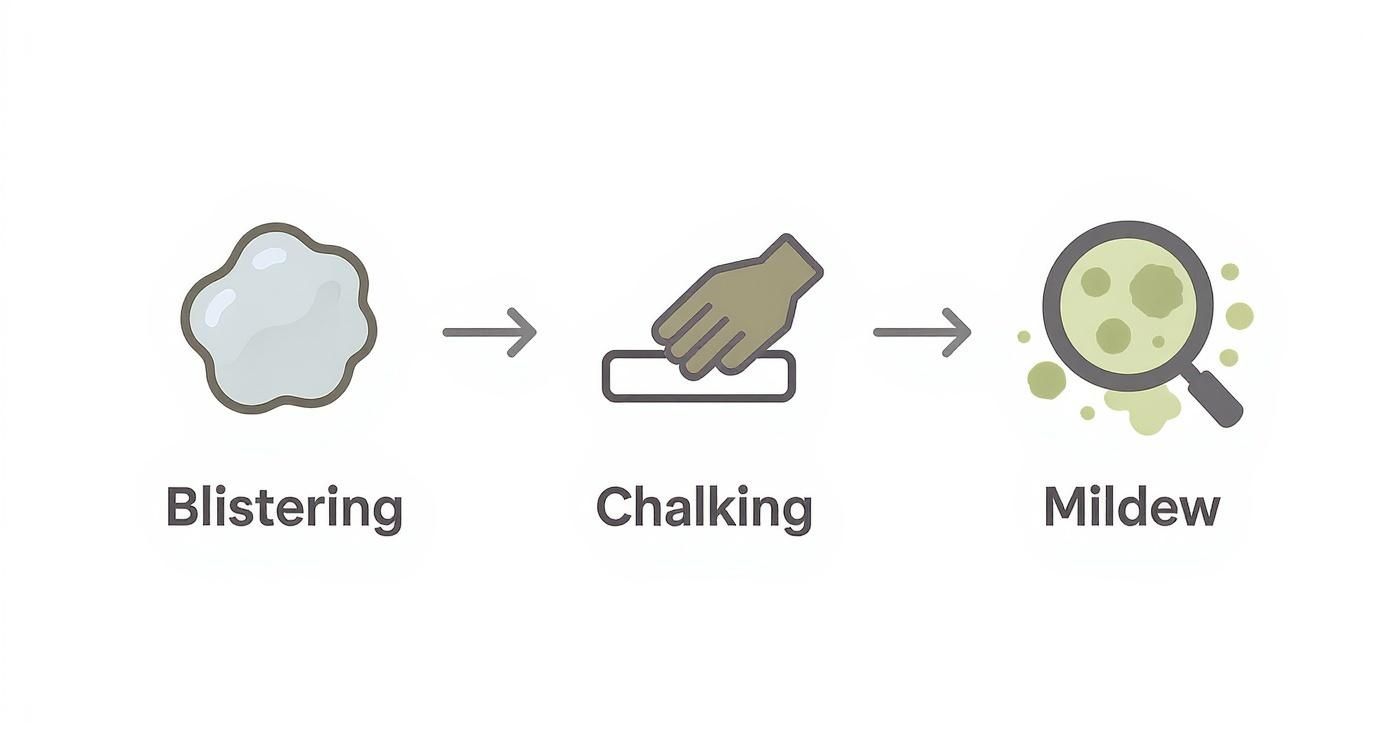
Blistering or Bubbling: These look like small bubbles under the paint. This is a classic sign that moisture is trapped behind the paint, breaking its bond with the wall. Blistering is a serious red flag because it indicates water intrusion. Learn more about what water intrusion is and why it's a serious problem to understand the risks.
-
Chalking: Gently wipe your hand across a painted surface. If a fine powder comes off, that’s chalking. It means UV rays are breaking down the paint. Heavy chalking means the paint is no longer protecting your home.
-
Peeling or Flaking: This is what happens after blistering is ignored. The paint starts to lift off in strips or flake away in small pieces. This leaves your home's siding completely exposed.
-
Mildew and Mold: Look for black, gray, or greenish spots. You'll often find them in shady, damp areas, like under eaves or behind bushes. Mildew feeds on the paint itself, slowly destroying it.
When you see blistering paint, don't just see a cosmetic issue. See it as your home telling you that moisture is getting in. Acting on these early signals is the most effective way to protect your investment.
By spotting these signs, you can be proactive instead of reactive. You’ll know when a simple cleaning will work and when it's time to call a local expert like Legacy Painting & Renovating.
A Coastal Painting Strategy That Actually Lasts
Knowing the problem is half the battle, but beating Monterey’s coastal weather takes a smart plan. A long-lasting paint job here isn't about luck. It’s about using the right materials, preparing surfaces carefully, and painting at the right time.
Generic paint and a quick power wash won't work in Carmel, Salinas, or anywhere on our coast. You need a system designed to handle the salt, moisture, and sun from day one.
Choosing The Right Materials For Monterey
The most important choice you'll make is the paint itself. For our climate, 100% acrylic latex paint is the best option. It is flexible, so it can expand and shrink with temperature changes, which prevents cracks. It also "breathes," letting trapped moisture escape instead of forming blisters.
But not all acrylic paints are the same. For a coastal home, you need paint with special additives:
- UV Inhibitors: This is like sunscreen for your house. It reflects harmful UV rays, stopping them from causing chalky, faded colors.
- Mildewcides: This is a must-have additive. It fights the growth of mold and mildew, which love the damp, foggy conditions in Pacific Grove.
Think of it this way: using a standard exterior paint on a coastal home is like taking a sedan off-roading. It might work for a little while, but it’s not built for the environment and is destined for early failure.
The Real Secret To Longevity: Surface Preparation
Here's a key fact: even the best paint will fail if you put it on a dirty or damaged surface. On the Monterey coast, preparation is 90% of the job. The goal is to create a clean, dry, and solid foundation for the new paint to stick to.
Careful prep work is not optional. It includes several key steps:
- Thorough Power Washing: This is crucial for removing the invisible layer of salt, along with dirt, mildew, and loose paint.
- Scraping and Sanding: Any peeling or flaking paint must be scraped off. We then sand the edges smooth so the final finish is seamless.
- Priming with a Specialized Formula: Bare wood or metal must be primed. For coastal homes, using a salt-resistant or stain-blocking primer provides an extra shield and helps the topcoat stick properly.
This diagram shows common paint problems that good prep work helps prevent.
Strategic Timing Is Everything
In Monterey, the painting season can be short. Trying to paint when it's foggy or damp is a bad idea. The high humidity keeps the paint from drying correctly, leaving you with a weak finish that won't last.
The best time to paint is during the dry, clear, and warm weather we usually see in late spring and early fall. Planning your project for these times is key.
Achieving a truly lasting paint job in Monterey often comes down to professional application and high-quality equipment. Tools like a professional-grade airless paint sprayer help ensure an even, consistent coat that fully seals the surface against the elements.
Finally, a simple yearly wash-down with fresh water will remove salt and grime. This simple step can dramatically extend the life of your paint job.
Why A Local Monterey Painter Makes The Difference
Knowing how to paint a coastal home is one thing. Doing it right in Monterey’s unique environment is another. The difference between a paint job that fails in four years and one that lasts for seven often comes down to one thing: local expertise.
Hiring a true Monterey County painter is about protecting your biggest investment. They understand our local climate in a way others don't. An out-of-town painter might not know why certain products fail in the Carmel fog or how to handle years of built-up salt spray in Pacific Grove.
The Value of Hyper-Local Knowledge
Legacy Painting and Renovating brings years of hands-on experience working in the harsh coastal environment. Our team has spent years working on homes from Salinas to the Monterey coast. This local knowledge is priceless.
A seasoned local pro knows:
- Microclimates: The salty air hitting a Pebble Beach home requires a different plan than the sunny conditions just a few miles away in Salinas.
- Product Performance: We know which paints and primers actually hold up to our marine air and which ones start peeling in a few years.
- Proper Timing: We know how to schedule jobs around our foggy seasons, making sure the paint cures properly and forms a strong finish.
Unlike other providers, Legacy doesn't just paint—we problem-solve for the Monterey climate. We know which marine-grade paints perform best and how to spot early signs of weather damage. This expertise prevents costly mistakes down the road.
“Hiring a local painter is like choosing a guide who knows the terrain by heart. They see the challenges coming long before they become problems, giving your home’s exterior a much safer and more successful journey.”
More Than Just a Paint Job—It’s a Protective System
Protecting your home is about building a complete, layered system. This is where an expert local team like Legacy Painting & Renovating Inc. really shines. We diagnose and solve the specific challenges your property faces.
Our process is built on local experience. We know which salt-resistant primers are needed for homes near the water and the right techniques to seal wood siding damaged by fog. To see how our local knowledge helps every project, learn why we are the best choice for your next home painting project.
Your home's exterior is its first line of defense. Trusting it to a team that understands the local battleground is essential for keeping your home beautiful and protected.
Frequently Asked Questions (FAQs)
Here are answers to some of the most common questions we get from homeowners in Monterey, Carmel, and the surrounding areas.
1. How often should I repaint my house in a coastal area like Monterey?
In our coastal climate, we recommend repainting your home's exterior every 4 to 6 years. The constant salt, fog, and sun exposure break down paint much faster here. Waiting until you see major peeling can lead to more expensive repairs to the wood underneath.
2. What type of paint is best for coastal homes?
The best choice is a premium 100% acrylic latex paint. These paints are flexible, so they won't crack during temperature changes. They also "breathe," which lets moisture escape and prevents blistering. Look for formulas with added UV protection and mildewcides for extra defense.
3. Can I just paint over small spots of mold or mildew?
No, never paint over mold. It's a living organism that will continue to grow under the new paint, damage the surface, and eventually reappear. A professional will always treat and kill mildew with a special cleaning solution before painting.
4. What is the most important step in painting a coastal home?
Thorough surface preparation is the most critical step. Even the best paint will fail if applied to a dirty, salty, or peeling surface. Proper prep includes power washing to remove all salt, scraping away loose paint, sanding rough spots, and using the right primer.
5. Does the fog in Monterey affect when I can paint my house?
Yes, absolutely. High humidity from our coastal fog prevents paint from curing correctly. This results in a weak finish that won't last. The best time to paint in the Monterey area is during the drier, warmer windows in late spring and early fall.
If you live near the coast, your home’s paint job needs more than just good looks—it needs lasting protection. Legacy’s team understands the science and strategy behind long-lasting exterior finishes in marine climates.