
Living in Monterey, Pacific Grove, or Carmel is a dream. But the same coastal climate we love can be a nightmare for your home's exterior paint. It's not your imagination if a fresh paint job looks faded and worn out too soon.
Our unique weather—a mix of salt air, thick fog, sun, and changing temperatures—works together to break down your home's protective coating much faster than in other places.
Why Coastal Homes Need Special Attention
Homes on the beautiful Monterey Peninsula face a constant battle with the weather. In most places, exterior paint can last up to ten years. Here, the story is different.
The ocean breeze and morning mist we enjoy are tough on paint. Homes in areas like Pacific Grove, Carmel, and Seaside are exposed to constant moisture and salt-rich air. This causes paint to chip, peel, and fade much sooner than expected.
Understanding how Monterey weather wears down exterior paint is key for local homeowners. The weather threats don't just happen one by one; they build on each other, creating a powerful force that requires a special defense.
Monterey's Top 4 Climate Threats to Your Paint
We see the same issues on homes from Salinas to Seaside. Four main weather factors cause most of the paint problems in our area.
Here’s a quick look at what your home is up against:
| Climate Factor | Primary Impact on Paint | Visible Signs of Damage |
|---|---|---|
| Corrosive Salt Air | Tiny salt crystals land on your siding and slowly eat away at the paint, making it weak. | Chalky residue, small pits, and fading, especially on walls facing the ocean. |
| Constant Marine Fog | Fog keeps surfaces damp, preventing them from fully drying. This is a perfect environment for mold. | Green or black spots, bubbling, blistering, and peeling paint. |
| Intense UV Rays | The sun's rays break down paint colors and make the finish brittle, even on foggy days. | Faded colors, chalky powder, and tiny cracks in the paint. |
| Sudden Temperature Shifts | Quick changes from a cool morning to a warm afternoon make siding expand and shrink. | Cracking and flaking as the paint is stretched beyond its limit. |
These factors work together in a destructive cycle. A generic paint job just won’t hold up against these conditions.
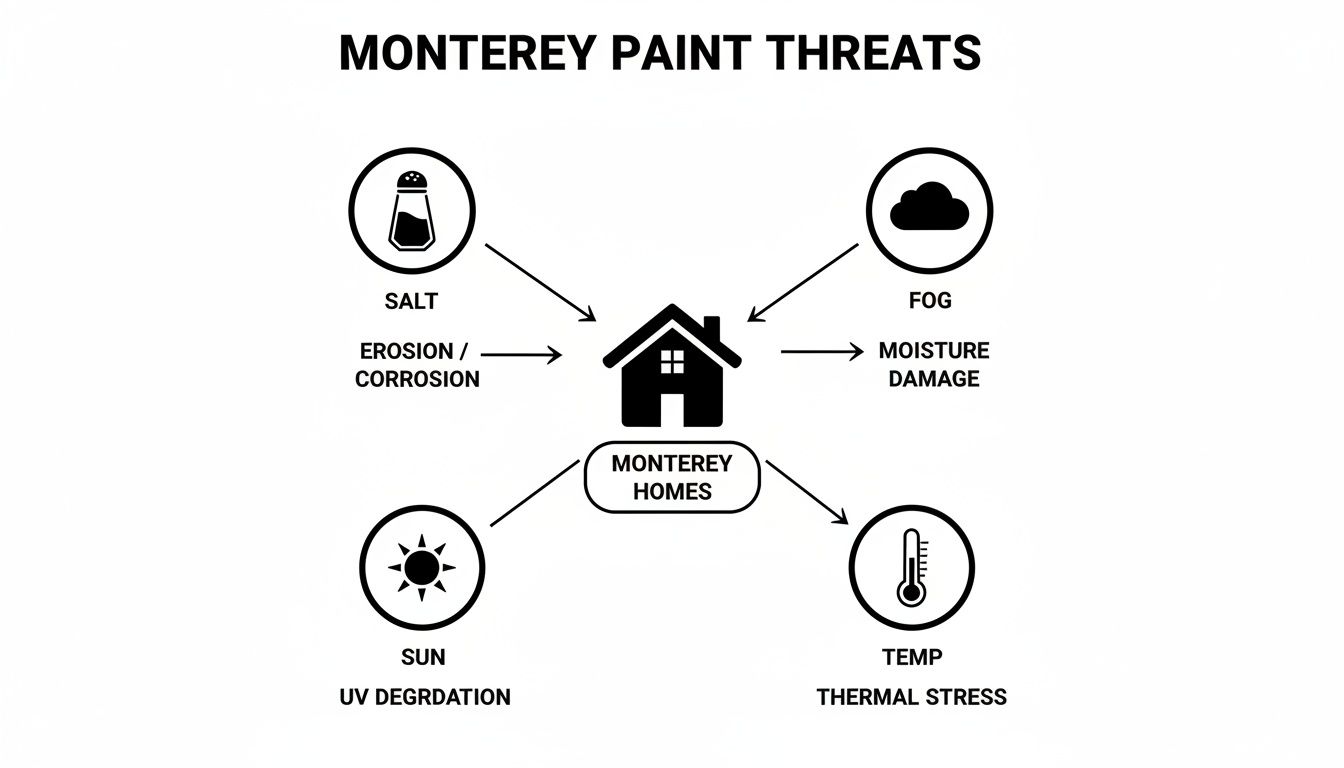
Here's how it happens: the sun and temperature changes create tiny cracks in the paint. Then, fog and salty moisture seep into those cracks, getting trapped. This is the perfect recipe for peeling. You can learn more about what causes paint to peel in our detailed guide.
“On the Monterey Peninsula, a standard paint job is a temporary fix. Our climate demands a system—proper prep, climate-specific primers, and durable topcoats—to provide lasting protection against salt, sun, and moisture.”
Without the right paint and careful prep work, a new paint job can start to fail in just 2-3 years. This not only hurts your home's curb appeal but also leaves it open to costly water damage.
The Hidden Damage of Salt Air and Fog
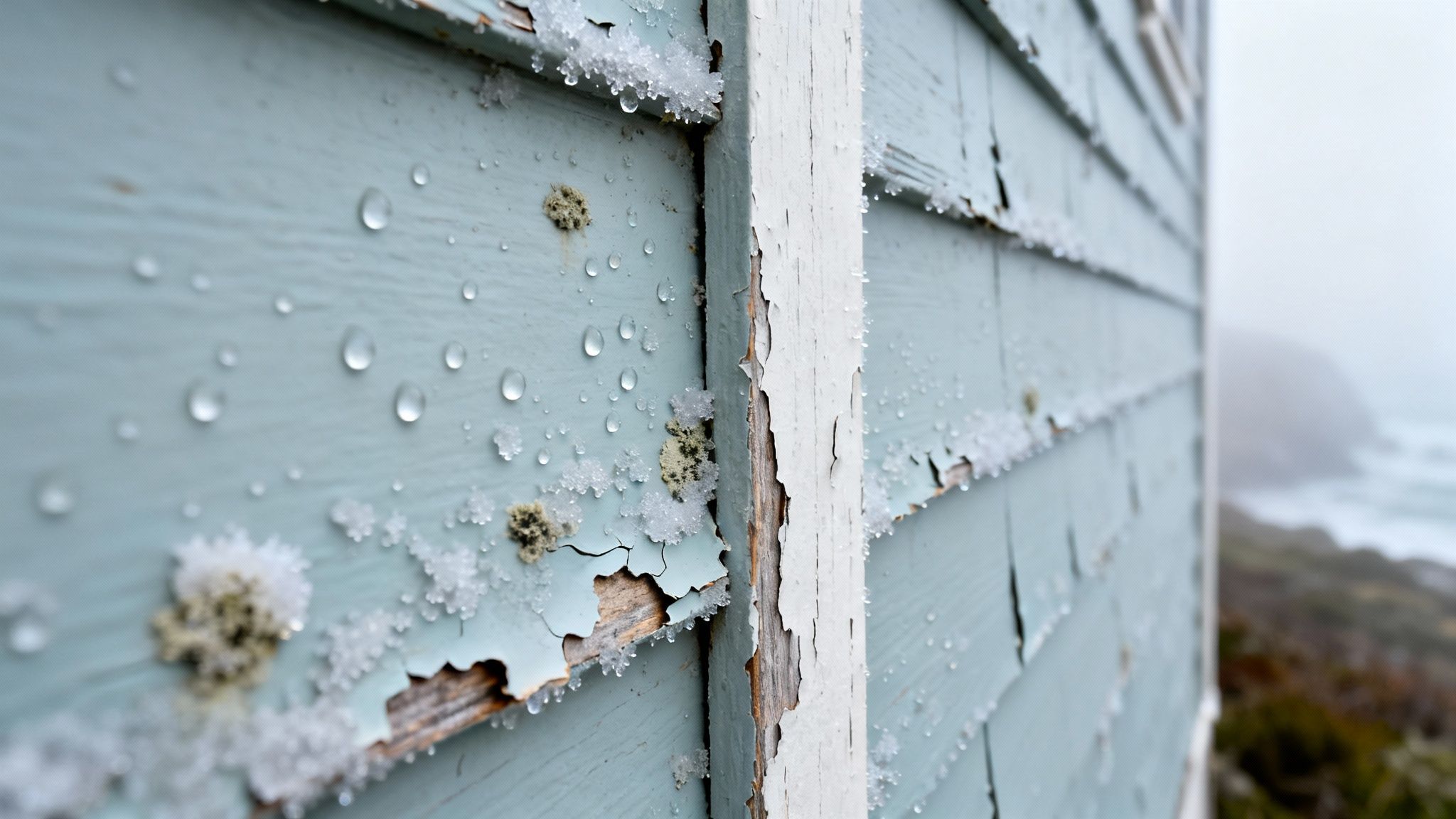
Living near the coast means your home is always covered in a fine mist of salt from the ocean. This isn't just a problem for beachfront homes in Carmel. The wind carries salt crystals for miles, letting them settle on your paint.
Think of this salt like fine sandpaper, always rubbing against your paint's protective layer. When our famous marine fog rolls in, it adds moisture. This turns the salt into a corrosive solution that attacks your exterior.
How Salt and Fog Work Together
This salty mixture breaks down the binders in your paint. Binders are the glue that holds paint together and helps it stick to your house.
When the binders weaken, the paint loses its grip. This is a big reason how Monterey weather wears down exterior paint so fast, leading to ugly bubbles and blisters.
Once bubbles form, they trap more moisture. Our fog means your home's exterior rarely dries out completely. This constant dampness creates the perfect storm for paint failure.
The combination of salt and fog doesn't just damage the paint; it creates a pathway for moisture to penetrate the very structure of your home, leading to much costlier repairs if left unaddressed.
Why Constant Dampness Is a Problem
Long periods of dampness are an open invitation for mold, mildew, and algae. These growths love moist, shady spots.
They don't just leave ugly stains. They actually feed on the paint, speeding up its decay. As they grow, they can push through the paint and into the wood or stucco below, causing deep damage.
Studies show that salt spray in coastal areas like Monterey can shorten a paint job's life by 30–50% compared to a home in a drier climate. You can learn more about the local climate's impact in the Moss Landing Community Coastal Climate Change Vulnerability Report.
Beyond wrecking paint, this can lead to bigger problems like coastal fog-related leaks. Choosing a weather-resistant paint is your first line of defense.
How Coastal Sun Fades and Weakens Your Paint
Don't let the Monterey fog fool you. The sun’s ultraviolet (UV) rays are strong here. They cut right through the fog, bleaching your home’s paint day after day.
This constant UV exposure is one of the biggest reasons how monterey weather wears down exterior paint. First, it attacks the pigments that give paint its color. A bright blue fades to a dull gray.
The Sun Breaks Down Paint's Foundation
Faded color is just the start. UV rays also attack the paint’s binders, which are the glue that gives the paint its strength and flexibility.
Once those binders break down, the paint becomes brittle. It can no longer expand and shrink with the temperature changes we see from Pacific Grove to Carmel. This leads to cracking and paint failure, leaving your home exposed.
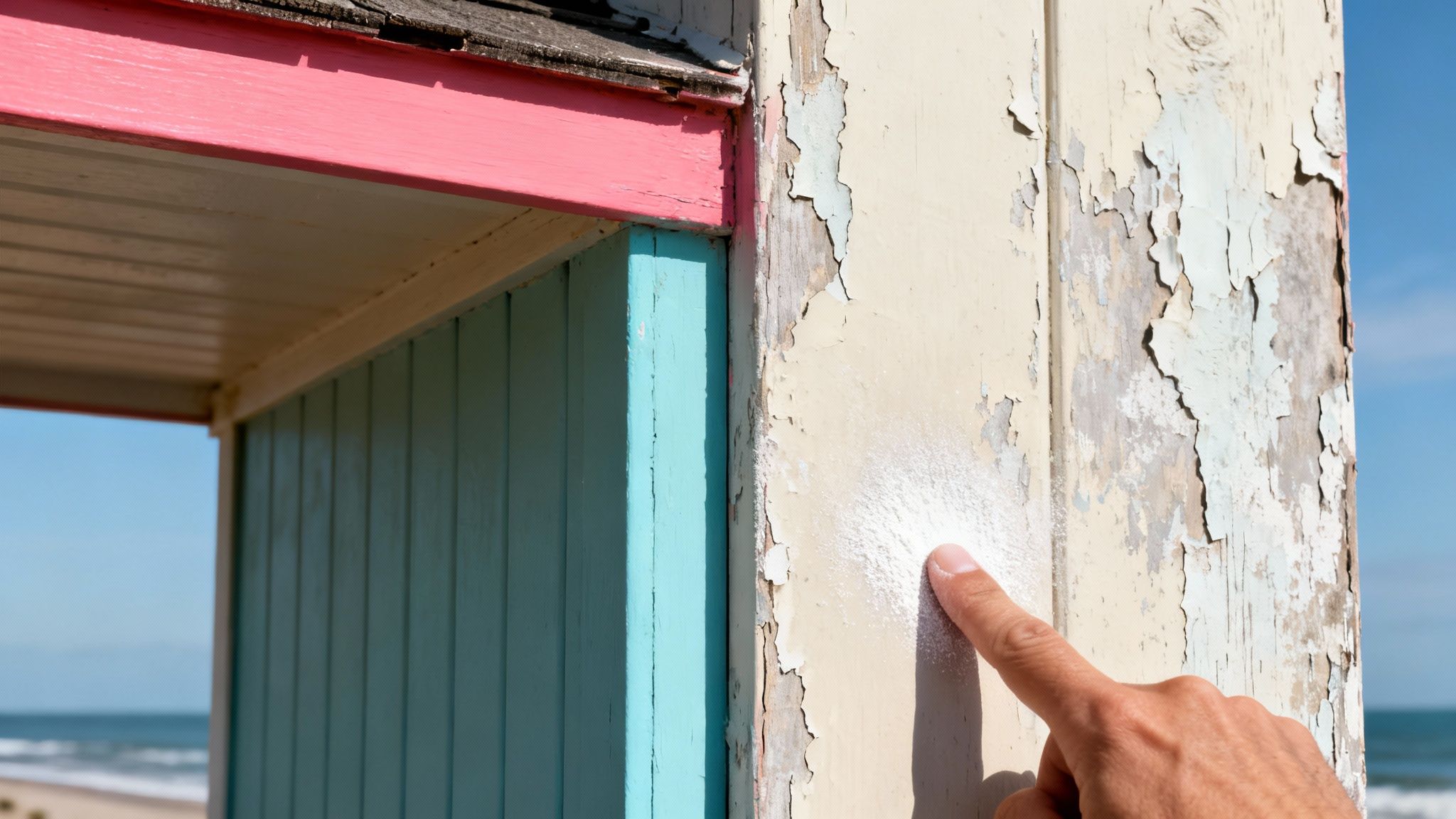
A common sign of this damage is chalking. If you wipe your hand across an old painted wall and get a powdery dust on it, that's chalking. It’s a clear sign your home's protective layer is failing.
“UV degradation doesn't just make paint look old; it fundamentally weakens its ability to protect your home. A paint film that has turned brittle and chalky is no longer an effective barrier against the salt and moisture that define our coastal climate.”
Shorter Lifespans are the Coastal Reality
This attack from the sun shortens the life of exterior paint. A paint job that might last 10 years elsewhere can start to fail in just four to six years here.
In a high-UV coastal area like Monterey, a standard paint that claims to last 15–25 years might only give you 7–12 years of real protection. To get more, you need special UV-resistant paints.
The paint's finish also matters. Different sheens offer different levels of UV protection. We created the ultimate guide to choosing the right paint finish to help homeowners make the best choice for our area.
The Destructive Cycle of Rain and Moisture
Our daily fog brings a gentle mist, but big winter storms are a different story. These storms can soak homes in Pacific Grove and Salinas for days.
Rain finds its way into tiny cracks and weak spots in your paint. For homes with wood siding, this is bad news. The wood soaks up moisture and swells. Then, when the sun comes out, it dries and shrinks.
The Problem with Swelling and Shrinking
This cycle of swelling and shrinking is how Monterey weather wears down exterior paint from the inside out. The movement puts a lot of stress on the paint.
Eventually, the paint cracks, flakes, or peels off in large sheets. Stucco homes have problems, too. Moisture trapped behind the paint can cause ugly water stains and make the stucco soft and crumbly.
The repeated expansion and contraction of siding is like bending a piece of plastic back and forth. Eventually, it weakens, cracks, and breaks. Your paint is the first thing to fail under this constant stress.
This process also creates the perfect home for mold and mildew. These growths love damp, shady areas. That’s why you often see green or black streaks on the north-facing walls of your house, which get less sun.
How Moisture Affects Paint Lifespan
The damage is more than just cosmetic. Experts agree that this wet-dry cycle is a primary cause of paint failure in our coastal climate.
Paint on exposed or shaded walls can fail up to 20–60% sooner than its warranty suggests. For more data on our local climate, you can read this report on Monterey County’s environmental health.
When water gets behind failing paint, it can lead to wood rot and serious structural damage. Learning what water intrusion is and why it's a serious problem is vital for any coastal homeowner.
Your Best Defense: Careful Preparation
The secret to a long-lasting paint job on the Monterey coast isn't the final coat of paint. It’s all about what happens before the can is opened.
A good exterior paint job is 80% preparation and only 20% painting. Simply putting new paint over a dirty, peeling surface is like building a house on sand. It won't last.
This is especially true for homes in Pacific Grove, Carmel, and Seaside. Proper surface prep is essential for protecting wood and stucco from premature weathering. Without this prep work, even the best paint will fail quickly.
Creating a Clean and Stable Surface
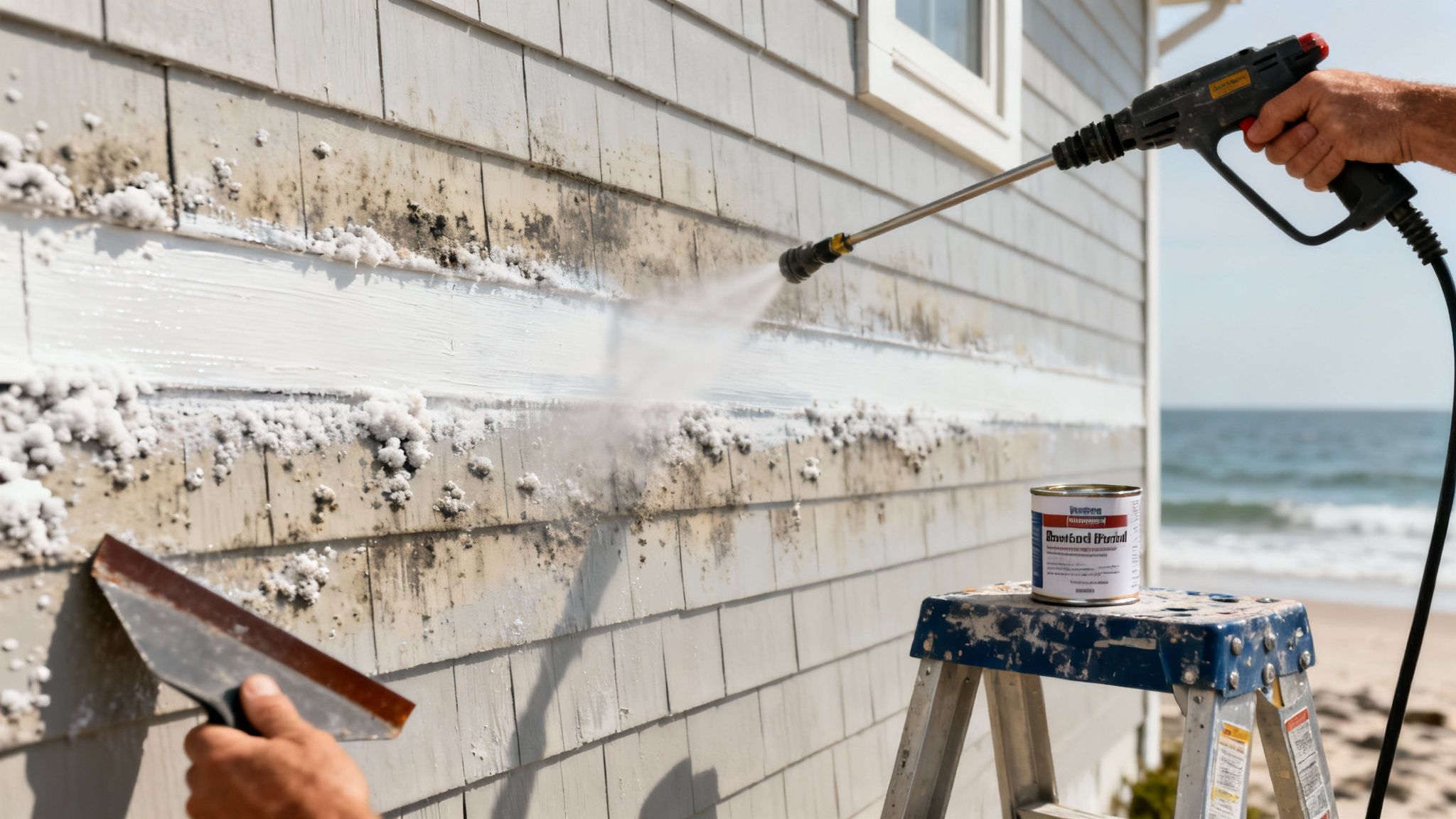
First, you have to remove every trace of salt, grime, and mildew from your home. This means a professional power washing to blast away all the buildup and loose paint.
Removing these things is a key part of fighting how Monterey weather wears down exterior paint. It's a step you cannot skip if you want the new paint to stick.
After the wash, the hands-on work begins. This includes:
- Scraping and Sanding: All loose paint must be scraped off. The edges are then sanded smooth to create a seamless surface.
- Repairing Damage: Any soft wood from moisture damage must be repaired or replaced. We fill cracks in stucco to block water.
- Securing and Caulking: Loose trim and old, cracked caulk around windows must be fixed. New, flexible caulk creates a watertight seal.
"Skipping any part of the prep work is like trying to put a bandage on a wound that hasn't been cleaned. You're just trapping the problem underneath, ensuring it will get worse. A lasting finish depends entirely on the quality of the surface you’re painting.”
The Final Step Before Painting
Once the surface is clean, smooth, and repaired, there's one last crucial step: priming. A high-quality, moisture-resistant primer is essential in our damp climate.
Primer seals repaired areas and stops old stains from showing through. Most importantly, it gives the topcoat a tacky surface to grip onto for a strong bond. You can learn more about the importance of surface preparation for painting in our guide.
Choosing the Right Paint for the Coast
The standard exterior paint from a big-box store is not made for the Monterey Peninsula. To protect your home, you need products designed for a tough marine environment. Durable, marine-grade paints and proper prep are essential.
Look for a premium, 100% acrylic latex paint. These paints are flexible, so they can expand and shrink with temperature changes. The best coastal paints also contain ingredients that fight mold and resist fading from the sun.
What to Look for in a Coastal Paint
- Strong Adhesion: The paint must form a tight grip on the primer and surface to keep moisture out.
- Salt-Spray Resistance: Marine-grade paints are made to repel corrosive salt particles from the ocean breeze.
- Moisture and Mildew Resistance: A formula with high-quality mildew-killers is a must in our foggy climate.
"On the Monterey Peninsula, the product matters just as much as the prep. Using a standard exterior paint is setting yourself up for failure in 2-3 years. A premium acrylic latex is the only choice for a finish that will last.”
When to Call a Professional Painter
It's time to call an expert if you see any of these warning signs:
- Widespread Peeling or Bubbling: If paint is failing in many spots, it points to a deeper problem that needs professional prep.
- Soft or Rotted Wood: Spongy spots on trim or siding mean moisture has already caused structural damage that needs immediate repair.
- Significant Mold or Mildew: Large patches of mold require special cleaning to remove completely before painting.
- Homes Taller Than One Story: Working on high ladders is dangerous. A professional team like Legacy Painting & Renovating Inc. has the safety training and equipment to do the job safely.
Legacy Painting and Renovating understands the Monterey Bay’s coastal exposure. We apply exterior coatings designed for moisture resistance, salt deflection, and UV protection.
Frequently Asked Questions
Homeowners from Carmel to Salinas often ask us how to protect their homes from our coastal weather. Here are answers to the most common questions.
How often should I repaint my house in Monterey?
You should repaint your exterior every 4 to 6 years in coastal areas like Monterey, Carmel, and Pacific Grove. Waiting longer risks letting moisture get behind failing paint, which can lead to costly wood rot and repairs. In marine-influenced areas, repainting cycles are shorter than the usual 7-10 years.
What are the first signs my exterior paint is failing?
Look for early signs to prevent bigger problems.
- Chalking: A white, powdery film on the surface when you wipe it with your hand.
- Fading Color: Bright colors looking dull and washed out.
- Fine Cracks: Tiny cracks, especially around windows and doors.
- Bubbling or Blistering: Small pockets where moisture is trapped under the paint.
- Dark Spots: Green or black spots that signal mold or mildew growth.
- Soft Wood: Spongy spots on wood trim, which mean rot has started.
What is the best time of year to paint my exterior?
The best time for exterior painting on the Monterey Peninsula is from late spring through early fall. During these months, we have drier weather, lower humidity, and mild temperatures. This helps the paint cure properly into a hard, protective shell.
Can I just paint over small spots of mildew?
No, never paint over mildew. This traps the mildew, which will continue to grow and push through the new paint. The surface must be treated with a mildew-killing cleaner, rinsed, and allowed to dry completely before any primer or paint is applied.
Why do professional painters use specific types of paint?
Professionals use specific paints because they know which ones can stand up to our coastal weather. They choose premium 100% acrylic latex paints because these formulas are flexible, stick well, and have ingredients to fight UV rays and mildew. This is the only way to get a durable finish that lasts in Monterey.
Living near the coast in Monterey, Salinas, Pacific Grove, or Carmel? Legacy Painting and Renovating can help protect your home with durable, weather-ready finishes designed for our region. Request a free exterior evaluation today.