
Direct Answer: Most bathroom remodels in Monterey require at least one permit. If you’re moving plumbing, adding electrical, or changing the layout, you need a permit. Cosmetic updates like painting or replacing fixtures usually don’t.
A lot of Monterey homeowners find out the hard way that skipping a permit on a bathroom remodel can cost more to fix than the remodel itself. We’re talking about failed home sales, forced demolition of finished work, and re-inspection fees that pile up fast. It’s not a paperwork formality — it’s something that directly affects your home’s value and your ability to sell it.
The confusion is understandable. Permit requirements in Monterey County aren’t the same everywhere. The City of Monterey, the City of Salinas, Pacific Grove, Carmel-by-the-Sea, and the unincorporated county areas each have their own building departments and their own thresholds for what triggers a permit. What flies in one city might require two separate inspections in another.
This article breaks down the two questions that actually matter: what work requires a permit, and what happens if you don’t get one. If you’re planning a bathroom renovation on the Monterey Peninsula — whether it’s a full gut job or a partial update — this is worth reading before you touch a single wall.
What Bathroom Work Actually Triggers a Permit in Monterey County
The simplest way to think about it: if the work changes anything behind the walls — plumbing pipes, electrical wiring, structural framing — you almost certainly need a permit. If it’s surface-level work that a future inspector couldn’t even see, you probably don’t.
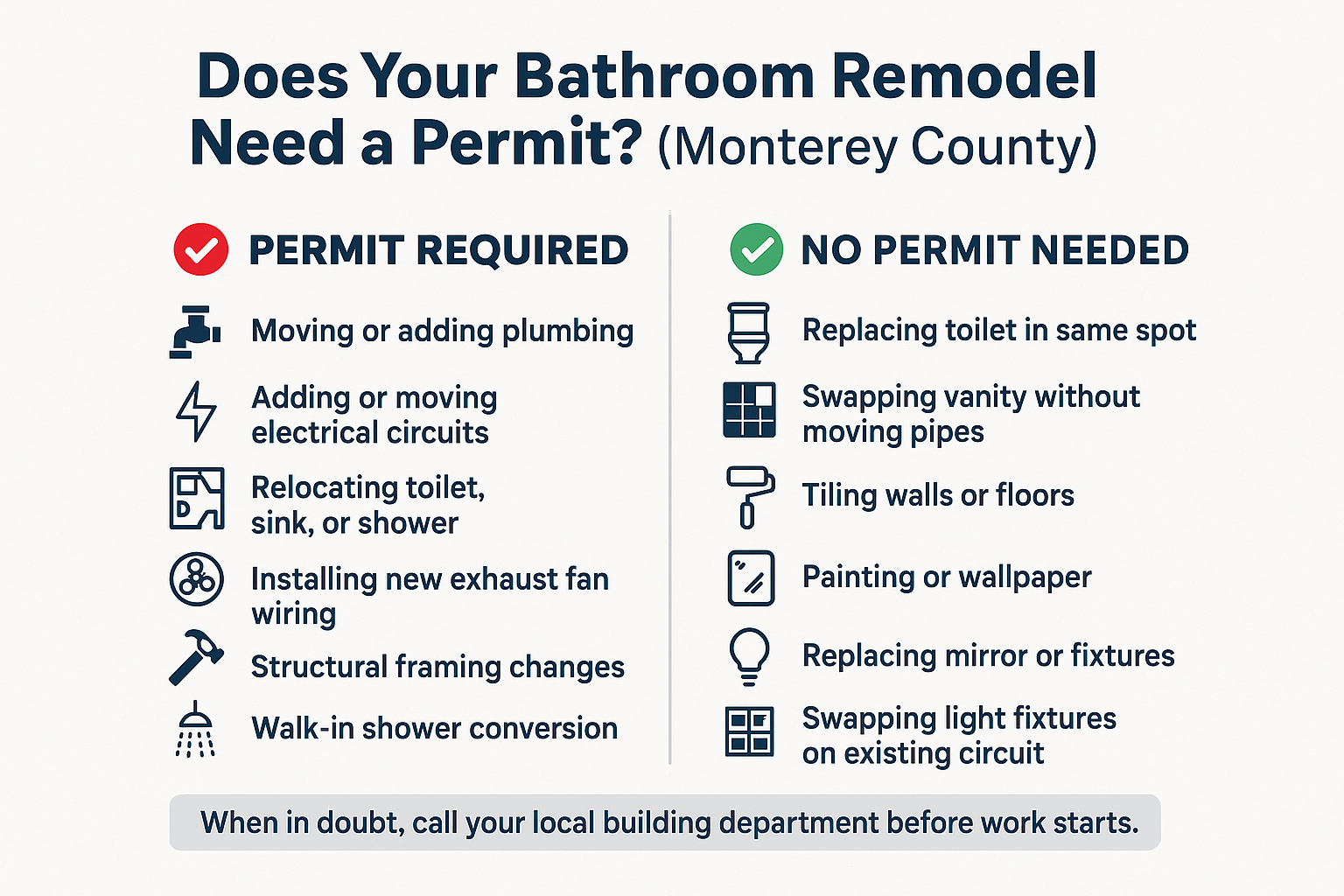
Here’s what typically requires a permit in Monterey County jurisdictions:
- Moving or adding a drain, supply line, or vent stack
- Relocating a toilet, sink, or shower to a new position
- Adding a new electrical circuit or moving outlets
- Installing a new exhaust fan that ties into your home’s electrical system
- Any work that changes the square footage or floor plan of the bathroom
- Replacing a tub or shower with a walk-in shower (structural framing often involved)
- Installing a tankless water heater dedicated to the bathroom
And here’s what generally does not require a permit:
- Replacing a toilet in the same location with no plumbing changes
- Swapping out light fixtures on an existing circuit
- Tiling over existing tile or installing new flooring
- Painting, wallpaper, or other purely cosmetic updates
- Replacing a vanity or mirror without moving plumbing
If you’re doing a full bathroom renovation that involves multiple of the items above, you could be looking at a plumbing permit, an electrical permit, and a building permit — all separate applications in some cities.
When in doubt, call your local building department before work starts. It’s a free phone call, and it’s a lot cheaper than unpermitted work that shows up on a disclosure form.
How the Permit Process Actually Works in Monterey and Salinas
Most homeowners imagine permits as a bureaucratic headache, but the actual process is more straightforward than it sounds — especially for a standard bathroom remodel.
In the City of Monterey, residential building permits for bathroom work are handled through the Community Development Department at City Hall on Pacific Street. You or your contractor submits plans, pays the permit fee, and waits for approval before work begins. Fees vary by project scope, but a standard bathroom remodel permit in Monterey typically runs $200 to $600 depending on valuation. More complex projects involving structural work can run higher.
In Salinas, the Building & Safety Division handles permits similarly. Salinas has moved a significant portion of its permit application process online, which speeds things up. Simple permits can sometimes be issued same day for straightforward work. Larger projects requiring plan check can take 2 to 6 weeks.
Pacific Grove and Carmel have their own departments and their own fee schedules. Carmel-by-the-Sea, given its historic overlay and design review requirements, tends to have more layers — especially if your bathroom changes touch the exterior of the home in any way, like adding a window.
A few things worth knowing about the inspection process itself:
- Rough-in inspection happens before walls are closed up — the inspector checks the plumbing and electrical work while it’s still visible
- Final inspection happens after everything is complete and confirms the work matches what was permitted
- Your contractor is responsible for scheduling inspections; make sure yours actually does this and doesn’t close up walls before the rough-in is cleared
If you’re working with a licensed contractor — and in California, they should hold a valid CSLB license — they’ll handle the permit application process as part of the job. Ask upfront whether permit fees are included in your estimate or billed separately.
Permit vs. No Permit: Quick Reference for Bathroom Remodels
Use this as a fast-reference guide when you’re deciding whether your planned bathroom work needs a permit in Monterey County.
What Happens If You Remodel Without a Permit
Skipping a permit might feel like saving time and money. But for most Monterey homeowners, it creates a problem that surfaces at exactly the wrong moment — when you’re trying to sell the house.
In California, unpermitted work must be disclosed to buyers. If your bathroom was remodeled without permits, that goes on the disclosure form. Buyers can use it to renegotiate the price, demand the work be brought up to code before close, or walk away entirely. In a market like the Monterey Peninsula, where home values are high and buyers’ agents are sharp, this is a real risk.
Beyond the sale, there are other scenarios that can get expensive:
- Insurance claims: If unpermitted work contributed to water damage or an electrical issue, your homeowner’s insurance company may deny the claim
- Retroactive permitting: Some cities require you to open walls to expose the original work for inspection — meaning you’re paying to demolish and redo finished work
- Fines: Monterey County building departments can issue fines for unpermitted work, sometimes calculated as a multiplier of the original permit fee
The full home remodel version of this problem is even messier. If a bathroom remodel was part of a larger renovation and none of it was permitted, the retroactive cost to bring everything into compliance can run into the tens of thousands.
And if you’re thinking about the DIY route — be honest with yourself about whether you’re prepared to pull permits and schedule inspections yourself. That’s a real part of the job. We’ve written about common regrets homeowners have after DIYing a bathroom — permits are one of the biggest ones.
Permit Costs and Timelines by Monterey County Jurisdiction
These are general ranges based on typical residential bathroom remodel projects. Actual fees depend on project valuation and scope — always confirm directly with the local building department.
| Jurisdiction | Typical Permit Fee Range | Estimated Approval Time |
|---|---|---|
| City of Monterey | $200 – $600+ | 1–3 weeks (plan check) |
| City of Salinas | $150 – $500+ | Same day to 2 weeks |
| Pacific Grove | $200 – $600+ | 1–3 weeks |
| Carmel-by-the-Sea | $300 – $800+ | 2–6 weeks (design review may add time) |
| Unincorporated Monterey County | $200 – $700+ | 1–4 weeks |
One More Thing: Knowing the Difference Between Renovation and Remodel Matters Here
This isn’t just semantics. In the context of permits, whether you’re renovating (restoring or updating what’s already there) versus remodeling (changing the layout or function) can affect what the building department requires from you.
Replacing a worn-out shower with an identical shower is renovation. Moving the shower to the other side of the bathroom and converting the old space into a linen closet is remodeling. The second version almost always needs a permit. The first might not, depending on whether you’re touching the plumbing supply lines.
If you’re unclear on the distinction and how it applies to your specific project, this breakdown of renovation vs. remodeling is worth a few minutes of your time before you sit down with a contractor.
And when you do sit down with a contractor, ask directly: Will you pull permits for this work, and are those fees included in this estimate? A licensed, insured contractor should answer that question without hesitation. If they suggest skipping permits to keep the cost down, that’s a clear signal to keep looking.
Frequently Asked Questions About Bathroom Remodel Permits in Monterey
Can my contractor pull the permit, or do I have to do it myself?
A licensed contractor can pull permits on your behalf — in fact, that’s the standard way it works on professional jobs. If your contractor holds a valid CSLB license, they’re authorized to apply for and manage permits as part of the project. Make sure you confirm this upfront and ask whether permit fees are included in the estimate or added on top.
What if the previous owner did unpermitted bathroom work? Am I responsible?
Yes, as the current owner, the responsibility transfers to you. When you sell, you’ll need to disclose it. Some buyers will ask you to retroactively permit and inspect the work before close. It’s worth getting a licensed contractor to assess what was done and whether it meets current code — that assessment can help you understand what you’re dealing with before it becomes a surprise.
How do I find out if a permit was pulled for past bathroom work on my home?
Contact the building department for the city or county where your home is located and ask for a permit history search. In Monterey and Salinas, this can often be done online or by phone with your home’s address. It’s free and takes about five minutes.
Does painting a bathroom require a permit?
No. Painting — including full bathroom repaints — is considered cosmetic work and doesn’t require a permit anywhere in Monterey County.
What if I’m just replacing the tile in my shower?
Replacing tile on existing surfaces generally doesn’t require a permit. But if the tile work uncovers water damage that requires replacing the cement board backer, the shower pan, or the waterproof membrane, those repairs may trigger an inspection depending on scope. When in doubt, call your building department or ask your contractor before work starts.
My bathroom remodel is part of a bigger renovation project. Do I need separate permits for each?
Often yes. Plumbing, electrical, and building work can each require separate permits, even if they’re part of the same renovation. A good contractor will sort this out during the planning phase and pull everything needed as a package. You can also read through our painting and remodeling guide for Monterey County for a broader look at how permits factor into larger home projects.
Planning a Bathroom Remodel in Monterey County?
Legacy Painting and Renovating handles bathroom renovations across the Monterey Peninsula — from Pacific Grove to Salinas to Carmel Valley — and pulls all required permits as part of the process. If you have questions about what your project requires, or you’re ready to talk scope and pricing, reach out by phone at (831) 917-0047 or through the contact form at legacypaintingrenovating.com.