Direct Answer: For interior trim in coastal Monterey homes, semi-gloss is the most practical finish for most rooms, it resists moisture, cleans easily, and holds up to daily contact far better than satin or eggshell.
Most homeowners searching for trim paint advice are actually asking the wrong question. They type in a brand name or a product comparison, but the decision that determines how their trim holds up over time is not which brand to buy. It is which sheen level to choose.
On the Monterey Peninsula, that choice carries more weight than it would in a dry inland climate like Sacramento or Fresno. Salt air and marine layer humidity mean your trim faces persistent moisture cycling, especially in bathrooms and kitchens. A finish that performs fine in those drier environments can blister, yellow, or peel much faster here because the surface never fully dries between fog cycles.
I’ve seen this pattern show up repeatedly in the work we do across Monterey County, homeowners repainting trim sooner than they expected, often because the original finish was chosen without thinking through the coastal conditions it would face. This article focuses on the sheen decision specifically, because that is where the real difference in performance lives.
What Each Sheen Level Actually Does on Trim
Sheen is not just about how shiny something looks. It directly affects how hard the cured paint film is, how well it resists moisture, and how cleanly it wipes off when someone bumps it or splashes water near it. For trim specifically, baseboards, door frames, window casings, crown molding, these things matter more than they do on walls.
Here is what each level means in practice:
- Flat: No sheen, rough texture. Hides imperfections well but absorbs moisture and cannot be wiped clean. Never appropriate for trim.
- Eggshell: Low sheen, slightly smoother. Sometimes used on walls, but far too soft for trim surfaces that see daily contact.
- Satin: Medium sheen, wipeable, popular for trim in interior rooms with low moisture exposure. Soft enough that it can look slightly uneven on trim with texture.
- Semi-gloss: Higher sheen, noticeably harder film, resists moisture well, and wipes clean easily. The most practical choice for most interior trim, especially in kitchens and bathrooms.
- High-gloss: Maximum hardness and sheen. Extremely durable and washable, but every imperfection in the surface shows. Only works well on very smooth, well-prepped trim.
For most rooms in a Monterey home, semi-gloss is the finish I’d steer a homeowner toward. It handles the humidity cycling this climate throws at it, and it cleans up without wearing down. If you want a deeper look at why trim paint fails faster in coastal homes, that breakdown is worth reading before you decide.
Trim Sheen Comparison for Coastal Interiors
This table shows how each sheen level stacks up on the things that matter most for trim in a coastal Monterey home.
| Sheen Level | Moisture Resistance | Cleanability | Best Use on Trim |
|---|---|---|---|
| Flat | Poor | Not washable | Avoid on trim entirely |
| Eggshell | Low | Minimal | Walls only, not trim |
| Satin | Moderate | Wipeable | Low-traffic, dry rooms |
| Semi-Gloss | Good | Easily washable | Most interior trim, kitchens, baths |
| High-Gloss | Excellent | Very washable | Smooth, flawless trim only |
Why the Coastal Climate Changes the Math Here
The Monterey Peninsula’s marine layer is not just a morning inconvenience. It is a recurring moisture event that affects how paint films cure, breathe, and hold up season after season. Fog rolls in off Monterey Bay, surfaces absorb humidity, then the afternoon sun dries everything out again. That expansion-and-contraction cycle is hard on any coating that is not built to handle it.
For interior trim, the concern is most acute in bathrooms and kitchens. Steam from showers and cooking raises the humidity in those rooms well above what most paint films were tested at. A satin finish may perform fine in a Sacramento bathroom. But in a Pacific Grove or Carmel home that sees persistent coastal fog on top of interior moisture, that same finish is under more stress.
Semi-gloss and high-gloss finishes form a denser, harder film that is simply more resistant to that repeated wetting. The California Air Resources Board has resources on interior coating performance standards that inform how products are formulated for regional conditions, worth knowing if you are weighing low-VOC options, which are something we work with regularly. If you want to understand what those VOC designations actually mean in practice, this breakdown of what low-VOC means in California is a good place to start.
For rooms that see heavy moisture cycling, high-gloss is worth considering if you are willing to put in the prep work it demands. But for most homeowners, semi-gloss is the right balance of durability and forgiving application.
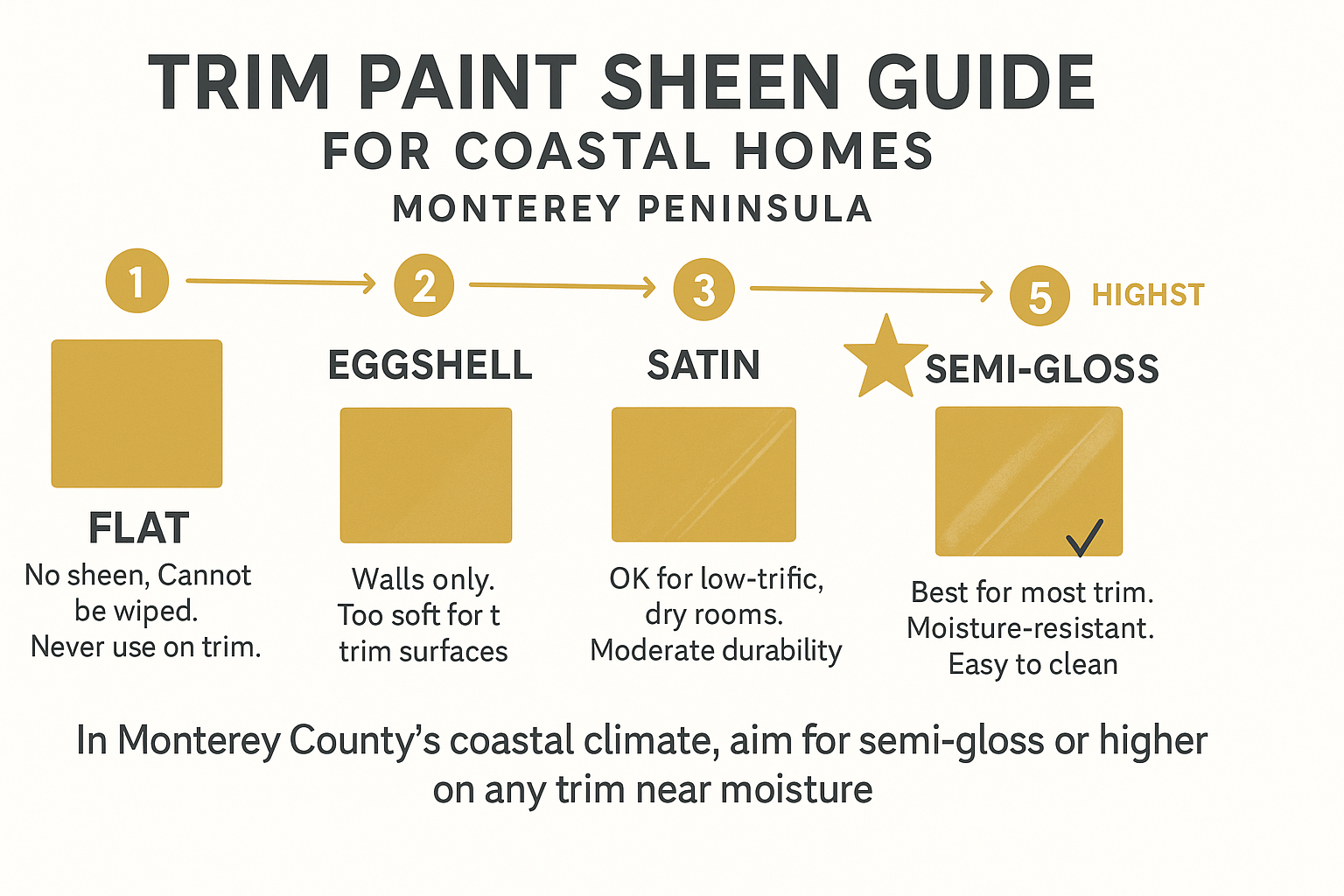
The Sheen Spectrum for Interior Trim: Coastal Climate Guide
This infographic maps each sheen level to its real-world performance on interior trim in a Monterey coastal home.
Why Prep Determines Whether the Finish Even Matters
Choosing the right sheen is only half the equation. If the surface is not properly prepared before the new coat goes on, the finish level will not save you.
This is where most DIY trim repaints fail before a single brushstroke goes down. Existing trim is almost always glossy from whatever was applied previously. If you roll or brush a new coat directly over a glossy surface without sanding it down or applying a liquid deglosser first, adhesion is poor. The new paint may look fine for a few weeks, then start lifting at corners and edges.
Proper prep for a trim repaint typically involves:
- Cleaning the surface to remove grease, dust, and any residue from cleaning products
- Sanding or deglossing the existing finish so the new coat has something to grip
- Spot-priming any bare wood, repairs, or stained areas
- Caulking gaps between trim and wall before paint goes on
- Allowing adequate dry time between primer and topcoat, which matters more in Monterey’s cooler, humid conditions
One of our customers described the crew on her exterior project this way: “The two painters were thorough in the preparation, painting and clean-up.”, Mary Ellen B. That same standard of attention applies directly to interior trim work. Prep done well is mostly invisible when the job is finished, you only notice it years later when the paint is still holding.
For a broader look at how Monterey’s climate shapes a house painting project from start to finish, that article covers conditions that affect interior and exterior work alike. And if your trim is part of a higher-traffic area where paint wears faster, this piece on why high-traffic rooms get painted more often explains the compounding factors.
Frequently Asked Questions About Trim Paint Finishes
Can I use the same sheen on trim and walls?
You can, but most painters and designers keep them separate for a reason. Walls typically get flat or eggshell, while trim gets satin or semi-gloss. The contrast in sheen creates a clean visual separation that makes the architectural details of a room read more clearly. Matching sheens tends to flatten the whole space.
Is high-gloss really necessary, or is semi-gloss enough?
For most Monterey homeowners, semi-gloss is enough. High-gloss is genuinely more durable and washable, but it demands a near-perfect surface, any ding, grain, or brush mark is visible. Unless your trim is very smooth and the surface prep is meticulous, semi-gloss is the more forgiving and practical choice.
My bathroom trim keeps peeling after a year or two. What’s going wrong?
In most cases, it comes down to two things: insufficient prep and a finish that is too soft for a wet room. If the existing surface was glossy and no sanding or deglosser was used before repainting, adhesion was poor from the start. Combine that with a satin or eggshell finish in a steamy bathroom, and peeling becomes almost inevitable. Moving to semi-gloss and doing proper surface prep before the next repaint usually solves it.
Does the brand of paint matter as much as the sheen level?
Brand matters in terms of quality, a quality product from a reputable manufacturer will cure harder and last longer than a bargain option. But for most homeowners, the sheen decision has more day-to-day impact on how the trim performs than the specific brand does. Get the sheen right first, then choose a quality product within that category.
How long should trim paint last in a Monterey home?
With proper prep and the right sheen for the room, interior trim can last 8 to 12 years or longer before it needs a full repaint. High-moisture rooms like bathrooms and kitchens will fall closer to the shorter end of that range. Trim in dry living spaces or bedrooms often lasts on the longer end. The main variables are prep quality, finish choice, and how much cleaning and contact the surface sees.
Ready to Stop Repainting Your Trim Every Few Years?
If you have questions about which finish is right for your specific rooms or your home’s conditions here in Monterey County, we are happy to talk through it. Legacy Painting and Renovating offers free estimates and can walk you through product and finish options before any work begins. Reach us at (831) 917-0047 or through the contact form at legacypaintingrenovating.com.