
As the year wraps up, Homeowners Associations (HOAs) in Monterey and Carmel are in the middle of budget season. This isn’t just about numbers. It’s the perfect time to plan big projects like exterior painting.
Scheduling your painting project now is a smart move. It helps you book the best contractors, get better prices, and avoid costly emergency repairs later.
Why Smart HOAs Plan Painting During Budget Season
For an HOA board or property manager, budget season is a great opportunity. While daily tasks are important, planning for large projects like exterior painting is one of the wisest financial decisions you can make.
Think of it like booking a flight months in advance. You get a better price before the peak season rush. Acting now saves money and stress.
In busy markets like Salinas and Pacific Grove, good painters are in high demand during spring and summer. If you wait, you’ll face limited choices and higher prices. By planning ahead, your board has time to get quotes, check references, and make a good choice without pressure.
The Advantage of Early Scheduling
Planning ahead does more than just get you on the schedule. It gives you control over the whole project. You can choose the best time to paint a house exterior based on our local coastal weather.
This also helps you avoid special assessments. When a big painting project is planned and budgeted, residents trust the board more. It shows you are managing the community’s money and property well.
Strategic Comparison: Planning Now vs. Waiting Later
The difference between planning now and waiting is huge. This chart shows why budget season is the best time to schedule your community’s exterior painting.
| Factor | Planning During Budget Season (Now) | Waiting Until Peak Season (Later) |
|---|---|---|
| Cost & Pricing | Lock in current pricing and avoid the spring/summer rush. | Higher prices due to high demand and busy contractors. |
| Contractor Choice | You can choose top-rated, experienced contractors like Legacy Painting. | Fewer choices. You might have to settle for a less experienced crew. |
| Project Timeline | Flexible scheduling allows for better planning and fewer surprises. | Rushed timelines and a high chance of delays. |
| Board Control | Plenty of time for research, comparing quotes, and getting board approval. | Fast decisions with little time for careful review. |
| Resident Impact | Good communication and scheduling keep residents happy. | Short notice and scheduling conflicts can upset homeowners. |
Using your budget season to plan a 2026 exterior painting project turns a stressful expense into a smart investment for your community.
The Hidden Costs of Delaying Exterior Painting
Putting off an exterior paint job might seem like a way to save money now. But it’s a risky move that usually costs more in the long run. For HOA boards in Monterey County, waiting is not just a cosmetic issue—it can lead to serious, expensive problems.
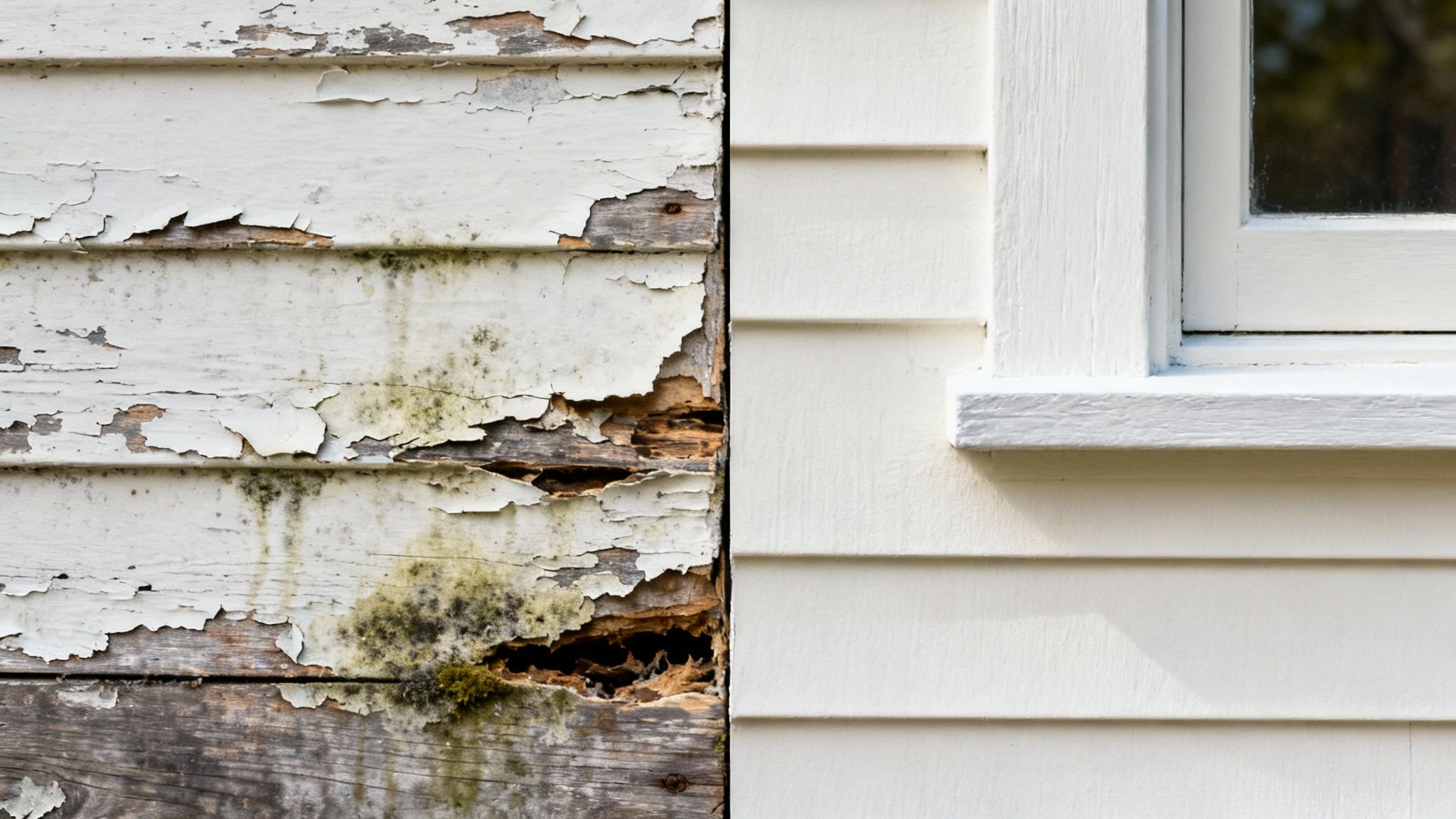
Think of paint as a shield for your building. When that shield is weakened by coastal fog in Pacific Grove or the hot Salinas sun, the materials underneath are left exposed.
From Minor Flaw to Major Failure
The first signs of trouble are small. You might see a little bubbling paint or a tiny crack. These small issues let moisture get in, which causes damage to spread quickly.
This is a big problem for buildings with wood siding. Moisture causes wood to swell, rot, and decay. A simple paint job can turn into a major renovation with expensive carpentry repairs. The same is true for stucco. Cracks let water in and can weaken the entire wall.
Proactive maintenance is always more cost-effective than reactive repair. A dollar spent on timely painting can easily save ten dollars on structural repairs later on.
The True Financial Impact of Neglect
Ignoring peeling paint doesn’t just risk physical damage. It lowers property values and guarantees higher repair bills later. Experts recommend repainting wood siding every 4–6 years and stucco every 7–10 years. Waiting longer can lead to siding failure and dry rot.
The numbers are clear. While painting a house costs money, repairing water damage can easily cost double or triple that amount. This is why planning your painting project during HOA budget season is a smart financial strategy. It keeps these hidden costs from getting out of control.
The Domino Effect on Your Community
When paint starts to fail, it affects the whole community in several ways:
- Decreased Curb Appeal: Peeling or faded paint makes the property look uncared-for. This can scare away buyers and lower property values for everyone.
- Increased Pest Problems: Damaged wood is a perfect home for termites and carpenter ants. This can lead to infestations that require professional exterminators.
- Higher Utility Bills: Cracks and gaps let air leak in and out. This makes HVAC systems work harder, raising energy costs for residents.
- Potential for Water Intrusion: Moisture can get deep into the building, causing mold, mildew, and stained walls. It’s important to understand what is water intrusion and why it’s a serious problem.
A smart investment in a quality paint job today is the best way to avoid these costly problems tomorrow.
Think ROI: Why Painting is an Investment, Not an Expense
When it comes to HOA projects, exterior painting offers a huge return on investment (ROI). It’s important for board members to see this project as a smart investment that protects and grows the community’s value. It’s not just another expense.
A fresh, modern look sends a strong message. In competitive markets like Monterey and Carmel, it tells residents and buyers that this is a well-kept, desirable community.
Boosting Property Value and Marketability
A beautiful exterior is the first thing people see. A clean paint job signals that a property is modern and cared for. This can make properties sell faster and for better prices.
On the other hand, a building with faded or peeling paint suggests neglect. It makes buyers wonder what other problems might be hiding. A great appearance is key to the HOA’s brand and affects every homeowner’s investment.
Key Takeaway: A well-maintained property doesn’t just hold its value; it actively increases it. This creates pride among residents and makes the community a more attractive place to live.
It’s More Than Just a Pretty Facade
The financial benefit of exterior painting goes beyond looks. The new paint is a protective shield. It defends your buildings against the harsh coastal conditions in Pacific Grove and the sun in Salinas. It prevents costly damage from moisture and pests.
The data shows that exterior painting is one of the smartest investments an HOA can make. According to Zillow, homes with well-painted exteriors sell for up to 2.9% more on average. It delivers a much better return than other common projects.
Long-Term Savings and Happier Residents
By investing in a quality paint job now, your HOA avoids bigger repair bills later. Fixing wood rot or water damage costs much more than a proactive repaint. This planning prevents surprise special assessments, which residents dislike.
A well-kept community also leads to happier residents. Homeowners feel good about where they live, which builds a stronger community. While painting is a big step, there are other affordable ways to refresh your home’s exterior to boost curb appeal even more.
For more on project returns, check out our guide on home renovation return on investment. When you see exterior painting as a value-driven decision, it’s an easy choice for any HOA board.
Your Step-By-Step HOA Painting Project Guide
Painting an entire community can feel like a big job. But a smart, step-by-step approach makes it manageable. For HOA boards in Monterey County, a clear plan is the key to a successful project that keeps everyone happy.
Following a clear process ensures every detail is handled. It turns a complex job into a smooth one.
Step 1: Assess Your Current Paint Condition
Before you get quotes, you need to know what you’re dealing with. Walk through the community and look for signs of wear. Or, hire a professional for a full assessment.
Look for these specific signs:
- Fading and Chalking: Does the color look dull? A chalky residue when you touch it means the paint is breaking down.
- Cracking and Peeling: Check for cracks or flaking paint, especially on wood trim and around windows.
- Stains and Mildew: Look for dark spots, especially on shaded walls where moisture collects.
- Wood Rot and Stucco Cracks: Check for soft spots in wood or cracks in stucco. These must be repaired before painting.
A detailed assessment helps you create a clear scope of work. This ensures you get accurate quotes from contractors.
Step 2: Develop a Detailed Scope of Work
Next, create a Scope of Work (SOW) document. This is one of the most important steps. A good SOW means every contractor bids on the exact same project, making it easy to compare offers.
Your SOW should include:
- Areas to be Painted: Be specific. List all surfaces, including siding, trim, doors, and fences.
- Required Repairs: Note all known issues, like wood rot or stucco cracks.
- Surface Preparation: A great paint job is all about prep. To learn more, read about surface preparation for painting.
- Paint Specifications: Name the type and quality of paint and primer you want.
- Timeline and Logistics: Outline your ideal start and end dates and any community rules.
Step 3: Navigate the Bidding Process
With your SOW, ask for proposals from at least three qualified painting contractors with HOA experience. Don’t just look at the price. A professional proposal should be detailed and address every item in your SOW.
You are looking for a partner. They should provide clear documents, be licensed and insured, and have a strong portfolio of projects in places like Salinas or Pacific Grove. This is where a company like Legacy Painting and Renovating stands out. We offer clear estimates designed for easy board approvals.
The infographic below shows the positive return on investment from a well-planned painting project.
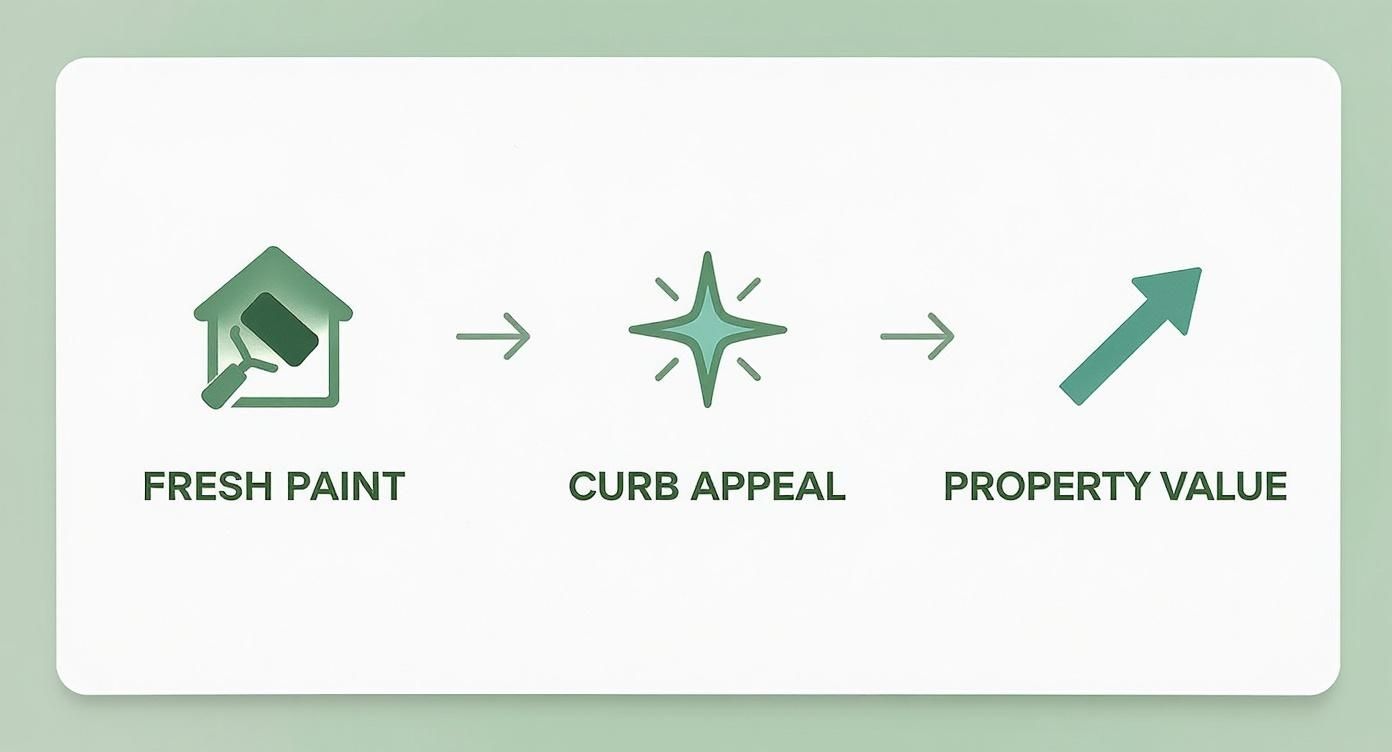
This shows that investing in quality exterior painting helps your community’s financial and visual health.
Step 4: Schedule and Communicate with Residents
After choosing your contractor, clear communication is key. Work with your painter to create a detailed schedule. Using essential project scheduling techniques helps keep things on track.
Give residents plenty of notice about:
- The project start and end dates.
- When their building will be worked on.
- Instructions for moving items from patios and balconies.
- Contact info for someone who can answer questions.
A well-informed community is a happy one. Proactive communication helps the project run smoothly for everyone.
How to Budget for Your Painting Project
A successful HOA painting project starts with a smart budget. For boards in Monterey and Carmel, getting the numbers right is the most important step. It ensures a beautiful result without surprise costs.
The main factors for your budget are the size and complexity of your property. A multi-story complex will cost more than single-story townhomes because of equipment and crew needs. The building materials also matter. Stucco and wood siding need different prep work and paint, affecting the cost.
Key Factors Influencing Your Budget
The current condition of your buildings is a huge factor. Is there a lot of peeling paint or wood rot? The more prep work needed, the higher the cost. This is why regular maintenance saves money in the long run.
Several key items will shape your project cost:
- Labor Costs: This is usually the biggest part of the budget. It covers the crew’s time for prep, painting, and cleanup.
- Material Costs: This includes high-quality primers, paints, and repair materials.
- Equipment Rentals: You may need to budget for scaffolding, lifts, and power washers.
- Accessibility: Hard-to-reach areas can increase labor time and cost.
Why an Itemized Quote is Essential
When you get bids, insist on a detailed, itemized quote. It’s the only way to compare contractors fairly. A vague estimate is a red flag.
A professional proposal should break down the costs for:
- Surface Preparation: Every step, from power washing to repairs, should be listed.
- Materials: The quote must specify the brand and type of paint used.
- Labor: You should see the estimated hours and crew size.
- Cleanup and Disposal: A clear plan for keeping the area tidy is a must.
Understanding these details is key to a solid budget. Our article on how to estimate a painting job offers more insights for HOA boards.
Planning for the Long Term
While national averages can be a guide, they are just a starting point for an HOA. Painting a multi-story building can easily cost 50% more than a single-story one. For more information, you can discover more insights about exterior painting costs on Angi.com.
Your HOA should include exterior painting in its long-term reserve study. By setting aside funds each year, the project becomes a planned expense, not a crisis. This forward-thinking approach keeps your community in Salinas or Pacific Grove looking great and financially stable.
Frequently Asked Questions About HOA Painting
As your HOA board starts budget season, planning a community-wide painting project is likely a top priority. It’s a big job, and questions are normal. Here are some straightforward answers to common questions from boards across Monterey County.
How often should our HOA repaint the exterior?
This depends on your location and building materials. For coastal communities in Monterey and Carmel, the salt air is harsh on paint. You will likely need to repaint every 5-7 years.
Inland in Salinas, the sun is the biggest issue. Stucco can often go 7-10 years, but wood siding may need a fresh coat every 4-6 years to prevent rot. A yearly inspection is the best way to know for sure.
What should we look for in an HOA painting contractor?
The right partner is crucial. You need a licensed and insured contractor with proven HOA experience in our area. Ask for a detailed proposal that outlines the work, products, and timeline.
Good communication is also very important. The contractor should work well with the board, property manager, and residents. Legacy Painting and Renovating has extensive experience with HOAs, apartment complexes, and multi-unit properties across Monterey County.
How can we minimize disruption for residents?
Clear and early communication is the key. A good contractor will help create a detailed schedule to share with homeowners well in advance.
A good communication plan includes advance notices, clear instructions for moving personal items, and a commitment to keeping the worksite clean and tidy each day.
Why is surface preparation so important?
Surface preparation is the foundation of a long-lasting paint job. It involves cleaning, scraping old paint, and repairing any damage.
Skipping proper prep work is a big mistake. It almost always leads to peeling and blistering, meaning you’ll have to redo the project much sooner.
Can a new exterior color really increase property values?
Absolutely. A fresh, modern color scheme can transform a community’s curb appeal. It makes the property look well-maintained and more attractive to buyers, which boosts home values for everyone.
A professional color consultation is a smart idea. An expert can help your board choose a timeless color palette that fits the architecture and looks great for years.
Board members and property managers should assess paint condition now. Request quotes before year-end to lock in preferred timelines and pricing for 2026.
Managing an HOA or multi-unit property in Monterey, Salinas, or Pacific Grove? Contact Legacy Painting and Renovating Inc. today for a detailed proposal and reserve your 2026 project window.