
If you live along the coast and have ever wondered, "Is my exterior paint fading too fast?"—you're not imagining it. Homes along the Monterey Bay face a unique battle with the elements. This constant fight can slash a paint job's lifespan down to just 4 to 6 years, instead of the typical 8 to 10 years seen further inland.
Your paint isn't just fading. It's under assault from the sun, salt, and fog. This guide explains why this happens and what homeowners in Salinas, Monterey, and Carmel can do to protect their investment.
Why Coastal Homes Are Tough on Exterior Paint
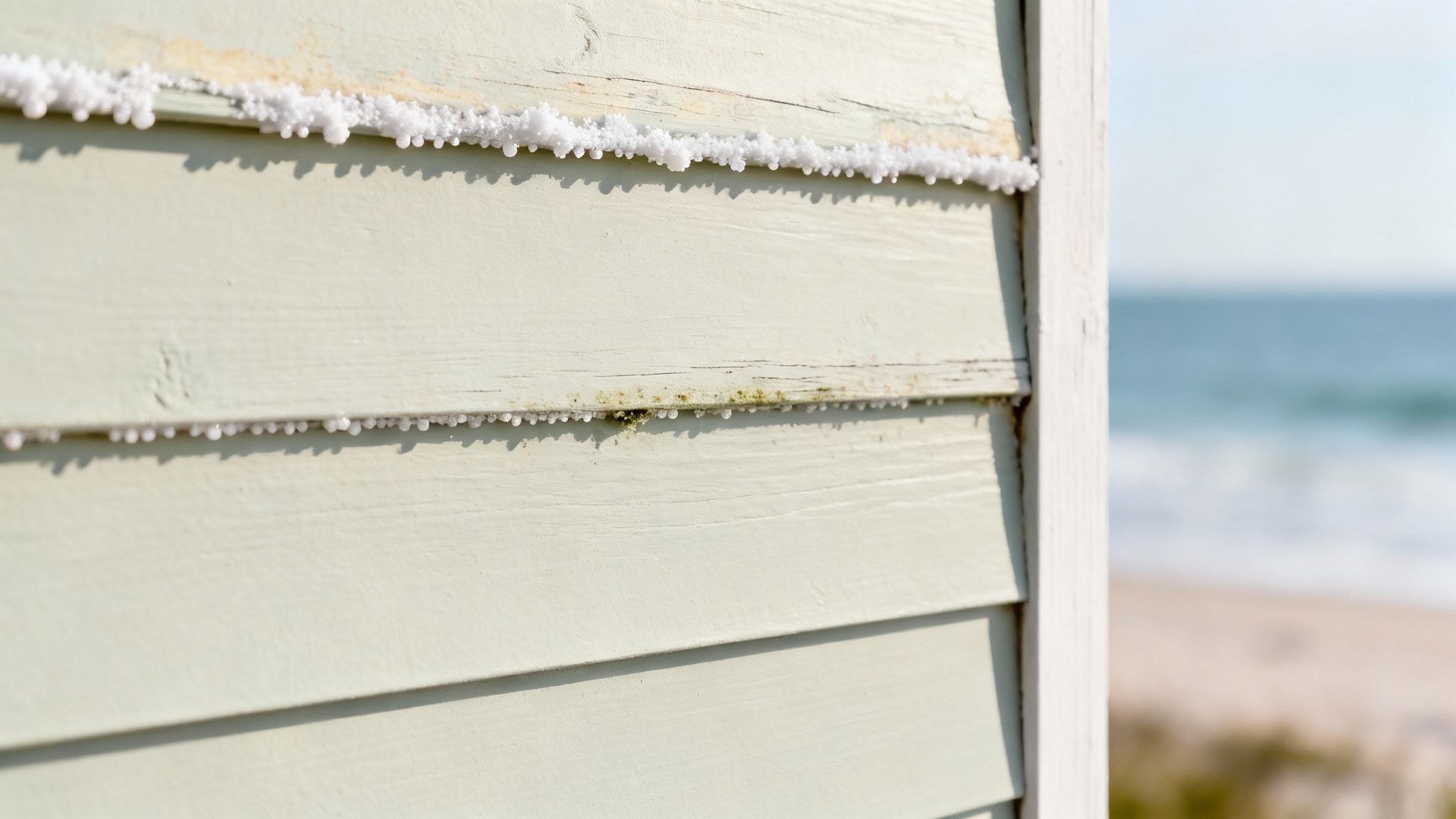
Living in a beautiful place like Carmel or Pacific Grove comes with a tradeoff. The very elements that make our coastline breathtaking are also relentlessly attacking your home's exterior. Unlike properties just a few miles inland, coastal homes are exposed to a powerful mix of forces that break down paint prematurely.
Many local painting companies talk about durability but rarely explain what that really means for a home by the ocean. A standard paint job just isn’t built for the specific conditions we face here. This leaves homeowners frustrated when their investment starts to peel, bubble, or chalk up years ahead of schedule.
The Three Main Culprits
Understanding why your paint is fading is the first step toward a long-lasting solution. Your home's exterior is constantly dealing with three major environmental attackers.
Here’s a quick breakdown of the primary causes of premature paint fading on coastal homes. This table summarizes the key environmental factors in Monterey County that accelerate paint degradation.
| Environmental Factor | How It Damages Your Paint | Visible Signs of Damage |
|---|---|---|
| Relentless UV Radiation | Breaks down paint pigments and resins, weakening the protective film. | Fading colors, chalky residue, loss of gloss. |
| Corrosive Salt Air | Fine salt particles land on surfaces, attract moisture, and corrode the paint. | Pitting, blistering, peeling, and accelerated chalking. |
| Persistent Humidity & Fog | Keeps surfaces damp, encouraging mildew growth and preventing proper paint curing. | Bubbling, peeling, mold/mildew spots. |
Let's look at how each one does its damage.
Relentless UV Radiation
The sun's rays are more intense along the coast, amplified by reflection off the water. This constant UV exposure acts like a bleaching agent. It breaks down the chemical bonds in your paint's pigments, turning vibrant colors dull and chalky.
Corrosive Salt Air
That beautiful salty mist from Monterey Bay is more than just water. It’s a fine, abrasive aerosol that settles on your siding. It carries corrosive salt that slowly eats away at the paint’s protective resin, speeding up chalking and allowing moisture to get underneath.
Persistent Humidity and Fog
The iconic fog we're famous for keeps surfaces damp for long periods. This constant moisture is terrible for paint. It can interfere with proper curing, encourage mildew to grow, and create the perfect conditions for blistering and peeling to begin.
Your coastal home deserves more than a quick paint job—it deserves a plan. Understanding these forces is the foundation for creating a protective strategy that lasts.
At Legacy Painting & Renovating Inc., we don't just apply paint; we engineer solutions built for the coast. We help homeowners understand these challenges so they can choose the right materials to fight back. For a deeper dive, check out our guide on weather-resistant paint options for your home.
The Triple Threat to Your Home's Exterior
It's not your imagination; paint fades much faster on a coastal home. Your exterior is in a constant battle with three powerful opponents working together: sun, salt, and moisture. Understanding this triple threat is the first step to protecting your investment.
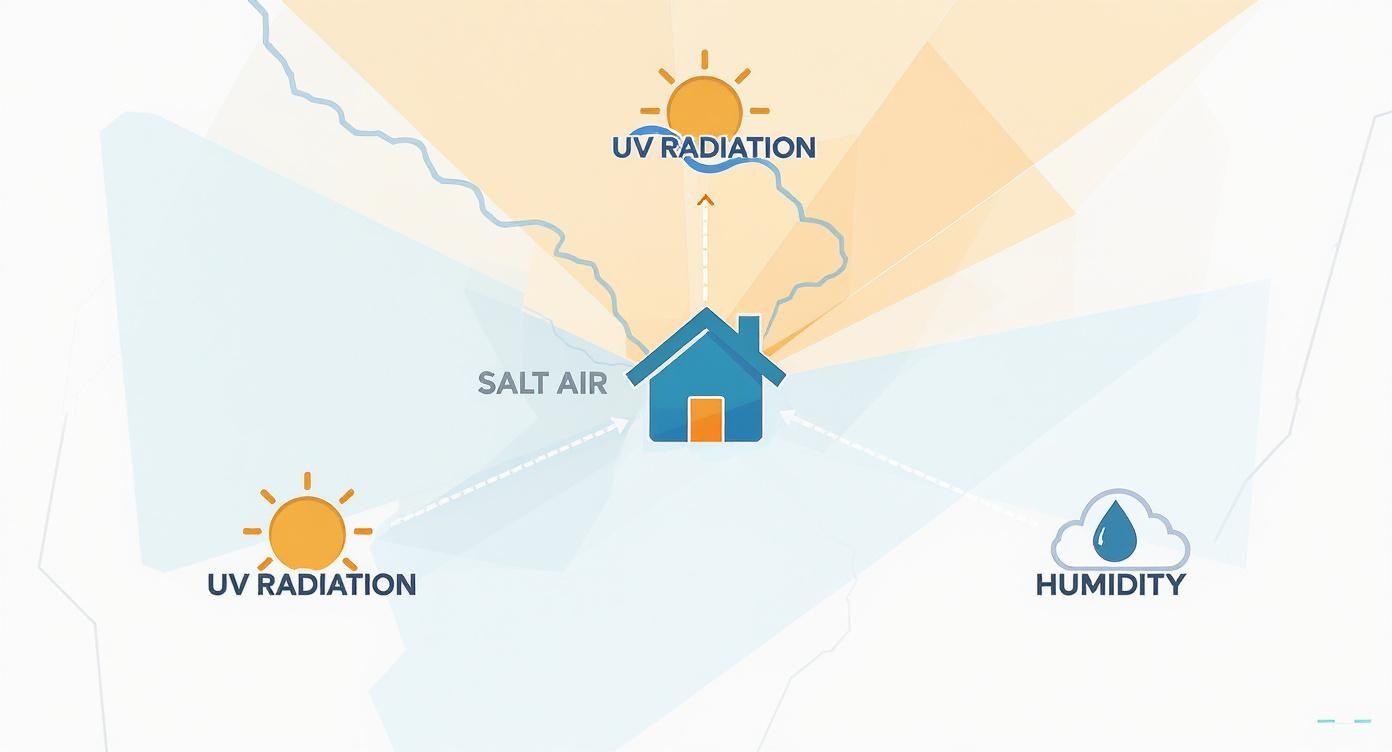
It's the combination of these three factors that breaks down your paint’s protective layer.
Sun and UV Radiation: The Bleaching Effect
The sun is the most relentless attacker. Its ultraviolet (UV) rays act like a slow-but-steady bleach, shattering the chemical bonds in your paint's pigments. This is what turns a once-vibrant blue into a dull, chalky gray in just a few years.
A home in Salinas gets plenty of sun, but a house in Pacific Grove gets a double whammy. UV rays don't just hit from above; they bounce off the ocean's surface, amplifying the exposure. This is why coastal homes may need repainting every 4-6 years, while inland homes can go 8-10 years.
Salt Air: The Corrosive Mist
That refreshing breeze off Monterey Bay carries a fine, salty mist that settles on your home. This isn't just dust—it’s actively corrosive. Salt attracts and holds onto moisture, keeping your home's exterior slightly damp and causing paint binders to break down.
This constant corrosive action leads directly to blistering, pitting, and peeling. Without a paint system designed to handle it, salt air will dramatically cut down the lifespan of your exterior finish.
Humidity and Fog: The Silent Soaker
Finally, there’s the persistent fog and humidity our region is famous for. This constant dampness creates an environment where paint struggles to properly cure. Trapped moisture is the number one enemy of a long-lasting paint job.
When moisture gets stuck beneath the paint film, it creates ugly bubbles and blisters on your siding. This dampness is also an ideal breeding ground for mildew. Even worse, that moisture can eventually find its way into the wood itself, leading to rot and serious problems. Learn more about what water intrusion is and why it's a serious problem.
Choosing the Right Armor for Coastal Conditions
Using standard exterior paint on a coastal home is like sending a soldier into battle with a wooden shield. To defend your home against sun, salt, and moisture, you need armor, not just color. This means choosing a paint specifically formulated for our unique coastal conditions.
For homeowners from Carmel to Monterey, the professional’s choice is almost always a 100% acrylic latex paint. This paint is incredibly flexible. It can expand and contract with temperature swings without cracking, which is a game-changer in our climate.
The Anatomy of a Coastal-Ready Paint
Not all acrylic paints are created equal. The secret to a paint job that lasts by the ocean lies in the quality of its ingredients.
These are the key additives that transform a good paint into a true coastal defender:
- High-Quality Resins: These binders create a tougher, more durable film that resists salt corrosion and stops moisture.
- UV Inhibitors: This is sunscreen for your house. These additives absorb or reflect the sun’s damaging rays, preventing color fade and chalky breakdown.
- Mildewcide Additives: In the damp, foggy air of Pacific Grove, mildew is a constant threat. Mildewcides stop mold and algae from growing on the paint’s surface.
Your home's defense is a complete system. Choosing high-quality paint is essential, but so is considering other durable components like Galvalume roofing, which offers superior protection in our humid, salt-laced climate.
The Critical Role of a Salt-Resistant Primer
Even the best paint in the world will fail if it can’t stick properly. Applying a high-quality, salt-resistant primer is non-negotiable for a coastal home. Primer is the critical bridge connecting your siding to the final topcoat of paint.
A specialized coastal primer seals the surface and creates a uniform foundation that the topcoat can grip onto. This is your best defense against the peeling and blistering that happens when salt and moisture sneak in. To learn more, check out our ultimate guide to choosing the right paint finish.
Comparing Paint Formulations for Coastal Homes
This table compares paint options to help you choose the best protection for your home in Monterey County.
| Paint Type | Key Ingredients & Features | Expected Lifespan (Coastal) | Best For |
|---|---|---|---|
| Standard Latex | Basic acrylic blend, fewer resins, minimal additives. | 2–4 Years | Low-budget, temporary fixes where longevity is not a priority. |
| Premium 100% Acrylic | High-quality acrylic resins, UV inhibitors, mildewcides. | 4–7 Years | The recommended choice for most coastal homes in Monterey County. |
| Marine-Grade Coatings | Elastomeric or epoxy-based, extremely thick, ultimate salt/UV resistance. | 8–15+ Years | Homes with extreme direct exposure to salt spray or commercial properties. |
Investing in a premium 100% acrylic system offers a fantastic balance of performance and cost for most local homeowners.
Why Meticulous Prep Work Is Non-Negotiable
Here’s a truth every seasoned painter on the Monterey Peninsula knows: the most expensive paint in the world will fail on a poorly prepped surface. It’s like building a house on a shaky foundation. The secret to a paint job that lasts is the unseen work that happens beforehand.
For coastal homes in places like Carmel and Pacific Grove, this prep phase is even more critical. It’s what separates a quick touch-up from a durable, long-term investment that genuinely protects your home.
The Foundation of a Flawless Finish
Proper surface preparation is a systematic process. The goal is to create a clean, stable, and uniform surface for the new paint to grab onto. Without this step, new paint is just a temporary mask over underlying problems.
This process involves a few non-negotiable actions:
- Thorough Cleaning: Power washing is essential to blast away the corrosive layer of salt, sand, and dirt.
- Removing Failed Paint: Any loose, peeling, or bubbling paint has to be scraped and sanded away.
- Sanding for Adhesion: Sanding smooths rough spots and scuffs up glossy surfaces so the new primer and paint can form a stronger bond.
- Making Necessary Repairs: We fix damaged wood or stucco and caulk gaps around windows and doors to make the surface watertight.
A coastal paint job is 90% preparation and 10% application. Rushing the prep work is the fastest way to guarantee paint failure within a couple of years.
Fighting Salt Before the First Coat
Salt air is one of the most destructive forces your paint will face. Painting directly over a salt-covered surface is like trying to put a sticker on a dusty table—it won’t stick. The salt crystals prevent the paint from forming a strong bond.
That trapped salt will continue to attract moisture, causing the new paint to lift, bubble, and peel. This is why meticulous preparation is an absolute requirement for a paint job that can stand up to our local climate. Explore our guide to professional surface preparation for painting to learn more.
Smart Strategies to Extend Your Paint's Life
Once the final coat is dry, your role in protecting that investment begins. Proactive maintenance and a few smart choices can dramatically extend the life of your home’s exterior. These simple strategies can mean the difference between repainting in four years or stretching it to six or more.
The Power of Color and Finish
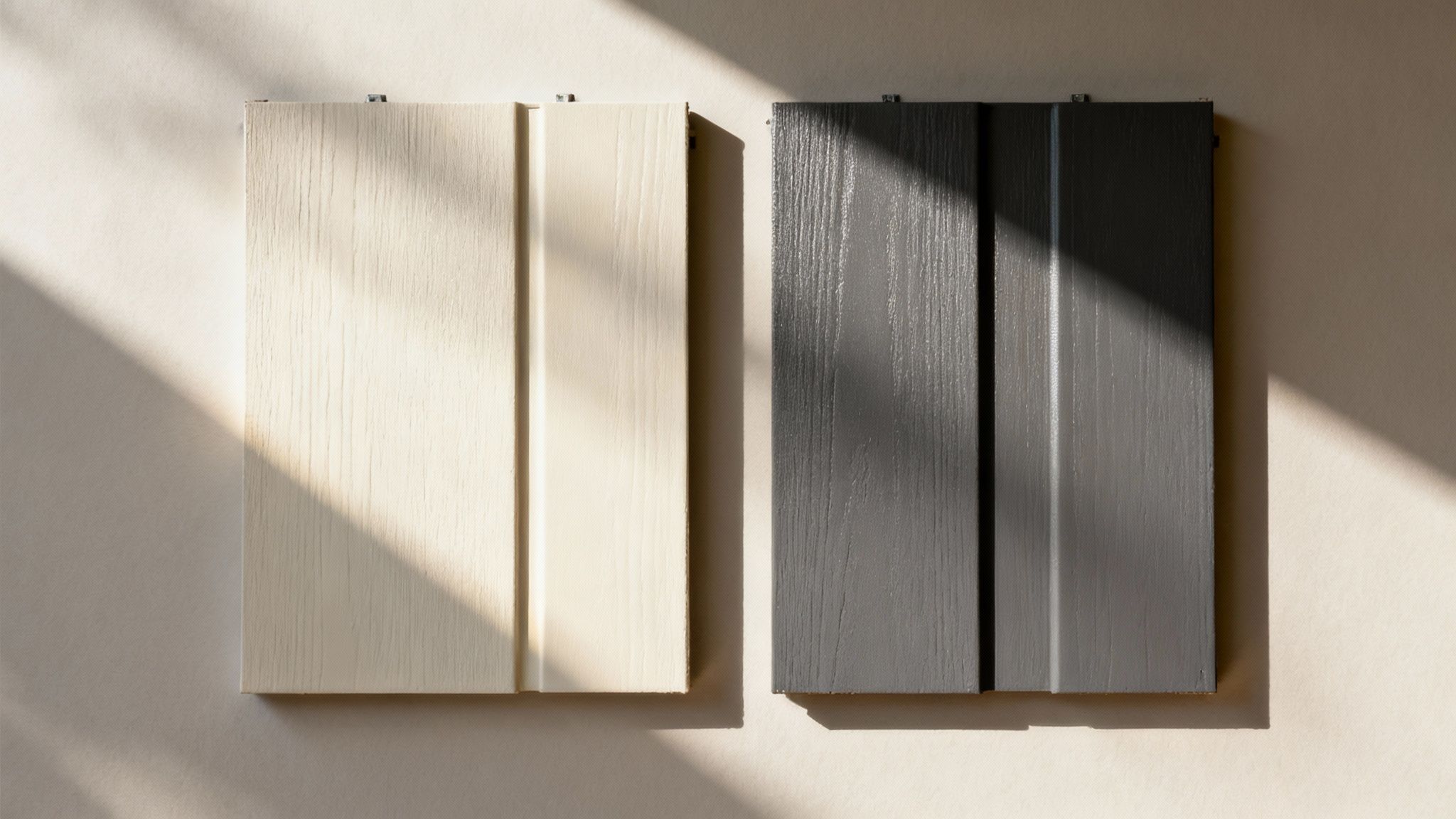
One of your most effective tools is your choice of color. While bold, dark shades can be striking, they take a serious beating from our coastal sun. Dark colors absorb more heat and UV radiation, which accelerates the breakdown of the paint's pigments.
Pro Tip: Lighter colors like beiges, soft grays, and off-whites reflect sunlight instead of absorbing it. This simple choice can add years to your paint's lifespan by reducing heat stress and slowing the fading process.
The paint’s finish, or sheen, also plays a huge role.
- Flat/Matte Finishes: These can trap salt and dirt, making them harder to clean.
- Satin/Semi-Gloss Finishes: These create a smoother, more durable film that is easier to rinse clean of corrosive salt deposits.
For coastal homes, a satin finish is often the ideal balance of durability and appearance.
Your Annual Maintenance Checklist
A little prevention goes a long way. An annual inspection and cleaning can help you spot minor issues before they become major problems.
Follow this simple checklist each year:
- Gentle Rinsing: At least once a year, gently rinse your home’s exterior with a garden hose to wash away salt, sand, and grime.
- Inspect for Damage: Walk around your property and look closely for any signs of cracking, peeling, or bubbling paint.
- Check the Caulking: Examine the sealant around windows and doors. If it’s cracked, it needs to be repaired to prevent water intrusion.
- Look for Mildew: Check shaded, damp areas for dark spots or streaks and clean them immediately.
Catching these issues early means you can perform minor touch-ups instead of a full repaint. Our guide on the best time to paint your house exterior offers valuable insights for scheduling maintenance.
A Professional Coastal Painting Plan Is Your Best Defense
Thinking of a new paint job as just a cosmetic touch-up is a common mistake on the coast. In reality, it’s the most important layer of defense your home has. Monterey County's unique blend of sun, salt, and fog requires professional expertise.
A true professional develops a strategic plan tailored to your home. Every step, from analyzing the surface to applying the final coat, is designed to combat our harsh coastal environment.
What Goes into a Successful Project?
A paint job that lasts is a partnership between top-tier materials and expert craftsmanship. A professional plan ensures every detail is handled correctly.
Here’s what that looks like:
- Expert Assessment: A pro will walk your property to identify trouble spots and map out your home's unique exposure to the elements.
- Systematic Preparation: This make-or-break stage involves deep cleaning, meticulous scraping, and precise repairs to create a flawless canvas.
- Material Selection: Pros use their experience to choose the perfect 100% acrylic paint and salt-resistant primer for your home.
Partnering for Long-Term Results
Keeping your home’s exterior looking great is an ongoing effort. Using gentle soft wash house cleaning methods can prolong your paint's life between full repaints.
Your coastal home's defense plan starts with a professional assessment and ends with a simple maintenance schedule. This proactive approach protects your investment.
Working with an experienced team is the only way to ensure your exterior paint job holds up. A professional plan gives you peace of mind, knowing your home isn’t just beautiful—it’s properly shielded from the demanding Monterey Bay environment.
Frequently Asked Questions
Here are answers to common questions we hear from homeowners in the Monterey area.
How often should I repaint my coastal home?
In coastal communities, you should plan on repainting your home every 4–6 years. This is much sooner than the 8–10 year cycle for inland homes. The exact timeline depends on the quality of the previous paint job and how much direct sun and salt spray your home receives.
Can I use regular exterior paint on my coastal home?
Using standard exterior paint is a mistake. The intense UV rays, salt, and moisture here demand a paint specifically designed to handle them. Look for premium 100% acrylic latex paints with UV inhibitors and mildewcides for the best protection.
Does my choice of paint color really matter?
Absolutely. Darker colors absorb more sunlight and heat, which speeds up the breakdown of paint pigments. Lighter colors reflect that solar energy, helping them stay vibrant longer under the coastal sun.
Is power washing necessary before painting?
Yes, power washing is a non-negotiable first step. It’s the only effective way to remove the invisible, corrosive layer of salt and grime. Painting over this buildup will cause the new paint to bubble and peel quickly.
What are the signs that my paint is failing?
Look for these red flags:
- Chalking: A powdery dust comes off when you wipe your hand across the siding.
- Bubbling or Blistering: Pockets of paint are lifting from the surface, often due to trapped moisture.
- Cracking and Peeling: Fine cracks appear, eventually leading to larger sections of paint flaking off.
When you see these signs, your home's protective shield is gone and it's time to act.
Your coastal home deserves more than a quick paint job—it deserves a plan. Legacy Painting & Renovating Inc. helps Monterey Bay homeowners protect their homes year-round with durable materials and smart maintenance advice. Contact us today to schedule a free inspection or paint longevity assessment.