Direct Answer: Historic Pacific Grove homes require more thorough surface evaluation, lead paint awareness, and a different approach to color selection than a standard repaint, the prep work alone changes significantly.
A homeowner reached out to us recently about a historic home in Pacific Grove that had been used as a rental for years. They were moving in themselves and needed both the interior and exterior repainted, and they had questions about color consultation. It was a situation I recognized immediately, because historic homes in Pacific Grove are genuinely a different kind of project.
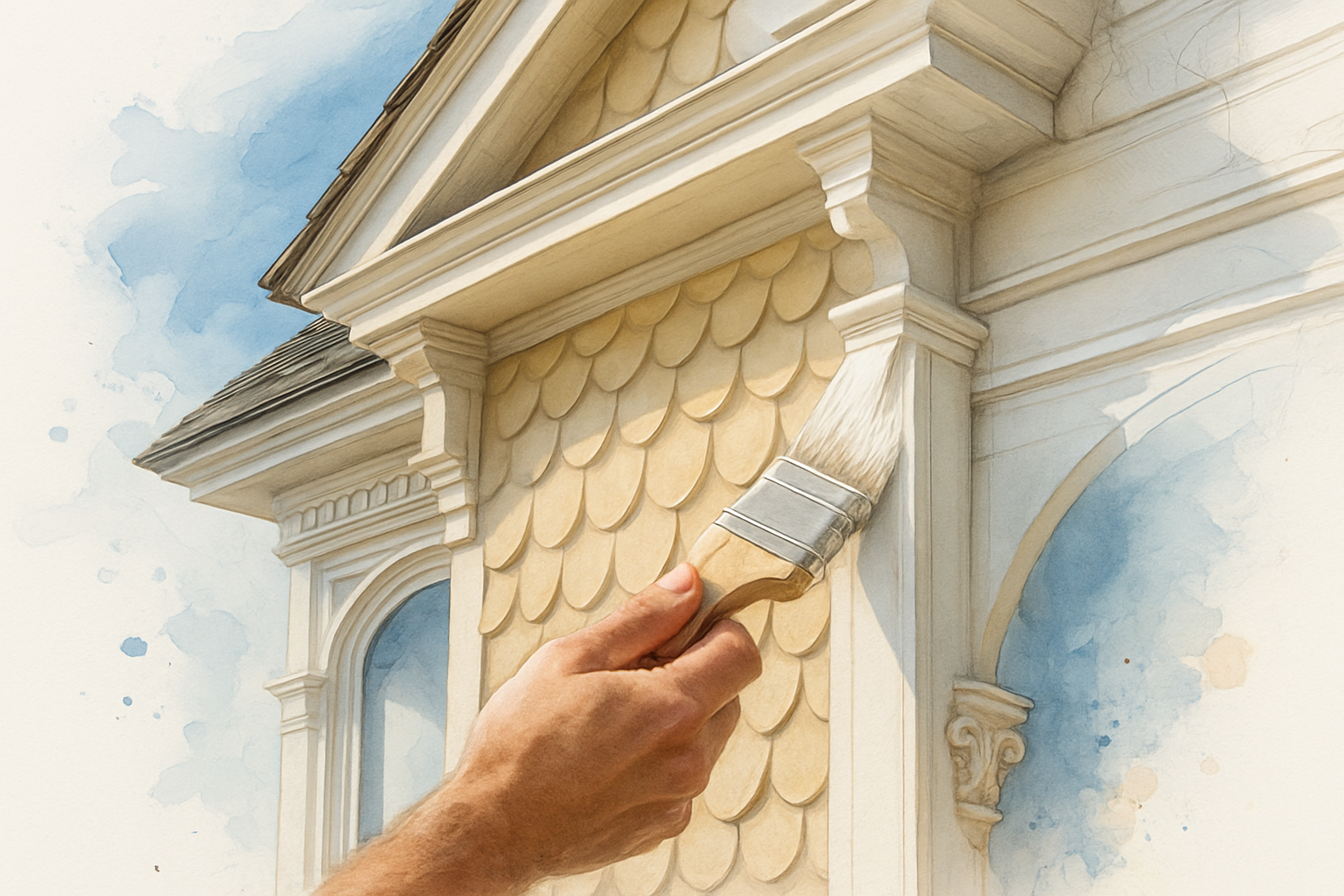
Pacific Grove has one of the highest concentrations of Victorian and historic-era homes on the Monterey Peninsula. The city’s historic district means there are real architectural details to consider, fish-scale shingles, decorative corbels, bay windows, ornate trim, and in many cases, real constraints that simply don’t apply to a 1990s tract home. The painting process changes accordingly.
If you own or are moving into a historic property in Pacific Grove, here is what I think you actually need to understand before any painting work begins, from surface evaluation to lead paint rules to how a color consultation works on a home with this much detail.
Reading an Old Surface Before You Touch a Brush
The single biggest difference between painting a historic home and painting newer construction is what you find when you actually look at the surface. A house that has been painted and repainted over 80 or 100 years has layers of paint history that a fresh coat has to bond to, and those layers don’t always cooperate.
Before we start any work on a home like this, we spend real time evaluating the existing surfaces. What we’re looking for includes:
- Chalking, a powdery residue that forms when old paint breaks down, which will prevent new paint from bonding properly if not addressed
- Alligatoring, a pattern of cracks that looks like reptile skin, usually caused by incompatible paint layers or a top coat that dried faster than the layer beneath it
- Incompatible paint layers, oil-based paint applied over latex (or vice versa) at some point in the home’s history, which can cause adhesion failure even when the new paint is applied correctly
- Areas of active peeling or blistering, particularly on north-facing walls or areas with moisture exposure
This evaluation is what determines the scope of the prep work and which products will actually perform. Skipping it and just rolling new paint over an old, compromised surface is how you get a paint job that looks good for six months and then starts peeling in sheets. What Monterey’s coastal climate does to exterior paint over time makes that failure happen faster here than in drier climates, the marine layer and salt air accelerate the breakdown of any coating that isn’t properly bonded.
Lead Paint in Pre-1978 Pacific Grove Homes: What the Rules Actually Require
Most of Pacific Grove’s historic housing stock was built well before 1978. That matters because any home built before 1978 may contain lead-based paint, and federal EPA rules require contractors to follow specific certified procedures when that paint is being disturbed.
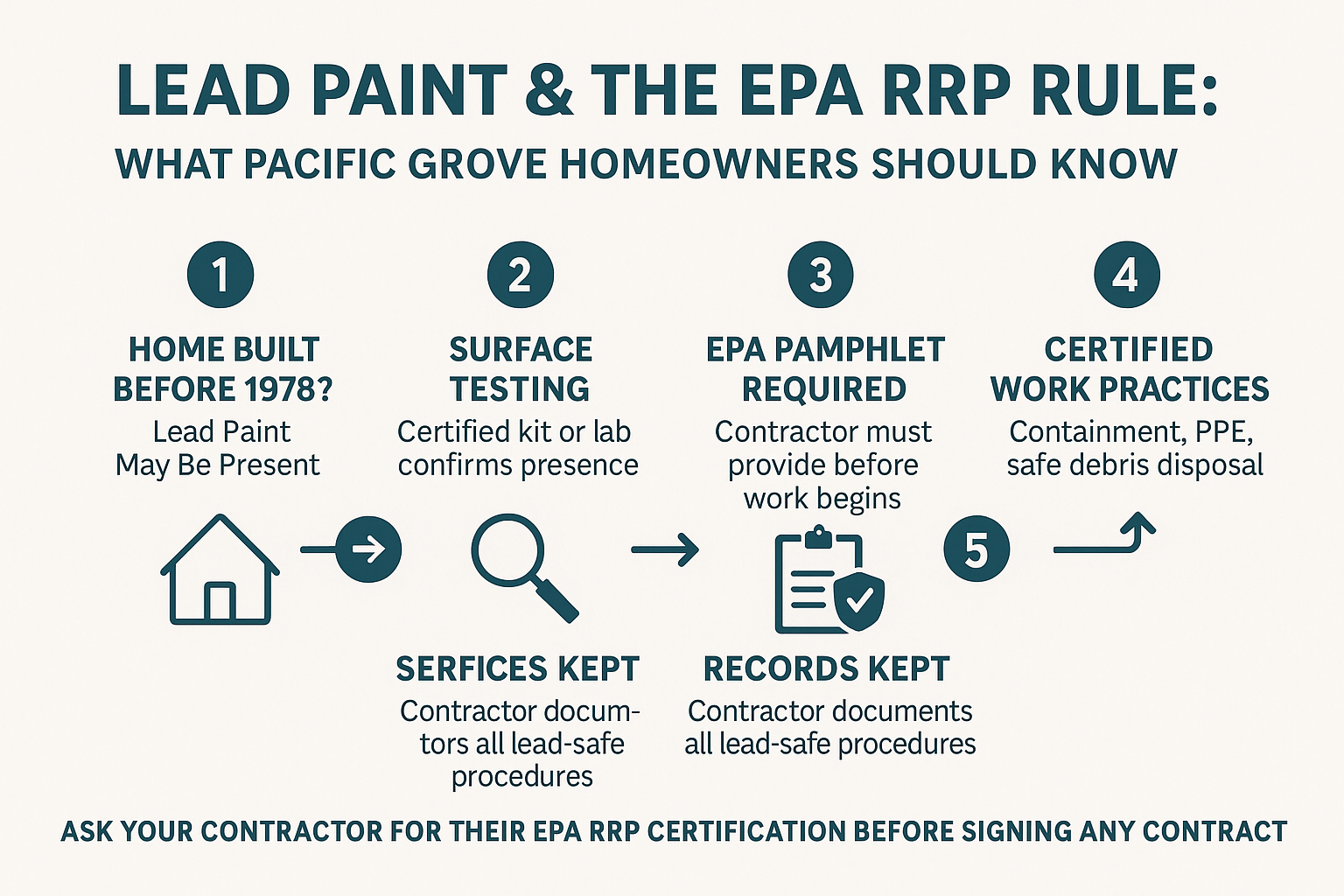
The program is called the EPA Renovation, Repair, and Painting (RRP) Rule, and it applies to contractors performing work that disturbs lead-based paint in pre-1978 homes. Here is what that looks like in plain terms:
- Testing, a certified firm can test surfaces before work begins to determine whether lead paint is present. This is done with a certified test kit or by sending samples to a lab.
- Certified work practices, if lead paint is present and will be disturbed by sanding, scraping, or other prep work, the contractor must follow EPA-certified lead-safe practices: containing the work area, using proper protective equipment, and disposing of debris according to specific protocols.
- Documentation, homeowners must be given an EPA pamphlet about lead paint hazards before work begins, and the contractor must keep records of the work performed.
For a homeowner moving into a historic Pacific Grove home that has been rented, this is worth taking seriously. You are not just protecting yourself, you are protecting your family and any workers on the job. A contractor who dismisses this conversation or says it doesn’t apply is giving you a red flag worth paying attention to. We hold our CSLB license and carry full insurance precisely because situations like this require a contractor who operates by the rules, not around them. If you want to understand more about how to evaluate a contractor’s qualifications before you book, this guide on what to ask an exterior painter covers the right questions.
Lead Paint Rules for Pre-1978 Homes: A Quick Overview
This infographic summarizes what the EPA RRP Rule means for homeowners in Pacific Grove and how it affects the painting process step by step.
Interior Repaints After a Rental: Why Prep Is Everything
The interior of a home that has been rented for years presents its own set of challenges. In my experience, these surfaces almost always have a combination of issues that you won’t see in a home the owner has maintained themselves.
The most common things we find in rental interiors include:
- Patched walls that don’t match the surrounding texture, a previous repair was done quickly without feathering the patch, and the new paint will highlight it instead of hiding it
- Paint applied over dirty or oily surfaces, particularly in kitchens and bathrooms, which causes the new coat to lift or peel within months
- Deep or saturated existing colors that require multiple hide coats to cover evenly, skipping primer here means the old color bleeds through no matter how many finish coats go on top
The prep stage is what determines whether the final result looks professional or patchy. Cleaning walls before painting is not optional, it is the step that makes everything after it work. Priming correctly, especially on patched areas and surfaces with heavy color, is what gives you a uniform finish instead of a result that looks fine in the showroom lighting and terrible in natural light.
A rental home often also has scuffs, nail holes, and minor drywall damage throughout. Addressing all of that before a single drop of finish paint goes on the wall is the difference between a paint job that lasts and one that needs to be redone in two years. For a deeper look at why prep work matters so much in high-use spaces, this piece on high-traffic room repaints is worth reading.
Common Interior Conditions in Rental Homes vs. Owner-Occupied Homes
These are the surface conditions we typically encounter in each type of home, and how they affect the scope of prep work before interior painting begins.
| Surface Condition | Rental Home | Owner-Occupied Home |
|---|---|---|
| Wall patching quality | Often quick-patched without texture matching | Usually better maintained or previously addressed professionally |
| Paint adhesion issues | Common, paint applied over dirty or oily surfaces | Less common if maintained regularly |
| Color saturation to cover | Often bold or dark rental colors requiring extra hide coats | Varies, typically lighter or neutral tones |
| Scuffs, nail holes, minor damage | Frequent throughout all rooms | Isolated and fewer in number |
| Need for primer coat | Almost always required | Situational, depends on color change and surface condition |
Color Consultation on a Historic Home Is a Different Kind of Conversation
Choosing colors for a Pacific Grove Victorian is not the same as picking a paint color for a modern home. On a modern house, you are mostly deciding between a few neutrals and maybe a front door accent. On a historic home with architectural details, you are making decisions about which features to highlight and how many colors to use across the entire facade.
A thoughtful color consultation on a home like this involves a few distinct questions:
- How many colors? Historic Painted Ladies in Pacific Grove often use three to five colors, a body color, one or two trim colors, and accent colors for specific details like corbels or window surrounds. Using only two colors can flatten the architecture. Using too many can look busy.
- Which details deserve emphasis? Fish-scale shingles, decorative brackets, bay window frames, and porch columns all respond differently to color choices. Highlighting them with a contrasting accent versus blending them into the body color produces completely different results.
- What does the street look like? Pacific Grove’s historic district has a visual context. Colors that work on one block may feel out of place on another. Walking the neighborhood matters.
- What coatings are appropriate? The coastal environment here, salt air, UV exposure, heavy fog cycles, affects which products will hold their color long-term. A historically appropriate color means nothing if the coating fails in three years.
Color consultation on a project like this is part design conversation and part technical discussion. It is not something to rush. And because the exterior of a Pacific Grove home is very visible to neighbors and subject to city character guidelines, getting the palette right before painting begins saves a lot of regret later. For a broader look at the coastal climate factors that affect coating selection, this article on what Monterey’s climate does to exterior paint covers the key considerations.
Frequently Asked Questions About Painting Historic Pacific Grove Homes
Do I need to test for lead paint before hiring a painter for my Pacific Grove home?
You are not legally required to test, but your contractor is required to follow EPA RRP lead-safe work practices if the home was built before 1978 and the work will disturb painted surfaces. Testing beforehand simply tells you and the contractor what you are dealing with so the right precautions are in place from the start. Ask any contractor you are considering whether they are EPA RRP certified before you sign anything.
How long does a full interior and exterior repaint take on a historic home?
It depends on the size of the home, the condition of the surfaces, and how much prep work is needed. A historic Pacific Grove home with significant surface issues, lead-safe work requirements, and a multi-color exterior scheme takes considerably longer than a simple repaint on newer construction. Expecting more time for prep alone, not just painting, is the right mindset going in.
Can I pick modern colors for a historic Pacific Grove home, or are there restrictions?
Pacific Grove has character guidelines for its historic district, but they are generally about maintaining the visual character of the neighborhood rather than prescribing specific colors. You have real flexibility in color choice. What matters most is how the colors work with the architecture, and on a Victorian with detailed trim and shingles, color selection has a big impact on the final result. A color consultation is worth doing before you commit.
Why does paint peel so quickly on some older homes near the coast?
A few things cause this, and they often combine. Incompatible paint layers built up over decades can fail when a new coat is applied without proper prep. Coastal moisture from Pacific Grove’s marine layer gets into any gap or crack in the coating, accelerating the breakdown. And if chalking or adhesion problems weren’t addressed before painting, the new coat has nothing solid to bond to. The fix is thorough surface evaluation and prep, not just a fresh coat over the existing problem.
What does color consultation actually involve for an exterior repaint?
A real color consultation for a historic home is more than handing you a fan deck. It involves looking at the architecture together, identifying which details are worth highlighting, talking through how many paint colors make sense for that specific facade, considering what products will hold up in the coastal environment, and looking at the visual context of the street. The goal is a palette that feels right for the home and holds up over time, not just a color you liked on a chip.
Have a Historic Home in Pacific Grove That Needs Painting?
If you are looking at a project like this, interior and exterior painting on a historic property, possibly with lead paint concerns and a color consultation involved, we are familiar with exactly what that work requires on the Monterey Peninsula. Legacy Painting and Renovating serves Pacific Grove, Monterey, Carmel, and surrounding Monterey County communities. You can reach us by phone at (831) 917-0047 or through the contact form at legacypaintingrenovating.com to schedule an estimate.