
Here’s the plain truth about why exterior paint jobs fail so fast on coastal homes. Standard paint and old-school prep methods were not made for the punishing climate we have in Monterey County. The mix of corrosive salt air, dense fog, and intense sun is a triple-threat. It chews through coatings that would last for years just a few miles inland. This leads to early peeling, blistering, and fading.
This guide explains why your paint job in Monterey or Carmel might be failing and how Legacy Painting's coastal-specific approach protects your home for the long term, preventing costly repairs.
Why Coastal Homes Need More Than Standard Paint
If you live anywhere from Monterey to Pacific Grove or Carmel, you’ve seen it happen. A beautiful paint job that looked perfect a couple of years ago is now chalky or peeling.
You might have used "weather-resistant" paint, but it still didn't hold up. This cycle happens because generic solutions don’t work here. They aren't designed to fight the specific environmental attackers on the Central Coast.
Most painting advice doesn't distinguish between dry heat and our salty, damp air. But for your home's siding, it’s a world of difference.
Our local environment has constant moisture from fog and sea spray that seeps into tiny cracks. At the same time, salt crystals in the air eat away at the paint's surface. This is the number one reason for early paint failure in our area.
The Three Main Attackers on Your Home's Exterior
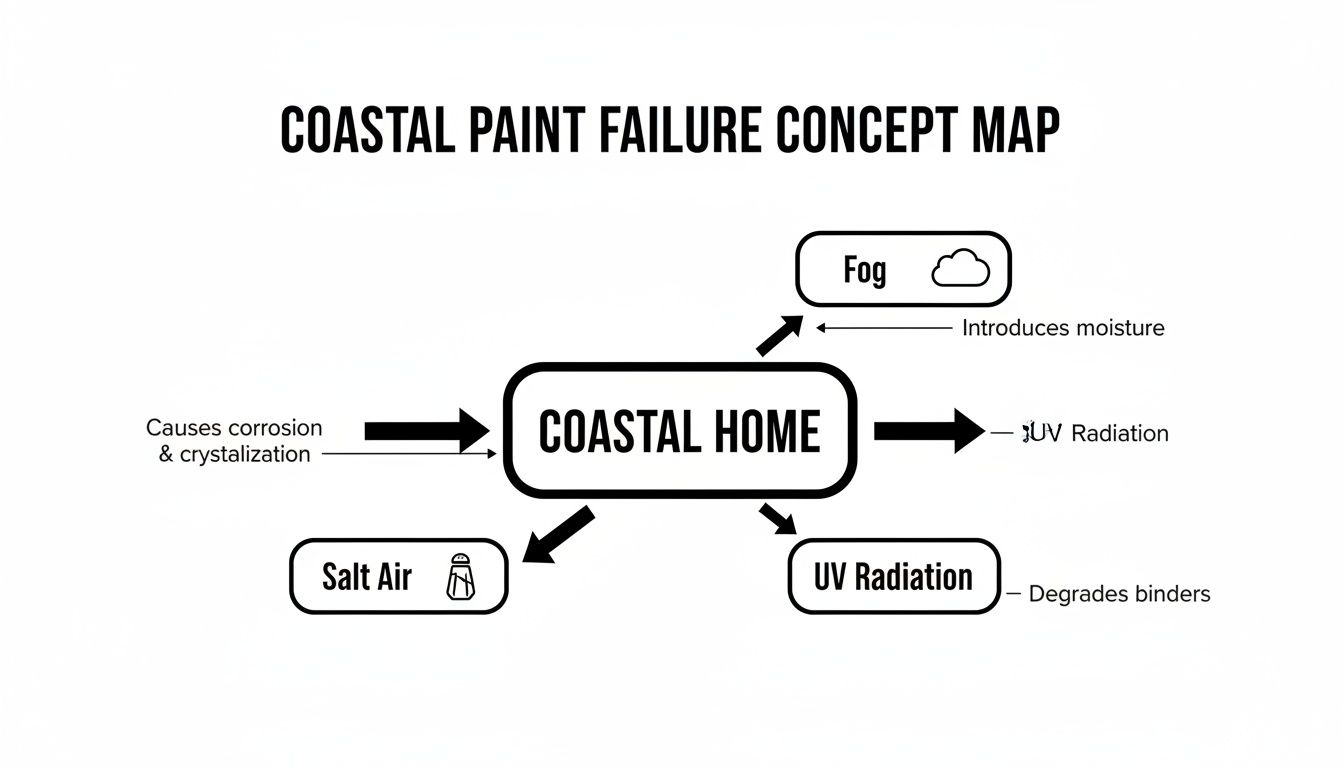
To protect your home, you have to know what you’re up against. Three elements are constantly at war with your paint job:
- Corrosive Salt Air: Tiny salt particles from the ocean settle on your siding. They slowly break down the binders in the paint, making it brittle and weak.
- Penetrating Fog and Humidity: The dense fog in places like Pacific Grove forces moisture deep into the wood. It gets trapped behind the paint and causes it to bubble and peel from the inside out.
- Intense UV Radiation: Even on overcast days, powerful UV rays break down the paint’s pigments. This causes fading and that chalky residue that weakens the paint.
This diagram shows how these three attackers work together to destroy your home's protective coating.
This constant attack means a generic approach is doomed from the start. We wrote a whole guide on how Monterey's coastal weather impacts your exterior paint because it’s so important. Protecting your investment requires a specialized system built for our climate.
How Coastal Climate Destroys Standard Paint
Let's break down exactly how our coastal environment attacks a typical paint job. The table below shows the main culprits and how they shorten the life of your home's finish.
| Coastal Attacker | How It Attacks Your Paint | Common Sign of Failure | Estimated Lifespan Reduction |
|---|---|---|---|
| Salt Spray | Abrasive salt crystals settle on the surface, drawing moisture and chemically breaking down the paint's binders. | Fading, chalking, and premature cracking, especially on windward-facing walls. | 30-50% |
| High Humidity & Fog | Constant moisture penetrates the paint film, getting trapped between the coating and the substrate. It also promotes mildew. | Blistering, bubbling, and peeling as moisture tries to escape. Dark spots from mildew. | 25-40% |
| Intense UV Rays | Solar radiation breaks down the chemical bonds in paint pigments and binders, causing the surface to degrade. | Color fading, a chalky white powder on the surface, and loss of gloss. | 20-35% |
This shows why a standard paint job that might last 10 years inland can fail in as little as 3 to 5 years here. It's not bad paint; it's the wrong defense for this battle.
Uncovering the Invisible Destroyers: Salt Air and Fog
Painting a home in Monterey or Pacific Grove is a different ballgame. It comes down to two main culprits: salt and moisture.
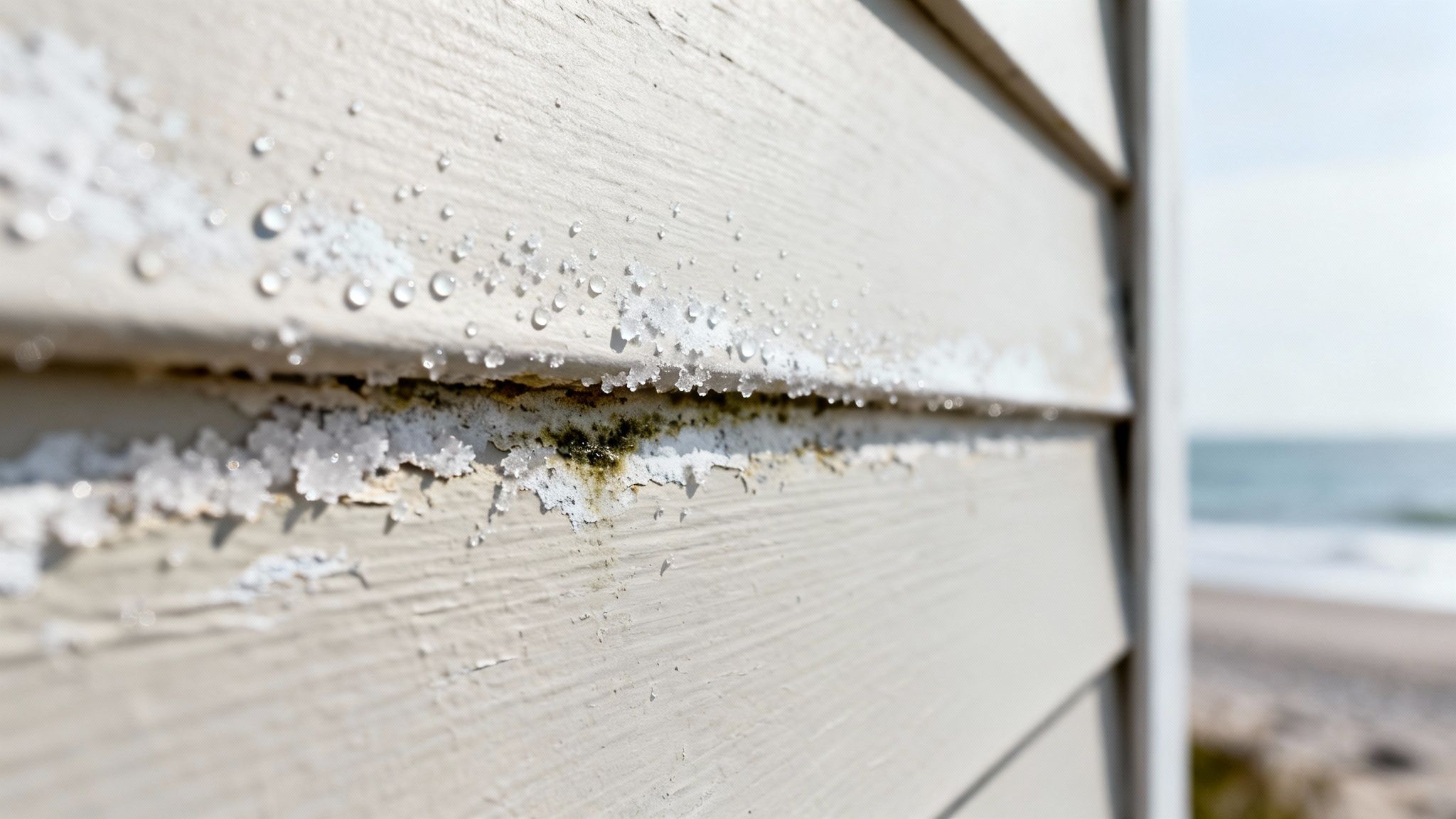
Imagine tiny salt crystals in the sea breeze constantly hitting your home. This is a relentless, corrosive attack that chemically shreds the binders holding your paint together. That chalky, faded look on coastal homes is the result of this invisible sandblasting.
The Constant Threat of Coastal Fog
Then you have our famous coastal fog. This isn't just surface dampness. It's penetrating moisture that gets into siding and becomes trapped behind the paint, creating a perfect breeding ground for mildew.
This trapped moisture causes the ugly blisters and peeling paint you see on homes from Carmel to Salinas. When the sun warms the house, that trapped water turns to vapor and pushes outward, lifting the paint right off the surface. A standard paint job can’t handle this level of abuse.
Expert Insight: "Extreme weather and salt air exposure have made exterior maintenance urgent for homeowners on the Central Coast. A standard paint job is no longer enough to protect the structure itself from long-term damage."
The Destructive Duo in Action
Salt and moisture don't work alone—they team up to destroy your paint. The salt air makes the paint brittle, creating tiny cracks. Then, the dense fog shoves moisture into those openings, getting underneath the paint and starting the blistering and peeling process.
The combination is brutally effective. Research shows salt air can corrode surfaces up to five times faster than in a normal environment. A fresh coat of paint can become a peeling mess in just a few years.
Recognizing the Early Warning Signs
You have to know what to look for before the problem gets out of hand. Spotting these issues early shows why a specialized, coastal-specific approach is necessary.
Here are the key signs that salt and moisture are winning:
- Chalky Residue: Run your hand across the siding. If it comes away with a white powder, the paint binders are breaking down.
- Small Bubbles or Blisters: These are the first signs that moisture is trapped behind your paint.
- Dark Spots or Streaks: Green, black, or greyish stains, especially on shaded walls, are likely mildew or algae.
- Cracking or Flaking: Look for hairline cracks around window frames and trim. This means the paint has lost its flexibility.
These are distress signals that your home’s protective shield is failing. Ignoring them allows moisture to seep deeper, leading to wood rot and more expensive problems. That's why we tell homeowners to repaint before winter moisture hits.
The Critical Role Of Coastal-Specific Prep Work
A beautiful, long-lasting paint job is all about what happens before a brush touches the wall. For homes along Monterey Bay, preparation is a different process.
Generic prep work is the biggest reason exterior paint fails quickly here. It’s a corner too many painters cut. At Legacy Painting, our coastal-specific prep system is the only way to ensure your paint job lasts for years, not just a season.
More Than a Wash: The Power of Decontamination
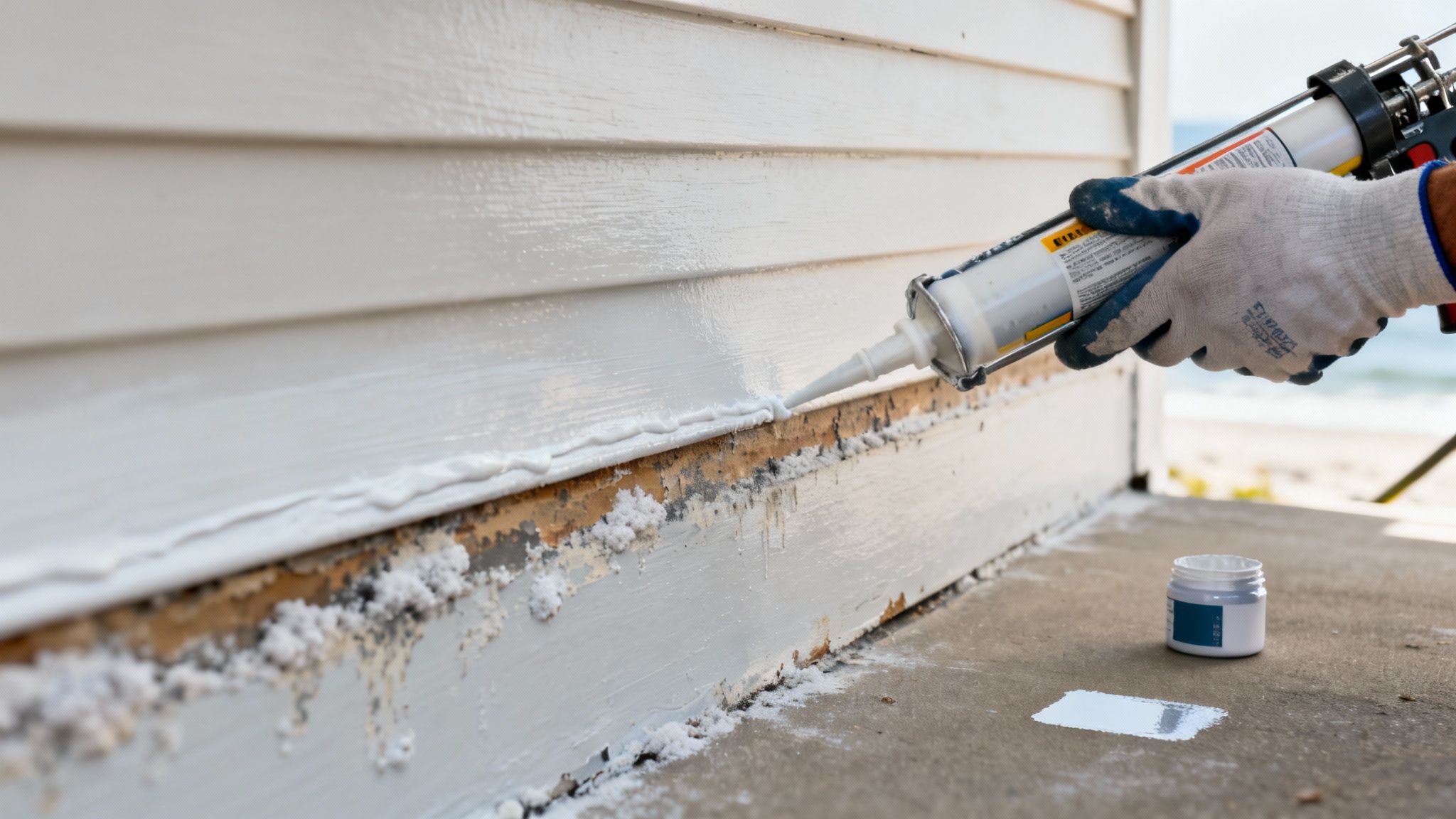
The first step is a careful power wash. This is about more than just knocking off dirt. We use precise pressure to remove embedded salt crystals and mildew that have bonded to your siding.
That invisible salt buildup creates a gritty, unstable surface that new paint can't grip. A simple rinse leaves this corrosive layer behind. Our process strips the surface back to a clean state, which is a must for proper paint adhesion.
Sealing Every Entry Point with Flexible Caulking
Next, we tackle cracks and gaps around your trim, windows, and siding. Homes in Carmel and Pacific Grove constantly expand and contract with changing temperatures and humidity.
Standard painter's caulk gets brittle and cracks under that stress. This creates tiny paths for fog and rain to get behind the paint.
That’s why we use specialized elastomeric caulks. This material is a flexible sealant that stretches with your home. It creates a waterproof barrier and stops moisture from causing the paint to blister. This step alone can add years to your exterior paint. Learn more in our guide to proper surface preparation for painting.
Industry trend: "Exterior painting contractors are emphasizing weather-resistant coatings and moisture control, especially in Monterey’s foggy, humid environment." This highlights the need for specialized preparation.
The Secret Weapon: Salt-Tolerant and Mildew-Resistant Primers
Finally, we apply our secret weapon: a salt-tolerant, mildew-resistant primer. This isn't an off-the-shelf product. It’s a high-adhesion formula made for salty, damp environments like ours.
This primer creates a barrier that locks out moisture and salt. It also contains ingredients that stop mold and algae growth. This foundation gives the topcoat a solid surface to grip, preventing peeling and blistering.
Choosing The Right Armor For Your Coastal Home
Using standard exterior paint on a home in Monterey is like bringing a garden hose to a wildfire. Your home needs specialized protection designed to withstand our beautiful but destructive coastline.
Think of these advanced paints as armor, not just decoration. They have specific defenses that generic paints lack. Choosing the right armor is the most important decision for a long-lasting, protective finish.
Elastomeric Coatings: The Waterproof Jacket For Your House
One of our most powerful weapons is elastomeric paint. It's a high-build, flexible coating that goes on up to 10 times thicker than standard paint. It’s like putting a thick, waterproof jacket on your house.
Its real superpower is flexibility. This paint can stretch to bridge hairline cracks in stucco and wood. As your home expands and contracts, this coating moves with it, keeping a continuous barrier against moisture.
Here’s why it’s a game-changer for our climate:
- It's 100% Waterproof: It seals out wind-driven rain and fog, stopping water from causing blistering.
- It's Highly Durable: The extra thickness protects against abrasive salt spray.
- It Fills Minor Imperfections: It spans small cracks and gaps, creating a smooth look.
This is why the truth about exterior paint failing fast in coastal homes often comes down to picking the wrong product. Elastomeric paint provides a proactive shield.
The Science Behind Advanced Acrylic Paints
Modern 100% acrylic latex paints have also become very advanced. But not all acrylics are equal. For homes in Salinas and along the coast, we only use premium formulas with specialized ingredients.
These paints are a complex chemical defense system. Two key components make all the difference:
- Powerful Mildewcides: These additives are blended into the paint to stop mold, mildew, and algae growth.
- UV Inhibitors: These act like sunscreen for your home, absorbing harmful UV rays that cause fading and chalking.
When choosing paint, it's also important to understand how to choose exterior paint colors. Lighter shades naturally reflect more UV radiation, which can help prolong the life of the paint.
By combining a flexible acrylic base with these potent additives, you get a coating that can breathe, resist fungus, and fight sun damage. For more tips, check out our guide on the top 4 ways to protect exterior paint in 2026.
The Legacy Painting System For Lasting Protection
So, how do all these specialized materials and prep techniques come together? It’s about a complete, climate-specific system. At Legacy Painting & Renovating Inc., we’ve built our process to address why exterior paint fails so fast on coastal homes.
This system is our promise to you. We don’t just paint your house; we seal it, protect it, and build multiple layers of defense to ensure the finish can withstand the challenges of the Central Coast.
From Inspection to Final Coat
Our work begins with a detailed inspection of your home's exterior. We hunt for signs of moisture intrusion, failing caulk, and hairline cracks.
From there, we move into our intensive preparation phase. This always includes:
- Decontamination Power Washing: To strip away salt, grime, and mildew.
- Detailed Scraping and Sanding: To remove all failing paint for a smooth surface.
- Targeted Repairs: Addressing any wood rot or surface damage first.
- Application of Flexible Caulk: Sealing every gap with high-performance elastomeric compounds.
Only after this foundation is perfect do we apply the coatings. It's about building for durability. You can explore what paint primer is used for to learn why it’s non-negotiable in our climate.
A System Built for Our Climate, Not Just Any Zip Code
The final piece is applying advanced coastal coatings. We’ll select a high-build 100% acrylic latex or a robust elastomeric paint based on your home’s needs.
This entire system is built to break the expensive cycle of repainting every few years. A standard paint job can fail here in just three years. With our expert system, your home in Salinas or Carmel can shine for a decade or more.
The Legacy Benefit: By investing in our professional, coastal-specific approach, you're not just improving curb appeal. You are safeguarding your home's structural integrity and preserving its value for the long term.
If you live in Monterey, Pacific Grove, Carmel, or Salinas, don’t settle for generic painting advice. Get a coastal-specific exterior plan from Legacy—built for our climate, not just any ZIP code.
Frequently Asked Questions
Homeowners across Monterey County ask us about protecting their homes. Here are some straightforward answers to common questions.
How often should I repaint my coastal home?
A standard paint job on a coastal home can fail in as little as three years. The constant attack from salt, fog, and UV rays is too much for generic coatings. However, when you use a coastal-specific system from Legacy—including high-prep, salt-tolerant primers, and elastomeric paint—you can expect it to last 7 to 10 years.
Is elastomeric paint really worth the extra cost?
Yes. Think of elastomeric paint as a thick, protective jacket for your home. It’s a flexible, waterproof shield that is many times thicker than standard paint. For homes in Carmel and Pacific Grove, its ability to bridge cracks and lock out moisture is a game-changer. The upfront cost is higher, but it prevents much larger expenses in the future.
Can't I just wash my house myself?
A garden hose might remove surface dirt, but it does almost nothing against the real enemies: salt crystals and mildew spores embedded in the surface. Professional power washing uses controlled pressure to strip those contaminants away. This decontaminates the surface, creating a stable foundation for new paint to bond to.
What is the best time of year to paint my home in Monterey County?
The ideal time for exterior painting here is from late spring through early fall. During these months, the weather is typically warmer and drier, which paint needs to cure properly. We are experts in our local microclimates and only paint on days with the right temperature and humidity to ensure a beautiful, long-lasting finish.
My current paint is bubbling—what does that mean?
Bubbling or blistering is a major red flag. It’s a clear sign that moisture is trapped behind your paint. When the sun heats your siding, that trapped water turns to vapor and pushes the paint off the surface. Before any new paint is applied, the source of the water must be found and fixed to solve the problem for good.
Don't let your biggest investment fall victim to the coastal climate. Legacy Painting & Renovating Inc. provides the specialized systems and expert application needed to protect your Monterey County home for years to come.
Get a free, no-obligation estimate for your coastal home today.