
Thinking about grabbing a brush and tackling that painting project yourself? You're not alone. Many homeowners in Salinas and Monterey are ready to transform their spaces.
But what starts as a cost-saving weekend project can quickly turn into a costly, stressful ordeal. Recent data shows a surprising trend. While only 29% of homeowners hired a pro initially, a staggering 70% said they would next time.
From mismatched colors to uneven finishes, many DIYers found out the hard way that painting isn’t as simple as it seems. In 2026, avoiding common pitfalls is more critical than ever. This guide breaks down the top 5 DIY painting risks to avoid in 2026 and why calling an expert like Legacy Painting & Renovating Inc. is the smartest move for your Carmel or Pacific Grove home.
1. Skipping Proper Surface Preparation
One of the most tempting shortcuts in a DIY paint job is jumping straight to the color. However, professional painters from Monterey to Salinas agree that what’s underneath is what matters most.
Inadequate surface preparation is the single biggest reason DIY paint jobs fail, often within the first year. This is a crucial step that makes it one of the top 5 DIY painting risks to avoid in 2026.
Proper prep involves cleaning, sanding, patching, and priming every surface. Skipping these steps guarantees a poor finish. Paint applied over dirt or peeling paint won't stick properly, leading to bubbling and chipping. In Monterey County, this risk is amplified by our coastal climate where salty air breaks down poor-quality work fast.
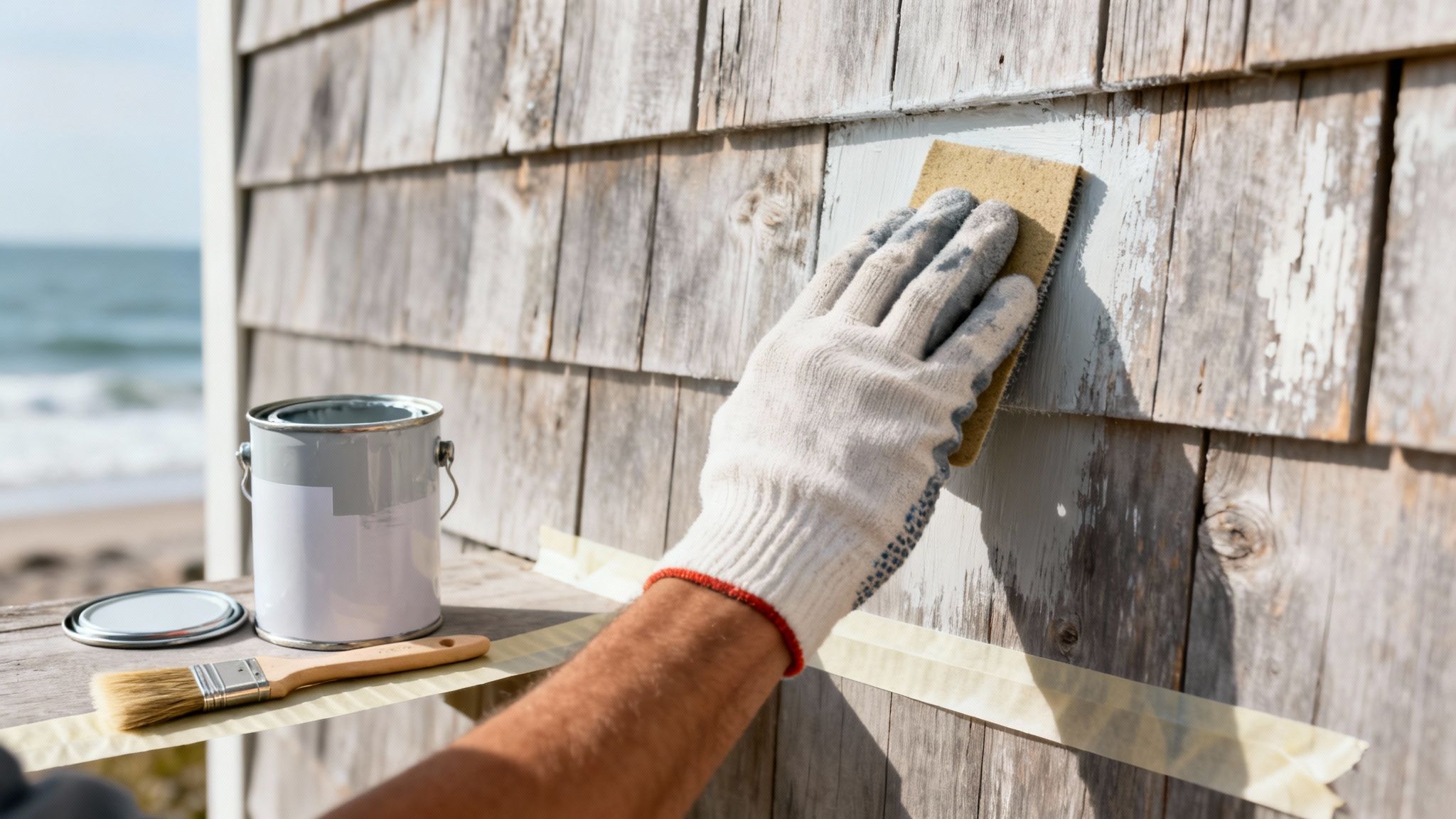
Why Proper Prep is Foundational
Think of primer as the foundation that locks your topcoat to the wall. It creates a sealed surface so the new paint doesn't soak into porous materials like drywall or wood. It also blocks stains and ensures the color you chose is the color you get.
Without this crucial foundation, you'll see every tiny crack and imperfection. The fix often requires a professional team to come in, sand everything back down, and start over correctly, doubling the project's cost.
"A gallon of high-quality primer is one of the best investments you can make in your home. It saves you time, money, and the frustration of having to repaint in a year."
Your Step-by-Step Prep Checklist
To avoid this common pitfall, follow a systematic approach. For a deeper dive, explore these expert tips on surface preparation for painting.
- Thorough Cleaning: First, wash all surfaces to remove dirt and grime. For exteriors in coastal areas like Pacific Grove, a pressure wash may be needed.
- Repair Imperfections: Fill all holes and cracks with spackle for drywall or wood filler for trim.
- Sanding for Adhesion: Scuff-sand glossy surfaces to give the new primer something to grip. For new drywall or repaired areas, sand smooth.
- Choose the Right Primer: Use a high-quality primer specific to your needs, like a stain-blocking primer for water spots or a salt-resistant exterior primer for a Carmel beachfront home.
- Allow Proper Dry Time: Rushing to apply your topcoat before the primer is fully cured can cause adhesion failure.
When to Call a Professional
If the preparation process feels overwhelming, it’s a strong sign to hire a professional. Legacy Painting & Renovating Inc. can assess the condition of your surfaces to guarantee a durable finish. For busy homeowners in Monterey and Carmel, that’s not just convenience — it’s peace of mind.
2. Ignoring Ventilation and Safety Hazards
Many DIY painters focus on the visual outcome but overlook the invisible dangers in the air. Paints and primers release volatile organic compounds (VOCs) that can cause headaches and other health issues.
This often-ignored danger is why improper ventilation is one of the top 5 DIY painting risks to avoid in 2026. Without proper airflow, these fumes accumulate to dangerous levels, especially in enclosed spaces like bathrooms.
Proper ventilation isn't just a comfort measure; it's a critical safety requirement. Climbing ladders or handling chemicals can also be dangerous. Legacy is fully licensed and insured, so homeowners don’t take on risks they weren’t prepared for.
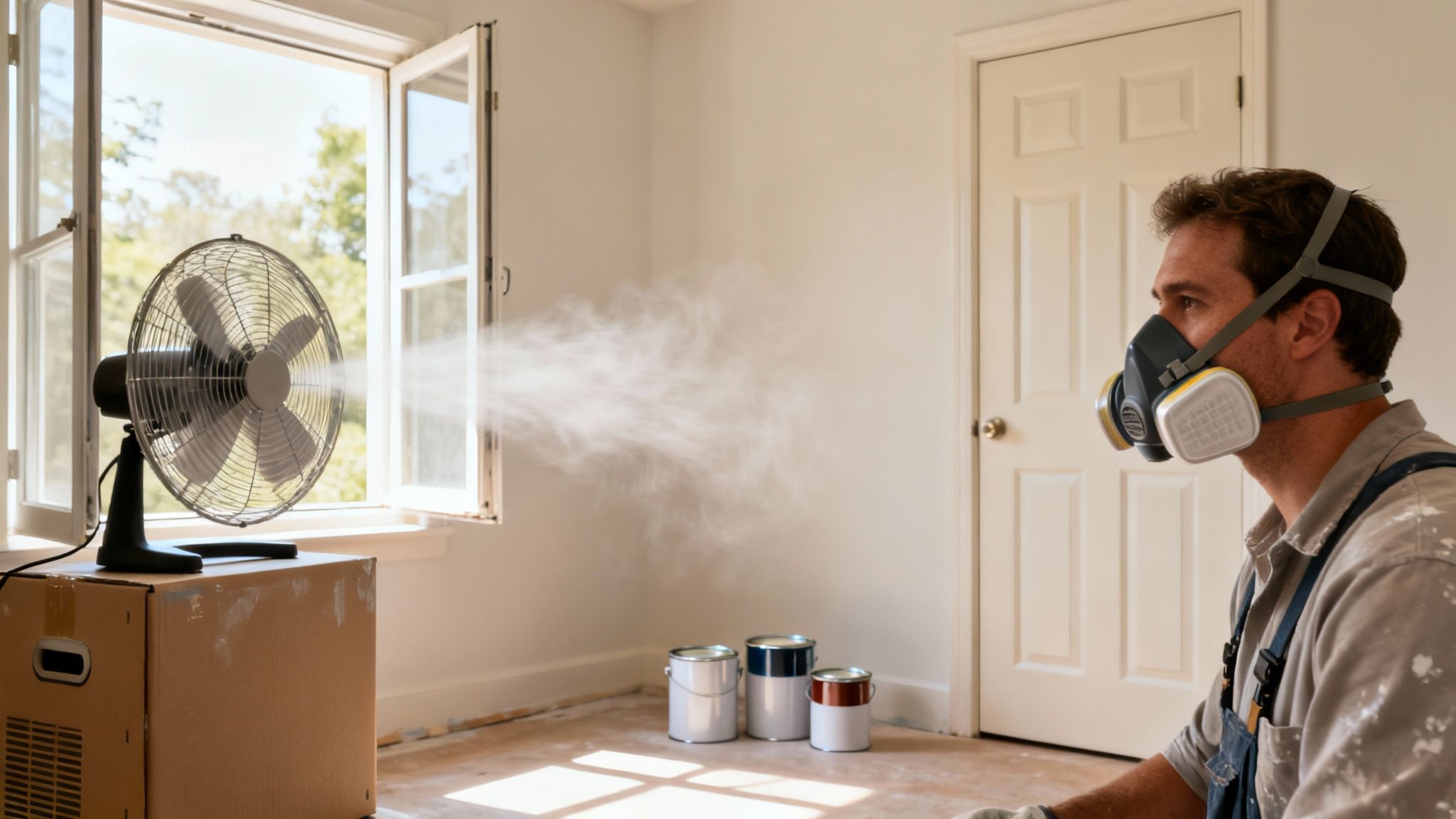
Why Air Quality is Non-Negotiable
Paint fumes can linger for days or even weeks, impacting your home's indoor air quality. For sensitive individuals or children, the consequences can be serious.
Proper ventilation and respiratory protection are your primary defenses. A simple dust mask isn't enough for oil-based products; a NIOSH-approved respirator is necessary to filter out harmful vapors.
"Fresh air is your best tool. Ignoring ventilation turns your home into a chamber of unhealthy fumes, putting your family’s health at risk for a coat of paint."
Your Step-by-Step Ventilation Checklist
To ensure a safe painting environment, follow this safety protocol. For homeowners particularly concerned about health, you can learn more about non-toxic paint brands.
- Create Cross-Ventilation: Open windows and doors on opposite sides of the room to create a natural airflow.
- Use Fans Correctly: Position box fans in windows facing outward to exhaust contaminated air.
- Wear the Right Mask: Use a minimum of a NIOSH-approved N95 mask for latex paints. For oil-based paints or solvents, upgrade to a respirator.
- Isolate the Work Area: Close interior doors and use plastic sheeting to seal off the room you are painting from the rest of the house.
- Choose Low-VOC Products: Whenever possible, select paints labeled as "Low-VOC" or "Zero-VOC."
- Take Frequent Fresh Air Breaks: Step outside for at least 10-15 minutes every hour to give your body a break.
When to Call a Professional
If you are painting a large area or a poorly ventilated space, hiring a professional is the safest choice. Legacy Painting & Renovating Inc. uses commercial-grade ventilation equipment and follows strict safety protocols.
That protection matters more than ever in 2026’s litigious climate. A professional team ensures the job is done safely, managing air quality so you can breathe easily and enjoy your home without health concerns.
3. Choosing the Wrong Paint or Tools
Walking into a paint store can be overwhelming. Choosing the wrong product for your specific surface or environment is a frequent and costly DIY mistake.
This common oversight is why incorrect paint type selection and application is one of the top 5 DIY painting risks to avoid in 2026. A formula designed for a bedroom will quickly fail in a humid bathroom or on an exterior wall battered by Monterey's salt-laced air.
Applying the wrong paint type leads to premature peeling, fading, and mildew growth. In our coastal climate, this risk is particularly high, as standard paint cannot withstand the constant moisture on exterior surfaces.
Why Paint Formulation Matters
Each paint type is engineered for a specific purpose. Interior paints are formulated for washability, while exterior paints contain additives that combat UV rays and moisture.
The paint’s sheen is just as important. A flat finish hides imperfections but isn't durable, while a semi-gloss finish is tough but highlights every flaw.
Choosing incorrectly creates immediate problems. For example, a DIYer in Pacific Grove used a flat-finish paint in their bathroom, only to see it streak and peel within months due to humidity. This error doubled the cost of a seemingly simple project.
"The right paint and primer combination is non-negotiable for a lasting finish. It's the difference between a paint job that looks great for a decade and one that fails in a single season."
Your Step-by-Step Paint Selection Checklist
To avoid the frustration of a failed paint job, use this checklist to select the right products. For more detailed guidance, learn about the best paint for high-traffic areas.
- Identify Your Surface: Is it drywall, wood, metal, or concrete? Each requires a specific type of primer and paint.
- Match Sheen to Function: Use matte or flat for low-traffic areas. Choose eggshell or satin for living rooms and kitchens. Reserve semi-gloss for trim and doors.
- Consider the Environment: For Monterey County exteriors, always select paints rated for coastal use. Inside, use mildew-resistant formulas for bathrooms.
- Use Compatible Systems: Ensure your primer and paint are compatible. Read the can's instructions carefully.
- Invest in Quality Tools: The right tools are as important as the right paint. Use high-quality brushes and rollers to avoid streaks.
When to Call a Professional
If you find the array of paint options confusing, it's time to consult a professional. The experts at Legacy Painting & Renovating Inc. can provide a consultation to ensure the correct products are chosen for Monterey County's unique conditions.
A professional painter not only selects the right paint but also applies it with the correct technique. This guarantees a beautiful and durable finish that protects your investment.
4. Underestimating the Dangers of Working at Heights
While a bad paint job can be fixed, a serious fall can change your life in an instant. The risks of working at heights are often underestimated by DIYers.
This makes falls and improper equipment use one of the most critical of the top 5 DIY painting risks to avoid in 2026. Many homeowners lack the training to safely paint multi-story homes.
This danger is pronounced in Monterey County, where hillside properties in Carmel create uneven ground and coastal winds can catch a ladder off guard. These are not just mistakes; they are life-altering accidents that underscore the importance of professional safety protocols.
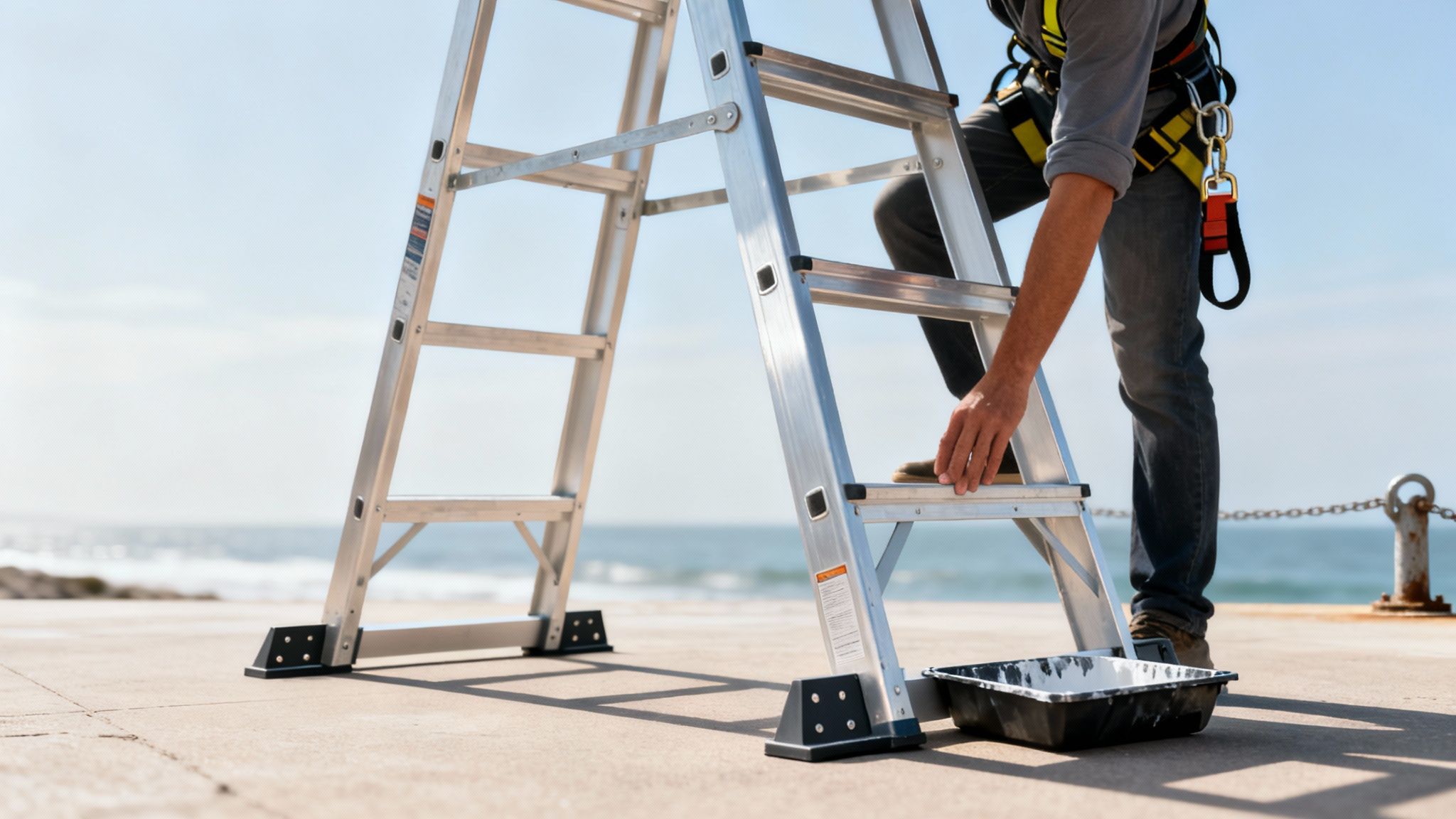
Why Safety Protocols Are Non-Negotiable
Professional painters are trained to follow strict safety standards. This covers everything from selecting the right ladder to working safely around power lines.
A wobbly ladder or a moment of overreaching is all it takes to cause a disaster. The hidden costs of a DIY project become painfully clear when safety is compromised.
"Your personal safety is worth more than any DIY project. We invest in top-tier safety equipment and continuous training because there are no second chances when you're 20 feet off the ground."
Your Step-by-Step Safety Checklist
To mitigate the dangers of falls, it is crucial to prioritize safety from the moment you set up your equipment. Following a strict protocol can prevent most common accidents.
- Inspect Your Equipment: Before every use, check your ladder for cracks or loose rungs. For guidance, use this complete guide to ladder inspection.
- Choose the Right Ladder: Use an extension ladder rated for your weight plus your tools.
- Establish a Stable Base: Place your ladder on firm, level ground. Use leg levelers for uneven surfaces.
- Maintain Three-Point Contact: Always keep either two feet and one hand, or two hands and one foot, on the ladder.
- Avoid Overreaching: Keep your hips within the ladder's side rails. It is safer to move the ladder than to lean.
- Monitor the Weather: Never work on a ladder during high winds or rainy conditions.
- Work with a Spotter: Never work alone on elevated surfaces. A spotter can hold the base of the ladder and call for help.
When to Call a Professional
If your project involves heights that make you uncomfortable, call a professional. Legacy Painting & Renovating Inc. is fully licensed and insured, protecting you from liability and ensuring the job is done safely.
A professional crew has the experience and equipment to handle challenging situations safely. This gives you peace of mind and a flawless finish without the risk.
5. Ignoring Moisture Damage and Long-Term Issues
A beautiful new coat of paint can hide problems, but it can’t solve them. A critical mistake is focusing only on the finish while ignoring hidden moisture.
This is especially damaging in Monterey County, where coastal fog and humidity test a home's defenses. This makes moisture management one of the absolute top 5 DIY painting risks to avoid in 2026.
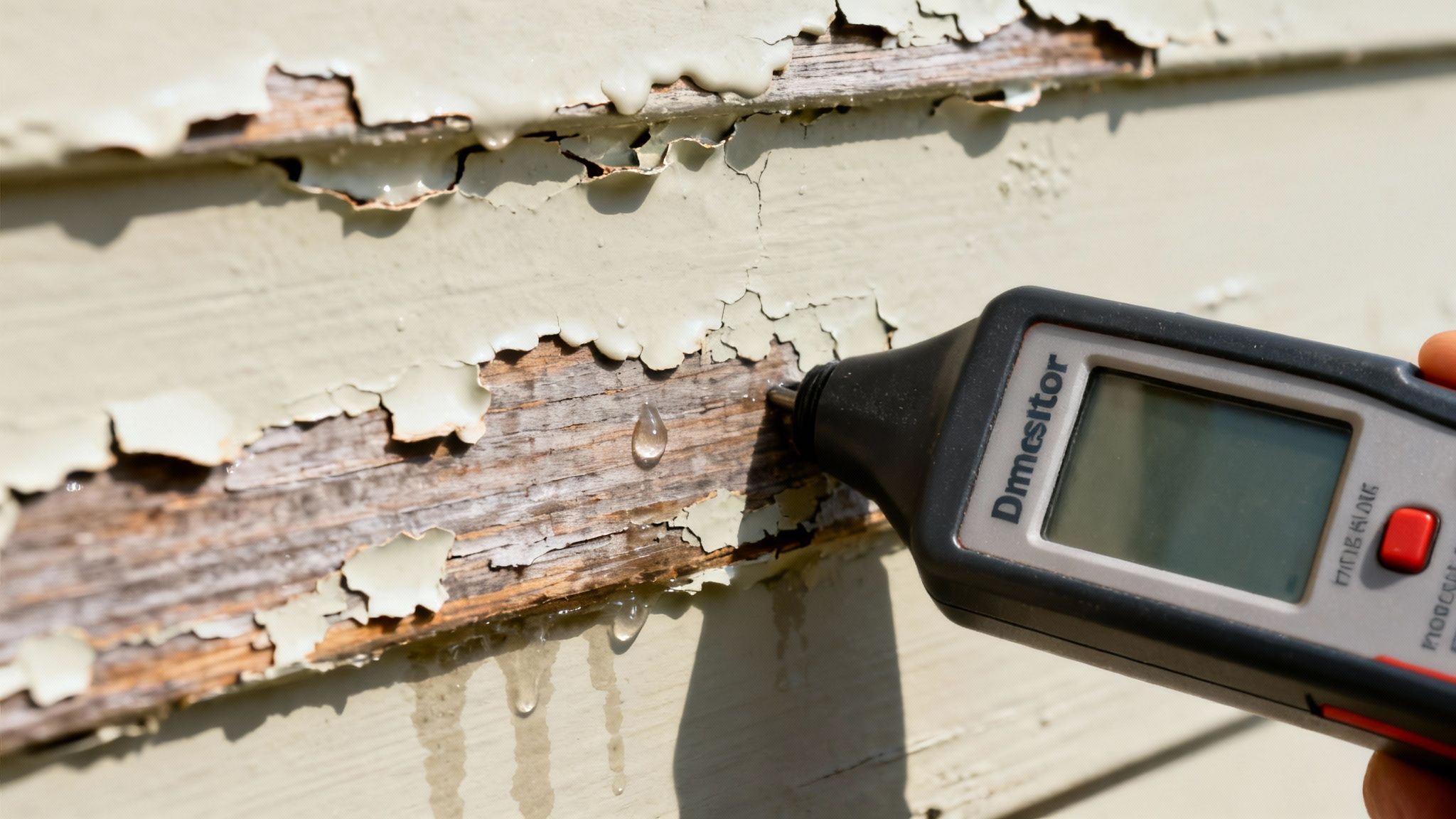
Painting over damp surfaces traps moisture, creating a breeding ground for mold and causing paint to peel. What starts as a simple paint job can escalate into a costly structural nightmare.
Why Moisture Management is Non-Negotiable
Think of your home's exterior paint as a raincoat. If it has holes or is put on over wet clothes, it fails. The same is true for your house.
Surfaces must be completely dry before any paint is applied. In a Salinas bathroom, a DIYer painted over mildew stains without fixing a ventilation issue. The mold grew back, creating health hazards and requiring expensive remediation.
Failing to address moisture jeopardizes your home's structural integrity. It's crucial to recognize the unmistakable signs of mold in your house before you pick up a brush.
"Water is the number one enemy of any paint job. We don't paint until we know the surface is dry and the source of any moisture is fully resolved."
Your Step-by-Step Moisture-Proofing Checklist
To protect your investment, become a moisture detective before you start. You can learn more about the serious problems caused by water intrusion.
- Test for Moisture: Before painting, use a moisture meter to ensure the substrate is dry.
- Inspect Water Diversion Systems: Check that gutters and downspouts are clear and functional.
- Use the Right Sealants: Apply waterproof, mildew-resistant caulk in moisture-prone areas like bathrooms and exterior trim.
- Ventilate Interior Spaces: Make sure bathroom and kitchen exhaust fans vent directly outside.
- Treat Stains and Mildew: Clean any existing mildew and apply a high-quality, mold-inhibiting primer to block stains.
When to Call a Professional
Diagnosing and fixing moisture issues often requires more than a visual inspection. If you suspect a problem, it's safer and more cost-effective to call an expert.
A professional team like Legacy Painting & Renovating Inc. has the tools to identify hidden moisture sources. We perform necessary repairs to ensure your home is protected before a can of paint is opened. This proactive approach is the key to a beautiful finish that lasts.
Frequently Asked Questions (FAQs)
1. How long does a professional exterior paint job last in Monterey County?
A quality paint job from a professional like Legacy Painting, using the right prep and materials, can last 7-10 years, even with our coastal salt air and fog.
2. What's the biggest mistake DIY painters make?
The most common and costly mistake is skipping proper surface preparation. Without clean, sanded, and primed walls, even the best paint will fail quickly.
3. Is it more expensive to fix a bad DIY paint job?
Yes, significantly. Fixing a failed paint job requires stripping or sanding off the old paint, repairing surface damage, and then starting the entire process over correctly, often doubling the initial cost.
4. How does a professional paint job add value to my home?
A quality paint job can add $2,000+ to your home's value. Exterior upgrades can increase property value by up to 5%, as fresh paint signals to buyers that the home is well-maintained.
5. When should I definitely hire a painter in Salinas or Carmel?
Always hire a pro for two-story exteriors, jobs requiring extensive prep work (like sanding old paint), or if you have underlying moisture or mold issues. Safety and expertise are paramount.
Add Value, Not Just Color: Why a Professional Paint Job is a Smart Investment
Navigating DIY painting in 2026 requires more than just a brush. As we've explored, the biggest pitfalls are about safety, durability, and the value of your home.
Avoiding the top 5 DIY painting risks to avoid in 2026 is the difference between a project you’re proud of and one that costs you time, money, and stress. DIY burnout is real—and expensive.
From DIY Dilemmas to Lasting Results
Each risk we covered highlights a central theme: professional expertise matters. A DIY project might seem like a cost-saver, but fixing mistakes can quickly add up.
In Monterey County, our coastal climate presents unique challenges. A paint job that isn't prepared for our local environment simply won't last, leading to peeling and fading.
Why a Professional Touch is Your Best Investment
Hiring Legacy Painting & Renovating Inc. transforms a painting project into a smart investment. Here’s a quick recap of the value we bring:
- Expert Preparation: We handle patching, sanding, and priming to ensure a flawless and durable finish.
- Safety and Compliance: Our team is fully licensed and insured, protecting you from liability.
- Guaranteed Quality: We use the right tools and techniques, preventing drips and uneven coverage.
- Enhanced Home Value: A crisp, professional paint job is one of the fastest ways to boost curb appeal.
Choosing a professional painter is about more than just applying color. It's about protecting your property, ensuring safety, and making a sound financial decision that adds tangible value. Professionals save you time, stress, and surfaces.
Ready to transform your space without the risks? The expert team at Legacy Painting and Renovating Inc. serves Salinas, Pacific Grove, Carmel, and Monterey. We’ll help you skip the stress and get it done right — the first time. Contact us today for a free, no-obligation estimate and let us help you avoid these common DIY pitfalls.