Direct Answer: Small home projects often reveal hidden problems — water damage, failing surfaces, outdated systems. Planning for scope creep before you start saves money, time, and frustration.
You hire someone to paint a bathroom. Three days in, they pull back the baseboard and find water-stained drywall that crumbles to the touch. What started as a $800 paint job just became a repair conversation you weren’t ready to have.
This happens more often than most homeowners expect — and it happens more often in older coastal homes around the Monterey Peninsula, where years of marine layer humidity work quietly behind walls. The salt air and fog cycles that make this stretch of California beautiful are also hard on materials most people never see.
This article is about how to think through a project before it starts, what questions to ask, and how to make smart decisions when a small job reveals something bigger underneath.
Why Small Projects Expand — Especially in Coastal Homes
Most homes on the Monterey Peninsula were built between the 1950s and the 1990s. That means aging substrates, older paint systems, and decades of coastal exposure baked into every surface. When you start pulling things apart — even for a simple refresh — you’re often the first person to look at those surfaces in years.
The most common triggers for scope creep on a painting or renovation project include:
- Water damage behind tile, under windowsills, or along exterior trim
- Failed caulking that let moisture into wood framing over many fog seasons
- Peeling or bubbling paint that signals a primer or adhesion failure below the surface
- Soft or spongy wood on decks, exterior siding, or window frames from salt air exposure
- Previous DIY patches that weren’t properly prepped and need to be redone before any new coat goes on
None of these problems are unusual. And none of them mean your project is a disaster. But they do mean the original scope needs to change — and you need a contractor who will tell you that clearly, with an honest explanation, rather than just painting over it and moving on.
If you want to understand what Monterey’s coastal climate does to exterior surfaces over time, that context matters before you even pick up the phone.

The Two Decisions That Determine How Badly Scope Creep Hurts You
When a project grows, homeowners usually have two decisions to make fast — and how you make them determines whether the surprise costs you money or just costs you a little more time.
Decision 1: Do you fix it now, or defer it?
Some problems, like minor drywall dings or hairline cracks, can legitimately wait. Others — like active moisture damage or rotted wood — will only get worse and more expensive the longer they sit. A good contractor will tell you which is which. If someone can’t explain clearly why something needs to be addressed now versus later, that’s worth paying attention to.
For context on which types of work actually protect long-term home value versus what can wait, this breakdown on renovation ROI for Monterey Peninsula homes is a useful reference.
Decision 2: Do you expand the same project, or schedule a separate one?
Expanding a project mid-stream can make financial sense — the surfaces are already open, the crew is already mobilized, and you avoid paying a second setup cost later. But it also changes your timeline and potentially your budget. Before saying yes to any expanded scope, ask for a written change order with the added cost spelled out clearly. That protects both you and the contractor.
Common Project Expansions and What Drives Them
These are the scenarios Monterey County homeowners run into most often when a project grows beyond the original plan.
| Original Project | What Gets Discovered | Typical Add-On Work |
|---|---|---|
| Bathroom paint refresh | Water damage behind vanity or toilet wall | Drywall repair, moisture barrier, re-prime before paint |
| Exterior repaint | Soft wood on trim, fascia, or window frames | Wood repair or replacement, spot prime, full re-prep |
| Cabinet painting | Grease buildup, failing laminate, or damaged box interiors | Degreasing, surface repair, possible cabinet box refresh |
| Deck refinishing | Rot in deck boards or posts | Board replacement, structural check before any stain or coating |
| Interior accent wall | Old texture patches or previous paint bleed-through | Full skim coat, proper prime, possible sheen adjustment across room |
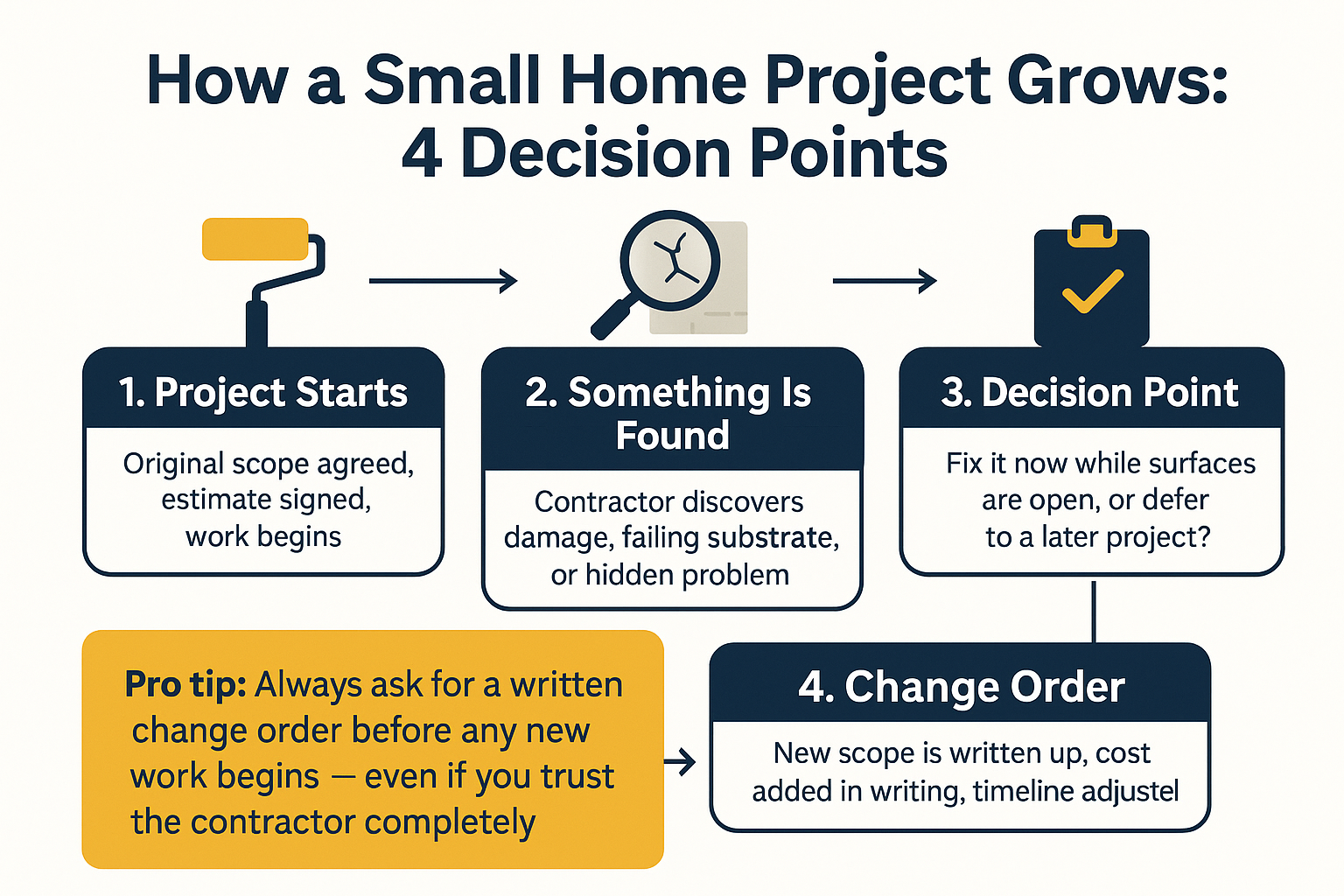
How a Project Grows: The 4 Decision Points
This shows how a homeowner typically moves from a small project to a larger one — and where the key decisions happen along the way.
How to Set Yourself Up Before the Project Starts
The best way to handle scope creep is to expect it — and build a small cushion into your plan before day one. A general rule of thumb for older homes: budget 10–15% above your estimate as a contingency. For a $5,000 exterior repaint on a 1970s Carmel cottage, that means holding back $500–$750 for possible surprises. On a $15,000 bathroom renovation, that’s $1,500–$2,250 sitting ready.
Beyond the budget, a few questions worth asking your contractor before work begins:
- What will you do if you find damage once the project starts? A professional should have a clear answer — they’ll stop, document it, and walk you through options before continuing.
- How do you handle change orders? Any change to the original scope should be written, priced, and signed before work continues. If a contractor is vague about this, take note.
- Have you worked on homes this age in this area? Someone familiar with Monterey Peninsula homes — especially those in Pacific Grove or older Carmel neighborhoods — will know what to look for before it becomes a problem.
Knowing how to tell a professional painter from someone just calling themselves one is useful context here. The same standards that separate a real professional from a weekend operator apply directly to how they handle unexpected scope.
And if your project is a kitchen or bathroom specifically, both of those spaces carry their own common surprises. The bathroom changes that cause the biggest project delays walks through several of the most common ones in detail.
When the Bigger Project Is Actually the Right Call
Sometimes what looks like scope creep is actually an opportunity. If you were planning to repaint your exterior anyway, and the contractor finds rotted fascia on the north side of the house, repairing it now — while the ladders are already up and the surfaces are prepped — almost always costs less than scheduling a second visit later. The mobilization cost alone (crew, equipment, masking, setup) can run $300–$600 for even a modest job in the Monterey area.
The same logic applies inside the house. If you’re painting your kitchen and the cabinets look tired but functional, that’s a good moment to have a real conversation about whether cabinet painting versus full replacement makes more financial sense for where you are in the home’s life. Not because anyone is trying to sell you a bigger job — but because the timing and labor overlap can make a larger scope genuinely cheaper per square foot.
The key is that the decision stays yours. A contractor’s job is to show you what’s there and explain your options clearly. What you do with that information is entirely up to you.
Frequently Asked Questions About Managing Project Scope
What’s the most common surprise contractors find on Monterey Peninsula homes?
Water intrusion is the most frequent one — especially around windows, under exterior trim, and behind bathroom tile. Coastal fog and salt air work slowly into any gap in caulking or flashing, and because it happens gradually, homeowners often don’t notice until a surface is opened up. Homes in Pacific Grove and older parts of Carmel seem to see this most often.
Can I say no to expanded work and just stick to the original plan?
Yes, always. A good contractor will explain what they found and give you options — but the decision is yours. The exception is structural or safety-related issues, where they may not be able to continue the original work until the problem is addressed. But for most cosmetic or surface-related surprises, you can choose to defer.
How do I know if a change order price is fair?
Ask for an itemized breakdown — materials, labor hours, and any disposal or subcontractor costs listed separately. For Monterey County, drywall repair runs roughly $150–$400 depending on the size of the affected area. Wood repair or replacement on exterior trim can run $200–$800 per section depending on extent. If the number feels off, you can ask for a line-by-line explanation or get a second opinion before approving.
Does a bigger scope change the permit situation?
Sometimes. Painting and surface prep generally don’t require permits. But if water damage leads to structural repairs, or if a bathroom project grows to include moving plumbing, permits may come into play. Whether you need a permit to remodel a bathroom in Monterey depends on what work is actually being done — that article lays out when you do and don’t need one.
Should I be suspicious if a contractor finds problems on every project?
Not automatically — but it’s a fair thing to pay attention to. Older Monterey Peninsula homes genuinely do have more hidden issues than newer construction. A trustworthy contractor will document what they find with photos before doing anything, explain why it matters, and give you time to think. If someone is rushing you into an expanded scope without showing you the problem clearly, that’s worth questioning.
Have Questions Before Your Project Starts?
If you’re planning a painting or renovation project in Monterey County and want honest answers before anything gets opened up, Legacy Painting and Renovating is available to walk through what you’re working with. You can reach Ernesto and Geobany’s team by phone at (831) 917-0047 or through the contact form at legacypaintingrenovating.com.