
Learning how to estimate a painting job correctly isn't just for contractors; it's essential for homeowners too. A professional quote breaks down square footage, surface conditions, prep work, and labor, ensuring the price reflects the true scope of work for a lasting finish. This guide will walk you through the key factors that go into a reliable estimate, helping you understand the value behind the price for your project in Monterey, Salinas, or Carmel.
The Anatomy of a Professional Painting Estimate

A professional painting estimate is far more than a number scribbled on a business card. It’s a detailed analysis of the project's true scope, separating a trustworthy proposal from an amateur bid.
This understanding is crucial, whether you're refreshing a historic home in Carmel or a modern commercial space in Salinas. The goal is to build a number that reflects the true value of the work, protecting both you and the contractor from unexpected costs.
Core Components of a Painting Estimate
To build a professional estimate, you need to look beyond the price of a can of paint. Several factors drive the final cost, and each one needs careful consideration.
Here’s a look at the essential components that make up an accurate painting quote.
| Factor | Description | Typical Cost Impact |
|---|---|---|
| Total Surface Area | The total square footage of all walls, ceilings, trim, and doors that need paint. This is the starting point. | Major |
| Surface Condition | The current state of the surfaces. Are they smooth and ready, or do they need extensive patching, sanding, or stain-blocking? | Significant |
| Prep Work | Everything from cleaning and taping to covering furniture and protecting floors. Quality prep is non-negotiable. | Significant |
| Paint & Materials | The cost of all consumables, including primer, top-coat paint, caulk, tape, and plastic sheeting. | Moderate |
| Labor Costs | The time and skill required for every step. This is often the largest portion of the estimate. | Major |
These components work together to form a comprehensive and fair price for the project.
Estimating a painting job means accounting for all these variables. As a baseline, professional painters often use square footage for initial figures, with rates typically falling between $1.50 and $4.00 per square foot. Labor usually makes up about 70-80% of the total cost, highlighting the skill involved in a flawless job. You can find more insights on project costs in detailed industry reports.
A well-crafted estimate isn't just a price tag; it's a roadmap for the project. It clearly outlines the scope, manages expectations, and builds a foundation of trust before the first can of paint is even opened.
For instance, a standard 1,000 sq. ft. interior paint job in a place like Monterey or Pacific Grove could range from $1,500 to over $4,000. That wide gap is almost entirely due to the variables we just discussed, which proves why a detailed, on-site assessment is so critical.
Measuring Your Project With Precision
Guesswork is the enemy of a professional painting job, leading to wasted materials and surprise costs. The foundation of a trustworthy estimate is always accurate, detailed measurements.
Getting this right from the start builds immediate trust and shows your contractor is a true professional. For painters working anywhere from Salinas to Carmel, a sharp pencil at this stage is non-negotiable.
Calculating Wall And Ceiling Area
The first skill in learning how to estimate a painting job is getting the basic wall area correct. For a simple rectangular room, it's straightforward.
Measure the length and height of each wall in feet. Multiply those two numbers to get the square footage for that wall.
- Example: A wall that’s 15 feet long and 8 feet high is 120 square feet (15 x 8 = 120).
Do this for every wall to be painted and add the numbers together. For the ceiling, just multiply the room's length by its width.
Subtracting Areas You Won't Paint
Now that you have the total wall area, you must account for large areas you aren't painting, like doors and windows. Skipping this step will result in buying too much paint.
Measure the height and width of each major opening. A typical interior door is about 21 square feet, and an average window is around 15 square feet. Subtract these totals from your overall wall square footage for a more accurate number.
Pro Tip: Don't worry about subtracting small items like light switches or outlets. The paint you'd "save" is minimal and serves as a tiny, built-in contingency.
A Practical Scenario In Pacific Grove
Let's put this into practice with a real-world example—painting a master bedroom in a Pacific Grove home.
- Room Size: The room is 14 feet long by 12 feet wide with 8-foot ceilings.
- Walls: Two walls at 14' x 8' (112 sq. ft. each) and two walls at 12' x 8' (96 sq. ft. each).
- Total Wall Area: (112 x 2) + (96 x 2) = 224 + 192 = 416 sq. ft.
- Openings: The room has one door (21 sq. ft.) and two windows (15 sq. ft. each, totaling 30 sq. ft.).
- Total Subtraction: 21 + 30 = 51 sq. ft.
- Paintable Wall Area: 416 sq. ft. – 51 sq. ft. = 365 sq. ft.
This detailed figure is the critical starting point for calculating paint, materials, and labor. To see how these numbers scale up, check out our guide on getting a whole house painting estimate in Pacific Grove.
From Measurements to Material Costs
Once you have your measurements locked in, it's time to turn those numbers into a solid list of materials. This step ensures no frantic, last-minute trips to the paint store, keeping the project on budget.
The heart of any paint estimate is understanding coverage. A gallon of quality paint typically covers 350-400 square feet for a single coat. On the labor side, a seasoned painter can usually tackle about 150-200 square feet per hour.
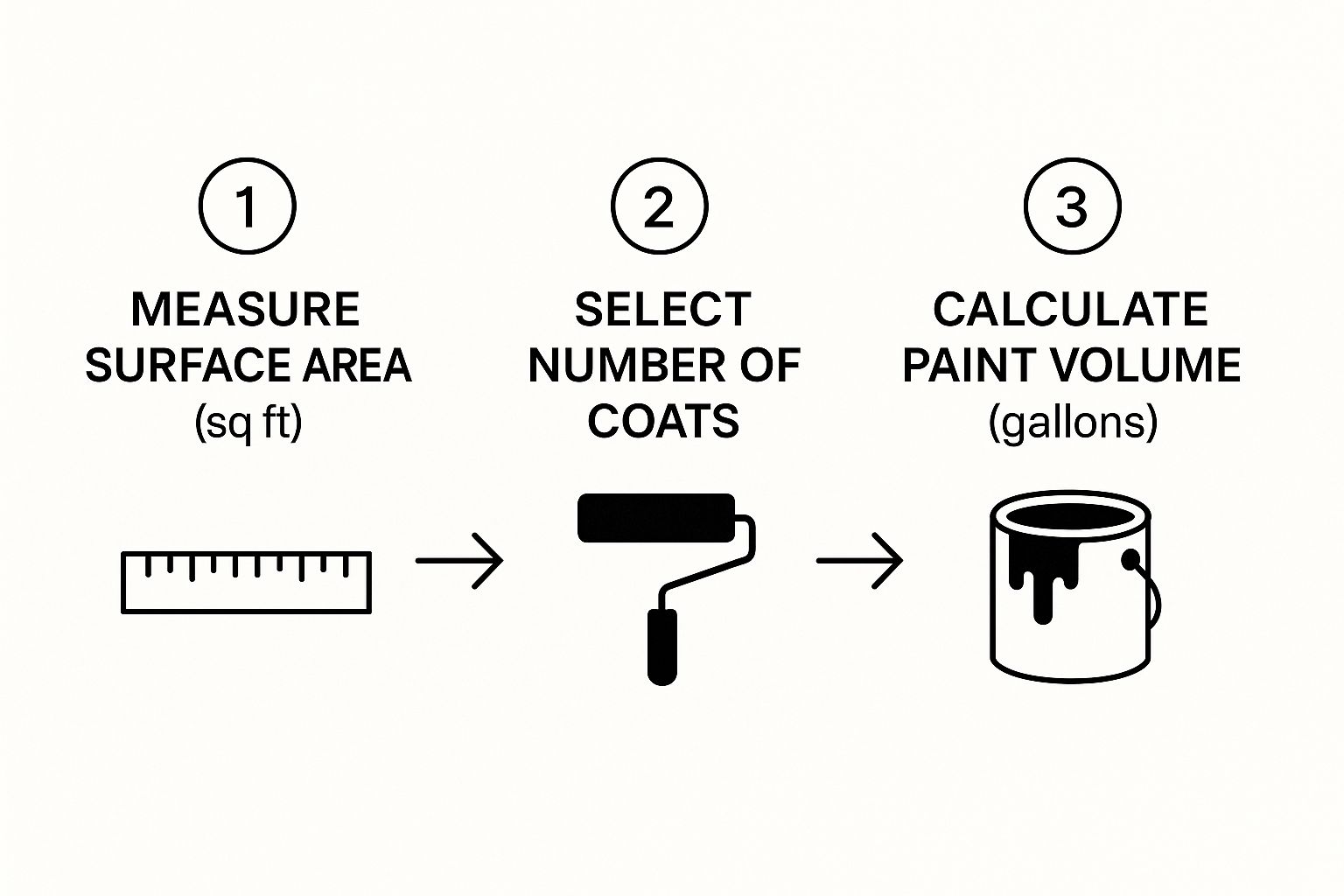
As you can see, it's a logical process that takes the guesswork out of the equation and moves you toward a professional, data-driven estimate.
Accounting for Surface and Color
That standard coverage rate is just a starting point. The actual amount of paint you'll need can change based on the surface texture and the color you're covering.
- Surface Texture: Smooth, primed drywall will likely get you 400 sq. ft. per gallon. Rough, porous surfaces like old plaster or stucco might only get 250-300 sq. ft. per gallon as they absorb more paint.
- Color Change: Going from a light cream to a light gray? Two coats will probably do. But covering a deep navy blue with a soft white will require a quality primer plus at least two, maybe three, finish coats.
This is where experience counts. Knowing how materials behave on different homes, from modern builds in Salinas to historic properties in Monterey, is what separates an amateur guess from a professional quote.
Paint Quantity Estimator (Per Coat)
This quick reference table can help you get a ballpark idea of your paint needs.
| Total Wall Square Footage | Approximate Gallons Needed |
|---|---|
| Up to 400 sq. ft. | 1 Gallon |
| 800 sq. ft. | 2 Gallons |
| 1,200 sq. ft. | 3 Gallons |
| 1,600 sq. ft. | 4 Gallons |
| 2,000 sq. ft. | 5 Gallons |
Remember to double these amounts if you plan on applying two coats, which is almost always recommended for a durable, even finish.
The Value of Premium Paint
It's always tempting to grab cheaper paint to keep costs down. This is almost always a mistake that costs more in labor and time.
A premium paint might have a higher price tag per gallon, but its superior hide and coverage mean you'll often need fewer coats. That saves a ton of time on labor, which is the biggest expense in any painting budget.
High-quality paints also create a more durable, washable finish, giving you much better value in the long run. For more advice, check out our expert home painting tips and get a free quote. And don't forget other essentials like painter’s tape, drop cloths, rollers, brushes, caulk, and primer.
Accounting For Labor And Overhead

While material costs are straightforward, labor is almost always the single biggest expense on a professional painting quote. Understanding how to estimate painting job labor accurately is what separates a sustainable business from one that struggles.
A true professional calculates the total time needed for every phase, from arrival to final cleanup. This ensures every minute of skilled work is accounted for, leading to a fair and realistic price.
Breaking Down Labor Hours
A painting project is so much more than just applying color. Each stage demands time and skill, which must be factored into the labor cost.
A typical job’s labor includes:
- Meticulous Prep Work: This is the most time-consuming phase, involving cleaning walls, patching holes, sanding, caulking, and masking trim, floors, and furniture.
- Priming: Applying a quality primer is essential for covering dark colors or raw surfaces, adding an application and drying cycle to the project.
- Painting Each Coat: This is the actual time spent applying the paint. Most jobs need two full coats for a uniform, durable finish.
- Final Cleanup: This includes removing tape and coverings, cleaning the work area, and doing a final walkthrough with you.
A job that looks simple can hide complexities that add serious labor hours.
Labor isn’t just about painting; it's about preparation, precision, and problem-solving. A suspiciously low bid often means that critical prep work—the very foundation of a lasting paint job—is being skipped.
Factoring In Job Complexity
Not all rooms are created equal. The unique character of a space has a huge impact on the time it takes to do the job right.
These factors will add significant time to the estimate:
- High or Vaulted Ceilings: These require ladders or scaffolding, slowing down the work and adding safety planning.
- Intricate Trim and Moldings: Crown molding and detailed window casings demand careful, time-consuming brushwork.
- Significant Drywall Repair: Patching large cracks or fixing water damage adds considerable time for application, drying, and sanding.
- Occupied and Furnished Homes: Working around furniture means extra time and care to protect your belongings.
This is why a detailed, on-site visit is so important. When a painter assesses a home in Salinas or Carmel, they spot these complexities and build the necessary time into the quote for services like exterior residential painting services.
Understanding Overhead Costs
Finally, every professional quote includes a portion for business overhead. These are the real-world costs of running a legitimate, trustworthy painting company.
Overhead includes things like:
- Insurance and Licensing: This protects you, your property, and our workers.
- Equipment and Vehicle Maintenance: Keeping our tools, ladders, and vans in safe, working order is a must.
- Marketing and Administrative Costs: These are the background expenses required to run the business.
This is a major difference between an established company and a lone handyman. Factoring in overhead ensures the business is stable and will be around to stand by its work for years to come.
Crafting a Quote That Builds Client Trust
Once you’ve run the numbers on materials and labor, it's time to put it all together in a professional quote. This document is your chance to manage expectations and build confidence.
A clear, detailed, and transparent proposal shows professionalism before a brush is even picked up. For homeowners in the Monterey Bay area, a good estimate helps spot a quality contractor and avoid surprises.
The Essential Elements of a Professional Quote
A standout quote should be easy to read and leave no room for confusion. Think of it as the project's official roadmap.
Every professional estimate we create has these non-negotiable elements:
- Detailed Scope of Work: We list every surface to be painted and all prep work, from patching holes to caulking trim.
- Itemized Cost Breakdown: We always separate the costs for materials and labor for full transparency.
- Clear Project Timeline: We provide an estimated start date and a realistic timeframe for completion.
- Payment Terms and Schedule: This section outlines how and when payments are due.
A professional quote is your best sales tool. It proves you've done your homework, respect the client's investment, and are committed to clear communication from start to finish.
Why a Professional Quote Matters
Putting everything in a written quote prevents "he said, she said" arguments. It ensures everyone is on the same page about what’s included—and what isn’t.
Clearly stating the brand and type of paint shows a commitment to quality. This detail is critical for any project, from a simple refresh to the full-scale jobs in our residential exterior painting gallery. When a client gets a thorough document, they feel secure in their decision.
Frequently Asked Questions
Understanding how to estimate a painting job can bring up a few questions. Here are answers to some of the most common ones we hear from homeowners in the Salinas and Monterey areas.
1. Why do painting quotes vary so much between contractors?
Quotes vary due to differences in labor rates, the quality of materials used, the thoroughness of prep work, and whether a contractor is fully licensed and insured. A very low bid often indicates that corners are being cut on prep or materials, which can cost you more later.
2. How much does it cost to paint a house exterior in the Monterey area?
Exterior painting costs depend on the house's size, siding material, condition, and architectural complexity. On average, you might expect to pay between $2.50 and $5.00 per square foot of siding. For a typical 2,000 sq. ft. home in a coastal community like Carmel, this could range from $5,000 to $10,000, with costs increasing if extensive repairs are needed.
3. Does the paint finish (e.g., matte, satin) affect the cost?
Yes, but mainly due to labor. Higher-sheen finishes like semi-gloss are less forgiving and show every imperfection, requiring more meticulous prep work and application. While the material cost difference is minor, the extra labor to achieve a flawless look with a shinier finish can increase the overall price.
4. Should I always get multiple quotes for my painting job?
Absolutely. We recommend getting at least three detailed, written quotes from reputable, licensed, and insured painters. This allows you to compare not just the price, but the scope of work, materials proposed, and the professionalism of each contractor, helping you make an informed decision.
5. What is a contingency in a painting estimate?
A contingency is a budget buffer, typically 10-15% of the total project cost, set aside for unexpected issues. This is a sign of an experienced contractor who plans for surprises like hidden wood rot or water damage. It’s not about padding the bill; it's smart planning to ensure the job is done right without derailing the budget.
Ready to get a clear, professional, and trustworthy estimate for your next project? The team at Legacy Painting & Renovating Inc. is here to provide a detailed, no-obligation quote tailored to your home in Salinas, Monterey, Carmel, Pacific Grove, or the surrounding communities.