
Figuring out how much paint you need for a job in your Monterey home can feel like a tough math problem. But knowing how to calculate your paintable square footage is the secret to getting it right. It helps you avoid that frustrating mid-project run to the hardware store.
Getting this number correct from the start saves you from buying too much paint. It also keeps you from running out when you’re halfway up a wall. It’s the first step to a smooth, successful paint job.
Your Guide to an Accurate Painting Project
Getting your measurements right affects everything, from your budget to your schedule. When you know your exact square footage, you can:
- Buy the right amount of paint: No more wasted paint or last-minute store trips.
- Create an accurate budget: You’ll know your material costs before you start.
- Plan your time well: Good estimates prevent surprise project delays.
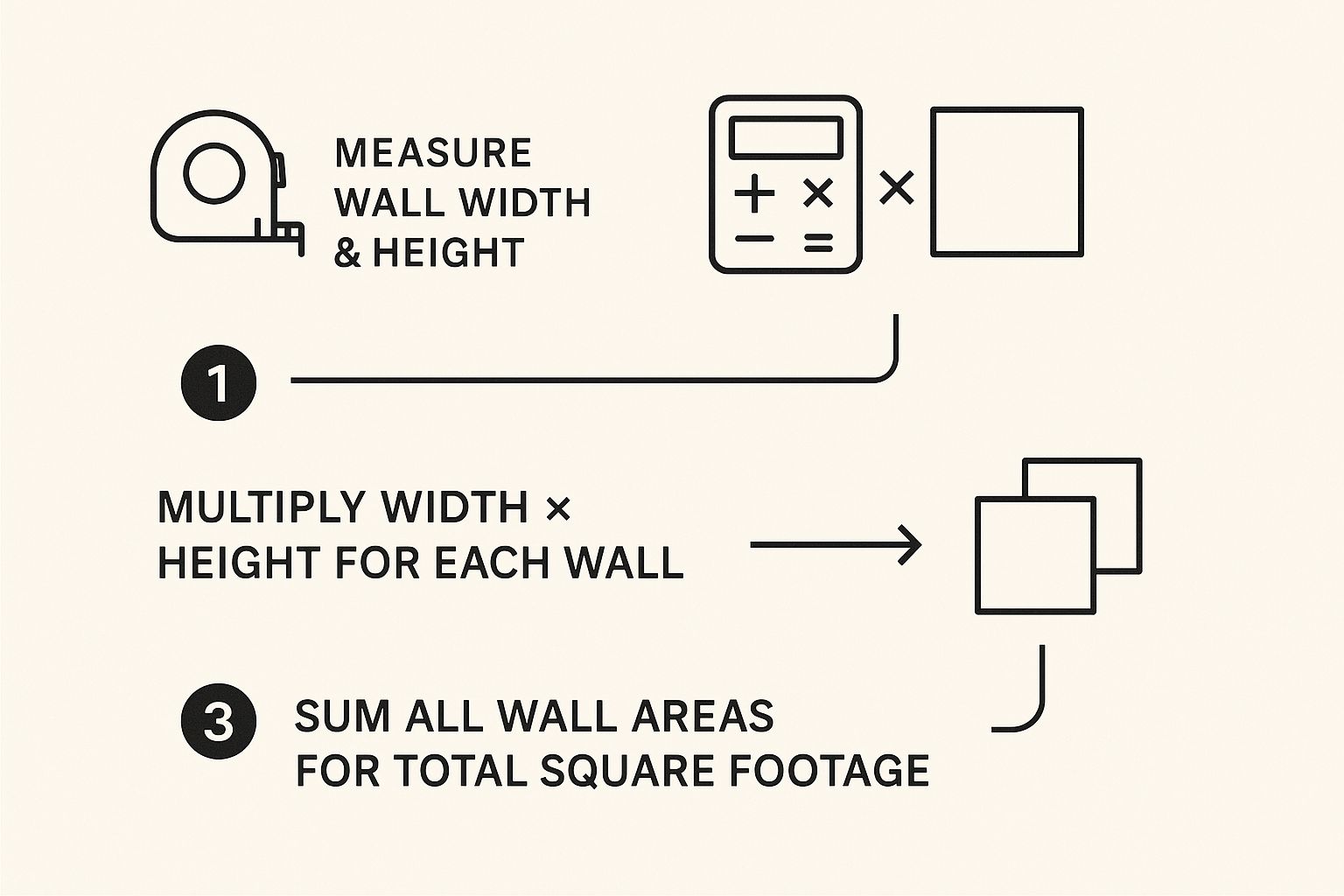
The basic math is simple. Just measure the height and width of each wall and multiply them. For example, a wall that is 10 feet high and 15 feet wide is 150 square feet.
Do that for every wall you’re painting. If you’re painting the ceiling, measure it too. Then, subtract the space for things you won’t paint, like doors and windows. A good rule is that one gallon of paint covers about 350 to 400 square feet. You can find more tips on estimating your next paint job to help plan your project.
This simple, reliable method is what professionals use. From Carmel commercial painters to home renovation experts in Salinas, it’s how they deliver precise results every time.
Quick Paint Calculation Cheat Sheet
To make things even easier, here are the basic formulas for measuring common surfaces in your home.
| Surface Type | Formula to Calculate Area (Square Feet) |
|---|---|
| Walls & Ceilings | Length x Width |
| Doors | Length x Width (Typically subtract 20 sq. ft.) |
| Windows | Length x Width (Typically subtract 15 sq. ft.) |
| Triangular Areas | (Base x Height) / 2 (For gable ends or vaulted ceilings) |
Just grab your tape measure and write down the numbers for each surface. Use these formulas to find your total paintable area. This takes all the guesswork out of the process.
Gathering Your Tools for Measurement
Before you start crunching numbers, it helps to get your tools ready. Think of it as prep work for the prep work. Getting this right from the start ensures your paint estimate is solid.
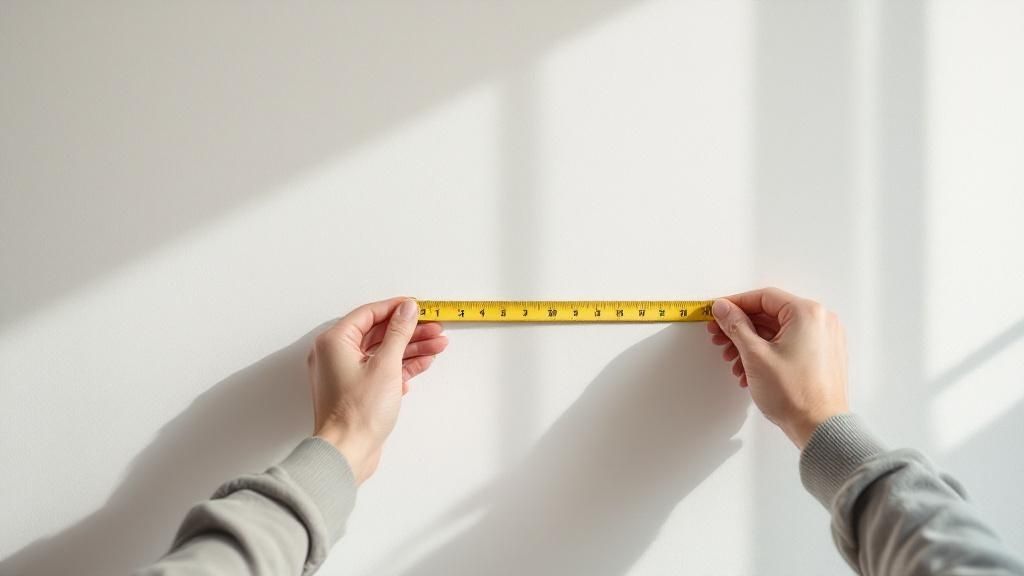
A simple tape measure is your best friend for most jobs. But if you have large rooms or high ceilings like those in Carmel, a laser distance measurer is a real game-changer. These tools are very accurate and save a lot of time.
Your Essential Measurement Kit
You don’t need much to get accurate numbers. Just grab these simple items before you begin:
- A Reliable Measuring Tool: Your trusty tape measure or a laser measurer.
- Something to Write On: A notepad and pen work great. The notes app on your phone is also handy.
- A Calculator: Your phone’s calculator is perfect for the job.
The way we calculate paintable square footage has changed over time. While a tape measure still works, modern laser tools can cut your measurement time by up to 50%. They also improve accuracy, reducing human error from 5-10% down to under 1%. For professional painters, that precision is a huge advantage, as noted in expert guides on how painters estimate jobs at contractorplus.app.
“Having precise measurements is the very first step toward a flawless finish. It helps you buy the right amount of paint and primer, preventing wasted material and extra trips to the store.”
Speaking of primer, it’s a key step for getting a professional look. This is especially true if you’re making a big color change. You can learn more in our guide on what paint primer is used for to see if your project needs it.
Measuring Your Walls and Ceilings
Alright, it’s time to measure your space. This is where you figure out your paintable square footage, and it’s easier than it sounds. For a standard rectangular room, like a spare bedroom in a Salinas home, just grab your tape measure.

First, measure the width of one wall from corner to corner. Next, measure its height from the top of the baseboard to the ceiling. Multiply those two numbers, and that’s the total square footage for that wall. Now, do the same for the other walls you plan to paint.
A Practical Example in a Monterey Home
Let’s walk through a real-world example. Imagine you’re painting a 12×15 foot bedroom in a Monterey home with a standard 8-foot ceiling.
Here’s how the math works:
- Two shorter walls: 12 ft (width) x 8 ft (height) = 96 sq. ft. each. That’s 192 sq. ft. total for both.
- Two longer walls: 15 ft (width) x 8 ft (height) = 120 sq. ft. each. That’s 240 sq. ft. for those two.
Add them all together (192 + 240). Your total wall area is 432 square feet.
Pro Tip: Always double-check your measurements. One small mistake with the tape measure can throw off your entire paint calculation. This could mean another trip to the store or wasted paint.
Measuring the ceiling is even easier. Just multiply its length by its width. For our example room, that’s 15 ft x 12 ft, giving you a ceiling area of 180 square feet.
Getting good at these quick measurements is a useful skill. You can use it for other home projects, like buying carpet or following an entryway rug size guide.
Accounting for Doors, Windows, and Trim
Once you have the total square footage for your walls, it’s time to adjust that number. You aren’t painting over doors and windows, so you need to subtract their area. This simple step helps you avoid buying an extra, unneeded gallon of paint.
Just measure the height and width of every door and window in the room. Multiply those two numbers for each one to find its square footage.
Here are a couple of common examples:
- Standard Door: A typical interior door is about 3 feet wide by 7 feet tall, which is 21 square feet.
- Standard Window: A window measuring 3 feet wide by 5 feet tall is 15 square feet.
Add up the square footage of all your doors and windows. Then, subtract that total from your wall area. It’s that easy.
How to Measure Trim
Trim is a bit different. For things like baseboards, crown molding, or window casings, you measure in linear feet.
It’s as simple as it sounds. Just use your tape measure to get the length of each piece of trim you plan to paint.
Keep this number separate from your wall measurements. This is especially important if you’re using a different paint color or finish for the trim. A precise measurement helps you buy the right amount and avoid headaches. If you do run into a problem, knowing how to fix paint drips can be a real project-saver.
Calculating for Unique and Exterior Spaces
Not every room is a perfect box. Homes in historic areas like Pacific Grove often have character, with vaulted ceilings, nooks, and tall stairwells. These spaces might seem hard to measure, but the trick is to break them down into simple shapes.
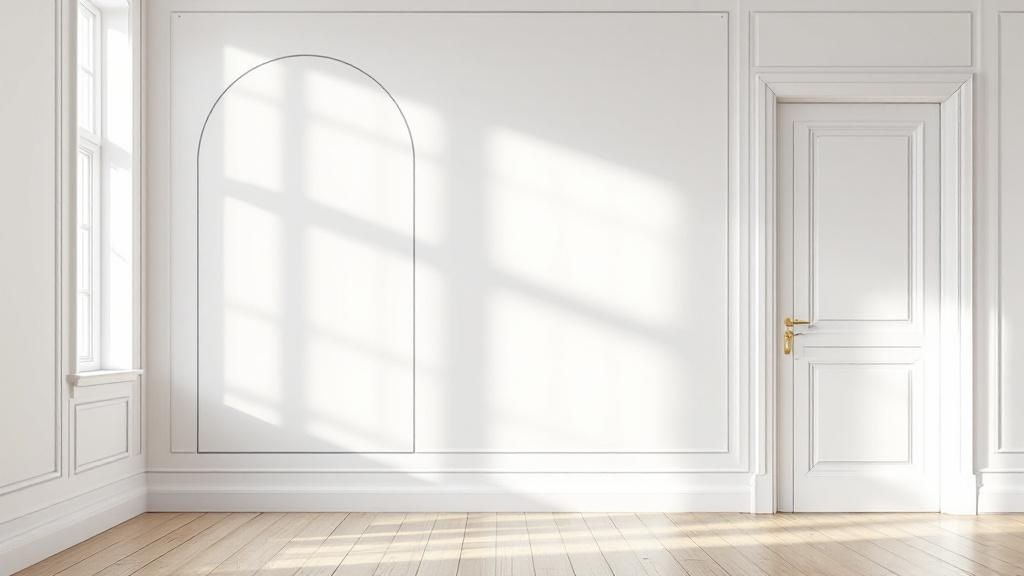
Take a triangular area, like the peak of a vaulted ceiling. Measure the width of the base and the height from the center of the base to the top point. Multiply those two numbers, then divide by two.
That simple formula—(Base x Height) ÷ 2—gives you the exact square footage for that triangle.
Tackling Exterior Painting Measurements
Figuring out the square footage for an exterior paint job starts with the same basic idea. You’ll measure the height and length of each wall to get your total area. But the process has its own professional considerations.
For instance, you’d normally subtract windows and doors for an interior project. Many pros don’t do this for exteriors because the time it takes to carefully paint around them usually cancels out any paint savings. For anyone planning this kind of project, our guide has more exterior house painting tips to help you get a beautiful, lasting finish.
“Modern tools like laser distance measurers are quickly becoming the industry standard. They deliver a level of accuracy and speed for exterior estimates that you just can’t get with traditional methods.”
Specialized software can turn these precise measurements into accurate paint estimates. This ensures fair pricing for homeowners in places like Salinas or Monterey. Understanding these details helps you plan your exterior project correctly.
Turning Square Feet into Gallons of Paint
You’ve done the measuring, and you have your total paintable square footage. The last step is turning that number into the right amount of paint.
A good rule of thumb is that one gallon of paint covers about 350 to 400 square feet. This is for a standard, smooth, primed wall. It’s a solid starting point for most rooms.
But that number can change. If you’re working with rougher surfaces like textured drywall or old plaster, those walls are “thirstier.” They soak up more paint, so you might only get 250 to 300 square feet per gallon. This is common in many classic Monterey homes.
The Simple Gallon Formula
For a quick estimate, use this simple formula. Take your total square footage and divide it by the average coverage per gallon.
Total Square Footage ÷ 350 = Gallons Needed Per Coat
Remember, almost every paint job needs two coats for a rich, even color. This is especially true if you’re making a big color jump, like from dark to light. If you’re still deciding on that perfect color, our guide on how to choose interior paint colors can help you get inspired.
Pro Tip: Always buy about 10% extra paint. Trust me. It’s a lifesaver for future touch-ups and saves you from a panicked trip to the store when you’re just a few feet short.
To make things even easier, here’s a quick reference table. It’ll help you estimate how many gallons you’ll need for a single coat.
Paint Gallon Estimator (Per Coat)
| Total Square Footage | Recommended Gallons (approx.) |
|---|---|
| Up to 400 sq. ft. | 1 Gallon |
| 400 – 800 sq. ft. | 2 Gallons |
| 800 – 1,200 sq. ft. | 3 Gallons |
| 1,200 – 1,600 sq. ft. | 4 Gallons |
Remember to double these numbers if you’re planning on two coats. This is almost always the case for a professional-looking finish. Getting your paint calculation correct is the key to a successful project.
Frequently Asked Questions (FAQs)
Here are answers to some common questions about calculating square footage for painting.
1. How does wall texture affect my paint estimate?
Rough surfaces like textured drywall or old plaster have more surface area. They absorb more paint. Instead of 350-400 sq. ft. per gallon, you might only get 250-300 sq. ft. It’s smart to buy extra paint for these surfaces.
2. Should I always use a primer before painting?
Primer is your best friend when making a big color change (like dark to light) or painting new drywall. It helps the topcoat stick, makes the color look right, and can save you from needing a third coat of paint.
3. Do I measure the ceiling if I am not painting it?
No. If you are only painting the walls, just measure the walls. Including the ceiling’s square footage will make your paint estimate incorrect. Only measure the surfaces you actually plan to paint.
4. How many coats of paint will I need?
You should almost always plan for two coats. This gives you an even, professional finish, especially when changing colors. You might only need one coat if using a high-quality paint-and-primer-in-one over a very similar light color, but two coats is the standard.
5. What if my room is not a simple rectangle?
Break down complex shapes into simple ones. For a triangular area under a gable, use the formula (Base x Height) / 2. For an L-shaped room, treat it as two separate rectangles and add their square footage together.
You can learn more by checking out our complete guide on how to estimate a painting job. The principle is similar for other projects, too—like using a storage calculator before a move.
Summary for Meta Description: Learn how to calculate square footage for painting with our simple guide. Get accurate measurements for walls, ceilings, and trim to buy the right amount of paint for your next project in Monterey, Salinas, or Carmel.
Ready to skip the math and get a professional finish for your Salinas or Carmel home? Contact Legacy Painting & Renovating Inc. today for a free, no-obligation estimate.
https://legacypaintingrenovating.com