
When you hear "custom house painting," it's easy to think it just means picking a new color. But for experienced custom house painting contractors, "custom" is a promise. It signals a personalized, high-end service where every detail is tailored to your home’s unique character, from surface analysis to the final, flawless coat.
This guide explains what sets a true custom paint job apart and how to find the right professionals in the Monterey Bay area to protect your investment. A custom project delivers a stunning finish that adds tangible value and long-term durability.
What a Custom Paint Job Really Means
A standard paint job gets color on the walls. A truly custom project treats your home like the unique canvas it is, considering its age, architecture, and even the local Salinas Valley or coastal Monterey environment. This specialized approach delivers a finish that doesn’t just look incredible—it provides lasting protection and adds real value to your property.
This demand for quality is reflected in the market. According to Zillow, professional interior painting can increase a home’s resale value by 1-3%. Homeowners are clearly looking for more than just a quick cover-up; they want personalized solutions that last.
The Anatomy of a Custom Project
So, what separates a quick repaint from a genuine custom job? It boils down to a deeper level of care and expertise. For instance, protecting a historic home in Carmel from salty coastal air demands different materials and techniques than updating a modern interior in Salinas. The goal is a solution designed specifically for your home's challenges.
A truly custom project almost always includes:
- An In-Depth Consultation: We discuss your lifestyle, how you use each space, and your long-term goals, whether that's maximum durability for a growing family or boosting resale value.
- Meticulous Surface Preparation: This is the most critical part of any high-quality paint job. It may involve careful hand sanding, repairing hidden wood rot, or fixing moisture issues to guarantee the paint adheres perfectly and lasts for years.
- Premium Material Selection: We use high-grade primers and paints specifically chosen for your home's surfaces and environment, like low-VOC options for interiors or resilient coatings for coastal exteriors.
- Advanced Application Techniques: We might use fine-finish spraying for a silky-smooth look on cabinets or precise, traditional brushwork for intricate trim. It's about using the right method for a flawless result.
To help you see the difference clearly, here’s a quick breakdown of what to expect from a standard service versus a custom one.
Standard vs. Custom Painting Project Breakdown
| Feature | Standard Painting Service | Custom Painting Service |
|---|---|---|
| Consultation | Basic color selection | Deep dive into goals, lifestyle, and architectural details |
| Prep Work | Light sanding, spot priming | Extensive repairs, full sanding, moisture remediation, detailed cleaning |
| Materials | Contractor-grade paint | Premium, specialized primers and top-coats for specific surfaces |
| Application | Standard roll and brush | Advanced techniques (spraying, back-brushing) for a flawless finish |
| Durability | 3-5 years | 7-10+ years with proper care |
| Focus | Speed and basic coverage | Longevity, protection, and aesthetic perfection |
As you can see, the investment in a custom project goes far beyond aesthetics. You're paying for a solution built to protect your home.
A professional custom paint job is an investment in your property's future. The return isn't just in curb appeal—it’s in the years of added durability and protection against the elements.
This detailed process ensures the final product isn't just beautiful but built to last. For homeowners, understanding the specific needs for home painting services in Pacific Grove can make all the difference in achieving a result that withstands our unique coastal climate.
Creating Your Project Vision and Scope

Before you call custom house painting contractors, the most critical work happens. You need a crystal-clear vision. A detailed project scope is your single most important tool; it's the roadmap that ensures you can communicate what you want and get accurate, comparable bids from professionals.
Getting this initial planning right prevents headaches down the line. Start by walking through your property. Make a list of every single surface you want painted—walls, ceilings, intricate trim, doors, and even window frames. The more detail you include, the smoother the project will go.
Defining Your Project’s Core Goals
Every painting project has a "why" behind it. Figuring out your motivation is key because it will shape every decision, from colors to your investment level. Are you looking for a quick, cosmetic refresh or a long-term transformation built to last?
Consider what’s driving your project:
- Boosting Resale Value: If you're getting your Monterey home ready for the market, your focus will be on neutral, crowd-pleasing colors. The goal is a flawless finish that signals meticulous maintenance to buyers.
- Personal Enjoyment: This is where you can let your personality shine. Maybe it’s that dramatic accent wall you’ve always wanted in your Pacific Grove living room or creating a serene, spa-like escape in your master bedroom.
- Protection and Durability: For an exterior paint job, especially in coastal spots like Carmel, the primary goal might be protecting your home from the elements. This means focusing on high-performance coatings that stand up to moisture, salt, and sun.
A well-defined scope is more than a to-do list; it’s a communication tool that bridges the gap between your vision and your contractor’s execution. It’s the single best way to ensure everyone is aligned on the final goal.
Cataloging Surfaces and Finishes
Once you know your "why," it’s time to get into the "what." This means specifying the exact materials and finishes you have in mind. Different paint sheens—like matte, eggshell, satin, or gloss—don't just change the look; they dramatically affect durability and how easy a surface is to clean.
A high-traffic hallway benefits from a durable satin finish that can handle scuffs and be wiped down. A formal dining room, on the other hand, might look incredible with a rich, velvety matte. Don't forget custom pieces like built-in shelving or kitchen cabinets—they require specialized paints to achieve a tough, furniture-grade finish.
Assessing Existing Conditions
Finally, it's time to play detective. Take a hard, honest look at the current state of your walls, trim, and siding. Finding these problems before you get bids is crucial because they must be fixed before any new paint is applied.
Your pre-project checklist should include a hunt for:
- Cracks in drywall or plaster.
- Peeling or bubbling paint, which often signals moisture problems.
- Water stains on ceilings or walls.
- Dents, dings, or nail holes that need to be filled.
- Signs of wood rot on exterior trim or siding.
When you can point these issues out to potential contractors, they can include the necessary repair work in their quotes. This level of transparency upfront is how you get a truly comprehensive bid that covers the essential prep work needed for a beautiful and lasting custom paint job.
How to Find and Vet Top Contractors

Once you have a clear vision, the next step is finding the right crew to bring it to life. Locating elite custom house painting contractors isn't as simple as a quick online search. The best pros build their reputations on word-of-mouth, especially within tight-knit communities and professional circles.
The painting trade has a large and stable workforce. This makes it crucial to find seasoned craftspeople in such a crowded field. Your hunt for a top-tier contractor should begin with sources you can trust.
Where to Look for Proven Professionals
While online reviews have their place, nothing beats a direct referral from someone whose opinion you value.
Here's where we always tell our clients to start:
- Design Professionals: If you're working with an interior designer or architect in the Salinas or Carmel area, ask for a recommendation. They have a vested interest in seeing their designs executed perfectly and will only work with painters they know can deliver.
- Community Associations: Live in a planned community or a historic district in Monterey? Your HOA often keeps a list of pre-vetted contractors who are familiar with the specific architectural rules and standards.
- Specialty Supply Stores: The staff at high-end paint and building supply stores know who’s who. They see which contractors are buying premium materials and know who uses them correctly.
A contractor's portfolio is their resume. Look for detailed examples of projects similar to yours—not just in scale, but in architectural style and complexity. This is the clearest indicator of relevant experience.
Vetting Through Portfolios and Consultations
With a shortlist in hand, the real work begins. This is where you separate the good painters from the great ones. A portfolio should tell a story of their skill and meticulousness. Analyze the homes they feature. Do they have experience with coastal properties in Pacific Grove like yours, or have they mainly worked on classic ranch homes in Salinas?
The initial consultation is your chance to dig in. This isn’t just about getting a price—it’s an interview. You need to come prepared with questions that get to the heart of their process and expertise. For a deep dive into this, see our own process in our guide to residential exterior painting.
Critical Questions for Your First Meeting
Walking into a consultation prepared with smart questions shows you’re a serious client and helps you gauge their expertise.
Make sure you get answers to these essential questions:
- Who will be on my property? Find out if they use their own trained employees or subcontract the work. This makes a huge difference in accountability and quality control.
- How do you protect my home? Ask about their specific processes for covering floors, furniture, and—most importantly—your landscaping and hardscaping.
- What brands of paint and primer do you prefer and why? A true professional will have strong opinions and be able to explain exactly why they choose certain products for different surfaces and conditions.
- Can you provide a recent reference? Don’t just ask for a list. Ask to speak with the homeowner from a recent project that’s similar in scope to yours.
Decoding Bids and Contractor Contracts
Getting a few quotes is the easy part. The real work is figuring out what those numbers actually mean. A professional bid from expert custom house painting contractors is much more than a price tag—it’s the roadmap for your entire project.
Comparing these documents is critical to avoid unpleasant surprises. The cheapest bid is rarely the best value. Unusually low prices often signal vague descriptions, cheap materials, or rushed labor that won't last. To compare apples to apples, demand clarity in every line item.
Reading Between the Lines of a Painting Bid
A trustworthy bid should spell out every phase of the project, leaving no room for assumptions. When looking at quotes from painters in the Monterey area, hunt for specifics. A bid that just says "prep and paint exterior" is a huge red flag. You want one that itemizes tasks like "pressure wash all surfaces, scrape and sand all areas of peeling paint, caulk all gaps and joints, and spot prime bare wood."
Here are the non-negotiables a professional bid must have:
- Detailed Scope of Work: It needs to state exactly what surfaces will be painted (walls, trim, siding) and what won't be.
- Surface Preparation Plan: The bid must detail the exact prep steps, from cleaning and sanding to making minor repairs. This is where quality is created.
- Material Specifications: The bid should name the brands and specific product lines for all primers, paints, and caulks. "High-quality paint" is not a specific enough term.
- Labor and Timeline: It needs to break down the cost of labor and give you a realistic project schedule.
This chart shows a typical project timeline and highlights how much work goes in before the final color is applied.
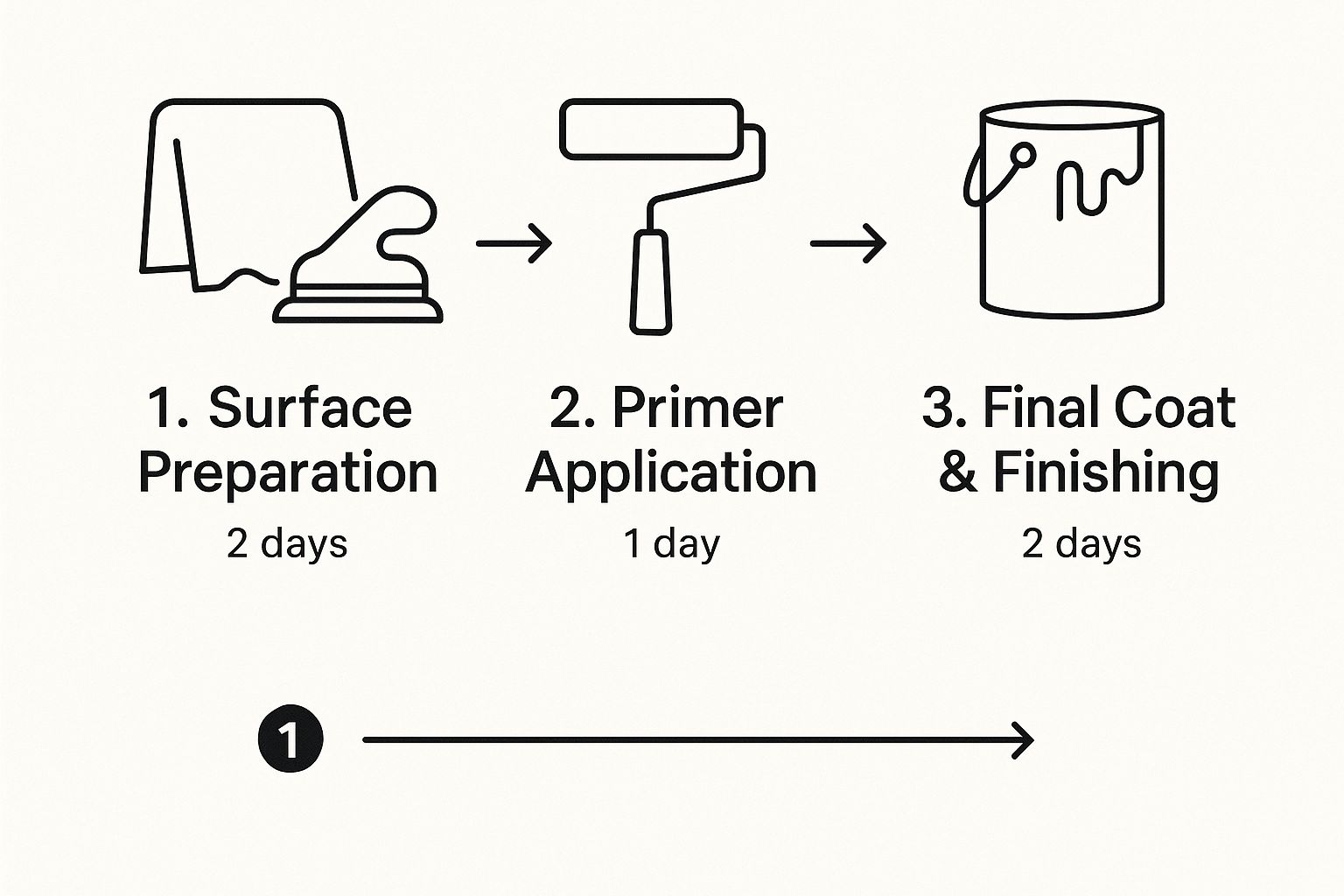
As you can see, the prep and priming phases can easily take up more than half the project's time. This isn't just busy work; it's what guarantees a durable, beautiful finish.
To help you stay organized, use this simple checklist to lay out the key details from each bid side-by-side. It makes spotting the differences—and the red flags—so much easier.
Contractor Bid Comparison Checklist
| Checklist Item | Contractor A | Contractor B | Contractor C |
|---|---|---|---|
| Total Price | |||
| Detailed Prep Plan? (Y/N) | |||
| Specific Paint Brand/Product Listed? | |||
| Projected Timeline (in days) | |||
| Proof of Insurance Included? (Y/N) | |||
| Workmanship Warranty Details | |||
| Payment Schedule Breakdown | |||
| Change Order Process Explained? (Y/N) |
Once you’ve filled this out for each contractor, the best choice often becomes much clearer. It’s not just about the final number, but about who provides the most professional and complete plan.
Unpacking the Contractor Contract
After you’ve picked your contractor, all those details from the winning bid should be formalized in a legally binding contract. This document protects both you and the painter. Never let a project begin without a signed agreement that covers every essential term.
Think of your contract as the ultimate source of truth for the project. For a deeper dive into what separates a reliable pro from the rest, check out our guide on hiring custom house painting contractors in Monterey.
A comprehensive contract should always contain:
- Payment Schedule: This clearly defines when payments are due. A common structure is a deposit (typically 10-30%), a mid-project payment, and a final payment upon satisfactory completion.
- Change Order Process: Things change. The contract must explain how any additions or modifications to the original scope will be handled, documented, and priced.
- Proof of Insurance: It must include proof of both General Liability and Workers' Compensation insurance.
- Warranty Information: The contract should clearly state what is covered by their workmanship warranty and for how long.
A detailed bid isn't just a price—it's a reflection of the contractor's professionalism and transparency.
By taking the time to carefully review both the bid and the final contract, you eliminate misunderstandings. This diligence sets the stage for a smooth project and a stunning result.
Managing Your Project From Start To Finish
Once you've signed the contract, the real work begins—and so does your partnership with your custom house painting contractors. A smoothly run project comes down to one thing: fantastic communication and clear expectations from day one.
Before any paint is opened, you should have a pre-job walkthrough. This is your chance to walk the property with the project manager and iron out every detail. Confirm color choices, finishes, and double-check that the scope of work matches the contract. This one meeting can prevent a mountain of misunderstandings.
Establishing Clear Communication
During that initial walkthrough, establish your single point of contact. This saves you from playing phone tag when you have a question. Also, decide on your preferred communication method—a quick text at the end of the day or a scheduled weekly check-in.
A professional crew knows they are working in your home. They should have a solid plan for daily setup and cleanup. This means protecting your furniture, covering your floors, and being mindful of your landscaping—a must for homeowners in places like Carmel and Pacific Grove who cherish their gardens.
The Final Walkthrough and Punch List
As the project wraps up, you’ll come to the most important step: the final walkthrough. This is where you meticulously review the work with your contractor before making the final payment. Don't feel rushed or shy about this; it is a standard and expected part of any professional job.
As you walk through, create what we in the industry call a "punch list." It’s simply a running list of any little touch-ups that are needed. Maybe you spot a tiny paint drip, a scuff mark, or an edge that isn't quite crisp.
Your final walkthrough is the cornerstone of project acceptance. A professional contractor will welcome your careful inspection as a chance to demonstrate their commitment to quality and ensure your complete satisfaction.
Any painter worth their salt wants you to be thrilled with the final product and will happily address everything on your list. Their reputation depends on happy clients who will provide great referrals.
This final meeting is also the perfect time to discuss the warranty and get tips on caring for your new paint job. Knowing how to maintain the finish is crucial for extending the life of your exterior residential painting. By staying engaged and proactive, you ensure the vision you had for your home becomes a beautiful reality.
Frequently Asked Questions
Stepping into a home renovation project can feel overwhelming, and it's natural to have questions. To help you feel confident when you hire custom house painting contractors, we've answered some of the most common questions we get from homeowners in the Monterey Bay area.
1. How much more does a custom paint job cost?
A true custom paint job can cost 20-50% more than a standard project. This price difference reflects meticulous surface preparation, the use of superior paints and primers, and the master-level skill required for complex architectural details. A professional bid will break these costs down so you can see exactly where your investment is going.
2. What insurance and licensing should I verify?
This is non-negotiable. Always confirm your contractor has two key policies:
- General Liability Insurance: This covers accidental damage to your property.
- Workers' Compensation Insurance: This protects their crew if someone gets hurt on the job, shielding you from liability.
Ask for current certificates of insurance sent directly from their provider to ensure the policies are active.
A reputable contractor will never hesitate to provide proof of their insurance and licensing. It's a standard part of doing business and a key indicator of their professionalism and commitment to protecting their clients.
3. How long should a quality exterior paint job last?
When done correctly by a professional painter, a custom exterior paint job should last 7 to 10 years, and sometimes longer. The lifespan depends on the quality of the prep work, the caliber of materials used, and your local climate. The coastal fog in Pacific Grove poses different challenges than the intense sun in Salinas, and an expert local painter will select products accordingly.
4. What is a change order and why is it important?
A change order is a formal, written update to the original contract. It’s used any time you decide to add or change something after the work has started—like painting an extra room or choosing a different color. This document lays out the new work, extra costs, and any timeline adjustments, preventing confusion down the road.
5. Do I need to be home while the painters are working?
You don't need to be home for the entire project. However, we strongly recommend being there for two key moments: the initial project walkthrough and the final inspection. If you'll be away, establish a clear communication plan with your contractor for daily updates. A trustworthy crew can work independently, but being available for questions ensures a smooth project.
For even more answers, feel free to explore the other topics we cover in our Legacy Painting & Renovating FAQs.
Ready to transform your home with a beautiful, lasting finish? Contact Legacy Painting & Renovating Inc. today for a free, no-obligation estimate and let our team of expert custom house painting contractors show you what a true custom paint job looks like. Visit us at https://legacypaintingrenovating.com.