
Searching for a "general contractor near me" can feel overwhelming. But finding the right professional in Monterey County is easier when you know where to look. The best contractors often rely on their local reputation, not flashy ads.
Your goal isn't just to find any contractor. You need to find a trusted partner for your project.
Starting Your Search For a Monterey General Contractor
Kicking off a home renovation means you first need a solid list of qualified pros. Instead of getting lost in search results, you can tap into local resources. This helps you connect directly with the local construction community.
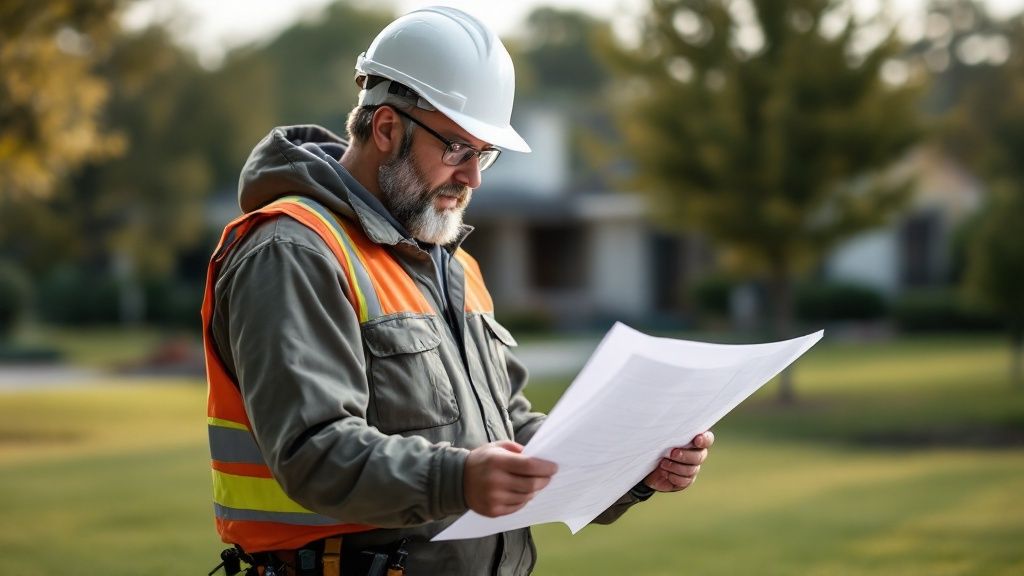
The construction industry is a huge part of the economy. The global market was valued at about US$11.39 trillion in 2024. This shows how much demand there is for skilled contractors who deliver quality work.
So, where do you start? This guide will point you in the right direction.
Where To Find Reputable Monterey County Contractors
This table shows the best places to start your search right here in the Monterey area. Think of it as your cheat sheet.
| Source | Why It Works | Local Example |
|---|---|---|
| Local Building Suppliers | Contractors visit these places daily. Staff know who is reliable and does good work. | Head to building supply stores in Salinas or Monterey and chat with the folks at the pro desk. |
| Professional Groups | Members must follow a code of ethics. They are serious professionals. | Check the Monterey Bay chapter of an organization like the National Association of the Remodeling Industry (NARI). |
| Personal Referrals | Nothing beats a first-hand account from someone you trust. | Ask neighbors in Carmel or Pacific Grove who they used for their recent kitchen or bath remodel. |
| Online Community Groups | Local social media groups can be a goldmine for honest reviews. | Post in a Monterey County homeowners' Facebook group asking for recommendations. |
These sources give you a huge advantage. You're starting with contractors who are already vetted by your community.
Leverage Your Local Network
Never underestimate the power of a personal recommendation. This is especially true in close-knit areas like Carmel and Pacific Grove. Talk to your neighbors, friends, or coworkers who have recently had work done.
A referral from someone you trust is often the best sign of a contractor's reliability, communication, and quality.
Local online community groups are another great resource. A quick post asking for recommendations can give you a list of trusted local contractors.
As you plan your project, you might think about using beautiful sustainable home products. This is a great topic to bring up with potential contractors.
Once you have a few names, you need to vet them. Our guide on finding the right home renovation experts near me has more tips to help.
How to Properly Vet Your Top Contractor Candidates
So, you have a short list of potential contractors. Now the real work begins. Vetting is more than just a quick check; it's about digging deep to protect your home and investment.
Think of it as a simple process. You define your project, compare bids, and verify your top choices. Following these steps is the best way to lower your risk.
Check the Essentials First
Before you schedule a meeting, you need to confirm a few things. These are non-negotiable for any contractor working in California. If a contractor can't provide these, it's a dealbreaker.
Here is your must-have list:
- CSLB License: Go to the Contractors State License Board (CSLB) website. Verify their license is active and in good standing.
- General Liability Insurance: This protects your property if something gets damaged. Ask to see the certificate of insurance.
- Workers' Compensation Insurance: This is critical. If a worker gets hurt on your property and the contractor isn't covered, you could have to pay their medical bills.
A true professional will have all this paperwork ready. It’s part of their construction project risk management and shows they run a real business.
Look Beyond the Star Rating
Online reviews are a great start, but you have to read between the lines. A wall of generic five-star reviews can be just as suspicious as negative ones.
Look for reviews with substance. A homeowner in Carmel detailing how their contractor handled a tricky permit is a great sign. That’s the kind of real insight you’re looking for.
Also, pay attention to how a contractor responds to negative feedback. A defensive response is a red flag. A calm, professional reply shows they take responsibility. Our contractor hiring checklist dives deeper into what these details mean.
Call Their Local References
This is the most valuable thing you can do. Speaking with past clients gives you an unfiltered look at how a contractor really performs.
Don't just ask "Were you happy?" Ask specific, open-ended questions.
Try asking questions like these:
- How was their communication? Did they keep you in the loop?
- Did the final bill match the first estimate?
- How did they handle unexpected problems?
- Did they stick to the timeline?
- Would you hire them again in a heartbeat?
Getting feedback from a client in Pacific Grove or Monterey gives you a clear picture of their current work. These talks will often make your final decision easy.
Asking the Right Questions in Contractor Interviews
Once you’ve confirmed their license and insurance, it's time for the interview. This is your chance to see beyond the paperwork. The goal is to find the right fit for your home and your peace of mind.
You're not just hiring a builder. You're looking for a partner for a big investment in your home.

This meeting will tell you if you can build a good working relationship. Treat it like a two-way street. They should want to understand your vision, too.
Diving Into Their Experience and Process
Start with the big picture. You want to get a sense of their background and how they run projects. Generic answers are not enough.
Here are a few key questions to start with:
- "How many projects like mine have you completed recently?" This tells you if they have relevant experience for your project.
- "Who will be my main point of contact, and how often will we talk?" A clear communication plan is a must. Knowing who to call prevents a lot of stress.
- "Do you handle the whole permit process?" A good local contractor will be an expert in Monterey County’s permit rules. This shows their local expertise.
Their answers will show you how organized and client-focused they are.
Gauging How They Handle Challenges
Let’s be real: no project is perfect. How a contractor handles surprises is what sets the great ones apart. Renovations can uncover anything from bad plumbing to hidden termite damage.
The real test of a great contractor isn’t when things go right. It’s how they communicate and find solutions when things go wrong.
Don't be shy. Ask them about a time a project went off track and what they did to fix it. Their story will tell you more about their character than any other question.
If you're planning a major renovation, understanding their skill is key. Legacy Painting & Renovating has a team of full home remodel professionals experienced in managing every phase of a project.
Making Sense of Different Project Bids and Quotes
Getting a few different bids is a smart move. But comparing them can be confusing. A stack of proposals with different prices often leaves you with more questions than answers.
The key is to look beyond the final number at the bottom of the page.
A professional bid is more than a price tag; it's a roadmap for your project. The cheapest quote is rarely the best deal. It often means corners are being cut. Your goal is to find the best value for your Salinas home, not just the lowest cost.
What a Professional Bid Should Include
To make a good decision, you need to see clear details in the proposals. A vague, one-page estimate is a huge red flag. A trustworthy contractor will provide a document that breaks down the whole project.
Here’s what you should see in a solid bid:
- A Detailed Scope of Work: This should list every single task. Vague terms like "remodel bathroom" are not enough. It should be specific, like "install new 12×24 porcelain tile flooring."
- Material and Product Specifics: The bid should list the types, brands, and models of materials. If it just says "new windows," you don't know what you're getting.
- A Clear Payment Schedule: You should never pay a huge amount upfront. Payments should be tied to project milestones, like "foundation poured."
A detailed bid protects both you and the contractor. It gets everyone on the same page and prevents surprise costs later.
Spotting Red Flags in a Quote
When you’re looking for a "general contractor near me," knowing how to spot warning signs is important. A bid that seems too low often means the contractor missed something or plans to use cheap materials. These low offers can grow in price with "unforeseen" changes.
It also helps to understand what shapes a contractor's price. For instance, the demand for skilled workers affects project costs. North America is expected to need 500,000 more construction workers to keep up. This affects contractor prices right here in Monterey County. You can learn more about these global construction trends.
For a deeper look into what goes into a contractor's price, check our guide on why contractors charge what they do. It explains costs like insurance and overhead.
Why a Detailed Contract Is Your Best Protection
Once you've vetted the candidates and compared bids, there's one last, crucial step. A friendly handshake is nice, but it offers zero protection for your home and money. A detailed, written contract is the single most important document in your renovation.
Think of it as the foundation of your working relationship. It lays out all expectations in black and white. This document is your best defense against misunderstandings and surprise costs.

Non-Negotiable Contract Elements
Your contract should be the complete roadmap for the project. In California, the law has specific rules for home improvement contracts to protect homeowners. Never sign a vague agreement.
A good contract must include these key parts:
- Complete Scope of Work: It should detail every task and specify all materials and finishes.
- Total Project Cost and Payment Schedule: The contract must state the total price and a clear payment schedule tied to project milestones.
- Project Timeline: This includes a start date and an estimated completion date.
- Change Order Process: This section explains how any changes to the plan will be handled and approved in writing.
- Lien Release Clause: This is critical. It ensures your contractor pays their subcontractors, so they can't place a lien on your property.
Understanding California-Specific Requirements
California law is very specific about home improvement contracts. It must include notices like your "Three-Day Right to Cancel" and info about the Contractors State License Board (CSLB). Any good local contractor will know these rules.
Moving forward without a signed, detailed contract is a risk you can’t afford. It’s the rulebook for your project, protecting your money and ensuring you get the results you paid for.
The construction industry is always changing. Global construction output is expected to rise by 2.3% in 2025. This shows why a solid contract is so important. If you're curious, you can read more about these construction industry trends.
Finally, your contract should say who is responsible for getting building permits. Our guide on renovation permit requirements in Monterey County can help you understand what's needed. A signed agreement is your ultimate peace of mind.
Frequently Asked Questions
Starting a home renovation can feel confusing. It's normal to have questions. Here are the top five questions we get from homeowners in Monterey County, with simple answers to help you.
What’s the difference between a general contractor and a subcontractor?
Think of your general contractor (GC) as the director of a movie. They manage the entire project, from start to finish. The GC handles the schedule, permits in Salinas or Carmel, and all the different crews.
Subcontractors are the specialists the GC hires for specific jobs. These are your expert plumbers, electricians, and painters. You hire the GC, and the GC manages the whole team for you.
How do I pay my contractor?
Never pay for the entire project upfront. Your payment schedule should be tied to progress. A professional contract will link payments to specific milestones, like when the framing is done.
California law protects homeowners. The down payment can't be more than $1,000 or 10% of the total contract price, whichever is less. A contractor asking for the full amount upfront is a major red flag.
What if we disagree during the project?
First, just talk it out. Most issues are simple misunderstandings that can be solved by looking at your contract. A good contractor wants to find a solution that works for everyone.
If talking doesn't work, put everything in writing. An email summarizing the issue creates a clear record. For major disputes, the Contractors State License Board (CSLB) offers help.
Do I need a permit for my renovation in Monterey County?
Most likely, yes. Any project that involves changing structural walls, electrical, or plumbing will need a permit. This includes most kitchen remodels, bathroom renovations, and home additions.
Your general contractor is responsible for knowing local codes and getting the right permits. This is a key part of their job and ensures all work is done safely.
How much should I set aside for a contingency fund?
This is a very smart question. We always tell clients to set aside a contingency fund of 10-20% of the total project cost. Renovations can uncover surprises, like old wiring or hidden water damage.
This fund is a safety net for those unexpected problems. Having it ready means a surprise won't ruin your project's timeline or budget.
Ready to start your next home project with a team you can trust? The experts at Legacy Painting & Renovating Inc. are here to bring your vision to life in Salinas, Monterey, and beyond. Contact us today for a free, no-obligation estimate!