
Starting a home project in Salinas or Monterey can be exciting. But its success depends on one thing: picking the right general contractor.
Knowing how to choose a general contractor you can actually trust is a skill. A little research now can save you from big headaches, surprise costs, and stress later.
Your Plan for Finding a Trusted Contractor
A home renovation should be a fun process, not something that keeps you up at night. Yet many homeowners feel lost when trying to hire a pro.
This guide is your roadmap. It’s based on our decades of local experience helping people in communities like Monterey and Carmel. It will help you hire with confidence.

Why Checking on Contractors Matters
Checking on your contractor is your best defense against problems. The construction industry is huge. People in the U.S. spend over $2.1 trillion a year on construction projects.
A good contractor does more than just build things. They bring peace of mind. They manage your project, solve problems, and guide you from start to finish. This is especially true for full home remodel professionals, where a strong partnership is key.
The right contractor doesn't just build your project; they build your confidence. They communicate clearly, provide detailed plans, and treat your home with the respect it deserves.
A Simple Plan for Success
Forget scrolling online and just hoping you find someone good. We’ll give you a clear plan to check out potential contractors. This will give you the right questions to ask and the important details to look for.
For another point of view, you can read these expert tips for hiring a general contractor for renovations. By following a plan, you can pick a partner who is dedicated to quality work.
The Vetting Process That Protects You
Let's turn your plan into action. Checking out contractors is the most important step. It’s how you build the confidence to move forward.
This is your guide for learning how to choose a general contractor you can actually trust. It’s about getting good local advice, checking their background, and asking the right questions. A little work now prevents big problems later.
Get Local Recommendations You Trust
First, make a short list of contractors. Online reviews are a good start, but a real recommendation from someone in your community is better.
If you live in places like Carmel or Pacific Grove, ask friends and neighbors who they used. They will give you the honest truth. You can also ask local real estate agents or people at your local hardware store.
Check Licenses and Insurance
Once you have a few names, it’s time for a background check. This step is a must. In California, any contractor doing work over $500 must be licensed by the Contractors State License Board (CSLB).
You can look up a contractor’s license on the CSLB website. Here’s what to check:
- Active License: Is the license current? A suspended license is a huge red flag.
- Workers' Comp Insurance: If they have employees, they must have this. If they don’t, you could be responsible for injuries on your property.
- Bond Information: A bond gives you financial protection if the contractor leaves the job or doesn’t pay their workers.
Never, ever hire a contractor who can't provide proof of an active license and proper insurance. This is your number one shield against shoddy work and financial disasters.
Learn to Check References
A good contractor will be happy to share references from past clients. Don't be afraid to call them. This is one of the best ways to learn about a contractor.
Ask specific questions to get a real feel for their work:
- How was their communication?
- Did they stick to the budget and timeline?
- How did they handle problems?
- Was the job site kept clean?
- Would you hire them again?
The answers will tell you more than any online review.
The infographic below shows the first steps every homeowner should take.
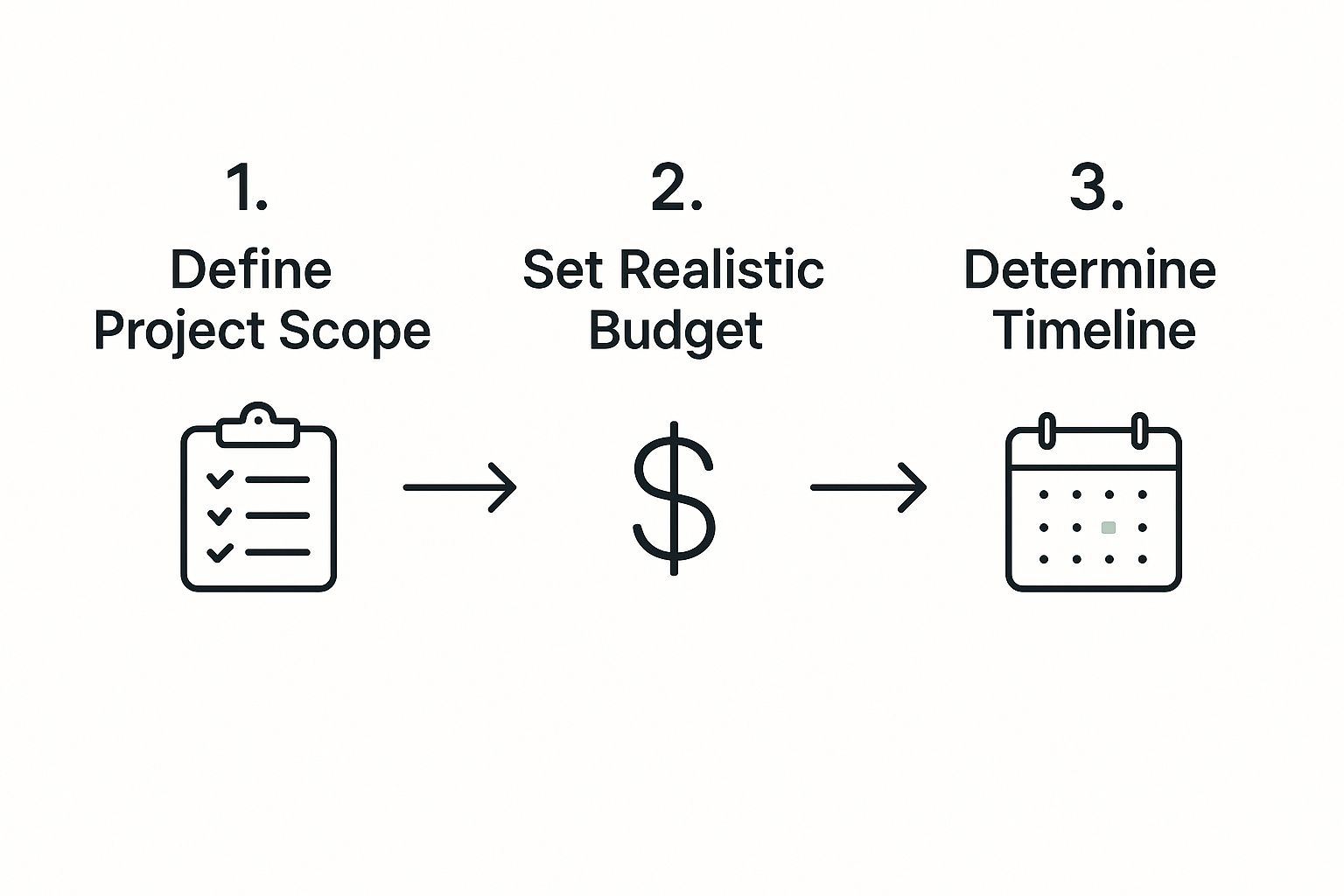
Knowing your project details first helps you have better talks with contractors. It also helps you get more accurate price quotes.
To help you stay organized, we created a checklist you can use.
Essential Contractor Vetting Checklist
Use this checklist to quickly verify a general contractor's qualifications and reliability for your project in Monterey County.
| Verification Step | What to Look For | Where to Check |
|---|---|---|
| License Status | Active, not expired or suspended. | CSLB Website |
| Workers' Comp | "Exempt" if no employees, otherwise "Active." | CSLB Website |
| Contractor's Bond | Active bond of at least $25,000. | CSLB Website |
| Past Client References | At least 3 recent and relevant projects. | Phone calls to references |
| Portfolio Review | High-quality photos of similar projects. | Contractor's Website/Social Media |
| Online Reviews | Consistent positive feedback. | Google, Yelp, Houzz |
This simple table helps you cover all the important bases before you decide.
Check Their Professionalism
Pay attention to how a contractor acts from your first contact. Do they answer the phone politely? Do they reply to emails quickly?
A contractor who communicates clearly and listens to you is showing they are organized.
We made a guide to walk you through every step. You can find our complete contractor hiring checklist here. Following these steps is the best way to find a great partner for your Salinas home renovation.
Spotting Contractor Red Flags and Green Flags
The price is not the only thing to look at. The best signs of a great contractor (or a bad one) are often in the small details.
Learning to spot these signs is a big part of knowing how to choose a general contractor you can actually trust. Pay attention now to save yourself from problems later.

Big Red Flags to Avoid
Some contractor actions should be deal-breakers. They often point to bigger problems. If you see any of these, it's best to walk away.
Pushy sales tactics are a classic warning sign. If a contractor says a price is "only good for today," be careful. A true pro will respect your need to think about your decision.
Another huge red flag is asking for a big payment upfront, especially in cash. In California, the law limits down payments to 10% of the total cost or $1,000, whichever is less. Anyone asking for more might have money problems or be planning to take your money and run.
A contractor who pressures you for a quick decision or a large cash payment isn't confident in their work—they're confident in their sales pitch. True professionals let their reputation, detailed estimates, and transparent process do the talking.
Finally, a vague estimate is a recipe for disaster. If a bid does not break down costs for labor and materials, you don't know what you are paying for. This often leads to extra costs later on.
Green Flags That Show a Good Partner
On the other hand, great contractors show positive signs from the start. These green flags show they are organized, honest, and care about their clients.
The most important green flag is a detailed, written estimate. A professional bid will list every cost, from materials to labor. This shows they have thought through your project and are open about costs. To learn more about how prices are calculated, read our guide on the real cost of doing business for contractors.
Good communication is another great sign. Do they listen to your ideas and answer your questions? A contractor who explains their process is someone you can work with.
Look for these other good signs:
- A Professional Website: A good website and positive reviews in Carmel or Monterey show they care about their reputation.
- Willing to Share Info: They should easily give you their license number, proof of insurance, and references.
- A Clear Contract: A good contractor provides a contract that explains the work, payment plan, and how changes are handled.
Here’s a quick table to help you compare.
Red Flags vs Green Flags When Hiring a Contractor
| Critical Area | Red Flag (Warning) | Green Flag (Proceed with Confidence) |
|---|---|---|
| Estimate | Vague, "ballpark" numbers with no breakdown. | Detailed, itemized written estimate covering labor, materials, and permits. |
| Communication | Rushes you, dismisses questions, poor follow-up. | Listens carefully, answers questions thoroughly, and is easy to reach. |
| Down Payment | Demands a large cash deposit upfront (>10% or $1,000 in CA). | Follows state laws for down payments; provides a clear payment schedule. |
| Sales Tactics | High-pressure, "today only" deals; pushes for a quick signature. | Gives you ample time to review bids and make a decision without pressure. |
| Documentation | Hesitates to provide license, insurance, or references. | Freely provides all requested documentation and encourages you to check them. |
| Contract | No contract or a very simple, one-page agreement. | A comprehensive contract that clearly defines the scope, timeline, and process. |
A trustworthy contractor acts like a partner. They take the time to understand your vision. These green flags are your proof that you're putting your home in good hands.
How to Read Estimates and Contracts Like a Pro
The estimate and the contract are the two most important papers you will see. Understanding them is the best way to keep your project in Salinas or Monterey on budget.
A good contractor gives you a clear roadmap that protects both of you. Learning to read these documents is a huge part of learning how to choose a general contractor you can actually trust.
Understanding the Estimate
A real estimate is more than just a single number. A professional bid will break down exactly what you are paying for. If an estimate is vague, you will likely have surprise costs later.
A good estimate should show you:
- Itemized Costs: A list of materials, like the brand of paint for an interior painting in Monterey job.
- Labor Costs: A clear breakdown of labor costs for each part of the project.
- Permits and Fees: A list of any needed permits or other fees.
- Scope of Work: The document must say what work is included and what is not included.
This detail proves the contractor has thought through your project. To see how pros create these documents, learn more about the process of estimating a painting job in our guide.
Key Things Your Contract Must Have
After you choose an estimate, it's time for the contract. This is a legal document that protects you. If a contractor gives you a simple, one-page agreement, that’s a big red flag.
A good contract should be the project’s official rulebook.
A great contract doesn't create conflict; it prevents it. It’s a sign of a contractor who values clear communication and wants to build a relationship based on mutual understanding and respect.
Make sure your contract includes:
- Detailed Scope of Work: This section lists every single task, from start to finish.
- Clear Payment Schedule: A pro ties payments to project milestones, like when the framing is done. This means you only pay for work that has been completed.
- Process for Changes: Surprises can happen. A good contract explains how changes will be handled with a written "change order" that you both sign.
- Project Timeline: The contract needs a start date and a finish date. This gives everyone a clear goal.
- Proof of Licensing and Insurance: The contract should list the contractor's license number and confirm they have insurance.
Understanding Material Costs
Material prices can change quickly. A good contract will explain how this is handled. For example, in early 2025, copper pipe prices jumped over 40%.
A contractor you can trust will talk to you about how price changes are handled. This way, you won't be surprised by a sudden budget increase. You can read more about these construction market trends on Skanska.com.
Before you sign anything, read every word. Don't be afraid to ask questions. A good contractor will be happy to explain everything until you feel comfortable.
What a Trustworthy Local Contractor Looks Like
We’ve talked about red flags and contracts. But what does a great contractor actually look like?
A truly trustworthy contractor has good professional habits you can spot right away. They're organized, open, and treat your home with respect.

Clear Communication Is Key
The best contractors never leave you wondering what’s going on. They make a clear plan for updates, like regular calls or texts.
At Legacy Painting & Renovating, we believe you should always know the status of your project. We provide steady updates so you feel informed. That is how you build real trust.
They Are Part of the Local Community
A contractor with local roots has a reputation to protect. They won't disappear after the job is done. A local pro knows the building codes and styles in communities like Pacific Grove and Monterey.
Being a licensed and insured California contractor is our promise to our neighbors. We care about the communities where we live and work.
Good Business Practices Matter
You need a contractor who can handle a tough market. The construction industry had many ups and downs between 2022 and 2025. The contractors who did well had solid business practices.
This strength is a huge green flag. It shows you are working with a company that is built to last. You can read more about these construction industry trends from Commerce Bank to see why this is important.
Their Reputation Is Easy to Check
A great contractor doesn't just tell you they do good work—they show you. They will be proud to share photos of past projects and give you references.
A contractor’s best sales pitch is their past work. Verifiable reviews and a portfolio of successful local projects are undeniable proof of their commitment to quality and client satisfaction.
When you can easily find good reviews from homeowners in your area, you know you've found a good company. This confirms you are choosing a partner for your Salinas home renovation that you can trust.
Answering Your Contractor Questions
Hiring a contractor brings up a lot of questions. We’ve put together the most common ones we hear from homeowners in Monterey County. Here are simple answers to help you.
How Many Estimates Should I Get for My Renovation Project?
We suggest getting at least three detailed estimates. This helps you get a clear picture of the project.
When you compare bids, you can see how different contractors plan to do the work. A bid that is much lower than the others is a huge red flag. It usually means they are cutting corners somewhere.
What Is the Difference Between Licensed, Bonded, and Insured?
These three things protect you as a homeowner. A good contractor will have all three.
Here’s what they mean:
- Licensed: This proves the contractor meets state standards. It means they know their job.
- Bonded: This is a safety net for you. It protects you financially if the contractor fails to finish the job or pay suppliers.
- Insured: This is very important. A contractor needs insurance to cover damage to your property (general liability) and injuries to their workers (workers' comp).
Should a Contractor Ask for a Large Down Payment?
No. A big down payment request is a serious warning.
California law limits down payments for home projects to 10% of the total price or $1,000, whichever is less.
Any contractor asking for more money upfront is waving a giant red flag. It often means they're not financially stable or, in the worst-case scenario, they're planning a scam. A reputable contractor ties payments to project milestones—work that’s actually been completed—not a big check before they even start.
What Happens If a Problem Comes Up During the Project?
Even with good planning, surprises can happen. A true pro knows how to handle them.
If you see a problem, tell the contractor right away. A trustworthy contractor will listen and find a solution. Any changes must be written in a change order that you both sign before the new work starts.
How Involved Should I Be in My Own Renovation?
Your input is important, but you don't need to be on-site every day. The best approach is to be available for key decisions and regular check-ins.
A great contractor will set up a communication plan with you. This keeps you updated without getting in the way. For more answers, check out our complete Legacy Painting & Renovating FAQs section.
Ready to start your project with a team you can genuinely trust? Legacy Painting and Renovating Inc. is here to bring your vision to life with transparency, craftsmanship, and a commitment to our Monterey County community. Contact us today for a free, no-pressure estimate!