
Your commercial concrete floor is like a big sponge. It soaks up stains, collects dust, and can look worn out quickly. Now, imagine giving that floor a seamless, high-gloss suit of armor. That's what a commercial epoxy floor coating does.
This is more than just a layer of paint. It's a special two-part system that bonds with your concrete. It turns a weak surface into a strong, easy-to-clean asset for your business.
What Is Commercial Epoxy Flooring?
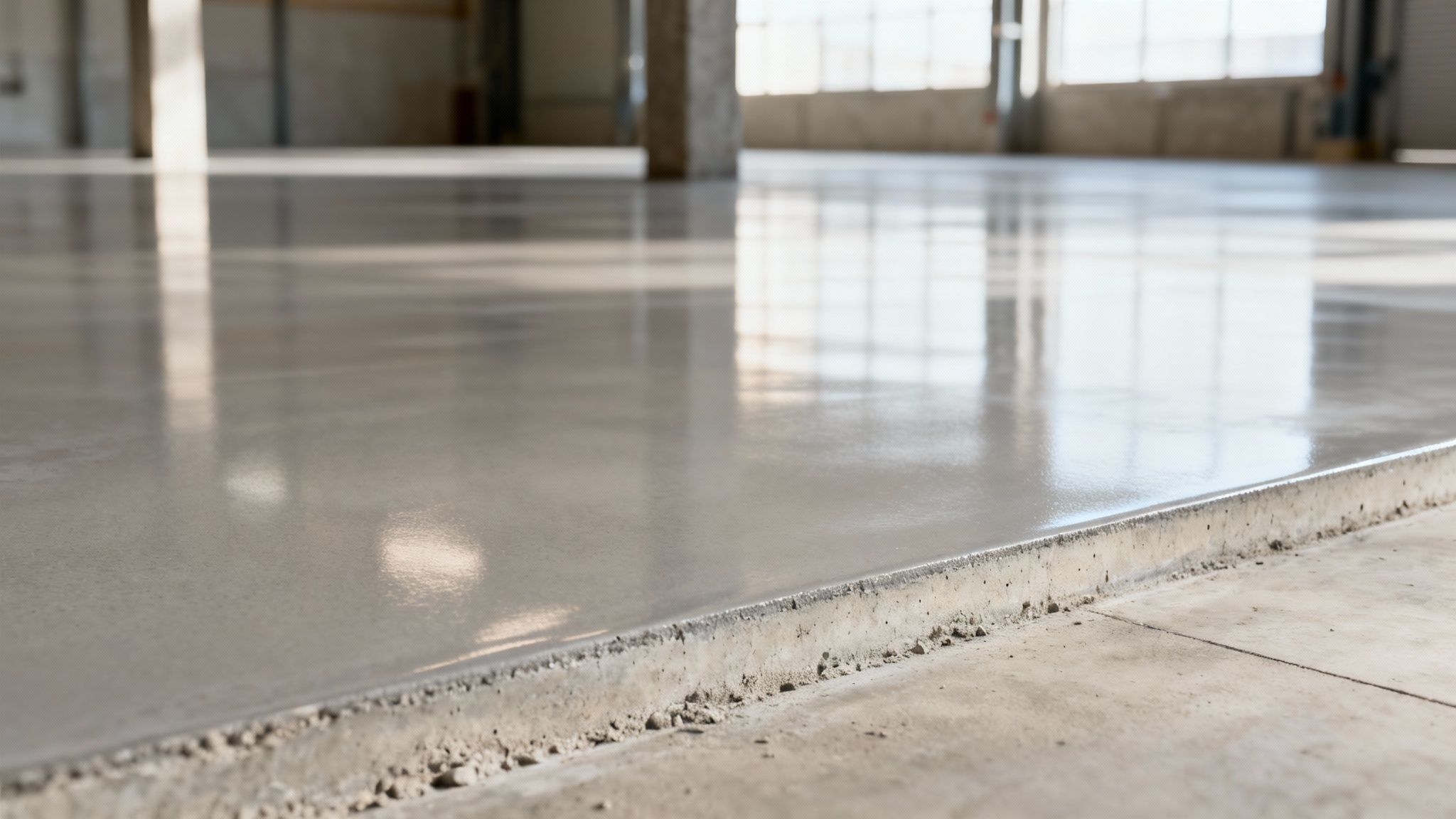
When professionals like our team at Legacy Painting & Renovating apply a liquid resin and hardener to your floor, a chemical reaction called "curing" starts. This process fuses the coating to the concrete. It creates a hard, plastic-like shield that is very resilient.
This protective layer is much thicker and tougher than standard floor paint. It is built to handle heavy foot traffic, rolling carts, and even forklifts. For businesses in Salinas or Monterey, this means a floor that won't chip or crack, no matter what you throw at it.
The Science Behind Its Strength
The magic of epoxy is in its molecular structure. During curing, the resin and hardener molecules link together. This forms a tight, solid surface that nothing can get through.
This non-porous finish is a game-changer for businesses where hygiene is key.
An epoxy floor is different from paint. Paint just dries on the surface. Epoxy chemically fuses with the concrete, becoming part of the floor itself. This bond is what gives it amazing durability.
The demand for this technology is growing fast. The epoxy floor coating market was valued at USD 2.43 billion in 2024. It is expected to hit USD 3.72 billion by 2032, showing how many industries rely on it.
More Than Just a Tough Surface
Besides being durable, epoxy offers practical benefits for commercial spaces. It creates a smooth surface with no grout lines or joints to trap dirt or bacteria. This makes cleanup very simple.
This makes it a perfect fit for many businesses:
- Retail Stores: The bright surface reflects light, making the space feel bigger and products look better.
- Auto Shops: It resists oil, grease, and chemical spills, making cleanup a quick wipe-down.
- Commercial Kitchens: It provides a sanitary surface that helps meet health code standards.
- Warehouses: It stands up to the constant abuse from heavy machinery.
To help you see the whole picture, we've made a quick table of the key benefits.
Key Benefits of Commercial Epoxy Flooring at a Glance
| Benefit | Description for Commercial Spaces |
|---|---|
| Extreme Durability | Resists chemicals, abrasions, and heavy impacts from machinery, forklifts, and constant foot traffic. |
| Enhanced Safety | Can be mixed with anti-slip additives to reduce workplace accidents in wet or oily conditions. |
| Low Maintenance | The seamless, non-porous surface is very easy to clean and sanitize, preventing bacteria growth. |
| Improved Aesthetics | Creates a bright, professional finish that improves lighting and impresses clients. |
| Cost-Effective | Offers a great long-term return by protecting the concrete and reducing repair costs. |
| Chemical Resistance | Protects concrete from damage caused by spills of oil, grease, solvents, and other harsh chemicals. |
| Quick Turnaround | Professional installation can often be completed with minimal downtime, getting your business back to work fast. |
As you can see, the advantages go beyond just a tough surface.
To really understand why epoxy is a popular choice, it helps to compare it with other commercial kitchen flooring options. While we specialize in commercial work, the same ideas of toughness and style apply to homes. You can see how this works in a home by checking out our garage floor coating services.
Why Monterey County Businesses Invest in Epoxy Floors
Businesses here in Monterey County, from a busy warehouse in Salinas to a high-end showroom in Carmel, face unique challenges. Their floors take a beating from foot traffic, heavy equipment, and daily operations. That’s why an epoxy floor coating commercial space is a smart investment in durability and safety.
The benefits are real for our local industries. A winery in the Salinas Valley deals with spills every day. Epoxy's chemical resistance means wine acids won't stain or damage the concrete.
Think about an auto shop in Monterey. It deals with dropped tools and corrosive fluids. A professionally installed epoxy floor handles that abuse without chipping or peeling. It makes a messy environment clean and safe.
Enhancing Hygiene and Cleanliness
One of the biggest reasons businesses switch to epoxy is hygiene. The surface is seamless and non-porous. This means there are no cracks where dirt and bacteria can hide.
This is a game-changer for many local businesses:
- Restaurants in Pacific Grove: A seamless floor is easy to clean and sanitize, helping kitchens pass health inspections.
- Healthcare Facilities in Carmel: In clinics and vet offices, keeping things sterile is vital. Epoxy provides a hygienic surface for infection control.
- Food Processing Plants: These places need floors that can be washed often without absorbing germs. Epoxy is perfect for that.
The easy maintenance alone saves a lot of money. Instead of scrubbing grout, daily cleaning is just a quick sweep or mop. This saves time and labor costs.
Boosting Brand Image and Customer Experience
A floor is more than just a surface to walk on; it’s part of your brand. With epoxy, a functional floor can become part of your customer experience.
We can use custom colors and decorative flakes to match your company’s branding. A luxury boutique in Carmel could use a metallic epoxy finish to create a stunning look. This visual appeal shows quality and professionalism.
The industrial floor coating market, valued at over USD 6.38 billion in 2025, is expected to jump to USD 11.21 billion by 2035. This growth is fueled by industries that see the value in epoxy. You can read more in this in-depth market analysis.
Ensuring Safety and Compliance
Workplace safety is a top priority for any business owner. A glossy floor might look slippery, but modern commercial epoxy systems are designed for safety.
By adding anti-slip aggregates into the topcoat, we can create a textured finish for great traction, even when wet. This simple step reduces the risk of slip-and-fall accidents.
This feature is essential for loading docks, commercial kitchens, and public entryways. A well-maintained epoxy floor helps keep your facility safe and compliant. While the floor itself may not need a permit, it is often part of a larger project. To make sure your whole project is up to code, check out our guide to Monterey County renovation permit requirements.
The Professional Epoxy Installation Process
A perfect epoxy floor coating for a commercial space depends on a precise process. Every step is critical. Rushing or skipping a phase leads to a floor that peels or bubbles. This is what separates a professional job from a DIY kit.
Think of it like painting a classic car. You wouldn't spray new paint over rust. You'd sand it down, fix imperfections, and use a primer. We bring that same level of detail to your concrete floor.
Step 1: Aggressive Surface Preparation
The most important work happens before any coating is applied. It starts with aggressive surface preparation using industrial diamond grinders. These machines grind the top layer of concrete, opening its pores. This creates a rough profile for the epoxy to bond with.
A common failure for DIY kits is poor prep. Acid etching or pressure washing isn't strong enough. That’s why those floors often start peeling within a year.
After grinding, our team inspects every inch of the floor. We find and repair every crack and pit with a strong epoxy filler. This makes the final surface perfectly smooth.
Step 2: Primer and Moisture Mitigation
With the surface prepped, we apply a moisture-mitigating epoxy primer. This first coat soaks into the concrete, creating a strong bond. It also acts as a barrier, stopping moisture from pushing up and causing the coating to fail.
This step is often skipped in cheaper jobs. For businesses in coastal areas like Monterey and Pacific Grove, it’s essential. Proper moisture mitigation prevents bubbles and protects your investment.
Step 3: Applying the Color and Build Coats
Once the primer is cured, it’s time for color. We apply a thick, pigmented layer of 100% solids epoxy. This "build coat" gives the floor its rich look and resists impacts and chemicals.
For businesses wanting extra visual appeal or slip resistance, we can add decorative vinyl flakes. This technique adds texture and a unique, custom look.
This chart shows how each stage creates a high-performance floor.
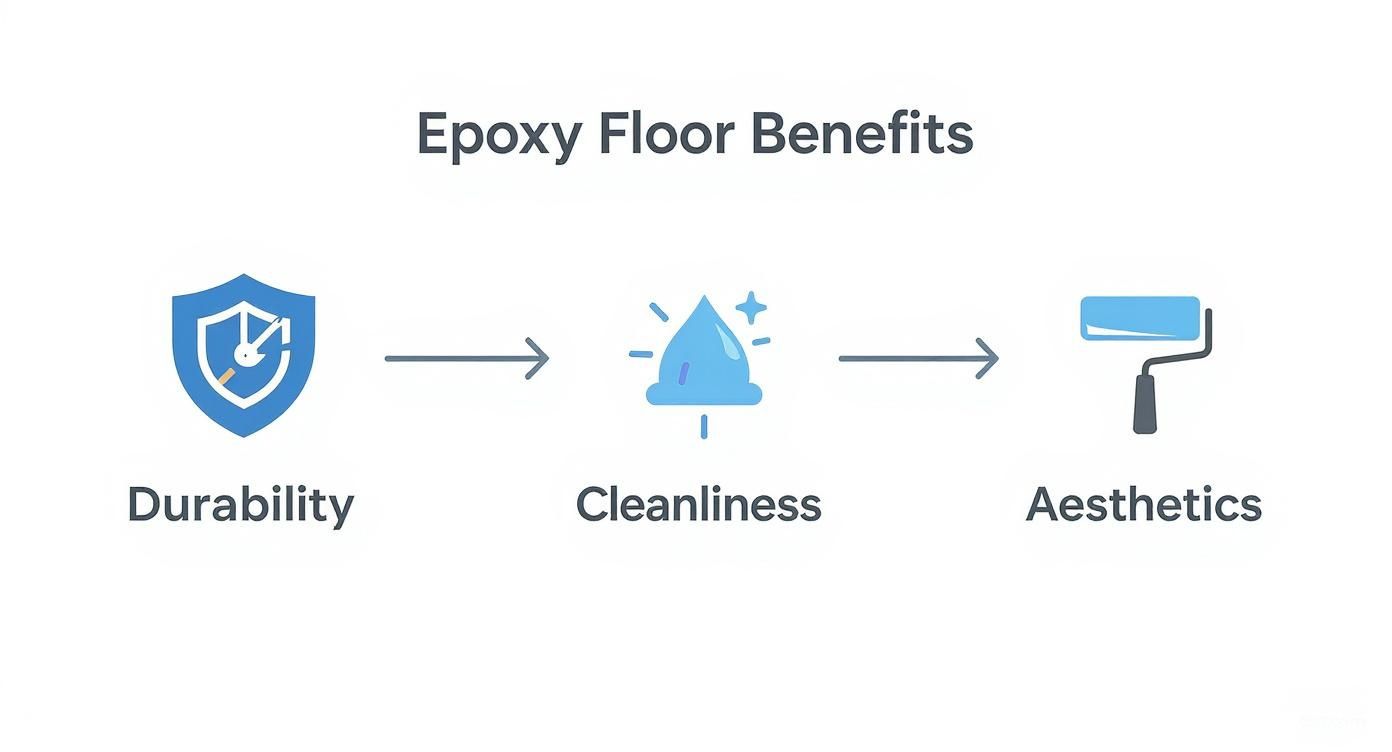
The process directly results in a floor that is durable, clean, and looks great.
Step 4: The Final Protective Topcoat
The last step is applying a clear, high-performance topcoat. This is the floor's first line of defense. It takes the daily scrapes and spills.
It provides UV stability to stop the floor from yellowing and boosts scratch resistance. If needed, we mix in an anti-slip aggregate for traction. This final layer delivers a flooring system that’s safe and beautiful. A similar process brings great durability to homes, too. See our methods on our page for garage floor coating services in the Monterey area.
Choosing the Right Type of Commercial Epoxy Coating
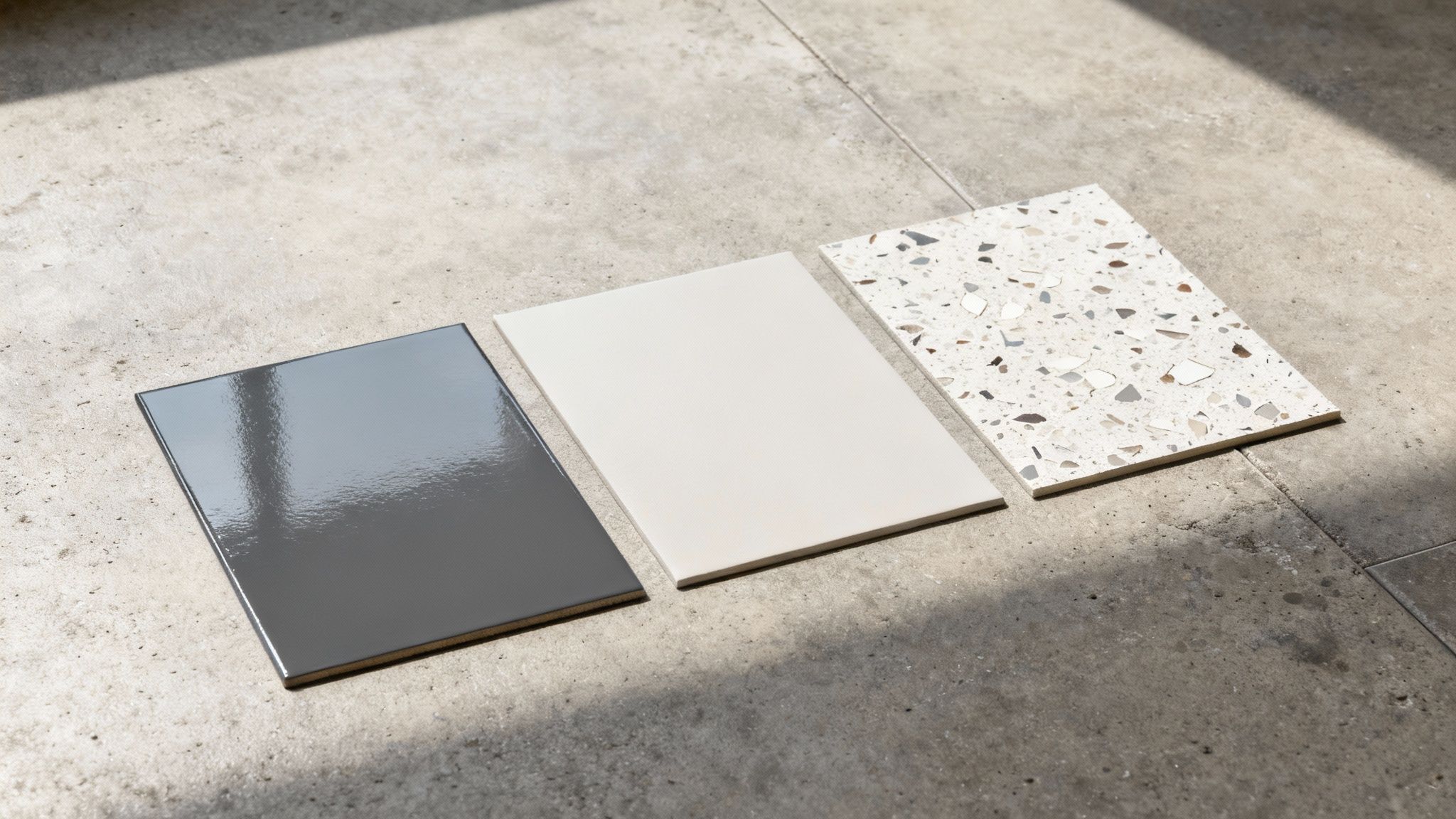
Picking the right epoxy floor coating for a commercial space is like choosing tires for a truck. You need to match the epoxy system to the demands of your Monterey County business.
Not all epoxy is the same. Knowing the difference is key to a long-lasting floor. Let’s break down the options.
100% Solids Epoxy: The Heavy-Duty Champion
When your floor needs to withstand constant abuse, 100% solids epoxy is the top choice. This system has no water or solvents. The thickness you apply is the thickness you get. It creates a very dense and durable surface.
This makes it the go-to for tough jobs:
- Warehouses in Salinas: It stands up to forklift traffic and heavy loads.
- Auto Repair Shops in Monterey: It resists damage from spilled oil and harsh chemicals.
- Manufacturing Plants: It provides a strong barrier against abrasion from heavy machinery.
Water-Based Epoxy: The Breathable Solution
Water-based epoxy is a user-friendly option with low odors. It’s not as thick as 100% solids, but it is "breathable." This lets it bond to concrete with higher moisture levels without peeling.
This quality makes it perfect for:
- Commercial Kitchens in Carmel: The seamless surface is easy to sanitize and handles damp conditions.
- Basements or Storage Areas: It works well in spaces where moisture is a concern.
Self-Leveling Epoxy: The Surface Savior
Is your business dealing with old, uneven concrete? Self-leveling epoxy is the answer. This coating is applied thicker and flows across the surface to fill in cracks and imperfections. It creates a brand-new, perfectly smooth floor.
For businesses in older buildings, self-leveling epoxy restores a floor's integrity without the high cost of a full concrete replacement. It's a game-changer for renovation projects.
Epoxy Flake Floors: Where Function Meets Design
When you need a floor that works hard and looks great, epoxy flake floors are a brilliant choice. We broadcast decorative vinyl flakes across the wet epoxy. Then we seal them in with a tough, clear topcoat. This creates a beautiful, textured look.
The added texture also provides natural slip resistance. This is a critical safety feature. This system is perfect for showrooms, schools, and even sports surfaces like those in our guide to tennis court floor coatings.
The global demand for high-performance coatings is growing. Cold-storage warehouses and e-commerce centers need floors with abrasion resistance. While epoxy is popular, other advanced options like durable and flexible elastomer coatings can also be great solutions.
Calculating the ROI of Your Epoxy Floor Investment
When looking at an epoxy floor coating for a commercial space, it's easy to focus on the upfront price. The cost depends on square footage and the condition of your concrete. But the real story is about long-term value.
A professionally installed epoxy floor is an investment that pays you back. The true return on investment (ROI) comes from the money you save over time. It's a smart move that strengthens your business.
Savings in Maintenance and Cleaning
One of the first paybacks is the drop in maintenance costs. Traditional concrete is porous and soaks up spills. VCT (Vinyl Composition Tile) requires constant stripping and waxing.
An epoxy floor is different. It's seamless and non-porous. Dirt and grime sit on the surface, making cleanup easy.
- Reduced Labor: Daily cleaning is often just a quick dust mop, which cuts janitorial hours.
- Fewer Chemicals: You can stop using harsh, expensive cleaners.
- No Waxing or Polishing: Epoxy never needs to be stripped and waxed, saving you thousands each year.
Enhanced Safety and Reduced Liability
A slip-and-fall accident is a serious liability risk. An epoxy floor with an anti-slip additive creates a high-traction surface. It protects your employees and customers, even when the floor is wet.
Investing in a safer floor is a direct investment in risk mitigation. Preventing even one accident can save a business from costly insurance claims and legal fees.
By making your workplace safer, you lower your operational risk. This is a powerful part of the ROI equation.
Unmatched Longevity and Durability
The biggest part of the ROI is longevity. A coat of floor paint might look good for a year, but it will quickly chip and peel.
An epoxy floor coating for a commercial space is built to last. With proper care, it can handle daily use for 10 to 20 years or more.
This incredible lifespan means you avoid the cost and disruption of replacing your flooring every few years. The initial investment is spread out over a decade or more, making the yearly cost very low. You can learn more about budgeting for projects in our guide to commercial painting costs.
Finding the Right Commercial Epoxy Contractor
The best materials can fail if they aren't installed by a pro. After choosing the perfect epoxy floor coating for your commercial space, the most important decision is picking the right contractor. A professional delivers a floor that performs; an amateur leaves you with a costly headache.
This is especially true here in Monterey County. Businesses from Salinas to Carmel need a partner who understands the local climate. Hiring an expert is about protecting your investment with skill and experience.
What to Look for in a Flooring Partner
Not all painters are epoxy specialists. This work requires specific equipment and a deep understanding of surface preparation. Cutting corners is a recipe for floor failure.
When vetting contractors, use this checklist:
- Proof of Licensing and Insurance: Always verify they have a valid California contractor's license and carry full insurance. This protects your business.
- A Portfolio of Commercial Projects: Ask to see their work in spaces like yours. An experienced contractor understands the importance of minimizing your downtime.
- Deep Knowledge of Surface Preparation: Ask about their prep process. A good contractor will explain how they diamond grind the concrete and repair cracks. If they mention acid etching, it’s a big red flag.
- Use of Industrial-Grade Materials: Find out what products they use. Professionals rely on high-performance, 100% solids epoxy from trusted brands.
A professional's quote reflects superior materials and the intense labor of proper prep. Be wary of low bids—they almost always signal shortcuts that will cost you more later.
Asking the Right Questions
Once you have a shortlist, it’s time to dig deeper. An experienced professional will welcome your questions.
Use these questions to gauge their expertise:
- How will you prepare my existing concrete floor?
- What epoxy system do you recommend for my business, and why?
- What is your process for repairing cracks?
- How do you test for and handle concrete moisture?
- Can you provide local references for other commercial projects?
Choosing the right partner, like our team at Legacy Painting & Renovating Inc., ensures your project is handled professionally. A high-quality epoxy floor coating for a commercial facility is a huge asset.
Your Questions Answered: Commercial Epoxy Flooring FAQs
Making a smart investment means getting clear answers. Here are the most common questions we hear from business owners across Monterey County.
1. How Long Does a Commercial Epoxy Floor Installation Take?
You should plan for a 3 to 7-day window. This timeline allows our team to do the job right. We need that time for concrete prep, applying multiple layers, and letting each layer cure properly.
The final schedule depends on the floor's size and condition. We always provide a detailed timeline upfront so you know what to expect.
2. Is Epoxy Flooring Slippery for My Customers and Staff?
A glossy floor looks great, but safety is key. We solve the problem of slipperiness during installation. We almost always include anti-slip additives in the final topcoat.
This additive creates a fine texture for grip and traction. It helps prevent accidents in a Salinas retail shop or a busy Pacific Grove restaurant, without making the floor hard to clean.
3. How Do I Keep My New Commercial Epoxy Floor Clean?
Epoxy floors are very easy to maintain. The surface is non-porous, so dirt and spills have nowhere to hide.
Here’s a typical routine:
- Daily: A quick sweep with a dust mop is usually all you need.
- Weekly: Use a mop with a pH-neutral cleaner and water. You can say goodbye to harsh chemicals and buffing machines.
4. Can You Install Epoxy Over My Old Tile or VCT?
The answer is a firm no. For epoxy to be durable, it must bond directly with the concrete. Putting it over another material will cause it to peel and fail.
Any existing flooring—tile, VCT, or old paint—must be removed. Then, we use our diamond grinders to prepare the concrete. This creates the perfect surface for the epoxy to grab onto.
5. How Long Will My Commercial Epoxy Floor Last?
When installed by pros using industrial-grade materials, an epoxy floor is a long-term asset. You can expect it to last 10 to 20 years, or even longer, in most commercial settings.
Compared to floor paint that needs to be redone every couple of years, the longevity is much better. It’s an investment that protects your business for decades.
This guide provides an overview of epoxy floor coating for commercial spaces, from its benefits to the installation process. Investing in a durable, low-maintenance, and aesthetically pleasing floor can significantly enhance your business operations and brand image.
Ready to transform your commercial space with a floor that’s as tough as it is beautiful? The team at Legacy Painting and Renovating Inc. is here to help businesses across Monterey County find the perfect flooring solution. Contact us today for a free, no-obligation estimate.