
You're here for one reason: you need to know what a commercial painting project is going to cost. Let's cut right to the chase.
While every single job has its own unique quirks, most professional quotes will land somewhere between $2 and $6 per square foot. But that number? It's just the beginning of the story. Think of it as a starting point, not the final price tag for your business in Salinas or Monterey.
This guide walks you through every detail that influences your commercial painting cost—from labor and materials to the prep work that separates a good job from a great one. We'll break down the 'why' behind the price so you can read any estimate with confidence and make the smartest investment for your business.
Understanding the True Scope of Commercial Painting

When budgeting for a commercial paint job, it’s easy to focus only on the square footage. The reality is that the final cost is a complex equation. A professional quote is much more than just paint and labor; it’s a detailed plan for protecting and enhancing your property.
For example, painting a simple, flat warehouse wall in Salinas is a world away from reviving the exterior of a historic building in Carmel. The first is straightforward, but the second demands specialized skills, premium materials, and meticulous attention to detail.
Key Takeaway: The price per square foot is a helpful ballpark figure, but the final cost is truly shaped by the project's specific needs. This includes the condition of the surfaces, how easy (or difficult) the building is to access, and the type of materials required for a finish that lasts.
A Growing and Evolving Industry
The demand for high-quality commercial painting reflects a booming market. The global Commercial Painting Services market was valued at an estimated USD 3,135.52 million in 2024 and is on a steady upward trend. This growth stems from new construction and a shift towards durable coatings that improve building safety and longevity—all factors influencing what you'll pay. You can explore more about these market trends and their financial impact.
To give you a clearer idea of potential costs, here’s a quick-reference table based on national averages. Keep in mind, this is for general guidance—your specific project in areas like Monterey or Carmel will have its own unique pricing.
Commercial Painting Cost Quick Estimator
| Project Type | Average Cost Per Square Foot (Interior) | Average Cost Per Square Foot (Exterior) |
|---|---|---|
| Office Buildings | $2 – $5 | $1.50 – $4.50 |
| Retail Stores | $2.50 – $6 | $2 – $5 |
| Warehouses | $1.50 – $3.50 | $1 – $3 |
| Restaurants | $3 – $7 | $2.50 – $6 |
| Healthcare Facilities | $3.50 – $8 | $3 – $7 |
This table provides a snapshot of what you might expect, but a detailed, on-site estimate is the only way to get a firm number for your property.
What Goes Into a Professional Estimate
Any trustworthy estimate from a contractor serving areas like Salinas or Pacific Grove will account for several critical factors beyond just building size. These are the things that ensure the job is done right the first time.
A professional quote should always break down the costs for:
- Surface Preparation: This is the vital work of cleaning, sanding, scraping, and repairing surfaces. Without it, even the best paint will fail.
- Material Quality: The choice of primers and paints—from standard latex to high-performance epoxies—massively impacts both the initial cost and how long the job will last.
- Labor and Expertise: This covers the time and skill of an experienced crew, especially important for complex architecture.
- Accessibility and Safety: If a job requires lifts, scaffolding, or special safety gear to reach high areas, those costs will be part of the estimate.
Getting a handle on these factors is the first step toward decoding your commercial painting cost and making a great decision for your property.
The Core Elements of Your Painting Quote

When you receive a professional painting quote, whether for a retail shop in Pacific Grove or a warehouse in Salinas, it’s built on three pillars: labor, materials, and project specifics. Understanding these factors is key to making sense of your commercial painting cost.
Think of it like getting a custom suit made. You're not just paying for the fabric; you're investing in the tailor's expertise and the flawless final product. A painting quote works the same way, combining quality products with the skill needed to apply them perfectly.
Here in Monterey County, our quotes account for local labor rates and logistics. This ensures your project is a lasting investment in your property's value and professional image.
Labor: The Engine of Your Project
Labor is almost always the biggest piece of the pie, making up 75% to 85% of the total cost. This isn't just for the time spent rolling paint on a wall. Professional labor covers everything that goes into delivering a top-tier finish.
This includes the skilled crew’s time for painstaking prep work, the steady hand needed for crisp lines, and the thorough cleanup that leaves your property immaculate. It also covers the expertise required to handle specialized equipment like aerial lifts safely.
Material Costs: It’s More Than Just the Paint
The "materials" line item on your quote covers more than just paint. It includes everything the crew needs to do the job right.
Here’s a look at what’s usually included:
- Primers: Using a high-adhesion primer is non-negotiable. It ensures the topcoat grips the surface properly, preventing peeling or blistering.
- Paints and Coatings: This can range from standard acrylics to specialized products like industrial epoxies or low-VOC paints for occupied spaces.
- Supplies: This covers all the essentials—rollers, brushes, painter's tape, drop cloths, caulk, and sanding materials.
A true professional knows that the quality of these behind-the-scenes materials is just as critical as the final coat of paint you see. Cutting corners on primer or using cheap caulk can undermine the entire project, leading to early failure and costing you more in the long run.
Project Scope: The Unique Details
The final piece is the project's unique scope. Two buildings with the same square footage can have wildly different painting costs. A simple, flat-walled warehouse is a much more straightforward job than a historic hotel in Carmel with intricate architectural details.
To build an accurate quote, a contractor needs to assess several factors during an on-site visit. You can get a feel for how these estimates are built by seeing what goes into a free house painting quote in Pacific Grove, CA.
Key factors that define the scope include:
- Accessibility: Are there soaring ceilings or multi-story exteriors that demand scaffolding or lifts?
- Surface Condition: Does the building have peeling paint that needs extensive scraping or cracks that need filling?
- Architectural Details: Are there lots of windows, doors, or other complex features that require more time and precision?
- Operational Needs: Does the work need to happen after business hours to avoid disrupting your customers?
Each of these variables influences the final commercial painting cost. A transparent, detailed quote will clearly lay out these core elements, so you understand where your investment is going.
Why Surface Preparation Is a Critical Cost

It’s easy to get caught up in picking the perfect color, but the secret to a paint job that lasts is what happens before a can is opened. Proper surface preparation is the foundation of a professional finish and a major factor in your total commercial painting cost.
Think of it this way: you wouldn't build a new property on a shaky foundation. Slapping fresh paint over peeling, dirty, or damaged surfaces is a recipe for disaster. It guarantees premature chipping and flaking, leading to more expensive repairs down the road.
This is especially true for businesses in coastal climates like Monterey County. Properties in Carmel and Pacific Grove are in a constant battle with salty air and moisture. For these buildings, meticulous prep work isn't just a good idea—it’s an absolute must.
What Does Professional Surface Preparation Involve?
Surface preparation is more than a quick wipe-down. It’s a systematic process to ensure the new paint forms a powerful, lasting bond with the wall.
The most common prep activities include:
- Thorough Cleaning: This often means power washing exteriors to remove dirt, grime, and mildew. For interiors, it involves cleaning walls to remove oils and residues.
- Scraping and Sanding: Any loose or peeling paint must be scraped off. The remaining edges are then sanded to create a perfectly smooth surface.
- Repairs and Patching: A pro crew fixes underlying problems, like filling cracks in stucco or patching holes in drywall.
- Caulking and Sealing: Gaps around windows, doors, and trim are sealed with high-quality caulk. This prevents moisture intrusion and creates a clean, finished look.
When you see a quote that details extensive prep work, it’s a good sign. It shows the contractor is committed to quality. This upfront investment in labor is what determines how long the paint job will last.
The True Cost of Skipping Preparation
Choosing a lower bid that skimps on prep work is "penny wise and pound foolish." That initial commercial painting cost might look great, but the long-term financial hit can be painful. A paint job without proper prep is destined to fail, often within a year or two.
When that happens, the failed paint has to be completely stripped off—a slow, labor-intensive, and expensive process. You essentially end up paying for the same job twice.
This is why it's so important to invest in a quality paint that ensures a long-lasting finish from the start, anchored by professional-grade prep work. A significant chunk of your budget is for the work that happens before the first can of finish color is even opened.
Comparing Interior and Exterior Painting Costs
Ever wondered why painting a building's exterior often carries a bigger price tag than the interior? They are shaped by completely different challenges. Understanding these differences is key to creating a realistic budget for your commercial painting cost.
Exterior projects are a battle against the elements. They demand durable paints engineered to stand up to sun, rain, and fluctuating temperatures. They also often require heavy-duty equipment like scaffolding, which adds complexity and cost.
Interior projects are all about precision and care. The focus shifts to protecting everything not being painted—floors, furniture, and fixtures. It’s also about executing the fine-detail work that makes trim and doorways look sharp. For these reasons, an exterior facelift for a storefront in Carmel is a different ballgame than an office refresh in Pacific Grove.
Cost Factor Comparison Interior vs Exterior Painting
Let's break down the unique cost drivers for each type of project. This table highlights how labor, materials, and logistics come into play differently.
| Cost Factor | Interior Painting Considerations | Exterior Painting Considerations |
|---|---|---|
| Labor Intensity | Meticulous masking, detail work on trim/doors, protecting assets. | Working at heights, extensive prep, managing weather delays. |
| Materials | Focus on low/zero-VOC paints, specific sheens, primers for drywall. | Requires durable, weather-resistant paints (UV/moisture/mildew). |
| Prep Work | Patching drywall, sanding, cleaning walls, covering furniture/floors. | Pressure washing, scraping old paint, repairing rot/cracks, priming. |
| Equipment | Ladders, sprayers, air movers for ventilation, masking tools. | Scaffolding, aerial lifts, pressure washers, extensive ladders. |
| Project Risks | Fume management, minimizing disruption to business operations. | Weather delays (rain, wind, temperature), safety at heights. |
As you can see, the nature of the work and the environment dictate where the budget is allocated.
Key Cost Drivers for Exterior Painting
When you paint a building’s exterior, you’re creating a protective shield. The costs are driven by the need for that shield to last, especially in the varied climates around Monterey County.
The biggest expenses unique to an exterior job typically include:
- Weather-Resistant Materials: Exterior paints have additives to fight off UV degradation, moisture, and mildew. These advanced paints cost more per gallon.
- Extensive Surface Preparation: Prep work here is serious business, often involving intense pressure washing to blast away grime and salt spray, and scraping every last bit of failed paint.
- Accessibility and Equipment: Getting to second or third stories means using scaffolding or mechanical lifts. The rental, setup, and operation of this gear are major line items.
- Weather Delays: Painters are at the mercy of Mother Nature. A professional crew must factor in potential downtime from rain, wind, or extreme temperatures.
Many of these principles are the same for any building, and you can learn more about our approach to exterior residential painting to see what goes into it.
Key Cost Drivers for Interior Painting
Interior painting is a game of finesse and detail. While you won't see scaffolding in an office, labor costs are driven by the meticulous work required to get a flawless finish inside an occupied space.
Here’s what primarily drives the cost for interior projects:
- Detailed Masking and Protection: Every surface not getting painted must be completely covered. This careful setup and cleanup are a huge part of the total labor hours.
- Complex Layouts and Trim: Painting around dozens of door frames, window sills, and baseboards requires a steady hand and a lot of time.
- Ventilation and Odor Control: In active spaces, managing fumes is critical. This often means using premium low-VOC or zero-VOC paints.
- Wall and Ceiling Conditions: Soaring ceilings take more effort. Likewise, walls that need significant patching will add to the prep time and overall cost.
Insight: Don't let square footage fool you. A wide-open 1,000-square-foot office will almost always cost less to paint than four separate rooms that add up to the same square footage. The separate rooms have far more corners and trim work, which means more time spent on detailed masking and cutting in.
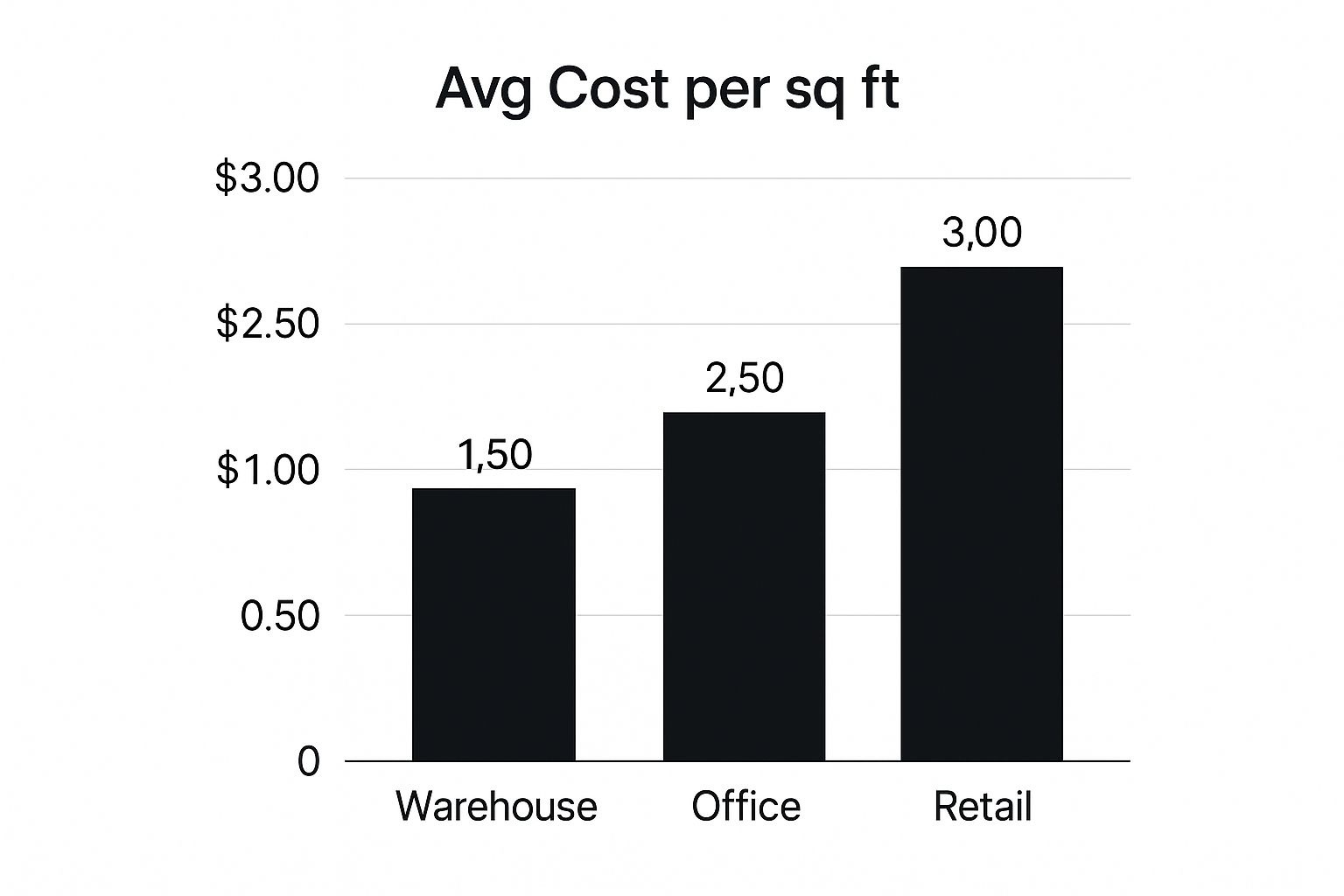
As the chart shows, spaces like retail stores tend to have higher costs. This is often because they need a higher level of finish and have more intricate details designed to impress customers.
How Building Complexity Shapes Your Budget
Not all square footage is created equal. A quote for a 5,000-square-foot project can swing wildly. Is it a simple, open warehouse in Salinas? Or a historic hotel lobby in Carmel with intricate trim and delicate features?
The specific character of your building is a huge driver of your final commercial painting cost.
Think of it this way: a flat wall is straightforward. But the moment you introduce windows, doors, or crown molding, the job transforms. Each element requires precise cutting-in and a significant jump in labor hours.
This is why an on-site assessment is the only way for a professional painter to build a quote that truly reflects the work needed for your specific property.
Architectural Details And Their Impact
The architectural style of your building plays a massive role in the labor involved. A modern, minimalist office is a different animal than a Victorian-era commercial building with ornate woodwork.
Several common features can ramp up the time and cost:
- Intricate Trim and Molding: Crown molding, detailed baseboards, and complex window casings demand a rock-steady hand and hours of meticulous work.
- Numerous Windows and Doors: Every frame needs to be perfectly taped off and painted around, adding considerable time.
- High Ceilings or Multi-Story Foyers: Getting to these areas safely means bringing in specialized equipment like scaffolding or aerial lifts.
- Textured Surfaces: Surfaces like brick or stucco are thirsty for paint and require specialized techniques and more product than smooth drywall.
Understanding how these details affect the job is key. You can see how professionals navigate these challenges when you hire a professional painter in Pacific Grove, where architectural diversity is part of the job.
Facility Type And Specialized Coatings
The function of your building is as critical as its form. A retail boutique has different demands than a food processing plant. These operational needs often require specialized, higher-cost coatings.
For instance, a busy restaurant kitchen might need heat-resistant paints. A medical clinic would benefit from antimicrobial coatings to help maintain a sterile environment. These high-performance products cost more but deliver essential long-term value.
Key Insight: Don't forget that the rising cost of raw materials can also nudge your budget. Supply chain issues and fluctuating crude oil prices have a direct impact on paint manufacturing, leading to price increases.
Recent market data shows that even when the overall volume of paint sold went down, the value of those sales went up. Industry analysis for 2024 anticipated this trend would continue, with a 2.6% increase in volume and a 5.3% growth in value. You can explore more on the state of the U.S. paint market to see how these economic factors are playing out.
Budgeting Smarter for Your Painting Project
Getting real value from your investment isn't about picking the lowest bid. The win comes from smart planning that focuses on quality and longevity, ensuring your commercial painting cost delivers a powerful return. A well-planned project acts as a protective shield for your building, saving you a fortune on future maintenance.
Timing and Bundling for Better Value
Here’s a pro tip: schedule your project during a painter's slow season. For us in Monterey County, demand for exterior work skyrockets during warm, dry months. If you can plan your project for the late fall or winter (weather permitting), you'll often find more competitive pricing.
Another savvy move is to bundle your services. If you need the exterior done and have some interior spaces that need a refresh, tackle them together. Grouping jobs into one project cuts down on setup and travel costs, and those savings are often passed along to you.
"The cheapest bid is often the most expensive in the long run. An estimate that seems too good to be true likely cuts corners on crucial steps like surface preparation or uses inferior materials, leading to premature failure and forcing you to pay for the same job twice in just a few years.”
The ROI of Premium Materials
It's tempting to shave a few dollars per gallon on paint, but this is a "penny wise, pound foolish" scenario. Investing in high-performance, premium paints is one of the smartest financial moves you can make. They're engineered for superior durability, fantastic color retention, and serious resistance to moisture and UV damage.
Yes, the upfront material cost is higher. But the long-term return is undeniable. A top-quality paint job can easily outlast a budget one by years, pushing your next major repaint far into the future. It’s a simple trade-off: pay a little more today to save a lot more down the road.
Frequently Asked Questions
Understanding the cost of commercial painting involves many factors. To help you budget effectively for your Monterey County business, this FAQ section covers key questions about project timelines, costs, and the value of professional service.
1. How long does a typical commercial painting project take?
The timeline for a commercial painting project depends heavily on its size, complexity, and the extent of surface preparation required. A small interior office in Salinas might take just 2-3 days. However, a multi-story exterior project in Carmel with significant repairs could take several weeks. A detailed quote from Legacy Painting & Renovating Inc. will always include a projected timeline.
2. Are specialty paints like low-VOC or durable exterior coatings more expensive?
Yes, specialty coatings typically have a higher upfront cost. Low-VOC paints improve indoor air quality, while durable elastomeric coatings for exteriors offer superior protection against weather. According to Zillow, homes with well-painted exteriors can sell for up to 2.9% more, making the investment in premium materials a smart one for enhancing property value.
3. How do you minimize disruption to my business operations in Monterey or Salinas?
Minimizing disruption is a top priority. We achieve this by:
- Flexible Scheduling: We work after hours, on weekends, or during shutdowns to avoid impacting your customers and staff.
- Professional Containment: Work areas are sealed off to control dust and fumes, ensuring a clean and safe environment.
- Clear Communication: We provide daily updates so you always know what to expect.
4. Why is hiring a licensed and insured painter in California so important?
Hiring a licensed and insured contractor is your best protection. A license confirms the painter meets state standards for expertise. Full liability and workers' compensation insurance protect you from financial responsibility in case of accidents or property damage during the project. It's a non-negotiable for any professional job.
5. What should I look for in a commercial painting estimate?
A transparent, professional quote is your project's blueprint. It should clearly outline:
- A detailed scope of work, including all surfaces to be painted and specific prep work.
- The exact brands and types of primer and paint to be used.
- A clear breakdown of labor and material costs.
- A projected timeline with start and completion dates.
- Clear payment terms and schedule.
Ready to transform your commercial property with a fresh, professional finish? Contact Legacy Painting & Renovating Inc. today to schedule a free, no-obligation estimate and discover how we can enhance your business appeal. Get Your Free Estimate Now