
Direct Answer: Start with the exterior if there’s any moisture damage, failing paint, or structural exposure. Interior work done before fixing exterior problems often gets ruined and redone.
Most homeowners planning a remodel ask this question once the budget is set and the excitement kicks in: do we start inside or out? It feels like a matter of preference. But in Monterey County, where marine layer humidity, salt air, and fog-cycle moisture work against any home that isn’t properly protected, the order you choose can determine whether your interior work lasts — or gets redone.
The wrong sequence costs real money. Fresh interior paint that gets hit by moisture infiltration from an unrepaired exterior is a complete waste. New kitchen finishes installed before a leaky window frame is addressed will show damage within a season or two. The Monterey Peninsula’s climate doesn’t forgive sequencing mistakes the way drier inland regions might.
This guide covers the two angles that matter most: how to think about sequencing when both interior and exterior work are on the list, and how Monterey’s specific climate conditions should shape that decision. We’ll skip the generic advice and focus on what actually matters in the field.
Why the Exterior Usually Comes First — and When It Doesn’t
The general rule in contracting is exterior before interior. The reason is simple: your exterior is the barrier between your home and everything the weather throws at it. If that barrier has problems — cracked caulk, failing paint, compromised wood — moisture finds its way in, and anything you’ve done on the inside is at risk.
On the Monterey Peninsula, this rule carries more weight than almost anywhere else in California. The marine layer rolls in most mornings from May through September, and salt air accelerates the breakdown of exterior coatings faster than UV alone would. An exterior that was last painted five or six years ago may look fine on a dry afternoon but be holding moisture in the substrate underneath.
That said, there are real situations where starting interior makes sense first:
- The exterior is recently repainted and in good condition — no peeling, cracking, or failing caulk
- Interior work involves structural changes like moving walls that could affect exterior tie-ins
- You’re working on a room-by-room budget and the interior rooms have no water exposure risk
- The exterior project depends on permits or HOA approvals still being processed
If your exterior checks out structurally and the paint is holding, you can absolutely start inside. But if there’s any question about the envelope — the walls, windows, trim, and foundation — fix that first.
For a broader look at what the difference between renovation and remodeling actually means, that’s worth reading before you finalize your project scope.
What Monterey’s Coastal Climate Does to the Sequence Decision
The Monterey Peninsula doesn’t follow standard California weather logic. Homeowners from Southern California or the Central Valley are often surprised by how aggressive the coast can be on exterior surfaces. Salt air, condensation cycling, and extended fog seasons mean that exterior surfaces here degrade faster and require more careful prep than in drier climates.
Here’s what that means practically for your project order:
Exterior paint failures in Monterey typically start at transition points — where wood meets stucco, around window and door frames, at deck ledger boards, and anywhere caulk has dried out or separated. These are the first places to inspect before you commit to any interior schedule.
If you’re seeing any of these signs on your exterior, prioritize it before any interior work:
- Bubbling or peeling paint on south- or west-facing walls (highest UV and wind exposure)
- Soft wood around window frames, fascia boards, or porch posts
- Visible caulk gaps at penetrations, trim joints, or where siding meets foundation
- Efflorescence (white salt deposits) on stucco surfaces — a sign of moisture moving through the wall
- Rust staining below metal fixtures or fasteners
Any one of these means moisture is either in the wall or about to be. Painting over them without proper prep just traps the problem. And if you’ve already done interior work — new drywall, fresh paint, new cabinetry — that moisture will find its way to it eventually.
For specific guidance on the best paint for stucco exterior walls in Monterey County, stucco prep and coating selection are different than wood siding and worth understanding before you get bids.
The Remodel Sequencing Decision at a Glance
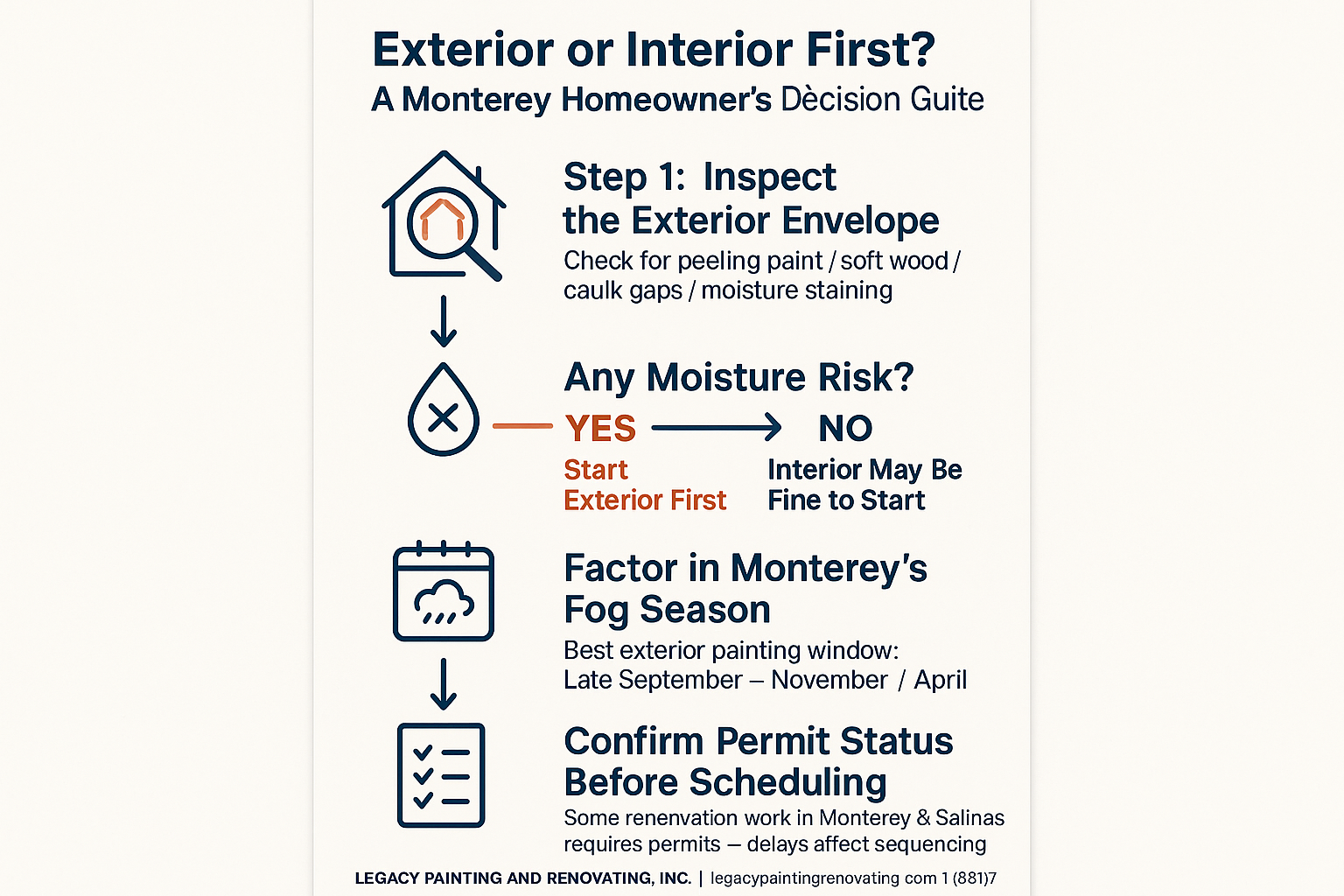
This infographic walks through the key decision points that determine whether your exterior or interior should come first.
How Interior Renovation Scope Affects the Right Order
Interior remodel scope matters a lot here. A fresh coat of paint on bedroom walls is a low-risk interior project that can happen in almost any order. But a kitchen remodel, bathroom renovation, or full home renovation is a different situation entirely — those projects generate dust, debris, and sometimes structural changes that can affect exterior surfaces or require work near exterior walls.
For example:
- A kitchen remodel that involves moving plumbing or cabinets near an exterior wall should have that wall’s moisture integrity confirmed first. You don’t want to tile a backsplash against a wall that has a slow leak behind it. See the kitchen remodel decisions that surprise Monterey homeowners most for a realistic look at what comes up.
- A bathroom renovation near an exterior wall — especially in older homes in Pacific Grove or Carmel where wall assemblies weren’t built for today’s waterproofing standards — should be preceded by an exterior inspection. More on what to expect during a bathroom remodel from start to finish.
- Interior painting after major renovation work should always come last — after drywall repairs are done, after trim is installed, after any dust-generating trades have finished.
The general field sequence for a project that includes both exterior and interior work looks like this:
- Exterior structural repairs (wood rot, caulking, surface prep)
- Exterior painting
- Interior demo and structural work
- Interior finish work (cabinets, tile, fixtures)
- Interior painting — always last among finish trades
Interior painting as a standalone project doesn’t follow this same logic. But once renovation work enters the picture, sequencing mistakes get expensive fast.
Exterior vs. Interior First: What the Conditions Tell You
Use this as a quick reference when deciding which scope to tackle first, based on conditions at your home.
| Condition at Your Home | Start Exterior First? | Notes |
|---|---|---|
| Peeling or bubbling exterior paint | Yes — immediately | Moisture may already be in the wall |
| Soft or rotting wood on trim or fascia | Yes — before anything else | Structural risk; affects interior too |
| Exterior paint is 2 years old and solid | Not necessarily | Interior work may proceed safely |
| Kitchen or bathroom remodel near exterior wall | Inspect exterior first | Confirm wall moisture integrity before finish work |
| Full home renovation underway | Exterior typically first | Sets the clean starting point for all interior phases |
| Interior painting only, no renovation | No exterior work required | Standalone interior paint can proceed independently |
| Coastal home in Carmel, Pebble Beach, or Pacific Grove | Inspect exterior every 3–4 years | Salt air accelerates coating breakdown vs. inland homes |
One More Timing Factor: Monterey’s Painting Season
Even once you’ve decided what order makes sense, the timing of exterior work matters on the Monterey Peninsula. Exterior paint needs the right conditions to adhere and cure properly — surface temperature above 50°F, relative humidity below 85%, and no rain forecast within 24–48 hours.
Monterey’s fog season runs roughly from May through August. During those months, morning humidity can exceed 90% before noon, which means exterior painting crews typically can’t start until early afternoon — and even then, fog can return by evening. That compresses the usable workday and affects how quickly large exterior projects can be completed.
The best windows for exterior painting on the Central Coast are typically:
- Late September through November — fog clears early, temperatures are moderate, rain season hasn’t fully arrived
- February through April — a reliable dry window before marine layer season sets in
If you’re planning a project that includes exterior painting AND interior renovation, scheduling exterior work in those windows and planning interior work to run alongside or immediately after gives you the best overall timeline.
For more on how weather timing affects exterior projects here, when to paint your Monterey house exterior covers the seasonal breakdown in detail.
Frequently Asked Questions About Remodel Sequencing
Can I paint the interior while the exterior is being worked on at the same time?
Sometimes, yes — it depends on the scope. If crews are doing surface prep or painting on the outside, interior painting can usually run simultaneously without conflict. But if exterior work involves open walls, window removal, or significant debris, running interior finish work at the same time creates problems. Talk to your contractor about whether the scopes can overlap before assuming they can.
What if I can only afford to do one right now — which one adds more value?
If your exterior shows visible wear — peeling paint, failing caulk, weathered wood — fixing that protects your investment and addresses the higher-risk problem first. An interior that’s dated but dry is cosmetic. An exterior that’s failing is a structural concern. Protect the shell first, then improve what’s inside it.
How do I know if my exterior actually has moisture damage, or if it just looks old?
A few field checks help. Press a screwdriver tip against wood trim, fascia, and window frames — soft or spongy wood means moisture is already there. Look for paint bubbling from the wall surface outward, not just surface oxidation. Check caulk lines at window frames and where siding meets trim — gaps wider than a credit card thickness are letting water in. When in doubt, have a contractor walk the exterior before you commit to an interior project timeline.
Does the order matter for a project that’s just interior painting — no renovation involved?
No. A standalone interior painting project doesn’t require any particular exterior condition. The sequencing question mainly applies when renovation work is involved or when there’s a known exterior problem that could affect interior surfaces.
We’re planning a full home remodel in Salinas. Where do we even start?
Full home remodels need a phased plan before any work begins. In broad terms: demo and structural work first, exterior envelope second, rough interior trades third, finish work last, painting always last. The specifics depend heavily on what’s in scope. How to make sure your full home remodel doesn’t turn into a nightmare covers the planning side of this well.
Ready to Map Out Your Project the Right Way?
If you’re planning a remodel in Monterey County and want a second set of eyes on what order makes sense for your specific home, Legacy Painting and Renovating, Inc. offers free on-site estimates and can help you think through the sequencing before you commit to a schedule. Call (831) 917-0047 or reach out through the contact form at legacypaintingrenovating.com — we’re happy to walk the property with you and give you a straight answer.