
Direct Answer: Yes, you can live in your home during a full renovation — but it takes real planning. The projects that go smoothly are the ones where the sequence, the dust control, and the temporary living zones were figured out before day one.
Most Monterey County homeowners don’t have a second property to disappear to while their house gets overhauled. And renting a short-term place in Carmel or Pacific Grove for a two-month renovation can easily run $4,000 to $8,000 or more — money that would be better spent on the project itself. So the real question isn’t whether you can live through a renovation. It’s whether your contractor has set things up so that you actually survive it.
The honest answer is that staying home works fine for most projects — if the sequence is right and the job site is being managed well. When it goes sideways, it’s almost never because of the work itself. It’s because nobody talked through what daily life was supposed to look like while demo crews and paint teams were moving through the house.
This article focuses on the two things that matter most: how to sequence your project so you always have functional space to retreat to, and what dust and odor control should actually look like in a well-run renovation. If you’re in the planning stage, these are the conversations worth having before the first nail comes out.
The Sequencing Question: Which Spaces Get Done First
The single biggest factor in whether living through a renovation is manageable is the order in which rooms get touched. A contractor who hands you a scope of work without a clear phase-by-phase plan for keeping habitable space available is a contractor worth pushing harder on this point.
The general rule is simple: never have both your kitchen and your bathroom out of commission at the same time. Beyond that, the smartest approach is to work inward from the least-used spaces first, so you always have a clean, functional zone to fall back on.
A workable sequence for a full home renovation often looks like this:
- Start with guest rooms, secondary bathrooms, or formal dining rooms — spaces you can close off without disrupting daily life
- Move to kitchen work while keeping at least one bathroom fully functional
- Tackle primary bedroom and bath last, or set up a temporary sleeping arrangement in a finished room before demo begins
- Save interior painting for after all trades finish — this is typically the final phase before walkthrough
If your project touches both kitchen and bathrooms, ask your contractor directly: what’s the overlap, and what’s my plan for cooking and bathing during that window? A camping stove and a gym membership are real answers that some homeowners use. But you should know that in advance, not the morning demo starts.
For a deeper look at how project sequencing decisions play out in practice, this breakdown of exterior vs. interior remodel order covers the logic clearly.
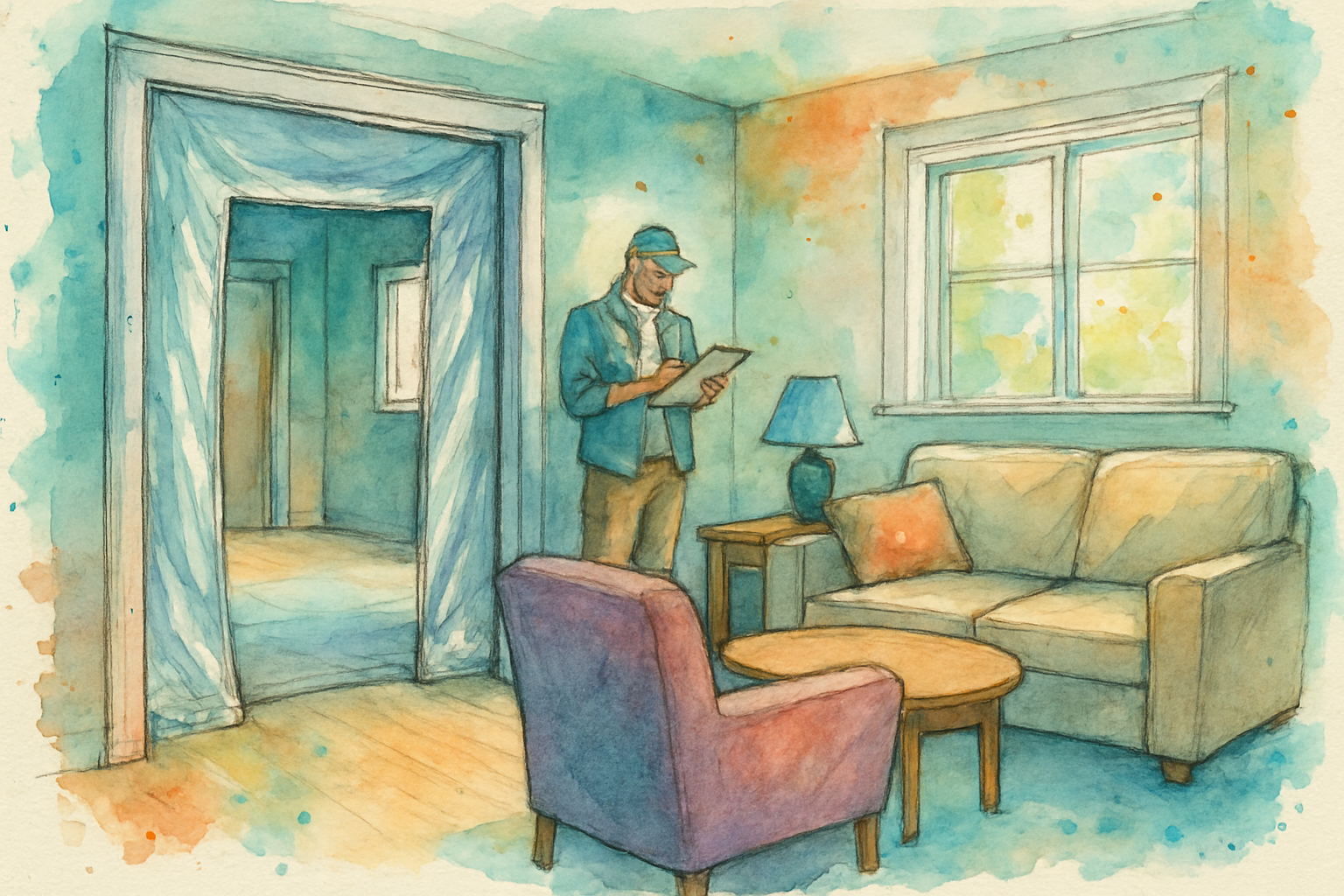
Dust Control Is Not Optional — Especially in Coastal Homes
Drywall dust is fine enough to travel through a house in ways you won’t notice until you’re wiping it off every surface three rooms away. In homes along the Monterey Peninsula, this is worse than it sounds — coastal moisture causes dust to cling to surfaces differently than it does in drier inland climates.
A professional renovation team should be putting dust barriers in place before demo starts, not as an afterthought. That means:
- Plastic sheeting sealed over doorways between the work zone and the rest of the house
- Negative air pressure fans (often called air scrubbers) in active demo or drywall areas to pull dust out rather than push it through the house
- Floor protection — rosin paper or ram board taped down in pathways, not just a drop cloth tossed over hardwood
- Daily cleanup at the end of each work day, not a single cleanup on the final day
If you have kids, pets, or anyone with respiratory sensitivities in the house, be upfront about that before work starts. Good contractors factor it into how they stage and sequence the work.
Paint odor is a separate but related issue. If your project includes interior painting — and most full renovations do — ask whether low-VOC or CARB-compliant coatings are being used. In a home where you’re sleeping 20 feet from freshly painted walls, that’s not a premium add-on. It’s a basic quality-of-life decision. California already has some of the toughest VOC regulations in the country under CARB standards, and most reputable contractors on the Central Coast are sourcing compliant products by default.
Common Renovation Phases: Livability Impact at a Glance
Different phases of a renovation disrupt daily life in very different ways. This table gives you a realistic sense of what to expect during each one.
| Project Phase | Typical Duration | Livability Impact |
|---|---|---|
| Demo (walls, cabinets, flooring) | 2–5 days depending on scope | High — dust, noise, loss of affected space |
| Drywall repair or replacement | 3–7 days including dry time | Moderate — dust and odor if compound is used |
| Cabinet installation or painting | 3–10 days | Moderate — kitchen access limited or eliminated |
| Bathroom renovation | 1–3 weeks | High if primary bath — plan alternative access |
| Interior painting (full house) | 4–10 days | Low to moderate — VOC and drying access |
| Flooring installation or refinishing | 2–5 days + cure time | Moderate — walk-off paths must be maintained |
| Final trim, hardware, punch list | 1–3 days | Low — mostly cosmetic finish work |
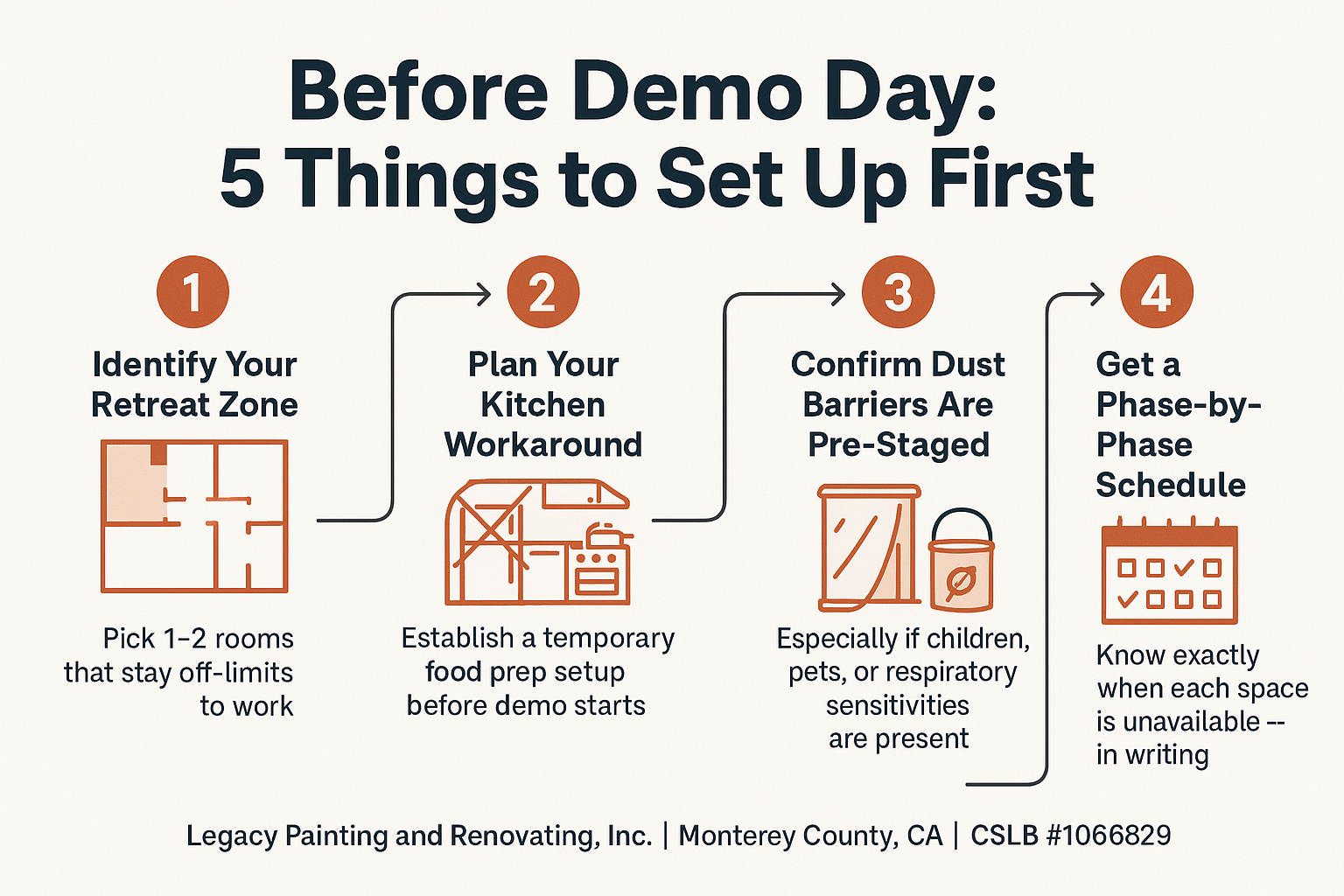
How to Set Up Your Home for a Livable Renovation
This infographic walks through the five things to establish before demo day so you’re not problem-solving on the fly once work begins.
The Kitchen and Bathroom Problem — And How Real Homeowners Handle It
Kitchen and bathroom renovations are where staying home gets genuinely hard. These aren’t spaces you can just close off — they’re the two rooms every person in the house needs every single day.
For kitchen work, the most practical short-term setups look like this:
- A folding table in the garage or dining room with a microwave, toaster oven, and electric kettle covers about 80% of daily cooking needs
- Paper plates and disposable containers eliminate the dish-washing problem entirely for 2–3 weeks
- Grocery delivery and a cooler with ice keeps fresh food accessible without a functioning refrigerator
For bathroom work, the math is different. If you’re renovating your only bathroom, you need a real plan — not an improvised one. Some Monterey County homeowners rent a portable toilet and a gym membership simultaneously. Others coordinate with family nearby. The important thing is that this conversation happens during the estimate stage, not during demo week.
If your project includes kitchen remodeling, pay attention to the cabinet phase specifically — it’s often the longest stretch where the kitchen is truly unusable. And if you’re weighing whether to paint your existing cabinets instead of replacing them entirely, the comparison between cabinet painting and replacement can help you understand whether a shorter disruption is possible for your situation.
For bathroom projects, the decisions that extend timelines are almost always the ones made after work starts — tile changes, fixture upgrades, and permit surprises. Understanding what causes bathroom project delays before you finalize your scope can save you an extra week of disrupted living.
What a Well-Run Job Site Actually Looks Like From the Inside
If you’ve had a bad contractor experience before — and a lot of Monterey homeowners have — you already know that the job site condition is a reliable signal of everything else going on with the project.
Here’s what a well-managed renovation looks like when you’re living inside it:
- Work areas are contained and staged before your morning starts — crews aren’t spreading materials across rooms you’re still using
- Tools and materials are stored consistently in one zone, not scattered through the house
- End-of-day cleanup happens every day — not a promise for Friday
- You receive a brief daily or next-day update on what’s been done and what’s coming — either a text, a call, or a quick in-person check-in
- Access times are agreed on — you know when crews are arriving and when they’re leaving, and that schedule is respected
This last point matters more than most homeowners realize. Living through a renovation is much more manageable when you have predictability. Knowing the crew arrives at 7:30 a.m. and wraps at 4:30 p.m. means you can plan your day around it. Open-ended start times and phantom disappearances are what wear people down over a multi-week project.
If you want a broader look at how full home renovation projects are structured from start to finish, this guide on avoiding a full home remodel nightmare covers the planning side in detail.
Frequently Asked Questions About Living in Your Home During Renovation
Is it actually safe to stay home during demo work?
For most residential demo — removing cabinets, tearing out tile, opening walls — yes, it’s safe as long as proper dust containment is in place. The main concerns are dust exposure and, in older homes, lead paint or asbestos. Any home built before 1978 in Monterey County should be tested before demo begins. A licensed contractor will know when testing is required and can help you coordinate it.
How long does a full home renovation typically take in Monterey County?
It depends heavily on the scope, but most full home renovations run 6 to 16 weeks from demo to final walkthrough. Permit timelines through the City of Monterey or Monterey County Planning can add 2 to 6 weeks on the front end for projects that require them. The more decisions you finalize before work starts — materials, fixtures, finishes — the fewer mid-project delays you’ll face.
Should we stay in a hotel or rental during the worst phases?
Sometimes, yes. If you have young children, pets, or anyone with asthma or serious respiratory issues, getting them out of the house during active demo and drywall work is genuinely worth the cost. A 3 to 5 day hotel stay during the dustiest phase is much cheaper than a full rental, and it covers the window where conditions are hardest to manage. Talk through the specific timeline with your contractor and identify the highest-impact days.
What’s the hardest part of living through a renovation that people don’t expect?
The noise is loud, but most people adjust. What actually wears people down is the unpredictability — not knowing when crews are showing up, not knowing what the house will look like when you get home from work, not knowing if the project is on track. This is why clear communication and a defined daily schedule aren’t just nice to have. They’re the difference between a stressful two months and a manageable one.
Do I need to be home while the work is happening?
Not necessarily. Most homeowners give their contractor a key or a code and go about their day. But someone — either you or a trusted point of contact — should be reachable by phone during work hours. Questions come up, decisions need to be made, and a delayed response can mean a crew sitting idle for half a day.
What if the project runs longer than the original timeline?
Delays happen — permit issues, backordered materials, weather. The key is whether your contractor communicates proactively or goes quiet. If you’re more than 3 to 5 days behind schedule, you should be receiving an explanation and a revised timeline, not silence. That’s a basic expectation, and it’s worth establishing at the start of the project.
Planning a Full Renovation in Monterey County?
If you’re getting ready for a full home renovation in Monterey, Pacific Grove, Carmel, Salinas, or anywhere on the Peninsula, Legacy Painting and Renovating is available to walk through the scope with you — including how to phase the work so you can stay in your home without losing your mind. Reach them at (831) 917-0047 or through the contact form at legacypaintingrenovating.com.