Direct Answer: A house painting cost calculator gives a planning range based on size, siding, and surface condition. It cannot see dry rot, access, or lead paint, so treat it as a budget starting point.
Almost every week, someone fills out our form asking for a number before they are anywhere close to letting a contractor walk their property. That is a completely reasonable instinct. You want to know if this project is a this year project or a next year project.
One homeowner wrote in saying they were still planning and comparing pricing for a full exterior repaint of a two story, 1,243 square foot stucco house, and asked that we not use a sprayer on the side attached to the neighbor. Another described a four bedroom, 1,866 square foot interior with four accent walls plus touch-ups to match the existing paint.
Those small details are the whole story. They are the difference between a generic per square foot figure and a number you can actually budget against. Here is how to read a house painting cost calculator in Monterey County, what genuinely moves the range, and where the math runs out.
Start With Where the Money Actually Goes
This is the part almost nobody explains, and it changes how you read every number you see.
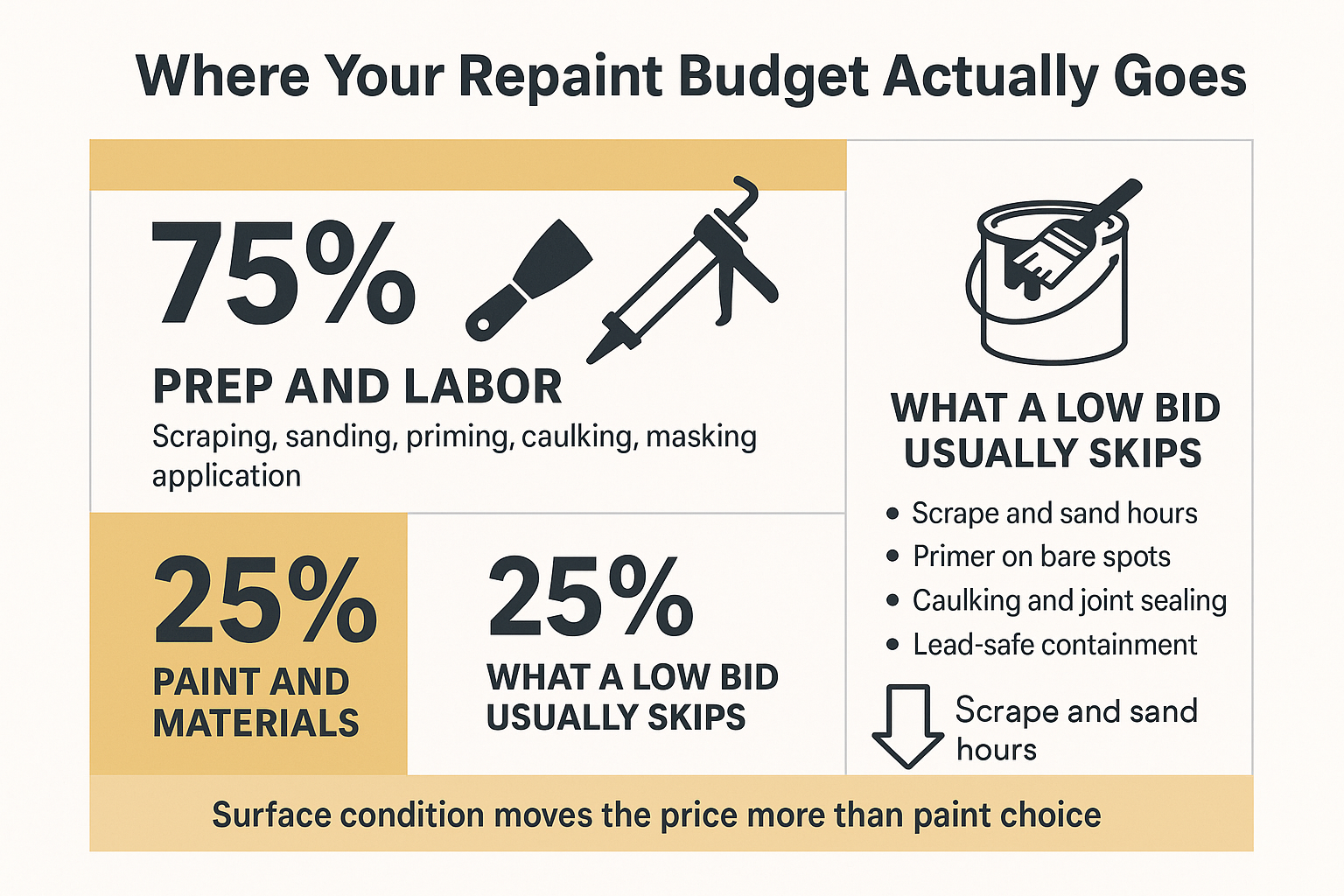
On a typical repaint, surface preparation and labor account for roughly three quarters of the total cost. The paint itself is the smaller share. Once that lands, a lot of confusing pricing suddenly makes sense.
It explains why a calculator asking about your surface condition moves the output far more than which paint line you pick. It also explains the bid that comes in way below everyone else’s. Nobody is buying cheaper paint to save you thousands, because the paint was never the expensive part.
When a bid drops far below the rest, the savings usually come out of:
- Scraping and sanding hours
- Priming bare or repaired spots
- Caulking joints, seams, and trim gaps
- Lead-safe containment on older homes
- Masking and protection of landscaping, windows, and hardscape
One homeowner wrote in about a garage floor saying they already had a quote in hand and were hoping to come in a few hundred dollars under it. That instinct is human. Just know that on a paint job, the money you shave off is almost always coming out of the prep work that determines how long the finish lasts.
The Inputs That Move a Range, and Why
A good estimator asks a handful of questions. Each one is standing in for a real chunk of labor hours.
Siding type. Stucco, wood siding or shingle, fiber cement, vinyl, and brick each soak up and hold coating differently. Stucco drinks material and needs crack repair. Wood shingle takes far more hand work than a flat fiber cement panel. Same square footage, different labor.
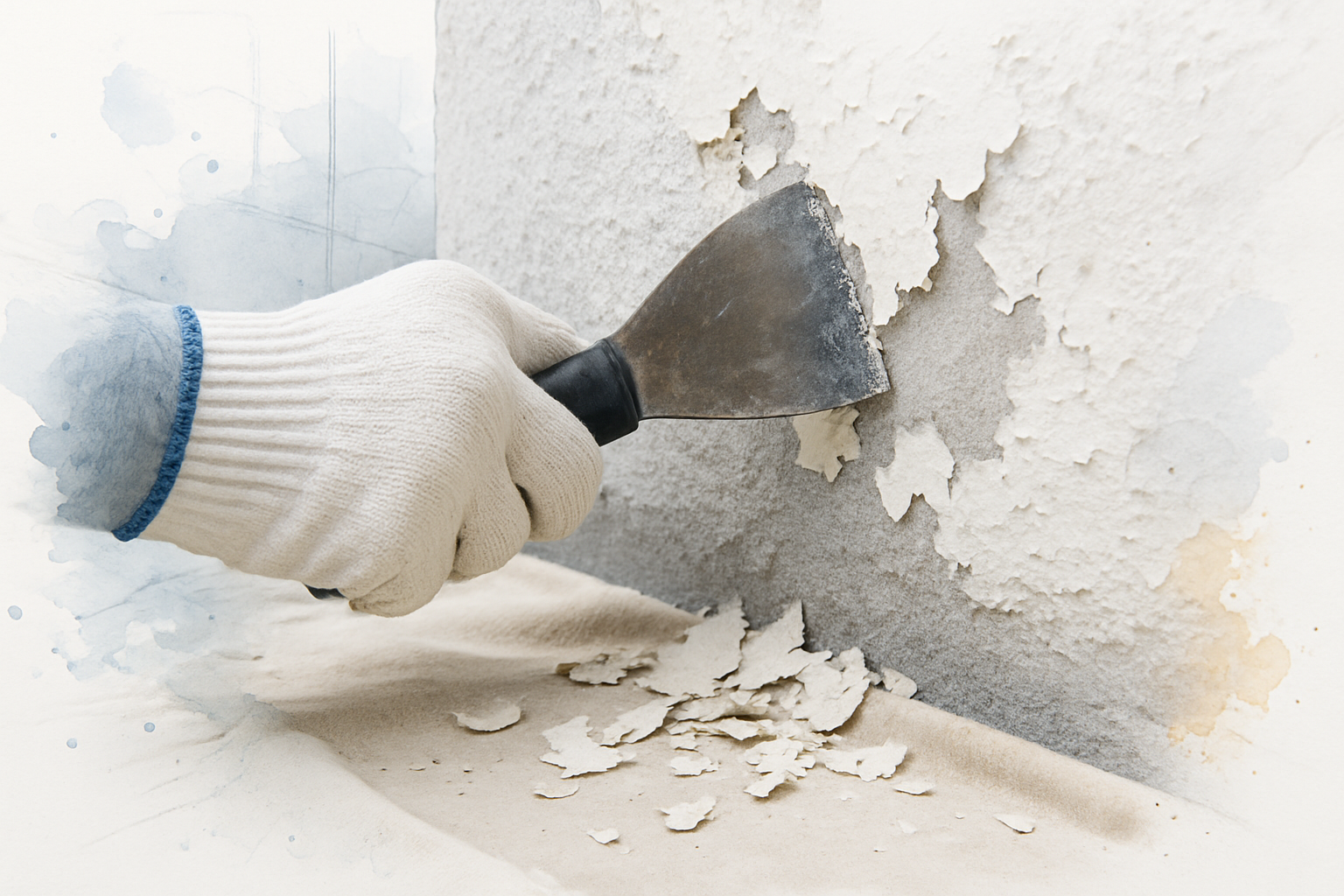
Current paint condition. This one moves the number more than most people expect. Sound paint, scattered peeling or chalking, and widespread failure are three completely different jobs on the same house. Widespread failure means scraping most of the building before anyone opens a can.
Exterior scope tier. Body only is one job. Body and trim is another. Body plus trim, doors, and the garage is another again, because doors and trim are slow, detailed, brush and roll work.
On the interior, the questions shift:
- Extent: a few rooms, about half the house, or the whole home
- Scope: walls only, walls and ceilings, or walls, ceilings, trim and baseboards
- Wall condition: minor patching, dings and nail holes throughout, or significant drywall repair
- Removal work: wallpaper coming off, or a popcorn ceiling coming down
Two Monterey homes of identical square footage can sit thousands of dollars apart. None of that gap is arbitrary. It is all sitting in those answers.
Why Two Identical Homes Price Differently
Here is the same 1,600 square foot single story house, described two different ways, and what changes behind the scenes.
| Input | Lower end of the range | Higher end of the range |
|---|---|---|
| Siding | Fiber cement, smooth and stable | Wood shingle with weathered edges |
| Paint condition | Sound, minor touch-up only | Widespread peeling and chalking |
| Scope | Body only | Body, trim, doors, and garage |
| Build year | Built after 1978 | Built pre-1978, lead-safe practices apply |
| Prep hours | Wash, spot prime, caulk | Full scrape, sand, prime, extensive caulking |
| Access | Single story, open yard | Steep lot, tight side yard, shared wall |
Where a Repaint Budget Actually Goes
This is the breakdown I wish every homeowner saw before they compared their first two bids.
The Pre-1978 Question Belongs in Any Honest Estimate
If a calculator never asks what year your house was built, it is giving you an incomplete picture. On the Peninsula, this is common rather than rare.
Monterey County’s median home was built around 1976, and roughly 12 percent of the housing stock predates 1950. That share climbs sharply in Pacific Grove and Carmel, where a lot of the charm comes from homes that have been standing for eighty or ninety years.
The EPA is direct about this: renovation, repair, or painting work in a pre-1978 home can create dangerous lead dust, and contractors doing that work have to be lead-safe certified. In practice that means:
- Contained work areas with plastic and sealed edges
- HEPA vacuum cleanup, not a broom and a shop vac
- Controlled collection and disposal of debris
- Different scraping and sanding methods that generate less dust
All of that takes time, and time shows up in the price. One homeowner wrote in about heavy cracking and peeling on their exterior and added that they believed it may be lead paint. That is exactly the right thing to flag early.
This is a legitimate line item on an older home, not an upcharge someone invented. If you want the longer version, we wrote about older homes on the Peninsula and the lead paint question separately.
What No Calculator Can See
I would rather you trust the range than be surprised later, so here is where the math genuinely stops.
Dry rot and carpentry repair. Soft trim, a rotted fascia board, a window sill that gives when you press it. None of that is visible to a form. It gets priced separately after someone puts hands on the siding and trim.
Access and staging. A two story home on a flat lot and a two story home on a slope with a four foot side yard are not the same job. Ladder time, staging, and safe footing all cost hours.
Coastal exposure. Salt air, marine layer humidity, and the fog to sun cycle raise the prep standard on this coast. A calculator can guess at your zip code, but it cannot see how our climate has already worked on your existing finish.
A few more that regularly move a number:
- Occupied vs. vacant. Working around furniture, pets, and a family’s schedule is slower than an empty house.
- Deep color changes. Going dark, or covering dark with light, can add a coat.
- Wallpaper removal. Some comes off in sheets. Some fights you for two days.
- Special requests. Like the homeowner who asked us not to spray the wall shared with a neighbor. That is a reasonable ask, and it changes the method and the hours.
What turns a planning range into a real price is a walkthrough of roughly thirty minutes. And if you are considering interior and exterior work, ask about doing them together, since one project shares a single mobilization and one scheduling block instead of paying to start twice.
What That Three Quarters Is Actually Buying You
Once you understand that most of the cost is prep and labor, homeowner reviews start reading differently.
What people around here describe after the work is finished is not usually the color. It is that the crew protected and cleaned the site, moved outdoor furniture and put it back, handled carpentry repairs as they came up, and finished on the schedule they gave.
One Monterey County homeowner put it plainly in a review: “The two painters were thorough in the preparation, painting and clean-up.” That sentence is the three quarters of the budget, described from the outside.
So when you are looking at a calculator range, read it as a planning figure, not a bid. Then read every real bid you get with one question in mind: what is this number assuming about prep? If you are also weighing surface specifics, choosing the right coating for stucco in this county is a separate decision worth its own homework.
Frequently Asked Questions About House Painting Cost Calculators
Why do two online calculators give me completely different numbers?
Usually because one is built on national averages and the other on local pricing. Labor rates, coastal prep standards, and the age of the housing stock in Monterey County all push real numbers away from a national figure. Also check how many questions each tool asks. A calculator that only wants square footage is guessing.
Does the paint I choose really not change the price much?
It changes it, just less than people expect. Paint is the smaller share of the total, so upgrading a product line moves the number modestly while a jump from sound surfaces to widespread peeling can move it dramatically.
My house was built in the 1950s. Should I expect a higher estimate?
Plan for it, yes. Federal lead-safe work practices on pre-1978 homes require contained work areas, HEPA cleanup, and controlled disposal, and that adds labor hours. It is a real cost of doing the job safely on an older Peninsula home, not padding.
What actually happens between the calculator range and a real price?
Someone walks the property, usually about thirty minutes. They check siding condition, press on trim and sills for soft spots, look at access and staging, note the build year, and confirm scope room by room. Dry rot and carpentry are typically quoted separately once they can see what is there.
Is it cheaper to do interior and exterior at the same time?
Generally yes, because booking them together shares one mobilization and one scheduling block instead of two separate project starts. Costs vary by home, so ask for both scenarios in writing when you get an estimate.
Want to Sanity Check Your Painting Budget?
There is a free planning estimator for Monterey County homes on our site if you want a range before you talk to anyone. When you are ready for an exact figure, Legacy Painting and Renovating offers no-obligation on-site walkthroughs across Salinas, Monterey, Pacific Grove, Carmel, and the surrounding communities. You can reach us at (831) 917-0047 or through the contact form at legacypaintingrenovating.com.