Direct Answer: Semi-gloss is the right finish for most interior trim and baseboards. High-gloss suits detailed millwork and front doors. Satin works only in dry rooms where you want trim to blend in.
You picked the color. You picked the brand. Then the guy at the paint counter asks what sheen you want, and you say semi-gloss because that is what everybody says.
That one answer decides whether your trim wipes clean for a decade or starts blistering along the baseboards in a bathroom within two winters. On the Monterey Peninsula, where the marine layer keeps indoor humidity high for months, the wrong sheen fails faster than it would almost anywhere inland.
I want to walk through what sheen actually does, which finish belongs on which surface, and the two prep mistakes I see behind most trim repaints in Monterey County, CA homes.
What Sheen Actually Does to a Trim Surface
Sheen is not a look. It is a change in the recipe.
As you move up from satin to semi-gloss to high-gloss, the paint carries more resin and less pigment. Resin is the binder that hardens into a film, so a higher sheen gives you a tougher surface that takes scuffing, cleaning, and door-slam contact better than a flat one.
That same resin also reflects light. And reflected light shows everything underneath it.
- Sanding scratches that were invisible while wet
- Raised wood grain from a waterborne coat over bare wood
- Old dents and filler that were never sanded flush
- Brush drag from a coat applied too soon
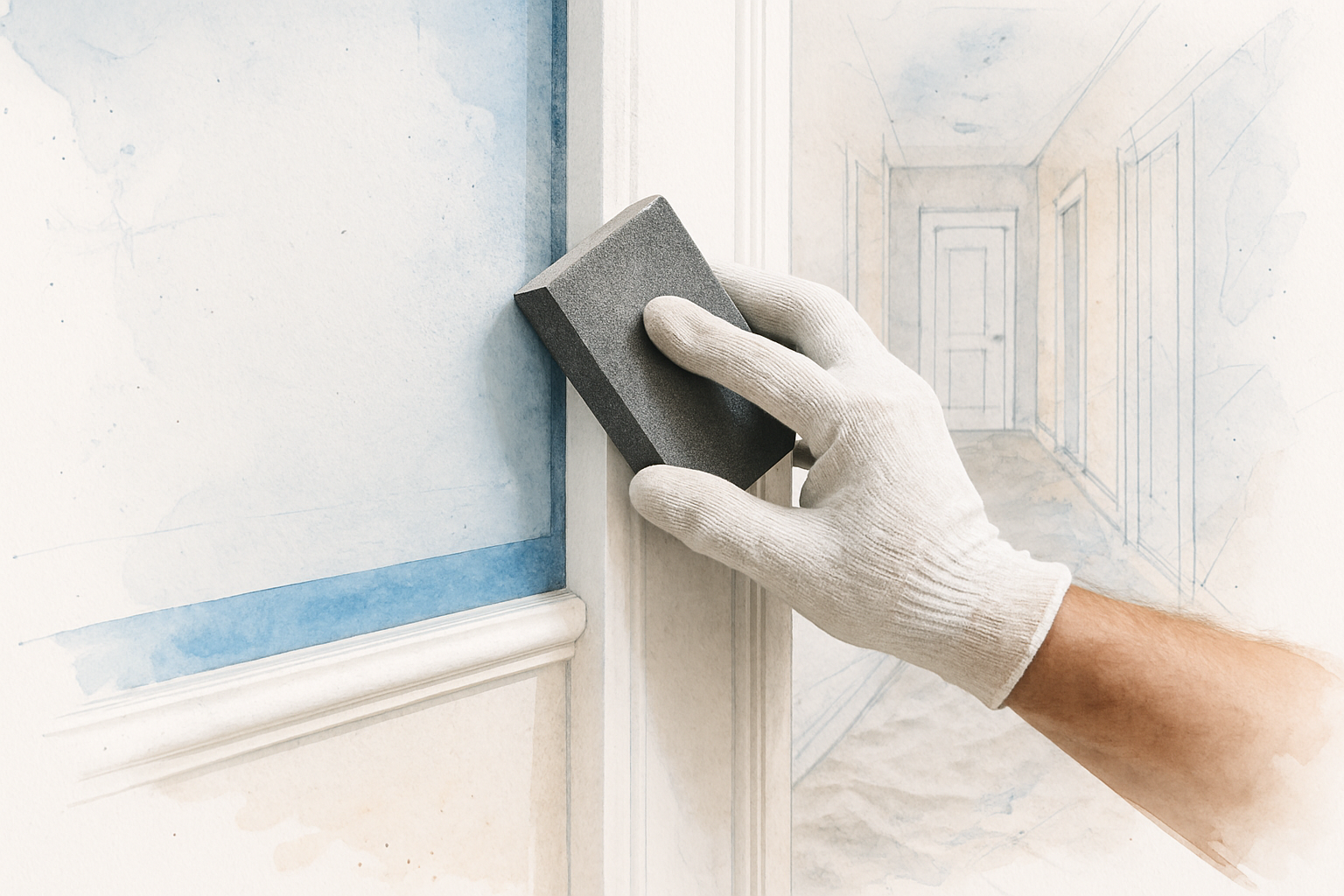
This matters more here than people expect. In a Pacific Grove bungalow with west-facing windows, the late afternoon sun comes in almost sideways across the door casings, and that raking light turns a high-gloss finish into an inspection lamp for the prep work.
So the honest way to think about it: higher sheen buys durability and cleanability, and charges you in prep hours. That trade is the whole decision. If you want the longer version of how the prep side works, we broke it down in what surface prep actually includes.
Which Finish Belongs Where
Most homes only need two sheens on the trim, and sometimes only one. Here is how I sort it on a walkthrough.
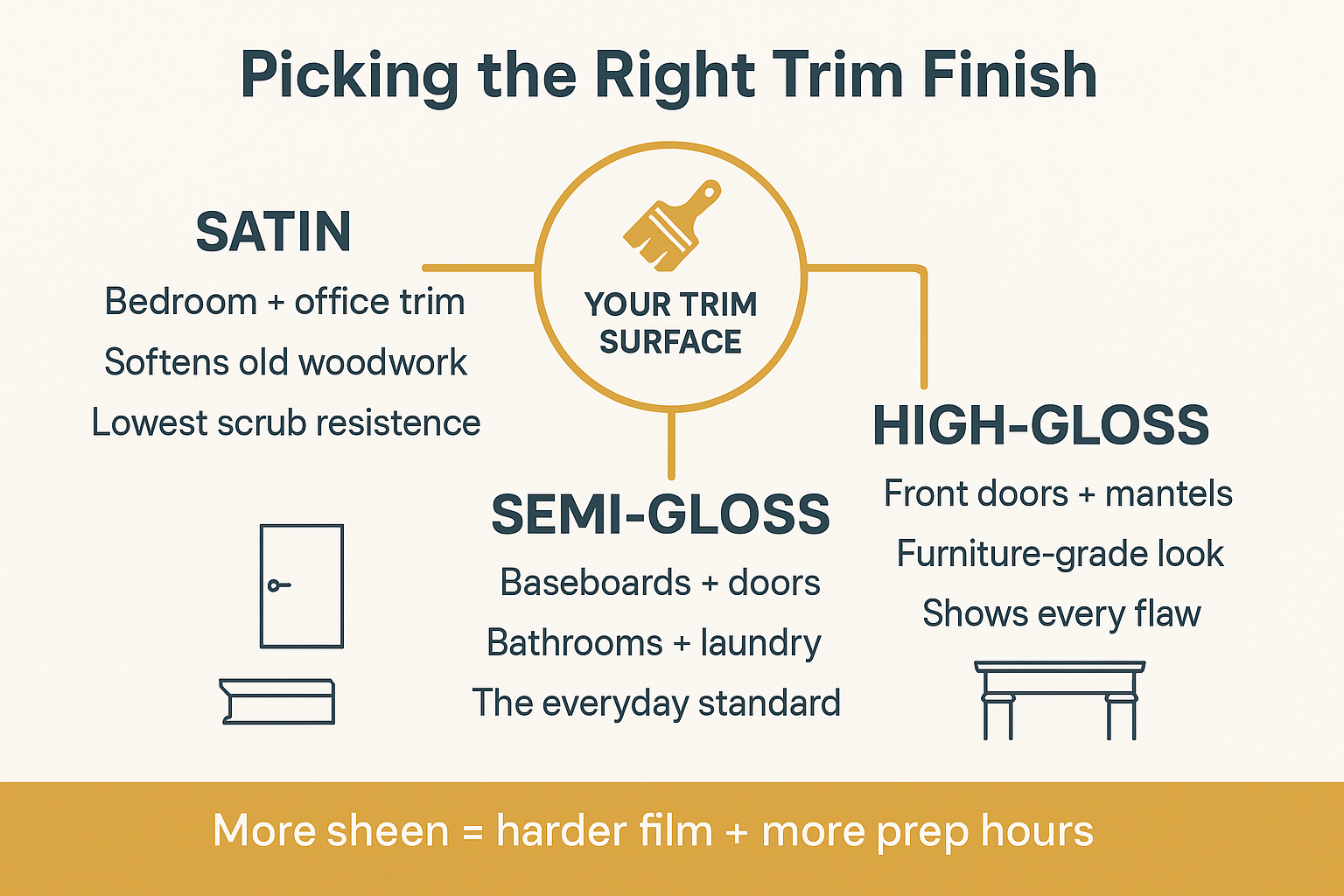
Semi-gloss is the working standard for baseboards, door casings, window trim, and doors. It is hard enough to clean with a damp cloth, it holds up to a vacuum banging into it, and the reflectivity sits low enough that a normal room can carry it without every wave in the wood showing.
High-gloss is a different category. It gives detailed millwork, a stair rail, a mantel, or a front door a furniture-grade look. It also punishes shortcuts, so I only recommend it when the surface is going to get full sanding, a proper primer, and a light sand between coats.
Satin sits below semi-gloss. I use it when a homeowner wants the trim to recede visually instead of pop against the wall, usually in bedrooms, home offices, or a room with heavily patched old woodwork worth hiding. It is the softest of the three and the least willing to be scrubbed.
A few rules I hold to:
- Kids and dogs in the house, go semi-gloss on baseboards, always
- Bathrooms and laundry rooms, semi-gloss floor, never lower
- Old redwood or fir trim with a rough history, satin hides more
- One accent element like a front door, high-gloss earns its keep
Trim Sheen Quick Reference
This is the cheat sheet I run through with homeowners before we order anything.
| Finish | Where it works | The tradeoff |
|---|---|---|
| Satin | Bedroom and office trim, older woodwork you want to soften, low-contact areas | Least scrubbable, not for wet rooms |
| Semi-Gloss | Baseboards, casings, doors, bathrooms, laundry, kitchens, hallways | Shows moderate surface flaws, needs real sanding |
| High-Gloss | Front doors, mantels, stair rails, detailed millwork | Shows every scratch and grain raise, longest prep |
Why Coastal Humidity Changes the Answer in Wet Rooms
Guides written for inland California skip this part, and it costs people money here.
A bathroom on the Peninsula is dealing with moisture from two directions. There is the shower, and then there is the marine layer that keeps outdoor humidity high through the summer fog months, which means the room never gets the long dry stretch a Central Valley bathroom gets.
A lower-sheen film is more porous. It takes on moisture, holds it against the wood, and eventually you get soft paint, dark edges near the floor, and lifting at the baseboard top edge.
We get inquiries about this more than any other trim problem. Several homeowners have described the same situation: they bought a house, the previous owner had rolled a matte or eggshell wall paint straight onto the baseboards, and now the bathroom trim is peeling. That is a known failure pattern in this climate, not bad luck.
For wet-area trim on the Peninsula, I treat semi-gloss with a mildew-resistant additive as the starting point, not an upgrade. If your trim has already failed once, why trim paint fails faster in coastal homes covers what to correct before recoating.
The Trim Finish Decision in One Look
Here is the same decision laid out visually, from surface type to the finish I would recommend.
Test Your Old Trim Before You Buy Anything
One of the most common callbacks in this trade has nothing to do with sheen. It is new waterborne paint applied over old oil-based trim without a bonding primer underneath.
Old oil and alkyd films cure hard and non-porous. A waterborne topcoat sits on top of that with nothing to grab, and it can peel off in sheets within a few months, usually in long strips right off the door casing.
If your home was built before the mid-2000s, there is a good chance the trim is oil. Here is the test, and it takes two minutes:
- Soak a cotton ball in denatured alcohol
- Rub it firmly on an out-of-the-way spot of trim
- If paint transfers to the cotton, the existing coat is latex
- If nothing comes off, treat it as oil or hard alkyd
When nothing comes off, that trim needs a bonding primer or a shellac-based primer before any finish coat, no matter which sheen you chose. On homes built before 1978, add lead-safe handling to the plan as well, which we cover in the lead paint question on older Peninsula homes.
Waterborne Alkyds and the Recoat Window Nobody Reads
Because of California’s VOC limits on architectural coatings, traditional oil-based trim paint has largely been replaced by waterborne alkyd hybrids. You can read the state’s rules on those coating limits through the California Air Resources Board.
These hybrids are genuinely good products. They self-level like oil, they dry to a harder film than standard latex, and they hold a sharp line on casings.
They also behave differently, and that catches people out. The recoat window is long, often 16 hours or more depending on the label, and that number stretches further in a cool, damp house during fog season.
Recoat too early and you get:
- Visible brush drag that will not lay down
- Blotchy, uneven sheen once the paint fully cures
- Adhesion problems that show up weeks later
So if the plan is to knock out a room’s trim in one Saturday, a waterborne alkyd is the wrong tool for that schedule. Pick a fast-recoat acrylic enamel instead, or accept a two-day job. For more on product selection, see what’s actually the best paint for trim and baseboards.
This Is a Conversation, Not a Paint Counter Decision
The finish level deserves five minutes of discussion before a job starts, not a shrug at the register.
A good painter should ask how the room gets used, whether the trim is oil, how much light rakes across it, and what you actually want the trim to do visually. One of our reviewers put it better than I can: “He and his crew followed through on my requests. With his knowledge and expertise can recommend suggestions and are honest if expectations cannot be met.”
Somebody who opens whatever five-gallon bucket is cheapest and rolls it on your baseboards is not making that call for you. They are just making it fast.
Frequently Asked Questions About Trim Paint Finishes
Can I use the same sheen on trim and walls?
You can, but it flattens the room. Trim reads as trim partly because it reflects light differently than the wall next to it. Wall paint on baseboards is also the number one cause of the peeling bathroom trim we get asked about, since flat and eggshell finishes are not built for that job.
Is high-gloss really that much harder to paint?
Yes. The paint itself brushes fine. It is the prep that doubles, because every scratch, dent, and raised grain fiber shows in the reflection. On detailed millwork that usually means full sanding, a sanded primer coat, and a light scuff between finish coats.
How do I know if my existing trim is oil-based?
Rub a cotton ball soaked in denatured alcohol on the trim. If color comes off, it is latex. If nothing happens, treat it as oil or hard alkyd, which means you need a bonding or shellac-based primer before any new coat.
Does the coastal fog affect interior trim paint drying?
It does. Cool, damp air slows both dry time and recoat time, so a label that says 16 hours can realistically mean waiting until the next afternoon in a Monterey or Pacific Grove home during fog season. Rushing it is what causes the blotchy sheen people notice a month later.
Should I repaint all the trim in the house at once?
Not necessarily, but sheens are hard to match by eye across rooms. If you are doing a hallway that opens into three bedrooms, do the connected trim together so the reflection stays consistent.
Thinking through a trim repaint on the Peninsula?
Sheen, primer, and recoat timing are all easier to sort out standing in the room than guessing from a color chip. Legacy Painting and Renovating works throughout Monterey County, CA, including Monterey, Pacific Grove, Carmel, and Salinas, and we are happy to walk a home and talk through the options. You can reach us at (831) 917-0047 or through legacypaintingrenovating.com when the timing suits you.