
There’s nothing more frustrating than seeing a beautiful paint job start to peel. It's a clear symptom of a deeper problem, as the real culprits almost always trace back to moisture, poor surface preparation, or environmental factors.
Understanding what causes paint to peel is the first step toward a lasting fix, preventing future failures and ensuring your home looks its best. This guide breaks down the common causes, from moisture intrusion in Monterey homes to improper prep in Salinas properties, and provides expert solutions.
Why Your Paint Is Peeling and What It Means
Seeing paint curl up and pull away from your walls is a tough pill to swallow, whether you're in a coastal home in Monterey or a sun-drenched property in Salinas. It’s a definite sign that the bond between the paint film and the surface underneath (what we pros call the "substrate") has broken.
The only way to get a lasting fix is to figure out exactly why that bond failed in the first place.
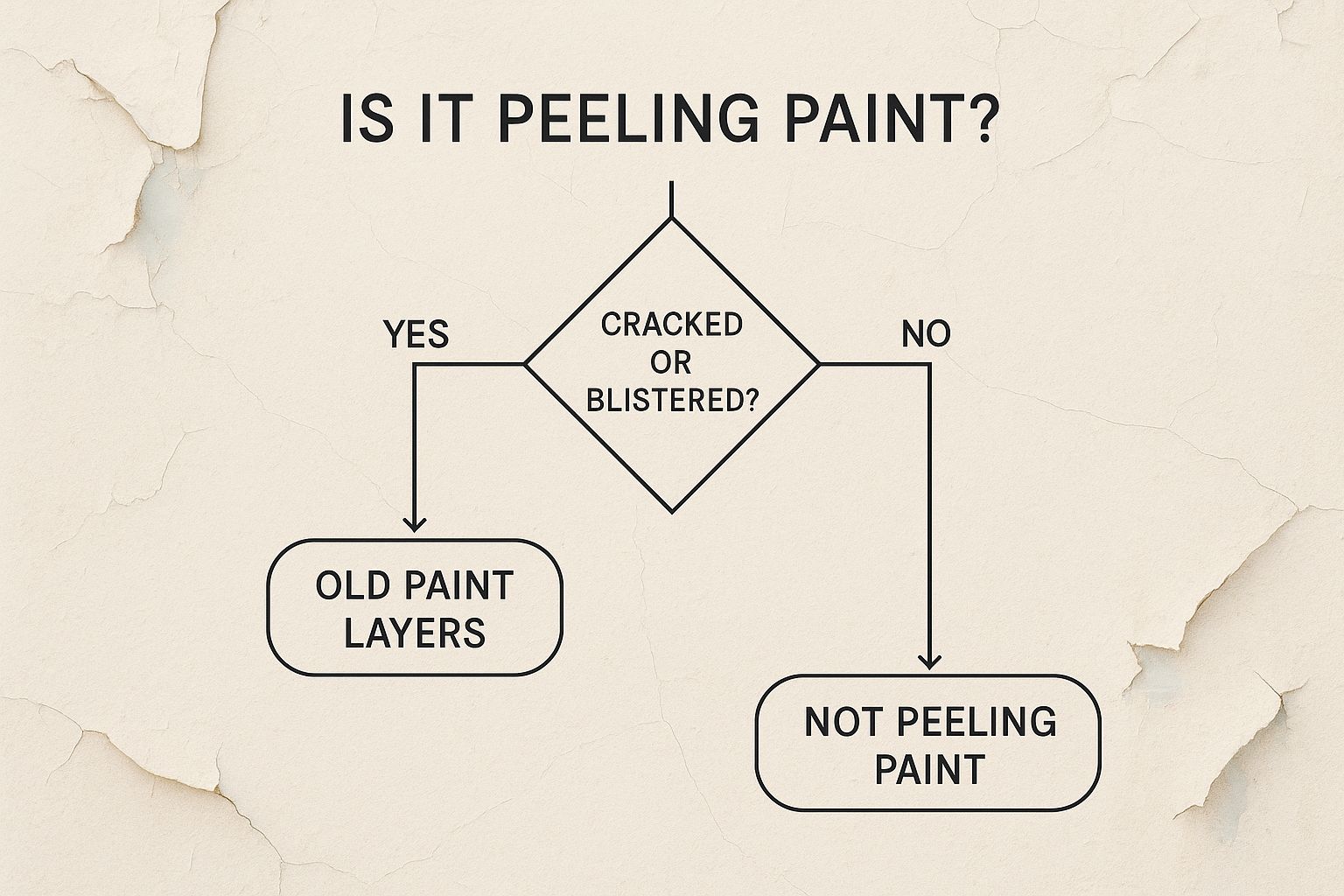
Peeling often starts small. You might notice tiny cracks or bubbles that grow as the paint loses its grip. This is a progressive issue; ignoring early signs will only lead to more widespread damage.
Identifying the Root Cause
Before picking up a scraper or paintbrush, you need to play detective. Each cause leaves distinct clues. Moisture problems usually show up as blisters or bubbles before the paint starts to peel. Poor prep work might lead to huge sheets of paint flaking off cleanly.
Sometimes, the two issues go hand-in-hand. Peeling paint is often a companion to blistering, a dead giveaway for trapped moisture. If you're seeing bubbles, you'll want to dig deeper into that specific problem. We have a whole guide that explores what causes paint to bubble and how to deal with it.
Quick Diagnostic Guide for Peeling Paint
To help you get a head start on your diagnosis, this table connects the common signs you're seeing to their most likely causes.
| Primary Cause | What It Looks Like | Common Locations |
|---|---|---|
| Moisture | Blistering, bubbling, or "alligatoring" (cracking that looks like reptile scales). | Bathrooms, kitchens, basements, and exterior walls near leaky gutters or sprinklers. |
| Poor Preparation | Large sheets of paint flaking off, revealing a shiny, greasy, or dirty surface underneath. | Any wall, trim, or surface that wasn't properly cleaned, sanded, and primed before painting. |
| Wrong Paint Used | Peeling that reveals a perfectly intact but incompatible layer below (e.g., latex over glossy oil paint). | Trim, doors, cabinets, and older homes where previous paint layers are a mystery. |
Looking at how and where the paint is failing will tell you almost everything you need to know to fix it right the first time.
Moisture: The Silent Destroyer of Your Paint Job
When a paint job goes wrong, moisture is the prime suspect. It’s the quiet culprit that ruins a perfectly good finish, whether in a bathroom battling steam or on the exterior walls of homes across Salinas and Carmel facing coastal fog and rain.
Think of your wall like a dry sponge. When it absorbs water from a leak, humidity, or condensation, materials like drywall or wood swell. As they dry, they shrink. This constant expansion and contraction puts stress on the rigid paint film, causing it to crack, bubble, and eventually peel.
Common Sources of Moisture Intrusion
Finding the source of moisture is the absolute first step toward a lasting fix. Before you even pick up a scraper, you have to find where the water is coming from.
Some of the most common offenders we see are:
- High Humidity: Rooms like bathrooms, kitchens, and laundry areas are ground zero. Without good ventilation, steam and humidity absorb into your walls.
- Plumbing or Roof Leaks: A slow, hidden leak inside a wall or from a damaged roof can saturate the drywall and studs, leading to widespread peeling.
- Exterior Water Entry: For homes in Monterey and Pacific Grove, clogged gutters, cracked siding, or failing caulk around windows are an open invitation for rain.
- Rising Damp: In some cases, moisture from the ground can wick up through a home’s foundation, causing paint to flake near baseboards.
“Moisture is one of the most destructive environmental factors for any paint job. Once water gets behind the paint and soaks into the substrate, the material swells and loosens its bond with the paint film. This is the primary reason what causes paint to peel on exterior surfaces.”
Industry data shows that properly addressing moisture problems before you paint can prevent as many as 90% of these failures. For a deeper dive, Sherwin-Williams offers some great professional insights on how to stop moisture from destroying your paint.
Finding and Fixing the Problem
If you suspect moisture is the issue, look for tell-tale signs like water stains, mildew, or a musty smell. A moisture meter is a fantastic tool for finding hidden water content inside walls.
The only real solution is to fix the leak first. You can't paint over a moisture problem and expect it to go away; the new paint will just peel again. Ensure your bathrooms have powerful exhaust fans, get any leaks repaired, and seal exterior gaps with a high-quality, flexible caulk.
Only when the surface is completely and thoroughly dry should you begin prepping for a fresh coat of paint.
Why 90% of Paint Failure Is Due to Poor Prep
We have a saying that’s proven true on every job: a great paint job is 90% preparation. Rushing this critical first step is the single most common—and costly—mistake anyone can make.
Think about putting a sticker on a dusty, wet, or greasy car bumper. It’s not going to stick right and will lift off in a day or two. Paint follows the same logic. Without a perfectly clean, dry, and stable surface, even the world's most expensive paint is guaranteed to fail.
The Non-Negotiable Steps for a Lasting Bond
Proper prep is a systematic process to remove every barrier between the new paint and the wall. Each step is designed to solve a specific problem.
The process always includes three core phases:
- Cleaning: This removes invisible enemies of adhesion—dirt, dust, oils from cooking, and soap scum in bathrooms.
- Repairing & Sanding: We fix every imperfection, from tiny cracks to nail holes. Then, we scuff the surface to create microscopic “teeth” for the new paint to bite into.
- Priming: A quality primer is non-negotiable. It seals the surface, blocks stains, and creates a uniform canvas for an even final color.
Skipping even one of these steps compromises the entire system. A clean but unsanded glossy wall won’t give the paint anything to grip. A perfectly sanded but dirty wall means the paint will just stick to the grime and peel right off with it.
Professionals know that poor prep is the culprit in the vast majority of paint failures. According to industry analysis, inadequate surface preparation is responsible for up to 80% of all coating failures. Contaminants like wax, grease, silicone, and rust create a barrier that stops the paint from bonding. You can discover more about how industries prevent this issue by following rigorous prep guidelines.
Tackling Different Surfaces and Contaminants
The exact prep work depends on the surface. A kitchen wall in a Salinas home with years of cooking grease needs more intensive cleaning than a quiet bedroom wall. Likewise, the exterior trim on a Carmel home, beaten down by salty coastal air, needs thorough sanding to remove old, chalky paint before anything new is applied.
Knowing how to get your walls ready is a vital skill. For a more detailed walkthrough, check out our guide on how to prepare walls for painting before you start your next project.
The real value our professional painters bring is this painstaking attention to detail. What happens before the first coat touches the wall determines whether your finish will look incredible for years or fail in months. Prep work is the foundation, and we build it to last.
Common Application and Environmental Mistakes
You can do everything right—perfectly clean, sand, and prime—and still have the paint fail. How you apply the paint and the conditions you work in are just as critical as the prep work. These mistakes are often the final piece of the puzzle when figuring out what causes paint to peel.
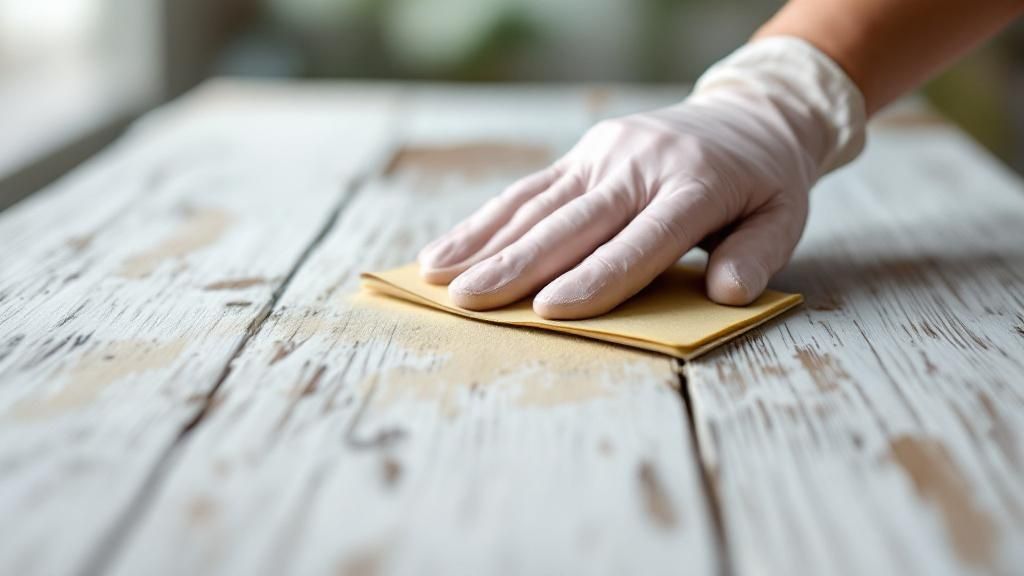
Think of painting like baking a cake. You can have the best ingredients and a perfectly prepped pan, but if the oven is too hot or you pull it out too soon, you won't like the result. Your paint job is no different.
Painting in the Wrong Conditions
The weather and environment have a massive say in how your paint cures. Here on the Monterey Peninsula, we’re in a constant dance with direct sun and heavy humidity—a combination that can sabotage a fresh paint job.
- Painting in Direct Sunlight: When you paint a hot surface, the paint dries too fast. The top layer skins over before the solvents underneath evaporate, creating a weak, brittle film that will crack and peel.
- High Humidity or Dampness: Trying to paint in damp, foggy conditions—a daily reality in places like Carmel and Pacific Grove—is asking for trouble. Moisture gets trapped inside the paint film, hurting adhesion and leading to premature failure.
A good rule of thumb is to always paint in the shade. If a surface is too hot to rest your hand on, it's too hot to paint. You should also avoid painting if the relative humidity is over 85%.
Rushing the job in the wrong conditions is a recipe for disaster. Curing is a chemical reaction that needs the right environment. Extreme temperatures or humidity will stop the paint from forming the tough, protective layer it was designed to be.
Common Application Errors to Avoid
Technique matters. Even experienced DIYers can fall into bad habits that undermine their prep work. Here are a few common mistakes we see.
Applying Paint Too Thickly
A thick coat seems like a good idea for coverage, but it’s a trap. A heavy layer of paint can't dry evenly, leading to ugly sagging, wrinkling, and peeling. It’s always better to apply two thin, even coats than one thick one.
Ignoring Recoat Times
The "recoat time" on the paint can isn't a suggestion. It’s the minimum time you must wait before adding another coat. If you rush, you trap solvents from the first coat, weakening the bond and causing the top layer to peel right off.
Using Incompatible Paint Types
This is a classic error. Putting water-based latex paint directly over an old, unprimed oil-based surface guarantees failure. The latex paint can't grip the hard, slick oil surface and will eventually peel off in sheets. If unsure, clean, sand, and use a high-adhesion primer to create a stable bridge between old and new layers.
The Professional Solution to Peeling Paint
When paint starts peeling, it's tempting to think a quick scrape-and-paint job will solve it. But that approach just puts a temporary band-aid on a much deeper issue. A finish that lasts requires pinpointing and treating the root cause. This is where a professional’s eye becomes indispensable.
At Legacy Painting & Renovating Inc., we don't just cover up problems. We start with a thorough diagnosis to figure out exactly why the paint is failing on your property. Whether it's dampness in a Pacific Grove home or intense sun in Salinas, we find the real culprit before picking up a brush.
Our Meticulous Process for a Lasting Finish
Once we know the why, we build a comprehensive repair and prep plan tailored to your home’s challenges. This is more than slapping on a new coat; it's about creating a solid foundation for durability. Our commitment to quality means we meticulously fix every underlying issue, from correcting moisture sources to selecting the perfect primers for your interior painting in Monterey.
This systematic approach is how we work. A beautiful paint job should also be a long-lasting one.
"For a paint job to truly last, the preparation has to be more important than the application. We solve peeling paint problems for good because we invest the time to fix what’s underneath, ensuring the new finish has a perfectly stable and clean surface to bond to."
If you’re ready for a finish that is genuinely built to last, our team can help. As expert Carmel commercial painters and residential specialists, we deliver results that stand the test of time. Reach out for a free consultation, and let's solve your peeling paint problem for good.
Frequently Asked Questions About Peeling Paint
Figuring out why your paint is peeling is the first step toward a fix that lasts. Here are some of the most common questions we answer for homeowners across Monterey County.
1. Can I just paint over peeling paint?
No. Painting over a failing layer is like building a house on a foundation of sand. The new paint might look good for a week, but it will quickly flake off along with the loose, old paint underneath. You must scrape and sand away all loose paint first.
2. Why is the paint in my bathroom peeling?
The culprit is almost always moisture. Steam and humidity from showers get behind the paint film, breaking its bond with the wall. Proper ventilation and using a high-quality, moisture-resistant paint are critical for preventing this.
3. How long should I wait to paint after it rains?
Patience is key. For exterior painting, wait at least one full, dry, sunny day after rain stops. For porous surfaces like old wood or stucco, it's safer to wait 2-3 dry days, especially in the coastal climates of Monterey and Carmel.
4. Does old age cause paint to peel?
It's a contributing factor, but not a direct cause. As paint ages, it becomes brittle and more likely to crack under stress from moisture or temperature changes. A top-notch paint job on a well-prepped surface can last for over a decade without peeling.
5. Is expensive paint less likely to peel?
Generally, yes. Higher-quality paints contain better binders and more flexible resins, helping them stick better and last longer. However, even the most expensive paint will still fail if the surface wasn't prepared right or if there are underlying moisture problems.
Tired of dealing with peeling paint? Let the experts at Legacy Painting & Renovating Inc. provide a permanent solution for your Salinas home renovation or Monterey painting project. Contact us today for a free, no-obligation estimate!