Direct Answer: On the Monterey Coast, exterior painting should generally start no earlier than 10 a.m. in summer, after marine layer burns off, and stop by 4 p.m. before evening moisture returns.
Most exterior painting advice gives homeowners a temperature range and calls it a day. Paint above 50 degrees, below 90 degrees, done. On the Monterey Peninsula, that is nowhere near enough information to protect a paint job.
The marine layer that rolls in off Monterey Bay through the summer months can push relative humidity close to saturation levels before 9 a.m., even on days that turn warm and sunny by noon. I’ve seen surfaces that feel dry to the touch hold enough moisture to cause real adhesion problems when coatings are applied too early. If a contractor ignores that and starts at 7 a.m. anyway, it doesn’t matter how good their paint is.
This article focuses on the two things that matter most for scheduling exterior work on the Central Coast: understanding the dew point rule and knowing what a responsible daily painting window actually looks like here, including how the calendar shifts that window in fall. If you’re planning any exterior work, this is the information you should have before you book anyone.
Why the Dew Point Rule Matters More Than Temperature
Most homeowners have heard of temperature minimums for painting. Almost nobody has heard of the dew point rule, and it’s the more important number on the Monterey Coast.
Dew point is the temperature at which moisture in the air starts to condense on surfaces. Paint manufacturers, including Benjamin Moore, specify that surfaces should be at least 5 degrees Fahrenheit above the dew point before painting begins. The reason is simple: if the surface temperature is too close to the dew point, microscopic condensation forms in the wet film as it’s being applied. You can’t see it, but it disrupts adhesion and can cause peeling within months.
Here’s why this matters specifically on the Peninsula. A July morning in Monterey might show an air temperature of 58 degrees, which sounds workable. But the dew point on a heavy marine layer morning can sit at 54 or 55 degrees. That gap is too narrow. The coating goes on over a surface that is essentially holding moisture from the overnight fog, and the result will show up later, usually in ways that are frustrating to explain to a homeowner.
Checking the dew point is easy. Free weather apps like Weather Underground and the National Weather Service both report it alongside temperature and humidity. Before any exterior work starts here, I check both the surface temperature with a thermometer and the dew point. If the gap isn’t at least 5 degrees, and ideally closer to 10, we’re not painting yet.
This is one of the habits that separates contractors who genuinely understand coastal conditions from those who follow a generic schedule regardless of where they’re working. For more on how this climate shapes exterior projects overall, How Monterey’s Climate Actually Shapes a House Painting Project covers the broader picture.
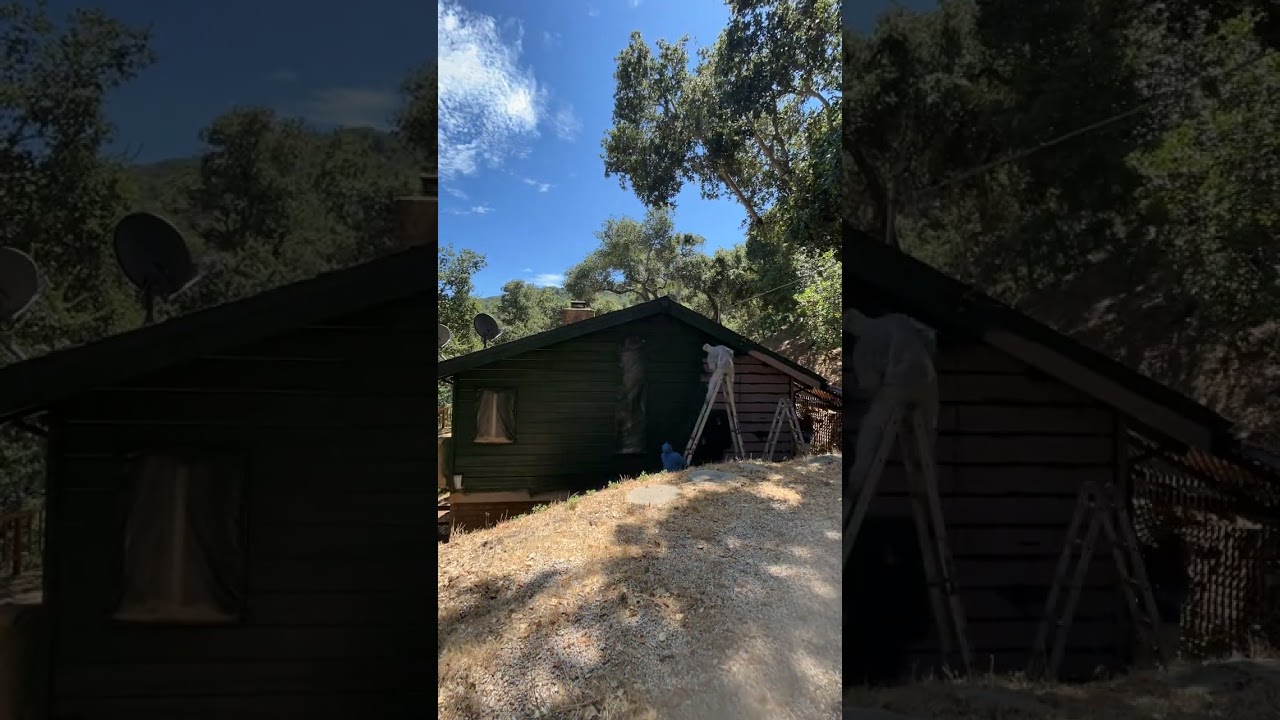
What a Responsible Daily Painting Schedule Looks Like Here
On a typical Monterey summer day, the coast holds heavy marine layer until somewhere between 9 and 10 a.m. before it starts to burn off. That means a crew that arrives at 7 a.m. has two options: wait for conditions to improve, or paint surfaces that are still technically too cool and damp. A good crew waits. A crew that’s trying to pack in hours doesn’t.
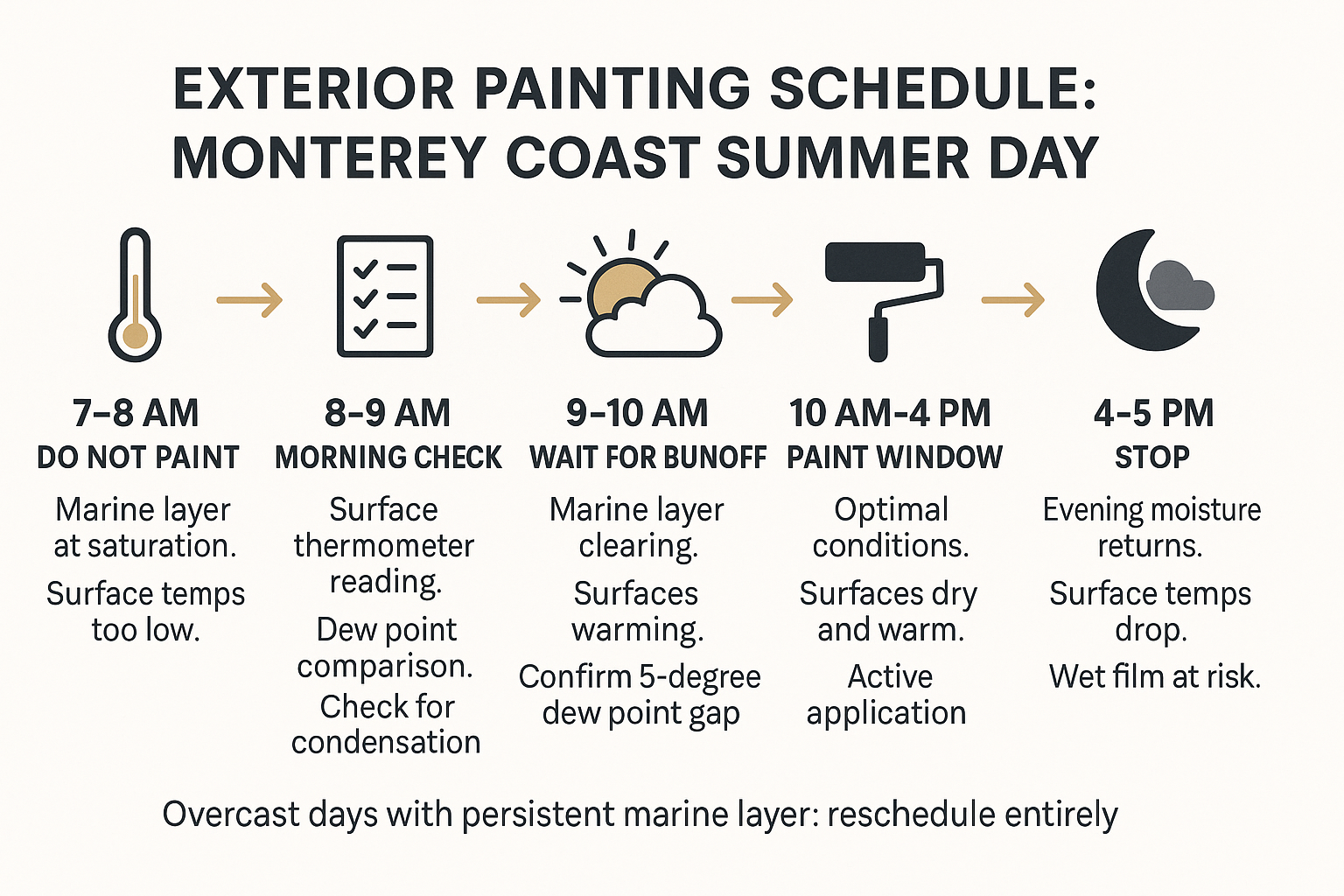
The window that generally works well for exterior painting in summer here looks like this:
- Morning check (8-9 a.m.): Surface thermometer reading on stucco or wood, dew point comparison, visual check for surface condensation
- Painting start (roughly 10 a.m.): Once surfaces have had time to warm above the dew point threshold and the marine layer has pulled back
- Active painting window (10 a.m. to about 4 p.m.): Best conditions for application and initial film formation
- Stop time (4-5 p.m.): Stop well before evening when coastal moisture starts returning and surface temperatures drop again
That’s a realistic 6-hour working window on a good summer day. On overcast days when the marine layer never fully burns off, that window can shrink to nothing and the honest call is to reschedule.
Stucco, which is extremely common on homes throughout Salinas and Monterey County, holds surface moisture longer than wood siding after a heavy marine layer night. It needs to be checked with a surface thermometer, not just by eye. Any areas showing efflorescence, the white, chalky mineral deposits that appear when moisture moves through stucco, need to be addressed in prep before any coating goes on at all. Those patches are telling you the wall has a moisture history, and painting over them without treatment will cause adhesion failures regardless of when you start. What Monterey’s Coastal Climate Does to Exterior Paint Over Time goes deeper on how these conditions affect coatings over the life of a paint job.
The Monterey Coast Exterior Painting Day at a Glance
This shows what a responsible exterior painting schedule looks like on the Monterey Peninsula in summer, from the morning check through the stop time.
Why Fall Changes the Math Entirely
Summer gets most of the attention when homeowners think about scheduling exterior work. But fall is where projects on the Monterey Peninsula can run into real trouble, and the window closes faster than most people expect.
Historical precipitation averages for Monterey tell the story clearly. July and August average almost no measurable rainfall. By October, the average climbs to nearly an inch. November jumps to over two inches. That sounds modest, but it creates a real problem for exterior coatings: rain on fresh or recently applied paint interrupts the curing process and can introduce moisture directly into a film that hasn’t had time to fully harden.
The practical implication is this: larger exterior projects on Peninsula homes should ideally be fully prepped and primed before October. The prep and prime phases take the most time and involve the most surface exposure. If those are done before the rains arrive, the topcoat application can happen in whatever dry windows October offers. But a project that starts prep work in late September is already racing.
I’ve worked on homes in Carmel and Pacific Grove where the homeowner wanted to push an exterior job deep into fall to fit their schedule. The honest advice I give is: the longer you wait past early September, the smaller the reliable window gets, and the more a weather delay can cascade into a project that gets interrupted mid-topcoat. That’s a bad place to be.
For anyone thinking about coating exterior wood specifically, Why Outdoor Wood Stain Fails Faster on the Monterey Coast explains how the seasonal moisture cycle affects stain penetration and longevity.
Monterey Coast Exterior Painting Conditions by Season
This is a general guide to what exterior painting conditions look like across the seasons on the Monterey Peninsula. Actual conditions vary by day and location, always check dew point and surface temperature before starting.
| Season | Typical Marine Layer Impact | Reliable Painting Window | Key Watch-Out |
|---|---|---|---|
| Summer (June-Aug) | Heavy morning marine layer, burns off by 9-10 a.m. | Roughly 10 a.m. to 4 p.m. | Starting too early, dew point gap too narrow |
| Early Fall (Sept) | Marine layer lightens, more variable days | Slightly wider window, but shortening | Surprise early rains, check forecasts daily |
| Late Fall (Oct-Nov) | Rain risk rises sharply, humidity stays high | Narrow and weather-dependent | Moisture in fresh film, extended cure times |
| Winter (Dec-Feb) | Wet season, frequent rain, low temps | Very limited, avoid major exterior work | Temperature drops below coating minimums |
| Spring (Mar-May) | Improving conditions, some morning fog | Building back toward summer window | Wind-driven salt air, check surface residue before painting |
Frequently Asked Questions About Exterior Painting Timing on the Monterey Coast
Can you paint exterior stucco when it looks dry but was foggy overnight?
Looking dry and being dry are two different things with stucco. Stucco holds surface moisture longer than wood after a heavy marine layer night, often several hours longer. The only reliable way to know is a surface thermometer reading compared against the current dew point. If the surface temperature isn’t at least 5 degrees above the dew point, it’s not ready regardless of how it looks.
What is the dew point and where do I find it?
Dew point is the temperature at which moisture in the air condenses on surfaces. Free weather apps, including the National Weather Service site and Weather Underground, report it alongside temperature and humidity. On a marine layer morning in Monterey, the dew point is often close enough to the air temperature that the gap matters a lot.
Is fall a bad time to paint the exterior of a home in Monterey County?
Early fall, through mid-September, can still work well. The reliable window starts shrinking in late September and gets significantly harder to manage by October, when Monterey’s historical rainfall averages pick up. Larger projects should have prep and prime work completed before October so topcoat application can happen in whatever dry windows fall offers.
What happens if paint is applied to a surface that’s too cool or damp?
Adhesion problems are the most common result. Moisture in the wet film during application disrupts how the coating bonds to the surface, which can show up as peeling, bubbling, or early paint failure, sometimes within a season. The frustrating part is that it often looks fine right after the job is done, and the issue appears months later when it’s harder to trace back to the application conditions.
How do I evaluate whether a contractor understands these coastal conditions before booking them?
Ask specifically what time they plan to start and what they check before picking up a brush on day one. A contractor who understands the marine layer dynamic will mention surface temperature checks, dew point, and a defined daily painting window without being prompted. What to Ask an Exterior Painter Before You Book Anyone has a fuller list of questions worth asking upfront.
Ready to Plan Your Exterior Project the Right Way?
If you’re thinking about exterior painting on the Monterey Peninsula and want a crew that actually checks conditions before starting, Legacy Painting and Renovating is available for estimates throughout Monterey County, including Salinas, Carmel, Pacific Grove, and surrounding areas. Reach us at (831) 917-0047 or through the contact form at legacypaintingrenovating.com to start the conversation.