Direct Answer: Yes. Interior painting works fine through a wet Monterey winter as long as the crew controls room temperature and humidity, and allows longer waits between coats than the paint can suggests.
Once the rain settles in over the Peninsula, exterior work comes off the table. And then you spend four months walking past the same scuffed hallway thinking about it.
I hear this every winter from homeowners in Monterey, Pacific Grove, and Salinas. They want the inside done, but they have heard that paint and humidity do not get along, and they are not sure whether winter is a bad time to start.
So here is the honest version. Interior painting absolutely works through a coastal winter, but the conditions change how the work gets scheduled, how long you wait between coats, and which rooms need extra attention before a brush touches them.
Short Answer: Yes, With Conditions You Can Actually Control
Inside a house, you control the weather. You cannot do that on a stucco wall in Carmel in February, which is why exterior timing gets its own conversation.
The catch is that a closed-up coastal house in January is not automatically a dry room. Marine layer moisture works its way in, the heat is often off during the day, and interior humidity can sit well above what paint manufacturers assume.
This winter that matters a little more than usual. NOAA’s Climate Prediction Center has put the odds of a very strong El Niño above 90 percent through fall and winter 2026-27, and the agency’s late-August seasonal outlook tilted California toward above normal precipitation. You can read the technical write-up in the ENSO Diagnostic Discussion.
I treat that as raised odds, not a forecast you should bet a project on. The 2015-16 El Niño was strong on paper and underdelivered rain here. What it does mean is that planning interior work around damp conditions is the smarter default this year.
What Humidity Actually Does to Dry Times
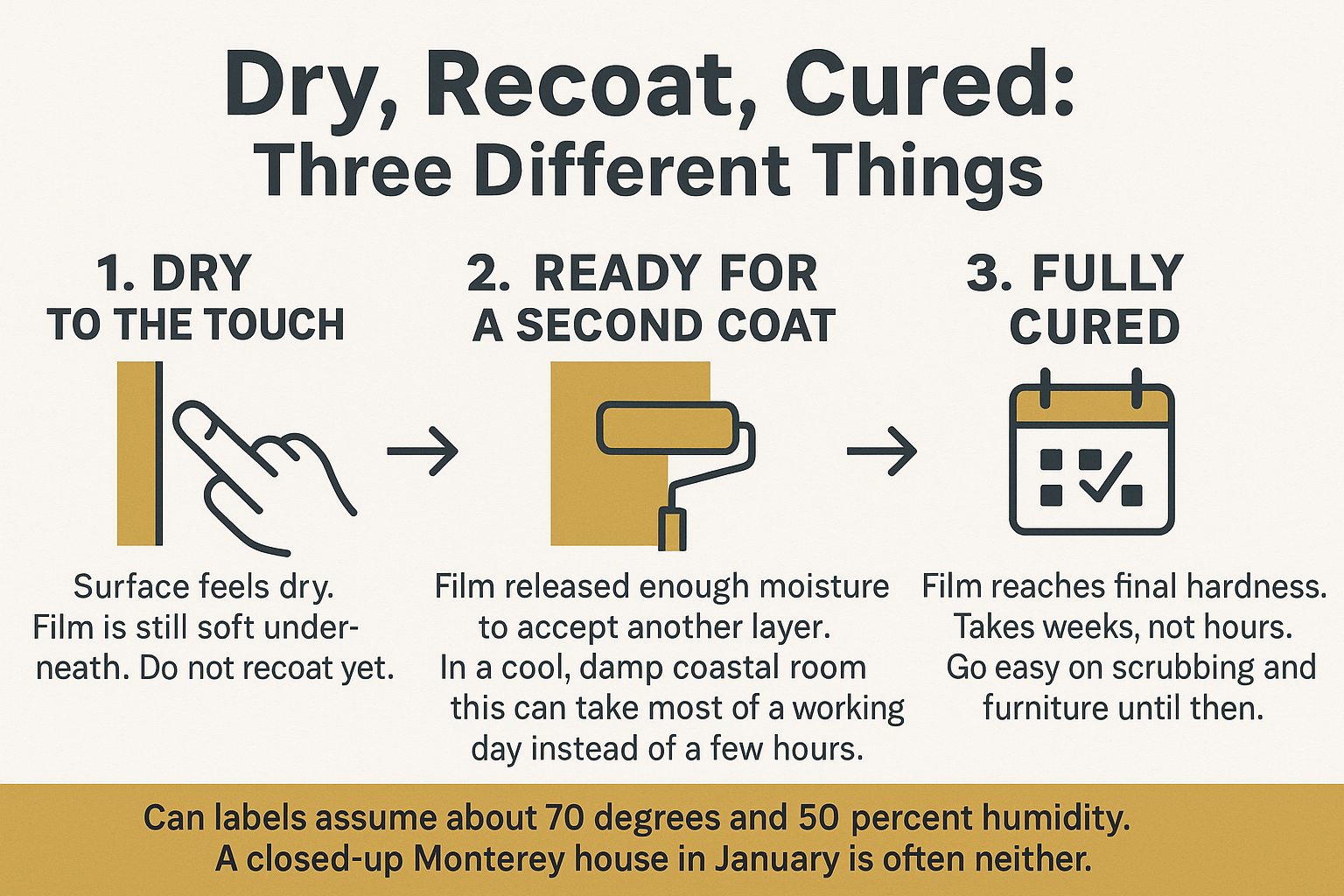
The numbers on a paint can assume a laboratory: roughly 70 degrees and about 50 percent relative humidity. Very few Peninsula living rooms hit that in January with the heat off.
Paint dries when water and solvents leave the film. Cool air slows that down. Humid air slows it down more, because the air is already carrying moisture and has less room to take on more.
There are three stages that get mixed up constantly, and the difference matters:
- Dry to the touch. The surface feels dry. It is still soft underneath.
- Ready for a second coat. The film has released enough moisture to accept another layer without lifting or dragging.
- Fully cured. The film has reached its final hardness. This takes weeks, not hours, on most interior products.
In a cool, damp room, a recoat window printed as two to four hours can stretch into most of a working day. That is normal and it is not a defect in the paint.
What goes wrong is rushing coat two. Rolling a second coat over a film that is still soft gives you streaking, roller marks that never flatten out, soft spots that mark up when furniture goes back, and adhesion problems that show up months later.
The Ventilation Catch-22 Nobody Warns You About
Every set of paint instructions says to ventilate well. Then an atmospheric river parks over Monterey Bay and you cannot open a single window without soaking the sill.
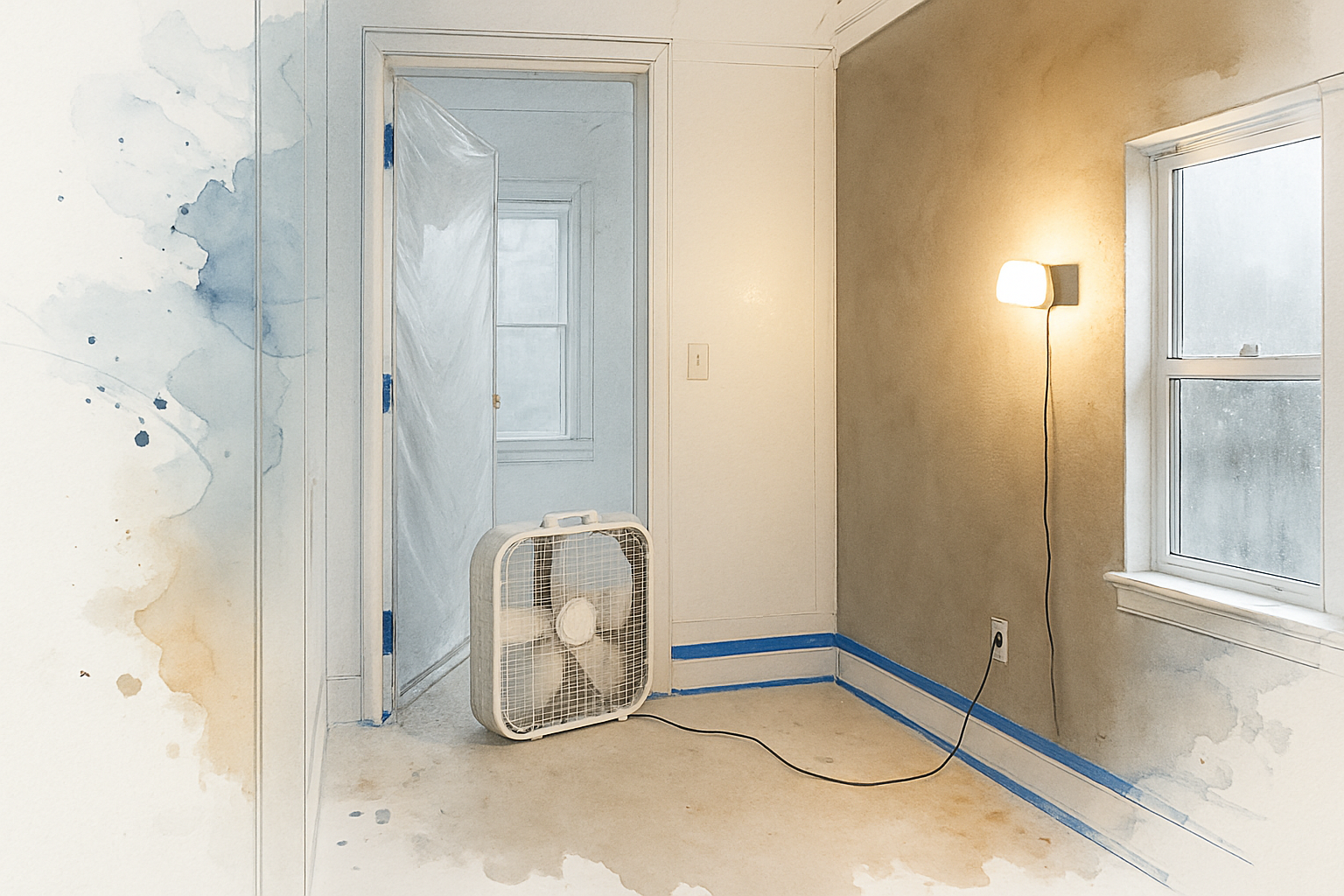
That is exactly when you most want the smell out of the house. Here is what a crew does instead of throwing the windows open:
- Hold a steady room temperature with the heat rather than letting the house swing cold overnight.
- Move air with fans placed to circulate, aimed across the room or toward a doorway, never blasting directly at wet film.
- Run a dehumidifier in rooms that read high on a simple humidity meter.
- Stage the work room by room, so one space dries while the next gets prepped and masked.
- Crack windows during dry breaks in the weather, which the Peninsula gives you more often than people expect.
This is also where low-VOC and CARB-compliant coatings earn their keep. A sealed-up house with two kids and a dog is a completely different air quality situation than an open house in July, and product choice does more for that than any fan.
If you want the details on what those labels mean under California rules, I wrote about what low-VOC actually means here.
Where Winter Slows an Interior Job Down
Not every surface reacts the same way to a damp house. These are the spots that change a schedule most often.
| Surface or room | Why winter slows it | What it means for your schedule |
|---|---|---|
| Walls in heated living areas | Least affected if the heat stays on | Close to normal recoat timing |
| Trim, doors, and cabinets | Enamels cure slower and stay soft longer in cool air | Hardware and door rehang may wait an extra day |
| Bathrooms and laundry rooms | Standing humidity from showers and dryers | May need drying time before prep even starts |
| Closets and interior hallways | Little airflow, no sunlight | Fans or a dehumidifier get added to the room |
| North-facing walls | Never catch direct sun, stay cool to the touch | Surface must test genuinely dry, not just feel cold |
Three Stages of Drying, and Why Only One of Them Is Safe to Recoat
Most winter paint problems trace back to confusing these three stages. Here is the difference in plain terms.
Winter Interior Work Fails in Bathrooms, Not Living Rooms
When interior paint lets go on the coast, it is almost never the big open living room. It is the small rooms that hold moisture and never see sun.
A homeowner contacted me about a bathroom where the previous owner had painted with no prep at all. The paint was starting to peel off in sections, and no amount of new paint over the top was going to fix that.
Before anything goes on a wall in a damp room, three things have to be sorted out:
- The moisture source. A slow leak behind a vanity or a window that sweats every morning will keep beating the paint no matter what you put on it.
- The exhaust fan. Plenty of older Peninsula bathrooms have fans that vent into the attic or nowhere at all. That moisture has to go outside.
- Whether the surface is genuinely dry. Cool to the touch and dry are not the same thing, especially on a north-facing exterior wall.
Mildew has to be cleaned and killed first, never sealed under a fresh coat. Painting over it buys you a few months and then it comes back through.
This is the part of the job that takes the time, and it is why prep is most of the work on any interior repaint worth paying for.
What Winter Adds to the Day Count
The questions I get are practical. One homeowner wanted a single bedroom wall painted and asked whether we work Sundays and how long it would take. Another with a three-story Monterey townhome, two stairwells and one high ceiling, wanted the whole interior in one color inside the month.
Both are doable in winter. What changes is the pacing:
- Longer waits between coats in cool, humid rooms
- Slower cure on trim, doors, and cabinet faces
- Furniture staying stacked in the middle of the room an extra night
- One or two more days on a whole-house job than the same scope in September
Here is the question worth asking any contractor you talk to this winter: not how many days the job takes, but how the schedule changes if the house is running humid. A crew that has worked through Peninsula winters will have a straight answer. One that has not will quote you the summer timeline and then go quiet when it slips.
If you are doing a larger project and staying put through it, living in your home during the work is a separate planning exercise worth reading up on.
What Matters Most When a Crew Is Inside Your House in January
Summer work spills outside. Winter work does not. Everything happens in your living space while the doors stay shut.
So the things that sound minor in July become the whole experience in January:
- Covering and protecting furniture, floors, and the path in and out
- Cleaning up daily, not at the end of the week
- Finishing when they said they would, because you are living around it
One review put it about as plainly as it can be put: “His painter Kevin did an excellent job and was on time and tidy.” That is not a flashy compliment. But in a rainy month with the windows shut, it is the one that counts.
My brother and I have over 20 years of combined experience on the Central Coast, and we hold CSLB license #1066829 and carry full insurance. Winter interiors are a normal part of our year, not an exception we make.
Frequently Asked Questions About Interior Painting in a Wet Monterey Winter
Is there a humidity level where you should just stop painting indoors?
Most manufacturers put the workable ceiling around 85 percent relative humidity, and quality starts slipping well before that. In practice, if a room reads high on a meter, we run a dehumidifier and heat until it comes down rather than pushing through.
How long before I can put furniture back against a freshly painted wall?
Give it longer than you would in summer. The wall may feel dry the same day, but full cure runs weeks, and pushing a couch against soft film in a damp house is how you get a shiny mark that never goes away. A few days of clearance is a reasonable habit.
Will the paint smell be worse because we cannot open the windows?
It can linger longer, yes. That is the main reason we lean on low-VOC and CARB-compliant products for winter interiors, along with fans set to circulate and short ventilation windows whenever the rain breaks.
Can you paint a bathroom in the middle of winter?
Yes, but the room has to be dried out and the moisture problem identified first. If the exhaust fan is not actually venting outside, that gets sorted before paint, otherwise the new coat is on borrowed time.
Is winter cheaper than summer for interior painting?
Pricing depends far more on scope, prep, and condition than on the calendar. Costs do vary quite a bit across Monterey County, so the only accurate number comes from a walkthrough of your actual rooms.
Thinking About an Interior Project This Winter?
Interior work continues through the winter months across Monterey, Pacific Grove, Carmel, and Salinas, and a walkthrough is the only way to know how your specific rooms will behave in damp conditions. If you want to talk through timing, Legacy Painting and Renovating can be reached at (831) 917-0047 or through the contact form at legacypaintingrenovating.com.